


Table of Contents
Microsoft has officially launched the public preview of its next enterprise platform, showcasing major Windows Server 2028 Features designed to redefine datacenter efficiency. According to primary reporting from Neowin, this release introduces native NVMe drivers, bootable ReFS volumes, and localized artificial intelligence infrastructure.
Enterprise administrators face soaring storage demands and intricate workload requirements across hybrid environments. The initial preview build establishes a modern architectural foundation that eliminates legacy bottlenecks while optimizing virtualization density across mission-critical enterprise hardware.
| Feature / Specification | Windows Server 2025 | Windows Server 2028 Preview | Architectural Impact |
|---|---|---|---|
| Primary Boot Volume Filesystem | NTFS Only | ReFS & NTFS Native Boot | Eliminates legacy NTFS dependencies and enables root self-healing |
| Default Storage Driver Stack | Storport / SCSI Miniport Layer | Native NVMe Driver Subsystem | Bypasses SCSI translation to saturate PCIe Gen 5 and Gen 6 buses |
| Networked Storage Fabrics | SMB 3.1.1 & iSCSI Protocol | NVMe-oF (TCP & RDMA) | Drastically slashes I/O latency and CPU overhead across fabrics |
| Automated Crash Remediation | Standard Recovery Environment | Quick Machine Recovery (QMR) | Automated self-healing and rollback of corrupted boot drivers |
| Local AI Model Acceleration | Windows ML (Basic Inference) | Local Token Factories (vLLM / Llama) | Native hardware GPU partitioning for on-premises LLM workloads |
| Fleet Management Console | Azure Arc & Admin Center | Microsoft Intune & Azure Arc | Unified endpoint management across persistent server infrastructure |
| Maximum ReFS Partition Scale | 35 Petabytes (Data Only) | 35 Petabytes (Boot & Data) | Scales massive multi-tenant virtualization partitions effortlessly |
Native NVMe Storage Architecture: Revolutionizing Kernel Driver Throughput
At the technical heart of the platform, Windows Server 2028 Features establish native NVMe storage handling as the default standard. By bypassing legacy SCSI translation layers, the rewritten storage driver interfaces directly with solid-state hardware controllers across PCIe Gen 5 and Gen 6 buses.
Traditional enterprise server installations historically routed solid-state communications through generalized block abstraction drivers. This legacy pipeline introduced non-trivial CPU interrupt overhead and increased submission queue latency during heavy parallel input-output operations.
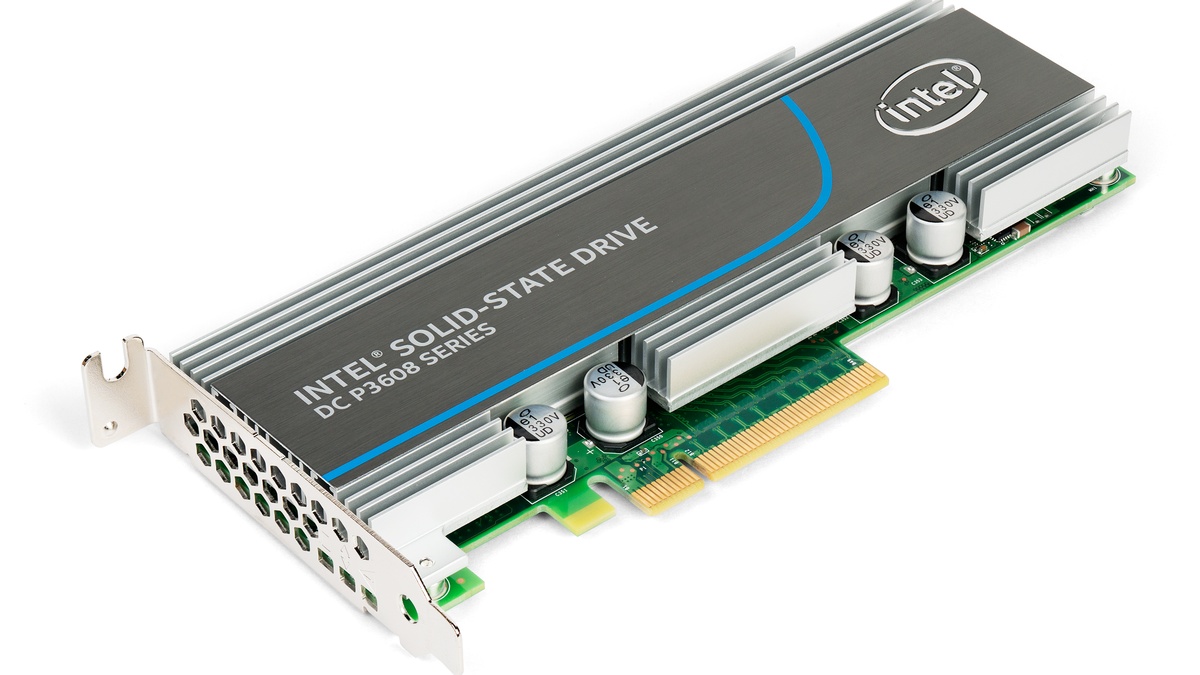
Under the modernized storage architecture, queue depth management scales linearly across multi-socket processing configurations. Datacenter administrators observe substantial improvements in input-output operations per second alongside measurable reductions in kernel processor consumption.
When evaluating high-throughput transactional database workloads, Windows Server 2028 Features deliver unprecedented sustained random read performance. SQL Server deployments benefit immediately from dedicated hardware queues that maximize solid-state drive saturation without causing thread starvation.
Furthermore, native NVMe power state management has been overhauled to optimize datacenter thermal budgets. Servers can dynamically throttle individual peripheral channels during idle windows while restoring peak operational bandwidth within microseconds when traffic spikes occur.
These foundational driver optimizations guarantee that enterprise storage infrastructure operates at bare-metal speeds. Organizations modernizing hardware arrays achieve maximum return on high-speed flash investments without relying on proprietary third-party storage drivers.
Analyzing Windows Server 2028 Features for Direct ReFS System Boot
Beyond controller communication, Windows Server 2028 Features achieve an historic milestone by introducing official boot support for Resilient File System volumes. Since its debut in Windows Server 2012, ReFS was strictly confined to secondary data storage pools and virtual disk repositories.
Enterprise administrators can now format the primary system partition with ReFS during clean operating system installations. This architectural leap eliminates long-standing dependencies on legacy NTFS for core system boot files, boot loaders, and driver directories.
The primary advantage of a ReFS boot partition centers on continuous background data integrity verification. The filesystem automatically detects localized bit rot and repairs silent file corruption using integrity streams without requiring offline disk maintenance downtime.
System administrators no longer need to schedule disruptive maintenance windows to execute legacy disk checking utilities. File metadata anomalies resolve automatically in real time, preserving continuous uptime across mission-critical hypervisor hosts and application servers.
Additionally, the integration of block cloning within the root operating system partition accelerates Windows Server 2028 Features administrative routines. Virtual machine provisioning and snapshot creation on system drives complete nearly instantaneously by manipulating volume metadata rather than duplicating physical storage blocks.
According to updated documentation published through Microsoft Learn, ReFS boot volumes support partitions up to thirty-five petabytes, providing enterprise infrastructure with unprecedented headroom for expansive multi-tenant hypervisors.
Storage Spaces Direct and Over-the-Fabric Networking Advancements
Software-defined storage architectures receive substantial performance enhancements through updated Storage Spaces Direct algorithms. Clustered enterprise servers synchronize data volumes across distributed nodes with substantially reduced networking latency and lower memory synchronization overhead.
A critical component within Windows Server 2028 Features is built-in transport support for NVMe over Fabrics over standard TCP and RDMA networks. This functionality allows storage pools to extend across high-speed Ethernet fabrics without requiring expensive dedicated Fibre Channel storage area network hardware.
Remote Direct Memory Access protocols bypass operating system networking stacks entirely during storage data transfers. Storage controllers transmit payload blocks directly between distributed server memory buffers, freeing processor cycles for application computation.
Hyper-converged infrastructure deployments achieve breakthrough density benchmarks under these low-latency fabric protocols. Storage clustering nodes maintain seamless bidirectional replication, ensuring zero data loss during unforeseen node hardware failures or unexpected datacenter disconnects.
As enterprise compute nodes integrate advanced processors like the AMD Ryzen 7 9800X3D for specialized edge applications, over-the-fabric protocols deliver desktop-class responsiveness to remote distributed file systems across high-bandwidth campus networks.
Deploying unified NVMe over TCP simplifies distributed datacenter topology while modernized architectural protocols dramatically reduce capital expenditures. IT organizations deploy scalable high-availability clusters using commercial off-the-shelf switches, unifying management across standard Ethernet fabrics.
Local Token Factories and Hardware Acceleration in Windows Server 2028 Features
Artificial intelligence inference is rapidly transitioning from centralized hyperscale clouds into localized private enterprise datacenters. Addressing this demand, Windows Server 2028 Features introduce native server capabilities specifically engineered to operate as localized token generation factories.
Datacenter operators can execute open-weight large language models directly on local hardware without sending sensitive corporate records across external networks. Built-in orchestration support interfaces natively with popular inference runtimes including Windows ML, vLLM, and low-latency Llama.cpp execution pipelines.
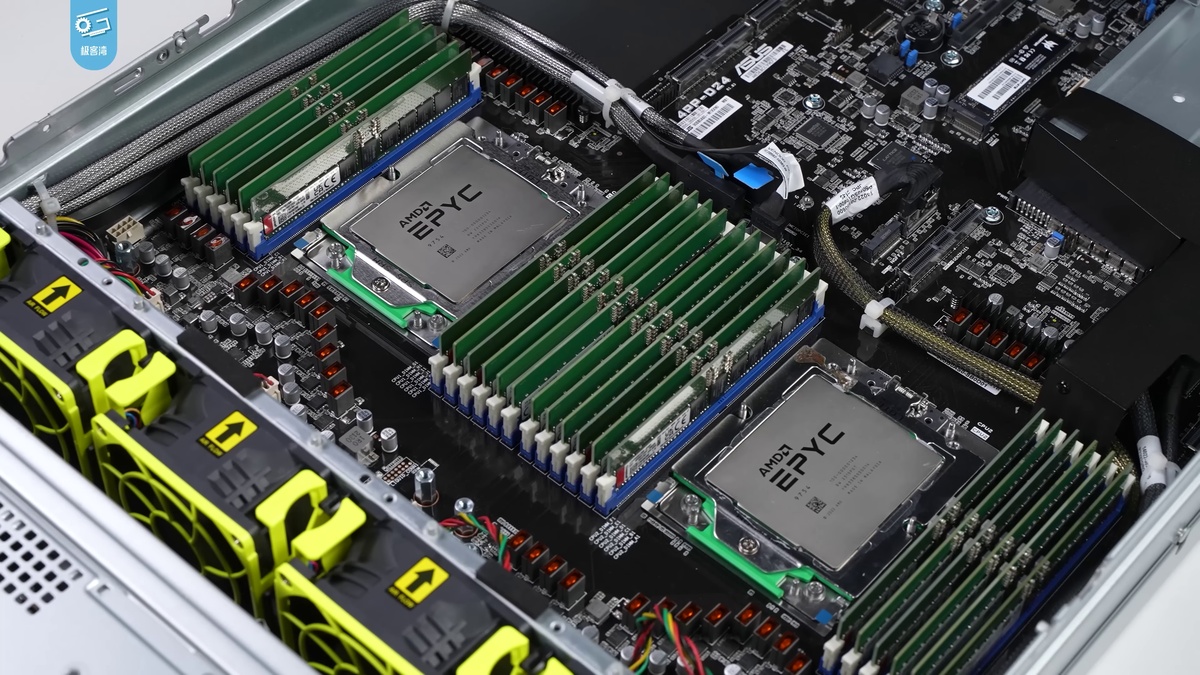
As organizations retire outdated infrastructure and Nvidia ends legacy platform support for vintage compute architectures, the new server operating system incorporates optimized kernel drivers for modern enterprise graphics processing units and neural accelerators.
Hardware partitioning allows system administrators to slice physical accelerator resources across multiple isolated virtual machines. Departments run dedicated natural language processing services simultaneously without risking performance contention or memory access conflicts on shared accelerator nodes.
By integrating native inference execution into Windows Server 2028 Features, organizations protect proprietary financial and operational records. Enterprise applications query local intelligence models with single-digit millisecond latency, unlocking secure automation without incurring unpredictable per-token cloud subscription expenses.
Supported by these scalable runtime environments, the new platform bridges on-premises physical compute with distributed cloud platforms. Organizations retain strict governance over private databases while offering enterprise teams high-performance artificial intelligence tools directly within corporate firewall perimeters.
Enterprise Infrastructure Matrix: Generational Architectural Comparison
Evaluating the architectural progression across recent enterprise operating system releases highlights massive performance gains. While previous releases expanded hybrid cloud integration, the 2028 release prioritizes raw solid-state throughput and intelligent autonomous remediation.
Enterprise IT planners analyzing Windows Server 2028 Features will note significant changes in memory allocation, processor core scaling, and container spin-up latencies. Datacenter virtualization hosts support expanded virtual machine densities while decreasing operating system footprint across dense clustered chassis.
| Architectural Domain | Windows Server 2022 | Windows Server 2025 | Windows Server 2028 |
|---|---|---|---|
| Peak NVMe IOPS Scaling | Up to 1.2M IOPS per Host | Up to 2.5M IOPS per Host | Exceeding 4.8M IOPS per Host |
| Kernel I/O Submission Latency | ~14.2 Microseconds | ~8.6 Microseconds | ~3.1 Microseconds (Native NVMe) |
| Cryptographic Defense Baseline | TLS 1.3 / AES-256 | TLS 1.3 / PQC Ready | Post-Quantum Cryptography & Auto-Cert |
| Host Maximum Physical RAM | 24 Terabytes | 48 Terabytes | Up to 64 Terabytes Physical RAM |
| Logical Processor Limit (VM) | 240 vCPUs per Guest | 240 vCPUs per Guest | Up to 512 vCPUs per Guest |
| Live In-Memory Hotpatching | Azure Edition VMs Only | Azure Edition & Arc Hosts | Standard & Datacenter Bare-Metal Support |

Just as compact workstations such as the Apple M4 Mac mini revolutionized desktop compute density, the streamlined Server Core profile achieves historic resource efficiency, consuming fewer idle processor cycles and minimal base memory.
Network compression protocols and dynamic packet aggregation enable high-speed replication across distributed hyper-converged nodes. Inter-node bandwidth utilization drops substantially during routine volume synchronizations, preserving vital network throughput for customer-facing production services.
The generational comparison matrix below outlines critical architectural differences introduced with Windows Server 2028 Features, providing systems architects with precise baseline figures necessary for long-term datacenter capacity planning and budget forecasting.
These technical metrics demonstrate clear operational justifications for deploying the next-generation operating system across enterprise modernization initiatives. Organizations upgrading aging server deployments gain substantial computational efficiency, reduced thermal dissipation, and streamlined hardware management across enterprise fleets.
Zero-Trust Security Baselines and Post-Quantum Cryptographic Readiness
Enterprise security architectures require robust zero-trust defense mechanisms integrated directly into low-level operating system components. The latest server release strengthens baseline defenses by enforcing mandatory hardware-enforced isolation across default installation profiles.
Key security pillars within Windows Server 2028 Features include Trusted Launch for Generation 2 virtual machines across hypervisor hosts. Virtual machines leverage virtual Trusted Platform Modules to safeguard cryptographic keys, guaranteeing system state integrity before booting virtual operating systems.
Anticipating future cryptographic vulnerabilities, Microsoft has introduced early post-quantum encryption algorithms across core communication channels. Encrypted transport protocols resist interception and retroactive decryption attacks, protecting sensitive enterprise communications from evolving quantum computing threats.
Automated certificate lifecycle management eliminates common administrator oversights that frequently cause catastrophic enterprise application outages. The server operating system monitors cryptographic certificate expirations and performs automated background renewals through secure enterprise certificate authorities.
Similar to modern secure cloud endpoints supporting Xbox Cloud Gaming architecture, enterprise servers benefit from hardened kernel isolation and virtualization-based security, preventing unauthorized privilege escalation across multi-tenant workloads.
By unifying hardware-rooted security with proactive cryptographic management, the updated operating system establishes an ironclad defensive perimeter. Security teams mitigate credential theft and kernel tampering, ensuring mission-critical infrastructure satisfies the strictest global regulatory compliance mandates.
Microsoft Intune Integration and Automated Quick Machine Recovery in Windows Server 2028 Features
Server fleet management transitions into a modern unified era with the debut of Microsoft Intune support for persistent enterprise servers. Administrators oversee server configuration profiles, compliance policies, and endpoint security baselines through a single intuitive cloud administration console.
Working alongside Azure Arc connectivity, Windows Server 2028 Features allow IT teams to manage physical and virtual nodes alongside desktop endpoints. Policy enforcement applies seamlessly across hybrid cloud infrastructure, reducing administrative complexity and standardizing organizational security postures.
Downtime mitigation receives a transformative capability through the preview release of Quick Machine Recovery technology. When a server encounters a boot-critical operating system crash or corrupted update, automated diagnostics isolate the faulty component without manual technician intervention.
Quick Machine Recovery restores operational kernel states using cached known-good system configurations within minutes of a crash event. Enterprise services resume normal operation rapidly, shielding corporations from prolonged service outages and costly downtime penalties.
Expanded Hotpatching capabilities complement recovery systems within Windows Server 2028 Features, allowing critical security updates to install without system reboots. In-memory patch injection applies monthly vulnerability fixes silently, preserving continuous availability across transactional databases and mission-critical enterprise services.
Together, cloud-native Intune governance and automated recovery mechanisms in the preview build redefine enterprise lifecycle operations. IT departments drastically decrease maintenance overhead while maintaining peak operational availability across global distributed server deployments.
Frequently Asked Questions
What are the most significant Windows Server 2028 Features in the new preview?
The preview of Windows Server 2028 Features introduces native NVMe drivers, direct ReFS boot support, local artificial intelligence inference token factories, post-quantum cryptography, and Microsoft Intune management.
Can the operating system boot directly from ReFS in Windows Server 2028 Features?
Yes, Windows Server 2028 Features allow administrators to format root operating system drives with ReFS, delivering proactive bit-rot self-healing, instant block cloning, and support for volumes up to thirty-five petabytes.
How does native NVMe support improve datacenter throughput in Windows Server 2028 Features?
Native NVMe drivers in Windows Server 2028 Features bypass legacy SCSI abstraction layers, connecting directly to PCIe controllers to dramatically increase input-output operations per second while lowering CPU interrupt overhead.
What is Quick Machine Recovery and how does it prevent server outages?
Quick Machine Recovery automatically detects boot-critical operating system failures and rolls back corrupted system updates or faulty drivers to restore server uptime without requiring manual technician intervention.
How can enterprise administrators access and test Windows Server 2028 Features today?
IT professionals can download evaluation ISO and VHDX images for Windows Server 2028 Features directly through the official Windows Server Insider Program portal for testing on physical servers or virtual machines.
Final Verdict: Enterprise Scalability and Mission-Critical Performance
The initial unveiling of Windows Server 2028 Features marks one of the most substantial architectural leaps in Microsoft’s server history. By unlocking native NVMe storage throughput and enabling bootable ReFS volumes, Microsoft addresses long-standing performance bottlenecks for modern datacenters.
Simultaneously, the integration of on-premises artificial intelligence token factories and automated Quick Machine Recovery ensures Windows Server 2028 Features remain future-proof. Organizations running complex hybrid infrastructure gain unprecedented control over data privacy, virtualization performance, and automated lifecycle maintenance.
As public testing progresses through the Windows Server Insider Program, Windows Server 2028 Features set a formidable new benchmark for enterprise computing. Datacenter architects should begin evaluating preview builds today to prepare infrastructure strategies for this transformative generational upgrade.
