


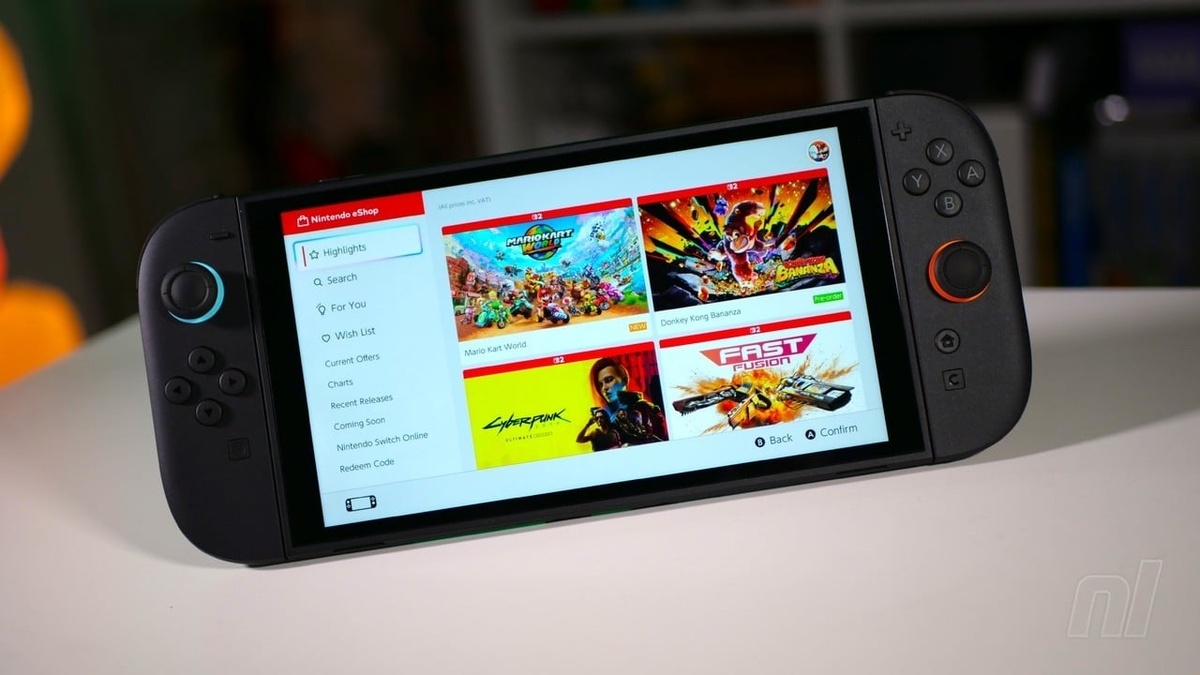
The latest Switch 2 Developer Survey findings confirm a monumental shift in gaming industry sentiment, with 46% of creators targeting Nintendo hardware over rival consoles. Industry analysts attribute this surge to unprecedented portable market expansion and flexible development frameworks.
Data compiled from over 2,600 industry professionals reveals that enthusiasm for Nintendo’s hybrid ecosystem now surpasses both PlayStation 5 and Xbox Series X. Studios cite favorable commercial economics and massive player engagement as decisive factors driving their future roadmaps.
| Target Platform Ecosystem | Future Development Interest | Active Shipping Pipeline | Installed Hardware Base (2026) | Primary Development Barrier | Architecture & SDK Foundation |
|---|---|---|---|---|---|
| Personal Computer (PC / Steam) | 81% Development Interest | 66% Active Projects | 1.40 Billion Active Ecosystem | Hardware Configuration Variety | DirectX 12 Ultimate / Vulkan API |
| Nintendo Switch 2 | 46% Development Interest | 29% Active Projects | 26.5 Million Console Shipments | Development Kit Allocation Pace | Custom Nvidia Tegra / DLSS 3.5 |
| PlayStation 5 / PS5 Pro | 42% Development Interest | 45% Active Projects | 72.0 Million Shipped Consoles | Escalating Production Budgets | Custom AMD RDNA 2 / Sony PSSR |
| Valve Steam Deck & Handhelds | 39% Development Interest | 34% Active Projects | 8.50 Million Dedicated Units | Thermal Battery Constraints | Proton Runtime / Linux x86-64 |
| Xbox Series X|S | 31% Development Interest | 37% Active Projects | 31.0 Million Shipped Units | Series S Performance Baseline | Microsoft GDK / DirectX 12 Agility |
GDC State of the Industry: Switch 2 Developer Survey Results
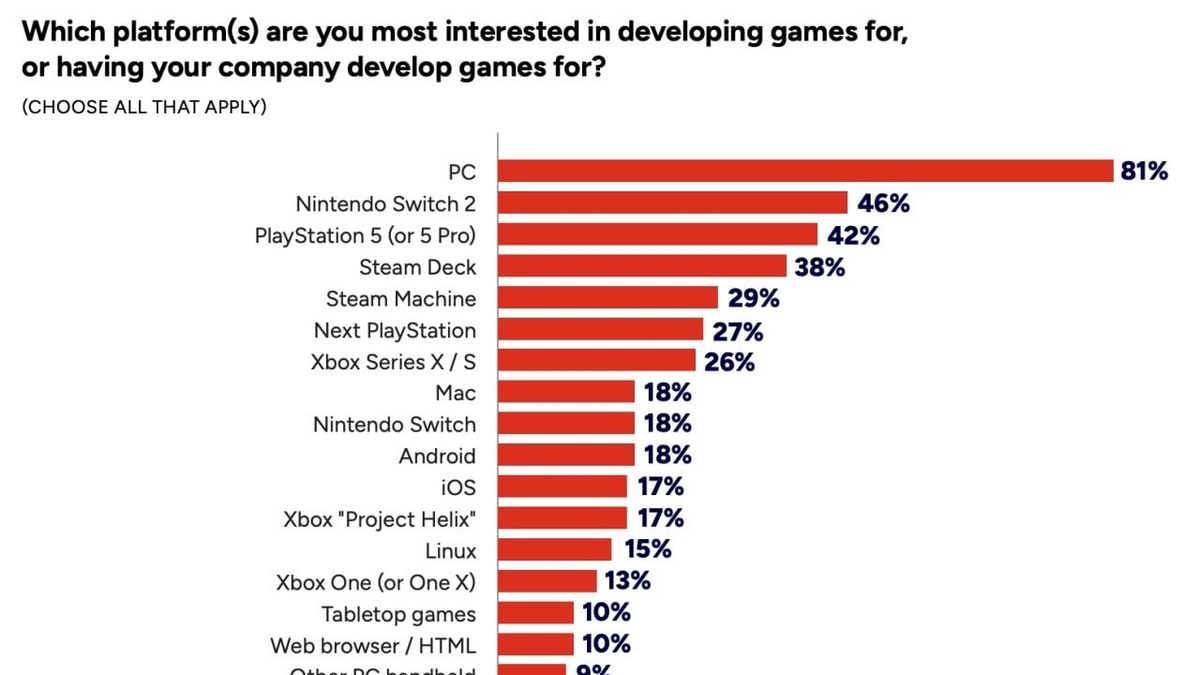
According to the newly published Switch 2 Developer Survey metrics from the GDC Festival of Gaming, personal computers retain the primary share of industry interest at 81%. However, Nintendo’s upcoming console captured second place overall, securing an impressive 46% of developer preference.
As reported in Nintendo Life’s survey coverage, the platform outpaced every dedicated home console ecosystem. The Switch 2 Developer Survey underscores how software architects view portable hybrid hardware as an essential commercial pillar alongside traditional desktop gaming.
By capturing 46% of prospective interest, Nintendo effectively relegated the PlayStation 5 to third position among home entertainment platforms. Industry watchers note that securing this tier of developer enthusiasm represents an extraordinary endorsement for hardware that launched relatively recently.
The official report released through the GDC portal highlights growing weariness toward ballooning AAA development cycles. Studios are seeking nimble platforms where creative game mechanics take precedence over astronomical visual asset budgets.
Consequently, this Switch 2 Developer Survey reflects broader dissatisfaction with escalating production expenditures across traditional fixed-function consoles. Creators increasingly favor adaptable hardware environments capable of delivering engaging gameplay without requiring eight-year development timelines or multi-hundred-million-dollar financial outlays.
Independent developers and mid-tier publishers displayed the most pronounced enthusiasm for Nintendo’s hardware architecture throughout the polling. These creative teams view portable handheld ecosystems as lucrative commercial proving grounds where innovative concepts achieve exceptional commercial discoverability.
Developer Interest Breakdown: Why Studios Prioritize Nintendo Over PS5 and Xbox
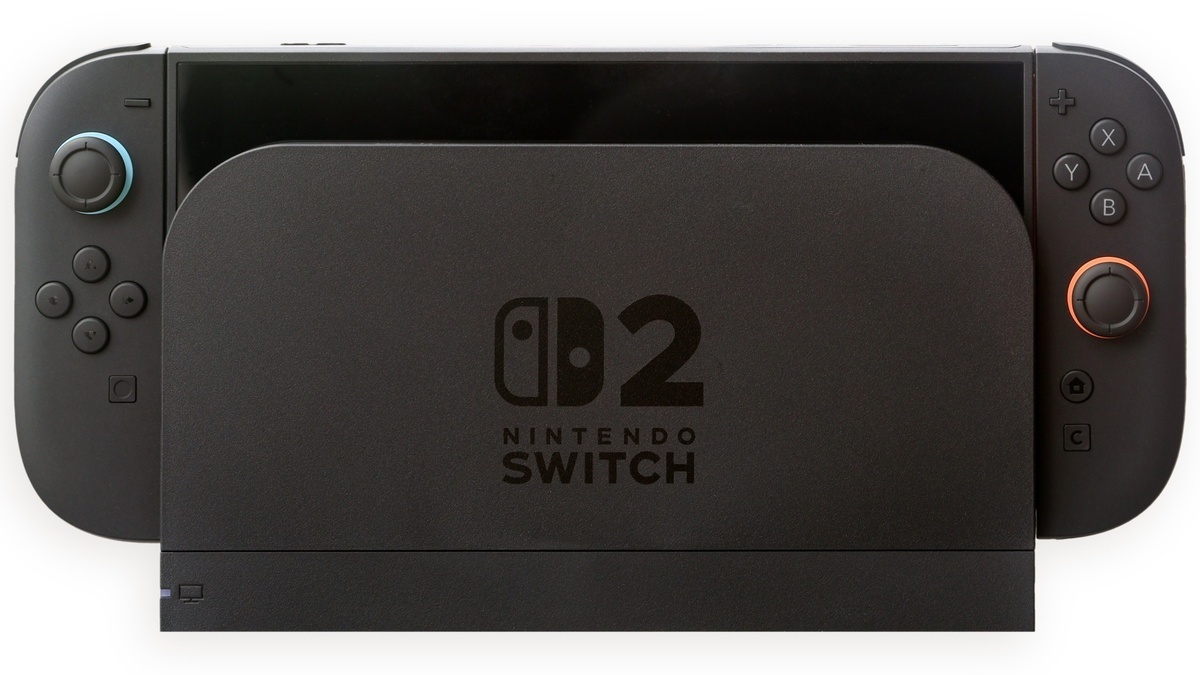
The preference divergence highlighted across the Switch 2 Developer Survey stems largely from shifting player lifestyles and playtime accessibility. Modern consumers demand versatile gaming experiences that seamlessly transition between stationary television displays and portable on-the-go play sessions.
While PlayStation 5 and Xbox Series X offer raw graphical compute, their market saturation has slowed significantly. In contrast, Nintendo’s hardware momentum creates an expanding addressable audience hungry for fresh software releases across diverse gaming genres.
Engineering leads examining the Switch 2 Developer Survey highlight that modern middleware engines like Unreal Engine 5 and Unity integrate smoothly with mobile chipsets. Modern compiler optimizations allow engineering teams to target portable devices without fundamentally compromising underlying artistic vision.
Furthermore, escalating development costs on competing home machines have prompted studios to diversify software pipelines across versatile platforms. As seen in recent gaming CPU hardware benchmarks, high-end PC performance continues pulling away from stationary living room consoles.
Developers also pointed toward software pricing stability within the Nintendo ecosystem as a primary financial incentive for production. Nintendo storefronts maintain premium software price tags longer than rival platforms, insulating independent studios from aggressive digital discounting spirals.
This pricing durability ensures that quality productions achieve sustainable return on investment over multi-year sales windows. Studio directors recognize that releasing titles into a healthy software ecosystem significantly improves operational survival in a volatile economic climate.
Pipeline Reality Check: How Switch 2 Developer Survey Data Reflects Active Dev Kits
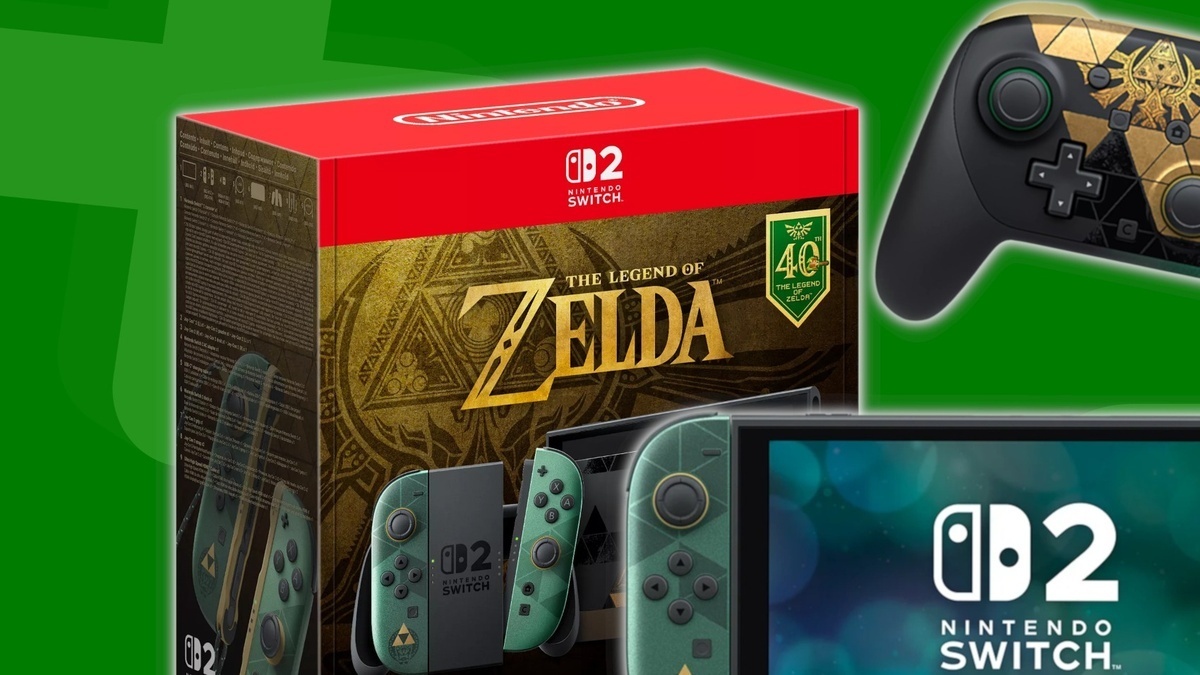
While aspirational curiosity ranks exceptionally high, the Switch 2 Developer Survey uncovers a distinct disparity regarding active shipping pipelines. Only 29% of polled studios confirmed their immediate upcoming commercial titles will ship directly onto Nintendo’s next-generation hardware.
This twelve-point variance between creative interest and active software production reflects temporary hardware allocation constraints. Hardware manufacturers typically throttle developer kit distribution during initial launch cycles, prioritizing established first-party teams and strategic corporate partners.
Hundreds of independent software teams reported waiting for verified hardware evaluation units before officially greenlighting production budgets. Without finalized retail silicon in hand, programming teams remain hesitant to commit extensive engineering resources toward dedicated portable optimization.
Analysts reviewing the Switch 2 Developer Survey emphasize that this pipeline lag matches previous console transitions across industry history. As manufacturing capacity scales and SDK tooling matures, the percentage of actively shipping projects invariably rises to match creative enthusiasm.
In contrast, personal computer and PlayStation 5 pipelines remain robust because studios have possessed mature development environments for years. Transitioning mature production codebases to a newly established platform requires dedicated porting windows that many smaller studios cannot immediately finance.
Industry veterans predict this distribution bottleneck will resolve by late 2026 as hardware supply chains normalize globally. Once developer kits reach mainstream independent creators, active production figures will surge toward the 46% preference ceiling demonstrated in initial polling.
Technical Architecture & Porting Efficiency: Nvidia DLSS and Custom Tegra Silicon
| Console Ecosystem | Compute Silicon & Core Architecture | Unified Memory & Bandwidth | Hardware Upscaling Support | Average Porting Timeline | Digital Revenue Margin Structure |
|---|---|---|---|---|---|
| Nintendo Switch 2 | Custom Nvidia T239 (Ampere/Ada) | 12GB LPDDR5X (102 GB/s) | Hardware DLSS & Tensor Cores | 4 to 7 Months Conversion | 30% Digital (Tiered Thresholds) |
| PlayStation 5 Pro | Custom AMD Viola APU (RDNA 3 Hybrid) | 16GB GDDR6 (576 GB/s) | Sony PSSR Hardware Engine | 8 to 14 Months Full Production | 30% Standard Platform Retainer |
| Xbox Series X | Custom AMD Scarlett (RDNA 2 Unified) | 16GB GDDR6 (560 GB/s) | AMD FSR 3.1 Software Pipeline | 7 to 12 Months Standard Build | 30% Platform Storefront Share |
| Steam Deck OLED | AMD Custom Sephiroth APU (RDNA 2) | 16GB LPDDR5 (88 GB/s) | System FSR & Display Integer | 1 to 3 Months Proton Tuning | 30% Standard (20% Above Scale) |
The underlying silicon detailed alongside the Switch 2 Developer Survey serves as a massive technical catalyst driving developer optimism worldwide. Utilizing a custom Nvidia processor featuring Ampere and Ada Lovelace microarchitecture innovations, the hardware delivers remarkable performance per watt.
Software engineers analyzing the Switch 2 Developer Survey praise the integration of dedicated Tensor Cores enabling hardware-accelerated Deep Learning Super Sampling. This advanced temporal reconstruction technology enables games rendering at internal 720p or 1080p resolutions to output pristine 4K imagery.
This architectural efficiency mirrors broader industry shifts away from legacy platforms, much like how Nvidia sunset legacy Windows 10 drivers to concentrate engineering on modern neural rendering pipelines. Modern gaming hardware increasingly relies on machine intelligence rather than brute-force rasterization.
By relieving computational strain through AI upscaling, engineers can implement sophisticated physics, denser environmental geometry, and complex gameplay systems. Developers no longer view portable hardware as a crippling technical compromise requiring gutted game mechanics or stripped-down visual assets.
Furthermore, the unified 12GB LPDDR5X memory configuration provides sufficient headroom for modern streaming asset budgets and high-resolution textures. Cross-platform studios can downscale existing PlayStation and PC assets efficiently without redesigning core game loops from scratch.
The technical parity achieved through modern Nvidia tooling ensures that the Switch 2 Developer Survey translates into practical engineering reality. Software porting studios report completing initial conversion milestones within months rather than requiring multi-year ground-up engine rewrites.
Economic Factors Driving Handheld Adoption: Production Budgets and Digital Margins

Beyond raw technical specifications, macroeconomic realities analyzed in the Switch 2 Developer Survey heavily influence studio decision-making. Devastating layoffs, corporate restructuring, and studio closures throughout 2025 and 2026 have forced executive leadership to reevaluate traditional production models.
Pouring two hundred million dollars into hyper-realistic console exclusives has become an untenable financial risk for most commercial developers. Studios increasingly prefer building engaging mid-tier titles with twenty-million-dollar budgets that thrive on portable hybrid platforms.
Survey respondents highlighting the Switch 2 Developer Survey noted that Nintendo’s digital storefront offers superior organic software discoverability. Rather than sinking into vast catalogs of algorithmic obscurity, well-crafted productions frequently capture featured merchandising slots on the eShop.
Meanwhile, subscription ecosystems and cloud streaming initiatives, such as Xbox Cloud Gaming pay-as-you-go bundles, continue fragmenting traditional retail monetization. Many independent publishers express reluctance toward licensing agreements that cannibalize upfront premium software sales.
Nintendo’s dedicated consumer base maintains an extraordinary appetite for purchasing premium games directly at full price. This transactional purchasing behavior provides independent creators with dependable operational cash flows essential for funding subsequent game development cycles.
By prioritizing sustainable financial models over speculative subscription licensing, the Switch 2 Developer Survey highlights a pragmatic return to core commercial principles. Studios view the hybrid console as a reliable revenue anchor capable of insulating creative businesses against macroeconomic shocks.
Multi-Platform Release Schedules: What the Switch 2 Developer Survey Signals for 2026
Examining multi-platform distribution trends, the Switch 2 Developer Survey indicates that day-and-date launches on Nintendo hardware will become standard industry practice. Major third-party publishers are no longer treating portable conversions as delayed aftermarket ports released years later.
Publishers including Sega, Capcom, Square Enix, and Ubisoft have restructured internal deployment schedules to ensure simultaneous release dates. Missing the launch hype window on a console with twenty-six million active users represents millions in forfeited opening-week revenue.
Furthermore, high-profile Western role-playing games and competitive action titles are targeting the platform alongside PC and home consoles. This cross-platform synchronization, illuminated by the Switch 2 Developer Survey, proves that developers view portable parity as mandatory for commercial triumph.
Just as compact computing form factors gained mainstream enterprise adoption, evidenced by the Apple M4 Mac Mini redesign, portable gaming devices have proven their capability to handle intensive computing workloads without compromising desktop-class user experiences.
Simultaneous multi-platform rollouts also expand global marketing efficiency, allowing publishers to unify promotional trailers, social campaigns, and influencer previews. Rather than rebooting marketing cycles for delayed editions, companies maximize global cultural momentum across every hardware ecosystem simultaneously.
Consequently, the commercial data emerging from the Switch 2 Developer Survey confirms that Nintendo has overcome the historical third-party software drought. The platform now operates as an indispensable pillar within global software publishing frameworks across North America, Europe, and Asia.
Market Impact & Long-Term Console Trajectory: Nintendo’s Ecosystem Advantage
The broader ramifications revealed by the Switch 2 Developer Survey extend far beyond individual software release slates into the upcoming console generation. By capturing developer mindshare early in the hardware cycle, Nintendo establishes formidable defensive moats against traditional home console competitors.
Neither Sony nor Microsoft currently offers an uncompromised native portable gaming device within their primary hardware lineups. While handheld PC devices like Steam Deck have captured enthusiast audiences, Nintendo maintains undisputed dominance across mainstream mass-market consumers.
Software architects contributing to the Switch 2 Developer Survey indicate that building games for Nintendo hardware unlocks multi-generational player demographics. From young casual gamers to seasoned enthusiasts, the platform attracts players who engage with diverse genres and artistic styles.
This demographic diversity provides developers with unique creative freedom rarely found on hardware dominated exclusively by gritty cinematic blockbusters. Whimsical platformers, complex simulation titles, and narrative visual novels discover massive commercial success alongside blockbuster action adventures.
As hardware sales surpass generational milestones throughout 2026, the momentum captured in this Switch 2 Developer Survey will solidify further. Industry observers anticipate that developer support will compound, establishing an unshakeable software library that defines the decade’s portable gaming landscape.
Ultimately, developers follow engaged audiences and profitable market conditions wherever they emerge across the global gaming landscape. Nintendo’s strategic execution ensures that creators will continue prioritizing the hybrid console as a premier destination for years to come.
Frequently Asked Questions
Why do developers favor Nintendo Switch 2 over PS5 and Xbox?
According to the Switch 2 Developer Survey, creators favor Nintendo due to massive portable engagement, lower production risk, and sustainable pricing models. While PS5 and Xbox require massive budgets, the hybrid platform delivers strong returns on creative, mid-tier productions.
What percentage of developers are interested in making games for Switch 2?
The official Switch 2 Developer Survey revealed that 46% of developers are interested in making games for Nintendo Switch 2. This placed the system ahead of PlayStation 5, Xbox Series X, and Steam Deck, trailing only PC at 81%.
Why is the active shipping pipeline lower than developer interest?
The Switch 2 Developer Survey revealed that 29% of studios are currently shipping games on the platform. Analysts attribute this gap to initial developer kit scarcity and established production pipelines prioritizing mature consoles before transitioning resources.
What technical features make porting games to Switch 2 easier?
Modern Nvidia silicon featuring dedicated Tensor Cores and DLSS upscaling allows developers to port games efficiently without sacrificing visual quality. Generous 12GB memory bandwidth and modern engine support streamline multi-platform conversion workflows significantly.
Will major third-party games launch day-and-date on Switch 2?
Yes, insights from the Switch 2 Developer Survey confirm that major publishers are synchronizing multi-platform release calendars. Third-party studios now prioritize simultaneous launches to maximize global marketing impact and capture substantial handheld launch revenues.
Final Verdict: The Strategic Shift in Console Development
The findings of the Switch 2 Developer Survey represent a definitive turning point in the console gaming hierarchy. As traditional home consoles grapple with unsustainable AAA budgets and plateauing hardware adoption, Nintendo’s hybrid ecosystem provides developers with vital commercial stability.
With 46% of creators actively expressing interest, Nintendo has successfully bridged the historical divide between indie developers and blockbuster publishers. Modern technical architectures powered by Nvidia AI upscaling eliminate past compromises, making portable development exceptionally rewarding.
As hardware allocations expand and active production pipelines catch up with creative enthusiasm, the impact of the Switch 2 Developer Survey will reshape global release schedules. Nintendo has firmly positioned its hybrid hardware as the premier commercial battleground for modern gaming software.
