


Table of Contents
Celebrating the original Xbox 25th anniversary marks a quarter century since Microsoft revolutionized sixth-generation home entertainment, transitioning video game consoles from proprietary RISC microarchitectures into standardized, high-performance personal computing hardware.
As detailed in retrospective coverage from Tom’s Hardware, the original Xbox 25th anniversary commemorates Microsoft’s ambitious gamble on commodity desktop silicon that defied established console traditions, delivering unprecedented visual fidelity that challenged Japanese industry dominance.
| Hardware Specification | Microsoft Xbox (2001) | Sony PlayStation 2 (2000) | Nintendo GameCube (2001) |
|---|---|---|---|
| Central Processing Unit (CPU) | Custom Intel Pentium III @ 733 MHz (Coppermine) | Emotion Engine MIPS R5900 @ 294.9 MHz | IBM PowerPC Gekko @ 486 MHz |
| Graphics Processor (GPU) | Nvidia NV2A @ 233 MHz (Programmable Shaders) | Graphics Synthesizer @ 147.4 MHz (Fixed Function) | ATI Flipper @ 162 MHz (Fixed Function / TEV) |
| System Memory & Bandwidth | 64MB DDR SDRAM Unified @ 6.4 GB/s | 32MB RDRAM @ 3.2 GB/s + 4MB eDRAM | 24MB 1T-SRAM @ 2.6 GB/s + 16MB DRAM |
| Internal Mass Storage | Integrated 8GB 3.5-inch IDE Desktop HDD | Optional 40GB HDD (Network Adapter Add-on) | Proprietary Removable Memory Cards Only |
| Networking Subsystem | Built-in 10/100BASE-TX Fast Ethernet Port | External Network Adapter Peripheral Required | Optional Broadband or Modem Adapter Add-on |
| Audio Processing Pipeline | Nvidia MCPX (64 3D Audio Channels, Real-Time Dolby) | SPU2 (48 Channels, Software Dolby Decoding) | Macronix 16-bit DSP (64 Channels, Dolby Pro Logic II) |
The x86 Console Gamble: Repurposing PC Silicon for Living Rooms
Reflecting on the original Xbox 25th anniversary highlights how audacious Microsoft’s original console strategy appeared when engineering work commenced under the direct leadership of DirectX creators in 1999.
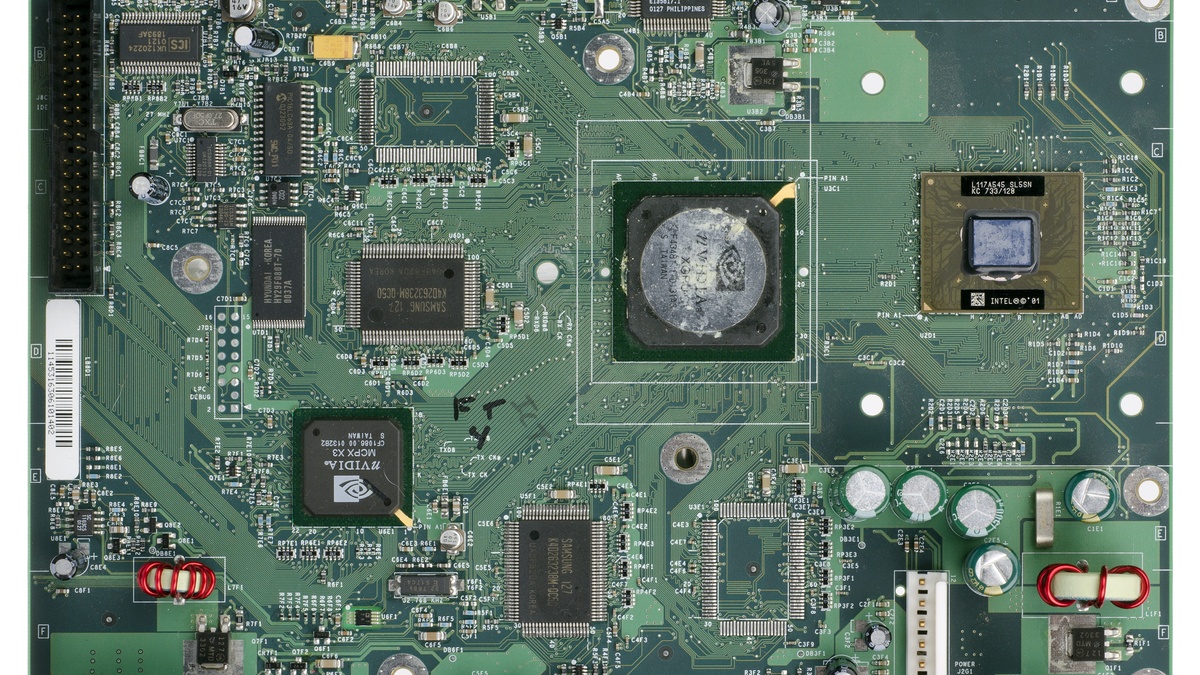
As engineers reflect on the original Xbox 25th anniversary, rather than designing bespoke vector units like Sony’s complex Emotion Engine, the Redmond team treated their machine as a purpose-built multimedia desktop.
This pragmatic design philosophy allowed western PC game developers to port complex simulation engines and three-dimensional renderers with remarkably low friction compared to competing platforms.
During that inaugural holiday launch, the original Xbox 25th anniversary established an essential bridge between computer graphics standards and television gaming, introducing programmable shaders to mainstream players.
By establishing a DirectX-compliant execution environment detailed across Microsoft Learn, the green team laid the foundational software tooling that still underpins modern multiplatform development.
As engineering historians revisit the original Xbox 25th anniversary, the massive nine-pound chassis stands out, but its heavy internal shielding protected uncompromising desktop-class components that consistently outrendered rival sixth-generation platforms.
Intel Coppermine at 733 MHz: Custom Desktop Microarchitecture Meets DirectX
At the heart of the original Xbox 25th anniversary hardware narrative lies Microsoft’s landmark silicon partnership with Intel, which secured an advanced x86 processor clocked at 733 megahertz.
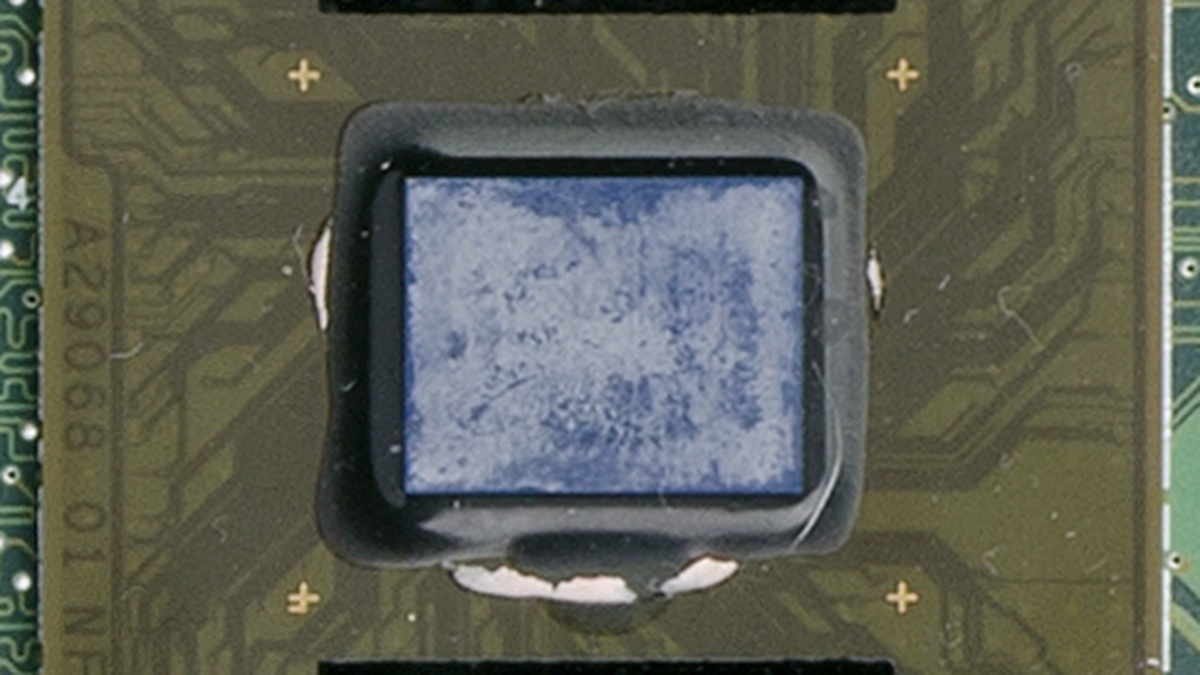
Documenting the original Xbox 25th anniversary reveals that this CPU represented a customized hybrid derived from Intel’s Coppermine mobile microarchitecture, packing 128 kilobytes of high-speed Level 2 cache running at full core clock speeds.
Clocked at more than double the frequency of Sony’s Emotion Engine, this processor offered remarkable integer performance and predictable floating-point math through native SSE multimedia instructions.
Developers analyzing the original Xbox 25th anniversary frequently praise how this straightforward processor structure eliminated the tortuous assembly optimization barriers that plagued early PlayStation 2 development pipelines.
Similar to how modern processors prioritize thermal headroom in our AMD Ryzen 7 9800X3D gaming processor breakdown, Intel’s Coppermine chip delivered desktop responsiveness directly into the living room.
Celebrating the original Xbox 25th anniversary highlights how this 133 megahertz front-side bus providing 1.06 gigabytes per second of throughput allowed the processor to coordinate game simulation loops and physics routines effortlessly.
Nvidia NV2A and MCPX Silicon: Programmable Shaders and Unified Memory
While the CPU delivered impressive compute muscle, celebrating the original Xbox 25th anniversary inevitably directs engineering focus toward Nvidia’s groundbreaking NV2A graphics processor running at 233 megahertz.
Examined during the original Xbox 25th anniversary, the NV2A was based closely on Nvidia’s revolutionary GeForce 3 and GeForce 4 Ti architectures, becoming among the first graphics processors to support programmable vertex and pixel shaders.
This technological leap allowed legendary titles like Halo: Combat Evolved to showcase specular bump mapping, volumetric fogging, and dynamic lighting effects previously impossible on home consoles.
Crucially, the original Xbox 25th anniversary commemorated a breakthrough 64-megabyte unified DDR memory architecture that delivered an astonishing 6.4 gigabytes per second of total system bandwidth.
This unified memory subsystem mirrored the balanced architectural principles evaluated in our Apple M4 Pro chip review, granting developers flexible frame buffer and texture allocations without artificial memory partitioning.
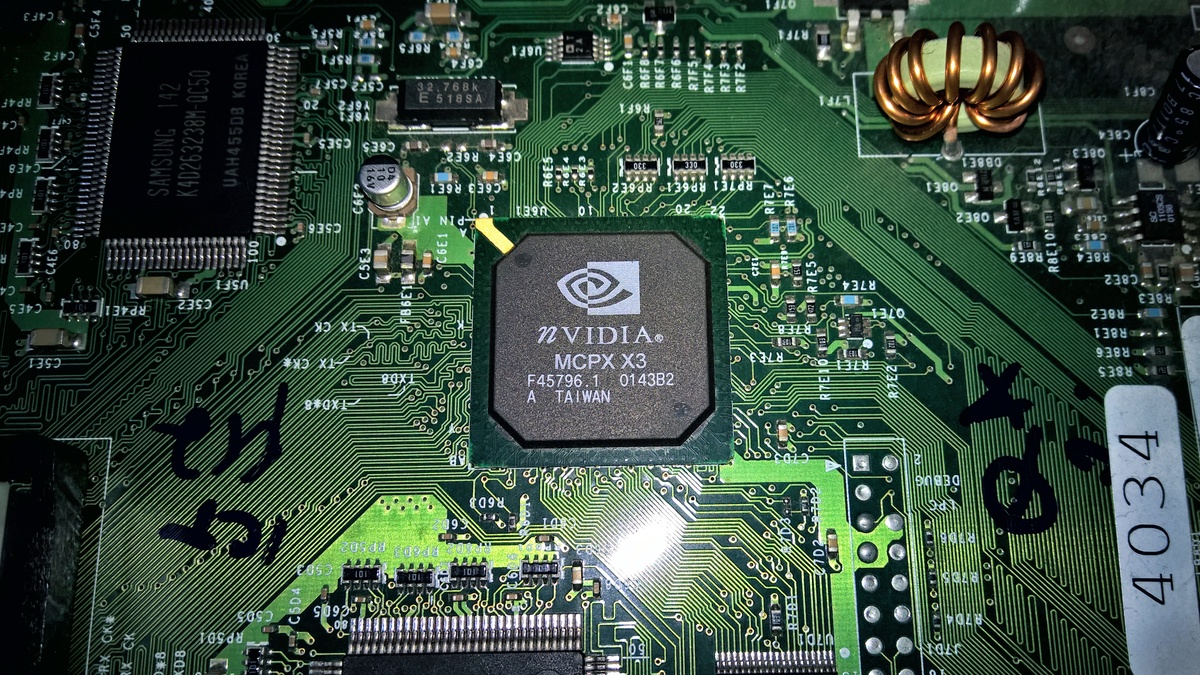
During the original Xbox 25th anniversary, audio engineers also celebrate Nvidia’s Media Communications Processor, which handled real-time Dolby Digital 5.1 spatial sound encoding directly within the hardware pipeline.
Integrated Broadband and Hard Drive Architecture: The Genesis of Xbox Live
Another definitive triumph celebrated during this original Xbox 25th anniversary was Microsoft’s prescient decision to mandate an integrated 3.5-inch eight-gigabyte hard drive inside every production unit.
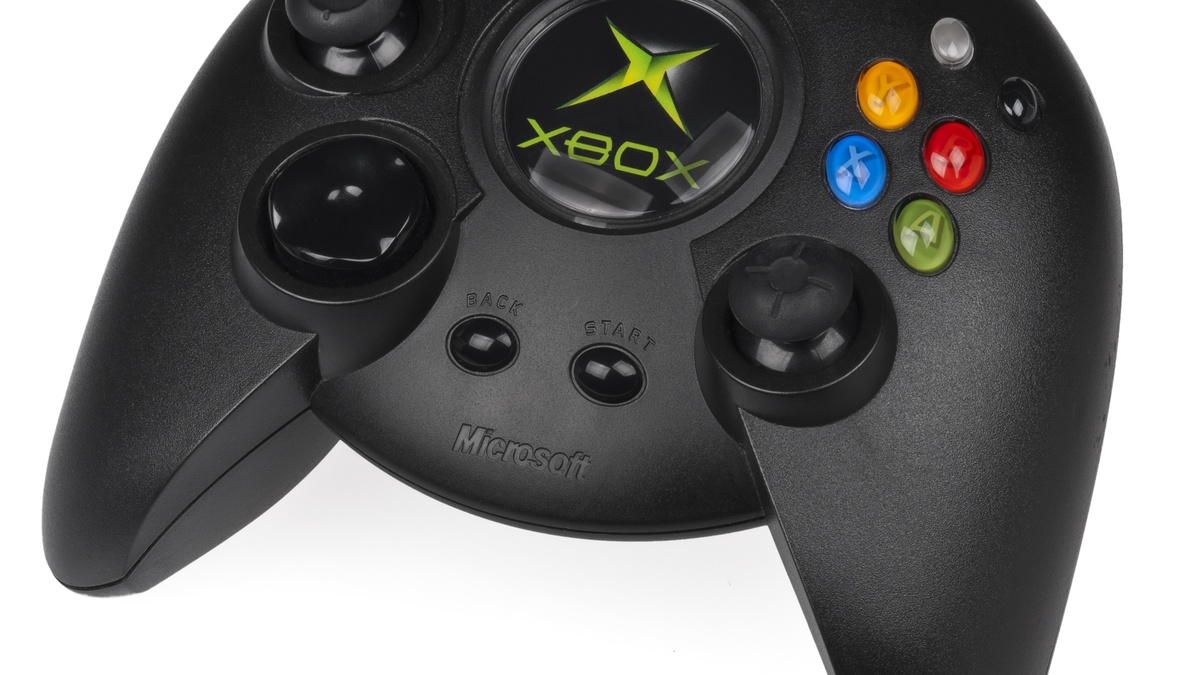
While competitors forced players to purchase diminutive eight-megabyte memory cards at premium prices, the Xbox allowed gamers to cache gigantic game worlds and store custom CD soundtracks locally.
The hard drive eliminated disk seek penalties during open-world streaming, enabling developers to build larger environments without relying on repetitive mid-level loading screens.
Equally crucial to the original Xbox 25th anniversary legacy was the native inclusion of a 10/100 Fast Ethernet port, completely bypassing dial-up modems to mandate high-speed broadband connectivity.
This forward-thinking network architecture sparked Xbox Live in late 2002, paving the way for the robust online server infrastructures examined in our Xbox Cloud Gaming analysis.
Reflecting upon the original Xbox 25th anniversary, the marriage of local hard drive caching, broadband networking, and unified gamertags permanently established the expectations that dictate modern digital multiplayer gaming today.
| Console Generation | Launch Date & MSRP | Compute Silicon (CPU & GPU) | System Memory Architecture | Primary Storage Technology | Defining Architectural Milestone |
|---|---|---|---|---|---|
| Original Xbox | November 15, 2001 ($299) | Intel Pentium III 733MHz + Nvidia NV2A | 64MB Unified DDR SDRAM @ 6.4 GB/s | 8GB 5400 RPM IDE Hard Drive | First internal HDD and native broadband port |
| Xbox 360 | November 22, 2005 ($399) | IBM Xenon 3.2GHz Tri-Core + ATI Xenos | 512MB Unified GDDR3 @ 22.4 GB/s + 10MB eDRAM | Removable 20GB HDD Module | Pioneered unified shaders and HDMI gaming |
| Xbox One | November 22, 2013 ($499) | AMD Jaguar 8-Core 1.75GHz + GCN Graphics | 8GB DDR3 @ 68 GB/s + 32MB ESRAM Cache | 500GB 5400 RPM SATA II Hard Drive | x86-64 convergence and Hyper-V virtualization |
| Xbox Series X | November 10, 2020 ($499) | AMD Zen 2 8-Core 3.8GHz + RDNA 2 (12 TFLOPS) | 16GB Unified GDDR6 (Up to 560 GB/s) | 1TB Custom PCIe 4.0 NVMe SSD | Xbox Velocity Architecture and hardware ray tracing |
Quarter-Century Retrospective: Microsoft Commemorates Milestone with 25-Game PC Bundle
Marking the quarter-century original Xbox 25th anniversary, Microsoft has launched a major promotional retrospective aimed at honoring the historic console’s enduring technological impact across the gaming industry.
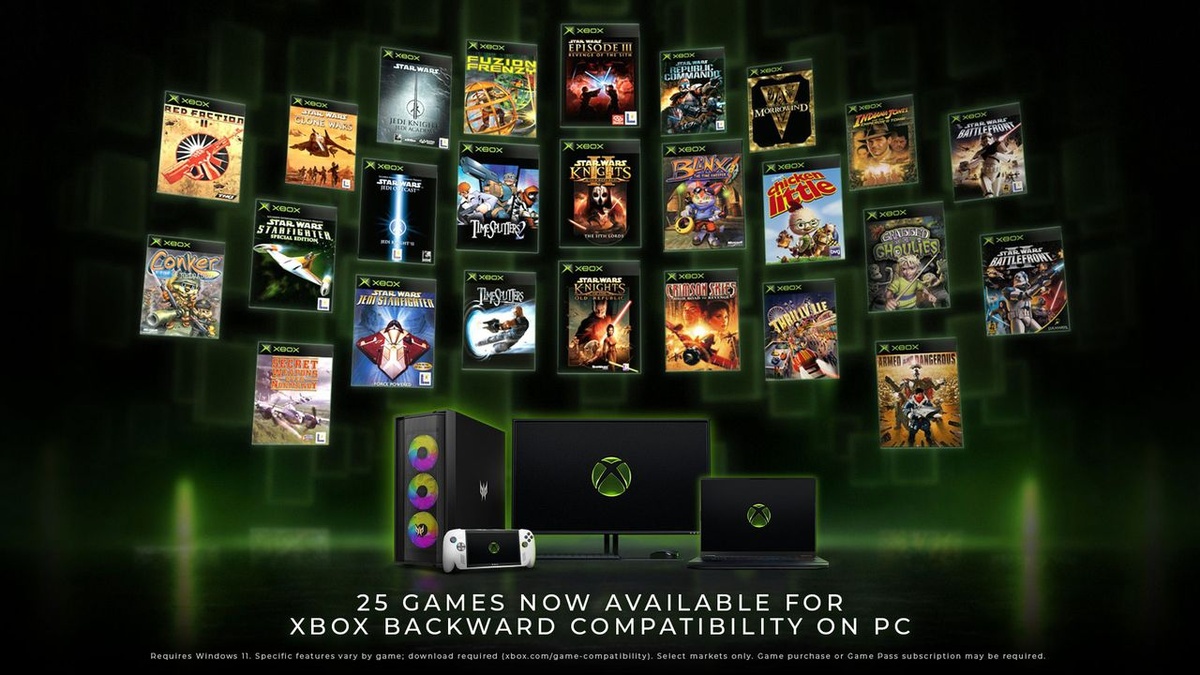
PC gamers purchasing qualifying pre-built desktop systems receive an expansive commemorative bundle containing twenty-five celebrated titles representing Microsoft’s rich intellectual property vault.
The promotion encompasses seminal releases including Halo: Combat Evolved Anniversary, The Elder Scrolls V: Skyrim, Doom II, Age of Empires II, and classic flight combat simulator Crimson Skies.
This digital giveaway underscores how the original Xbox 25th anniversary established an ecosystem that eventually unified Windows desktop hardware and dedicated console platforms under one shared gaming umbrella.
Much like the software compatibility safeguards analyzed in our Windows gaming platform transition report, Microsoft continues championing backward compatibility across multiple computing generations.
Additionally, Microsoft has published commemorative desktop wallpapers, nostalgic digital badges, and exclusive anniversary profile enhancements to celebrate twenty-five years of Xbox engineering history.
Frequently Asked Questions
When was the original Xbox officially released in North America?
Microsoft officially launched the original Xbox in North America on November 15, 2001, introducing high-performance PC silicon architecture to sixth-generation home console players.
What CPU and GPU powered the original Xbox hardware?
The original Xbox was powered by a customized 733 MHz Intel Pentium III Coppermine processor and a 233 MHz Nvidia NV2A graphics processor supporting programmable shaders.
Why was the inclusion of an internal hard drive so revolutionary?
Including a built-in 8GB hard drive eliminated memory cards, allowed seamless open-world asset caching, stored custom game soundtracks, and enabled persistent downloadable content patches.
How did the original Xbox establish the foundation for Xbox Live?
By integrating a 10/100BASE-TX Ethernet port as standard hardware, Microsoft mandated broadband connectivity, launching Xbox Live in 2002 with unified gamertags and matchmaking.
What is included in Microsoft’s 25-year Xbox celebratory bundle?
Microsoft’s 25-year bundle offers 25 fan-favorite titles with new gaming PCs, including Halo Combat Evolved Anniversary, Skyrim, Doom II, and Age of Empires II.
Final Verdict: The Enduring Architectural Legacy of Microsoft’s Living Room Pioneer
Looking back during the original Xbox 25th anniversary, Microsoft’s audacious entry into the console arena stands as one of the most consequential hardware gambles in modern technology history.
By proving that standard x86 silicon, direct programmable shaders, and unified memory could outperform exotic proprietary designs, Microsoft established the blueprint that dominates ninth-generation platforms today.
From pioneering broadband multiplayer to introducing internal storage caching, the original Xbox 25th anniversary honors a visionary machine whose technical DNA remains unmistakably alive across modern gaming.
