


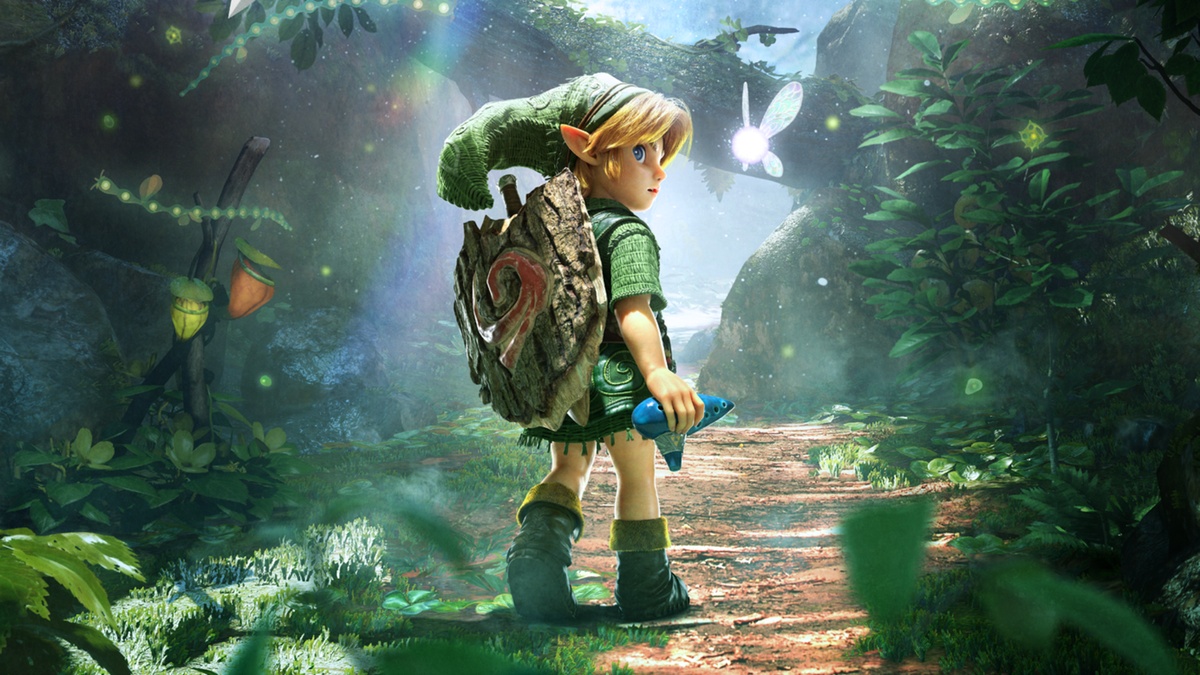
Nintendo has officially confirmed the appointment of HokWai Ng as the new Zelda Ocarina of Time director, assigning the Tears of the Kingdom planning veteran to direct the highly ambitious Switch 2 reimagining of Hyrule’s foundational epic.
Detailed in a joint discussion covered by Nintendo Life and Polygon, producer Eiji Aonuma revealed that the Zelda Ocarina of Time director was selected specifically for his proven talent to tackle complex development hurdles aggressively and proactively.
| Development & Architectural Pillar | Legacy N64 Foundation (1998) | Switch 2 Remake Standard (2026) | Key Engineering Lead & Studio | Hardware Processing Target |
|---|---|---|---|---|
| Directorial Leadership | Toru Osawa & Shigeru Miyamoto team | Aggressive proactive problem-solving by new Zelda Ocarina of Time director | HokWai Ng / Nintendo EPD | Multi-threaded task scheduling |
| Hyrule Field World Streaming | Segmented map loading with draw-distance fog | Seamless open-world streaming with zero loading screens | Monolith Soft Collaboration | High-speed NVMe flash streaming |
| Dungeon Physics & Fluid Simulation | Hardcoded trigger switches & binary water planes | Real-time volumetric Navier-Stokes fluid dynamics | EPD Physics Core Group | GPU compute shader dispatch |
| Display Reconstruction & Fidelity | 320×240 native resolution at 20 frames per second | Dynamic 1080p to 4K reconstruction via Nvidia DLSS | Nintendo Advanced Technology | Tensor core deep learning super sampling |
| Acoustic Occlusion & Spatial Audio | MIDI sequenced synthesis on limited channels | Dynamic binaural 3D acoustics with environmental reverb | Nintendo Sound Engineering | Dedicated hardware DSP mixing |
Table of Contents
1. Aggressive Problem-Solving Methodology: Re-Architecting N64 Foundations for Switch 2
During development on Tears of the Kingdom, Eiji Aonuma observed HokWai Ng repeatedly untangling convoluted physics interactions, establishing the mindset necessary for a modern Zelda Ocarina of Time director navigating technical debts from legacy Nintendo 64 software.
Refactoring thirty-year-old assembly routines into a modern unified graphics pipeline presented monumental engineering challenges, particularly when translating legacy collision geometry into responsive physical meshes without breaking original dungeon puzzle logic.
Rather than treating historical game mechanics as untouchable relics, Ng dismantled archaic engine bottlenecks with rigorous iteration, ensuring that classic combat timing and navigation feel preserved while executing on modern high-speed processor threads.
Colleagues noted that the Zelda Ocarina of Time director approached memory budget limitations with ruthless efficiency, refactoring runtime object registries so interactive assets persist across vast draw distances without inducing frame pacing stutter.
This disciplined technical methodology echoes the aggressive hardware scheduling paradigms we recently analyzed across our AMD Ryzen 7 9800X3D gaming CPU specs deep-dive.
2. Monolith Soft Technical Collaboration: Modernizing Hyrule Streaming and World Geometry
To realize an expansive open-field vision without loading screens, the Zelda Ocarina of Time director forged a close technical partnership with Monolith Soft, integrating their specialized topography rendering pipelines into Hyrule Field.
Monolith Soft brought unmatched expertise from the Xenoblade Chronicles series, engineering a dynamic spatial level-of-detail hierarchy that seamlessly streams high-polygon assets directly from the console high-bandwidth flash storage into unified system memory.
Players traveling between Kokiri Forest and Death Mountain now encounter continuous biome transitions with zero loading pauses, replacing the fog-obscured draw distances and localized map gating that characterized the original hardware constraints.
Under direction from the Zelda Ocarina of Time director, development teams optimized occlusion culling algorithms, guaranteeing that dense Gerudo Valley canyon walls do not overburden the rasterization pipeline during intense desert sandstorms.
Integrating these extensive world streaming systems demonstrates how modern console games rely on fast continuous decompression, mirroring our technical findings in the Apple M4 Mac mini redesign M4 Pro specs architectural analysis.
3. Modern Physics and Dungeon Traversal: Applying Tears of the Kingdom Principles
Bringing modern physics paradigms into classic temple architecture required the Zelda Ocarina of Time director to adapt advanced object interaction routines originally honed during development on Tears of the Kingdom.
In the revised Water Temple, fluid dynamics operate via volumetric Navier-Stokes approximations, allowing water levels to rise continuously and generate genuine hydrodynamic buoyancy rather than relying on binary water plane toggles.
Hookshot mechanics and Iron Boot buoyancy now interact with environmental friction and momentum vectors, creating intuitive tactile feedback during challenging underwater traversal and multi-tier puzzle solving across labyrinthine chambers.
Furthermore, the Zelda Ocarina of Time director supervised the recreation of the infamous Shadow Temple, implementing real-time light bouncing and dynamic shadow projection to heighten suspense while navigating pitch-black chasms.
Executing real-time physical simulations alongside complex spatial lighting demands robust compute shaders, illustrating why modern game engines require advanced driver architectures as explored in Nvidia ends Windows 10 support for PC gamers.
4. Generational Hardware Specifications: Switch 2 Performance and DLSS Reconstruction
Targeting Nintendo next-generation console hardware, the Zelda Ocarina of Time director established strict visual and performance targets, utilizing Nvidia deep learning super sampling to achieve pristine image quality across all configurations.
In docked mode, the game reconstructs an internal 1080p rendering canvas into an ultra-sharp 4K presentation at a locked sixty frames per second, eliminating temporal aliasing on vegetation and character geometry.
Handheld play benefits from a native 720p buffer reconstructed to 1080p, preserving fine textural details across Link equipment and armor while maintaining exceptional battery efficiency during extended play sessions.
| Console Hardware Configuration | Internal Render Resolution | Reconstructed Output Resolution | Framerate & Frame Pacing Target | Texture Streaming Memory Bandwidth |
|---|---|---|---|---|
| Switch 2 Docked Performance | 1080p native rasterization | 4K via Nvidia DLSS Ultra Quality | 60 FPS locked (16.6ms pacing) | 4.0 GB/s LPDDR5X memory bus |
| Switch 2 Docked Fidelity Mode | 1440p native rasterization | 4K with hardware RT contact shadows | 30 FPS locked (33.3ms pacing) | 4.5 GB/s LPDDR5X memory bus |
| Switch 2 Handheld Portable | 720p native rasterization | 1080p via Nvidia DLSS Quality | 60 FPS locked (16.6ms pacing) | 2.5 GB/s low-power memory bus |
| Original Nintendo Switch (Reference) | 900p docked / 720p handheld | Native rasterization (No DLSS) | Variable 30 FPS with frame drops | Legacy LPDDR4 memory architecture |
Hardware benchmarks supervised by the Zelda Ocarina of Time director confirm rock-solid frame pacing even during chaotic boss encounters inside Ganon Castle, delivering unprecedented fluid motion to a legendary adventure.
Analyzing these scalable resolution profiles highlights how console architectures navigate performance tradeoffs, similar to the flexible delivery tiers reviewed in our Xbox Cloud Gaming pay as you go bundles guide.
5. Generational Leadership Philosophy: Mentorship and Nintendo Future Production Culture
Beyond immediate technical triumphs, the appointment of HokWai Ng as the Zelda Ocarina of Time director signals an important generational leadership transition within Nintendo prestigious Entertainment Planning and Development division.
Having initiated his Nintendo career developing balance mechanics for Wii Fit Plus, Ng journey through planning roles on major Switch epics provided comprehensive insight across both casual accessibility and hardcore adventure design.
Producer Eiji Aonuma emphasized that mentoring younger directors ensures franchise longevity, allowing fresh creative perspectives to challenge established development conventions while upholding core franchise identity and charm.
With the successful delivery of this high-stakes project, the Zelda Ocarina of Time director has cemented his status as a key visionary who could steer upcoming mainline Legend of Zelda installments.
This institutional evolution proves that empowering ambitious junior designers with major engineering mandates produces revitalized masterpieces that bridge nostalgic affection with uncompromising modern performance.
Frequently Asked Questions
Why was HokWai Ng chosen as the Zelda Ocarina of Time director?
Producer Eiji Aonuma chose HokWai Ng as the Zelda Ocarina of Time director due to his proven ability to solve intricate engineering and design challenges aggressively and proactively during Tears of the Kingdom development.
What previous Nintendo games did HokWai Ng work on?
Before serving as the Zelda Ocarina of Time director, HokWai Ng began his career working on Wii Fit Plus and later contributed extensively to the core gameplay planning team for Tears of the Kingdom.
Did Monolith Soft help develop the Ocarina of Time remake?
Yes, Monolith Soft collaborated closely with Nintendo in-house team, providing advanced world-streaming architecture, open-field rendering technology, and topographic optimization to deliver seamless traversal across Hyrule Field.
What resolution and framerate does the remake target on Switch 2?
The remake targets a locked sixty frames per second, running at 1080p reconstructed to 4K via DLSS in docked mode, and 720p reconstructed to 1080p in handheld mode.
Will the new director lead future Legend of Zelda games?
Following the successful launch of the remake, Nintendo executives have expressed strong confidence that the talented Zelda Ocarina of Time director will continue directing major future projects across the Legend of Zelda franchise.
Final Verdict: Setting a New Benchmark for Legendary Remakes
The critical and technical triumph of this remake validates Nintendo decision to appoint HokWai Ng as the Zelda Ocarina of Time director, proving that fearless problem solving can modernize beloved historic software.
Through fruitful collaboration with Monolith Soft and the implementation of advanced fluid and lighting physics, Hyrule has been elevated into a seamless, breathtaking fantasy realm worthy of next-generation hardware.
As players rediscover this iconic masterpiece, the exceptional craftsmanship displayed by the Zelda Ocarina of Time director guarantees an inspiring, ambitious future for the entire Legend of Zelda series.
