


Table of Contents
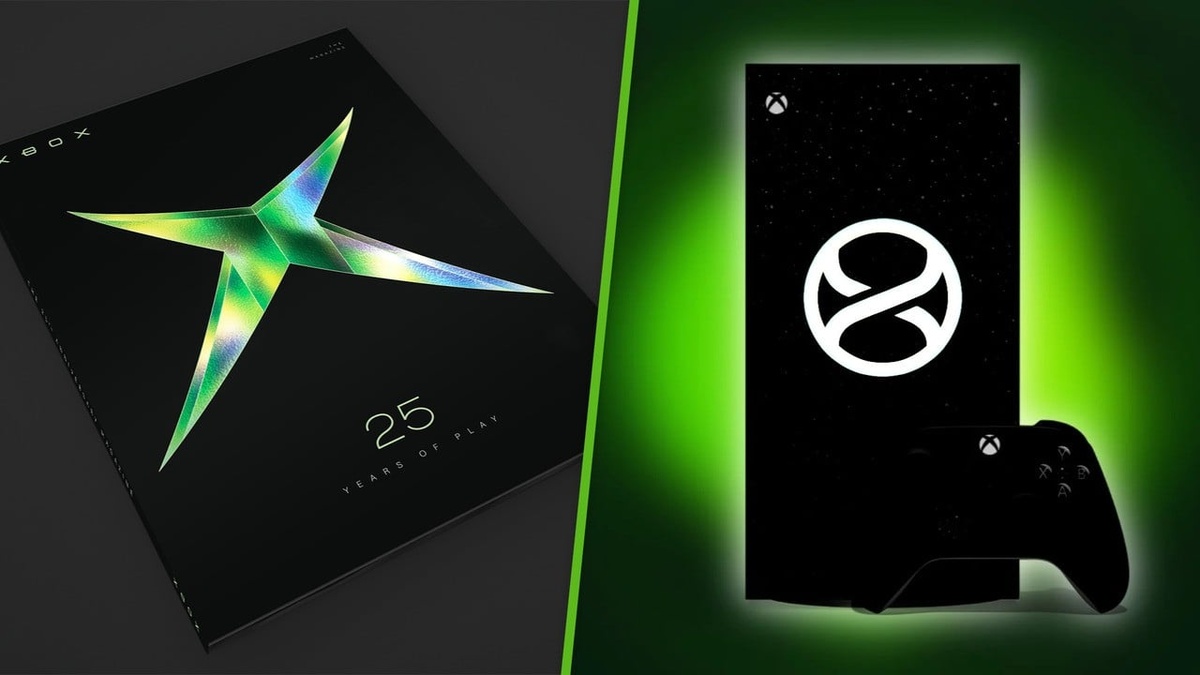
Microsoft has revealed comprehensive new technical details regarding Xbox Project Helix during the platform’s twenty-fifth anniversary celebrations, establishing a bold hardware philosophy designed to bridge high-end desktop gaming with living room console convenience.
Detailed in an exclusive retrospective published by Pure Xbox from the Seattle FanFest commemorative magazine, leadership confirmed the device functions as a dedicated console capable of executing PC games.
| Platform Architecture Metric | Traditional Windows PC | Xbox Series X Architecture | Xbox Project Helix Platform |
|---|---|---|---|
| System Architecture Focus | Open General-Purpose Desktop | Fixed Living Room Console | Dedicated Console With PC Gaming |
| Setup & Maintenance Flow | Manual Drivers, Patches & Shaders | Instant Boot & Automated Updates | Instant Play With Deep Power Tuning |
| Next-Gen Visual Pipeline | Brute-Force Compute & Upscalers | Fixed RDNA 2 Raster Hardware | Neural Rendering Silicon & ML Cores |
| Game Library Scope | Fragmented Multi-Storefront Launchers | Four Generations of Xbox Releases | Unified Xbox Catalog & PC Storefronts |
| Living Room User Experience | Desktop Windows Navigation Overhead | Standard Dashboard & Quick Resume | Bespoke TV UI With PC Game Access |
Console Architecture: Eliminating Operating System Friction for Instant Play
Jason Ronald, Xbox Vice President of Next Generation, emphasized that Xbox Project Helix is explicitly engineered as a console rather than a repackaged desktop computer, protecting players from operating system headaches.
The primary design objective focuses on immediate accessibility, allowing players to boot games instantly without enduring mandatory Windows update prompts, background antivirus scans, or fragmented graphics driver installations.
While the machine removes traditional PC maintenance friction, engineers confirmed that power users retaining enthusiasm for performance tuning will enjoy direct access to granular graphics options, refresh controls, and performance configurations.
This hybrid philosophy resolves long-standing frustrations documented in our coverage of desktop Windows gaming software transitions, ensuring living room convenience remains completely uncompromised across high-end hardware.
By combining console simplicity with open gaming capabilities, Xbox Project Helix guarantees that players enjoy seamless plug-and-play entertainment while preserving the extensive library freedom historically restricted to expensive desktop rigs.
Eliminating operating system complexity ensures that living room users never need a mouse or keyboard to navigate setup menus or launch demanding AAA titles.
Neural Rendering Silicon: Delivering Generational Fidelity Without Computational Bloat
Rather than pursuing arbitrary resolution metrics like 8K displays or 240Hz refresh rates, Microsoft is focusing Xbox Project Helix around sophisticated silicon innovations, led primarily by on-die neural rendering pipelines.
Ronald highlighted that modern semiconductor advancements require smarter pixel generation techniques, citing neural rendering as an efficient method to produce breathtaking visual fidelity without demanding unsustainable power budgets or massive memory bus widths.
This architectural shift mirrors industry hardware trends analyzed by Digital Foundry, where machine learning frame generation and intelligent reconstruction outperform raw rasterization horsepower across modern game engines.
Dedicated neural acceleration silicon allows developers to implement photorealistic volumetric lighting, real-time ray tracing, and cinematic geometry while maintaining consistent 60 frames per second performance under sustained thermal envelopes.
Similar silicon efficiency principles were explored in our analysis of dedicated neural engine performance scaling, proving that intelligent co-processors maximize efficiency across compact living room enclosures.
By prioritizing machine learning rendering over brute-force compute units, Xbox Project Helix aims to deliver generational visual leaps while keeping manufacturing yields and retail pricing accessible for everyday console enthusiasts.
Universal Library Unification: Bridging Four Console Generations and PC Ecosystems
Microsoft described Xbox Project Helix as the ultimate gaming machine, created specifically to remove arbitrary platform boundaries between four generations of legacy Xbox hardware and modern desktop computer releases.
Players will enjoy immediate access to their accumulated backward-compatible catalogs, bringing twenty-five years of digital game ownership, community friends lists, cloud achievements, and save game progression directly into next-gen hardware.
Simultaneously, the architecture introduces native compatibility for personal computer titles, breaking down storefront walls that historically separated living room console owners from open digital computer marketplaces.
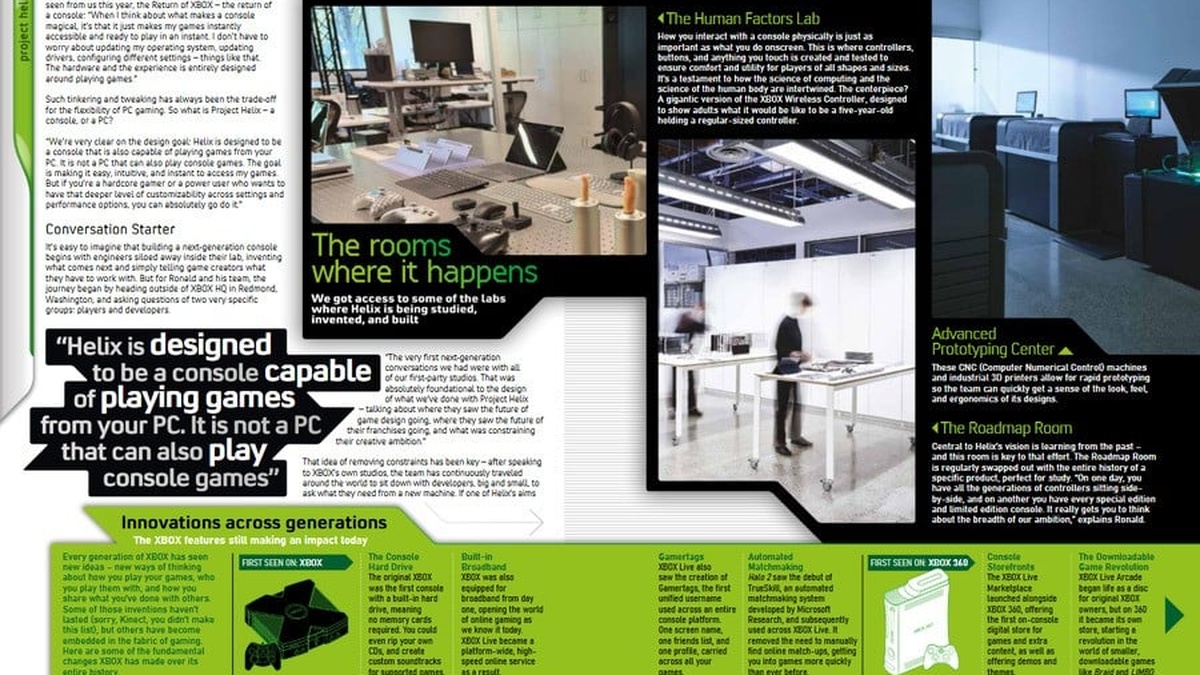
To manage this vast library of disparate software, engineers developed a bespoke dashboard interface that organizes titles from varied sources into a unified, controller-friendly digital collection.
This cohesive interface prevents launcher fragmentation, guaranteeing that booting an indie title or high-budget blockbuster on Xbox Project Helix feels as intuitive as navigating standard console game discs.
Preserving digital investments across multiple hardware generations remains a central priority, ensuring that legacy console titles benefit automatically from enhanced frame rates and faster storage speeds.
First-Party Game Design: Removing Creative Bottlenecks for Next-Gen Studios
Architectural design for Xbox Project Helix originated through direct technical consultations with first-party development teams across Xbox Game Studios, Bethesda Softworks, and Activision Blizzard to identify existing creative constraints.
Leadership sought to understand where technical boundaries throttled creative ambition, asking game directors what computational barriers prevented them from building richer worlds, more responsive physics systems, and complex simulated environments.
Ronald candidly acknowledged that during the Xbox One launch era, the platform lost focus by prioritizing broader multimedia entertainment apps over the core desires of passionate game creators and players.
| Hardware Engineering Domain | Xbox One Era (2013) | Xbox Series X Era (2020) | Xbox Project Helix Era (Next-Gen) |
|---|---|---|---|
| Primary Design Objective | All-In-One Multimedia Integration | Raw Brute-Force Compute Power | Ultimate Gaming Machine Without Barriers |
| Target Rendering Pipeline | Standard 1080p Rasterization | Dynamic 4K Native Reconstruction | Dedicated On-Die Neural Rendering |
| Storefront Ecosystem Access | Strictly Walled Console Store | Console Store & Game Pass Library | Cross-Storefront PC & Console Access |
| Studio Design Collaboration | Top-Down Media Feature Focus | Fast Storage Velocity Architecture | Direct Elimination of Creative Bottlenecks |
| Operating System Strategy | Multi-OS Virtual Machine Hypervisor | Dedicated Streamlined Xbox Shell | Zero-Maintenance Console TV Interface |
With Xbox Project Helix, hardware architects renewed their commitment to building the premier platform for game creators, eliminating hardware bottlenecks to unleash ambitious interactive experiences that were previously impossible.
These collaborative architectural insights parallel recent advancements in enthusiast hardware, such as our benchmark breakdown of AMD next-generation gaming processor architecture, where specialized cache hierarchies resolve developer bandwidth limits.
Providing game creators with predictable silicon resources ensures that future first-party titles can push world density and procedural complexity without sacrificing frame rate stability.
ROG Xbox Ally Learnings: Testing Multi-Storefront Aggregation in the Wild
Microsoft revealed that real-world deployment of the ROG Xbox Ally handheld served as an essential engineering testbed, directly influencing the architectural trajectory of Xbox Project Helix.
Testing unified libraries across handheld form factors provided invaluable user telemetry, exposing how modern players interact with aggregated game collections spanning Steam, the Epic Games Store, and PC Game Pass.
Player feedback from early handheld experiments highlighted key operational pain points, allowing engineers designing Xbox Project Helix to refine interface navigation, cloud save synchronization, and controller input mapping before finalizing console silicon.

This integrated strategy complements cloud advancements explored in our review of Xbox cloud streaming flexible access bundles, expanding ecosystem reach across portable devices and high-end living room displays.
By actively listening to community reactions and addressing operational shortcomings identified on portable hardware, Microsoft ensures that the next-generation console delivers a refined, thoroughly tested platform on day one.
Continuous feedback loops between players and platform architects guarantee that next-generation hardware designs remain grounded in practical player needs rather than speculative corporate assumptions.
Frequently Asked Questions
Is Xbox Project Helix a dedicated console or a desktop computer?
The upcoming platform is engineered strictly as a dedicated living room console that can run PC games, avoiding Windows desktop maintenance while offering optional advanced performance settings.
How does neural rendering improve visual fidelity on Xbox Project Helix?
Neural rendering uses on-die machine learning acceleration to reconstruct high-fidelity graphics and generate fluid frames without requiring massive memory bandwidth or brute-force silicon compute power.
Will existing backward-compatible games work on the new console?
Yes, Xbox Project Helix preserves backward compatibility across four generations of Xbox titles, retaining player save data, digital purchases, and achievements alongside PC releases.
What lessons did Microsoft apply from the ROG Xbox Ally into future console hardware?
The ROG Xbox Ally revealed player habits across multi-storefront libraries, helping architects refine the bespoke dashboard, save synchronization, and controller navigation for the upcoming platform.
When will Microsoft reveal final hardware specifications and pricing for Xbox Project Helix?
Microsoft has not yet announced pricing or launch dates for the new machine, though industry reports anticipate deeper hardware breakdowns as the next generation approaches.
Final Verdict: Redefining the Living Room Console for a Cross-Platform Era
The revelation of Xbox Project Helix demonstrates Microsoft’s commitment to eliminating historical gaming barriers, unifying multi-generation console preservation with open PC library accessibility.
By prioritizing on-die neural rendering over brute-force 8K resolution, Microsoft introduces a practical, developer-focused silicon blueprint tailored for sustainable living room performance.
As Microsoft balances console simplicity with PC freedom, Xbox Project Helix stands poised to reshape the competitive landscape for next-generation interactive entertainment.
