



Table of Contents
Telltale Games surprised handheld enthusiasts this autumn by postponing its anticipated comic-noir mystery adventure. Investigating the confirmed Wolf Among Us Switch Delay reveals how engineering teams prioritized stable frame pacing and asset streaming over rushing to meet the concurrent October multi-platform launch.
A newly discovered Nintendo eShop listing indicates that Sheriff Bigby Wolf will arrive on November 29, 2026. This tactical extra month of optimization guarantees that mobile players receive the full visual fidelity and responsive quick-time inputs that narrative-driven noir mysteries fundamentally demand.
Evaluating the technical ambition of this handheld release requires contrasting the remaster against the original episodic adventure from 2013. The comparative matrix below outlines key architectural differences, rendering targets, and platform schedules that define this comprehensive graphic-novel restoration.
| Feature Specification | Original Release (2013-2014) | Remastered (PS5 / Xbox Series / PC) | Nintendo Switch Remastered (Target) |
|---|---|---|---|
| Underlying Engine | Legacy Telltale Tool | Modernized Telltale Pipeline | Custom Tegra X1 Optimized Branch |
| Docked Display Output | 720p Dynamic (PS3 / Xbox 360) | 4K Native (3840×2160) | 1080p Dynamic (1600×900 Native) |
| Handheld Display Output | 544p (PlayStation Vita) | N/A (Home Hardware / Desktop) | 720p Native (1280×720) |
| Target Refresh Rate | Unlocked / Variable 20-30 FPS | 60 FPS Fixed | 30 FPS Locked Frame Pacing |
| Texture & Lighting Pipeline | Standard Definition / Flat Shading | 4K Uncompressed / Neon Volumetrics | Compressed High-Res / Dynamic Noir Glow |
| Release Timing Status | Released October 2013 | Launched October 29, 2026 | Estimated November 29, 2026 |
These engineering specifications demonstrate why extra development time was mandatory to avoid the jarring frame drops of older releases. Delivering modern shader complexity within a fifteen-watt power budget underscores the intricate balancing act shaping this ambitious handheld conversion.
Nintendo eShop Listing Reveals New Launch Window Following Wolf Among Us Switch Delay
When Telltale Games released their official social statement on October 17, fans immediately questioned how long the delay would last. Reporting verified by prominent gaming outlet Nintendo Life confirmed that the Wolf Among Us Switch Delay stemmed from a targeted effort to polish mobile performance.
While home consoles and high-end personal computers received their digital unlocks on October 29, the hybrid platform was noticeably withheld. Studio leadership emphasized that Nintendo enthusiasts deserved an uncompromising experience, explaining why the Wolf Among Us Switch Delay became essential during final certification testing.
Retail storefront tracking confirmed that an updated release estimation quietly materialized on the Nintendo eShop directory this week. The updated product page indicates an estimated arrival date of November 29, 2026, granting developers nearly four full weeks of additional debugging.
This revised schedule situates the narrative thriller squarely within the competitive holiday shopping season, capitalizing on seasonal player engagement. By leveraging this strategic Wolf Among Us Switch Delay, Telltale avoids competing directly against massive October blockbuster releases across rival platforms.
Furthermore, revisiting Fabletown in handheld format remains a major selling point for fans of Bill Willingham’s acclaimed comic series. Ensuring seamless exploration through gritty Manhattan back-alleys without sudden asset stuttering justifies the temporary wait for prospective digital purchasers.
Telltale Technical Optimization: Tegra X1 Constraints and Frame Pacing Challenges
Adapting modern rendering pipelines to the aging Nvidia Tegra X1 processor requires ruthless memory optimization and careful shader instruction scheduling. Understanding the Wolf Among Us Switch Delay requires examining how modern post-processing effects interact with mobile Maxwell graphics compute clusters.
Earlier episodic releases from the studio frequently suffered from erratic micro-stuttering during intense quick-time event sequences. In fast-paced narrative confrontations, sudden frame drops disrupt player reaction timing, turning dramatic story-altering choices into frustrating mechanical failures.
To resolve these historical bottlenecks, engineers rebuilt the internal animation interpolation systems to lock gameplay at thirty frames per second. The Wolf Among Us Switch Delay provided essential profiling cycles to calibrate uniform frame delivery across both exploration and cinematic combat scenes.
Unlike high-wattage desktop hardware discussed in our technical breakdown of the AMD Ryzen 7 9800X3D gaming CPU specs, mobile silicon operates under strict thermal limits that penalize unoptimized draw calls.
Balancing CPU command buffers against GPU vertex shading prevents thermal throttling during extended handheld gaming sessions. Dedicating extra weeks to fine-tuning thread scheduling ensures the hardware maintains consistent thermal margins while running complex interactive cutscenes.
Visual Fidelity Upgrades: How Wolf Among Us Switch Delay Preserves Comic Noir Aesthetics
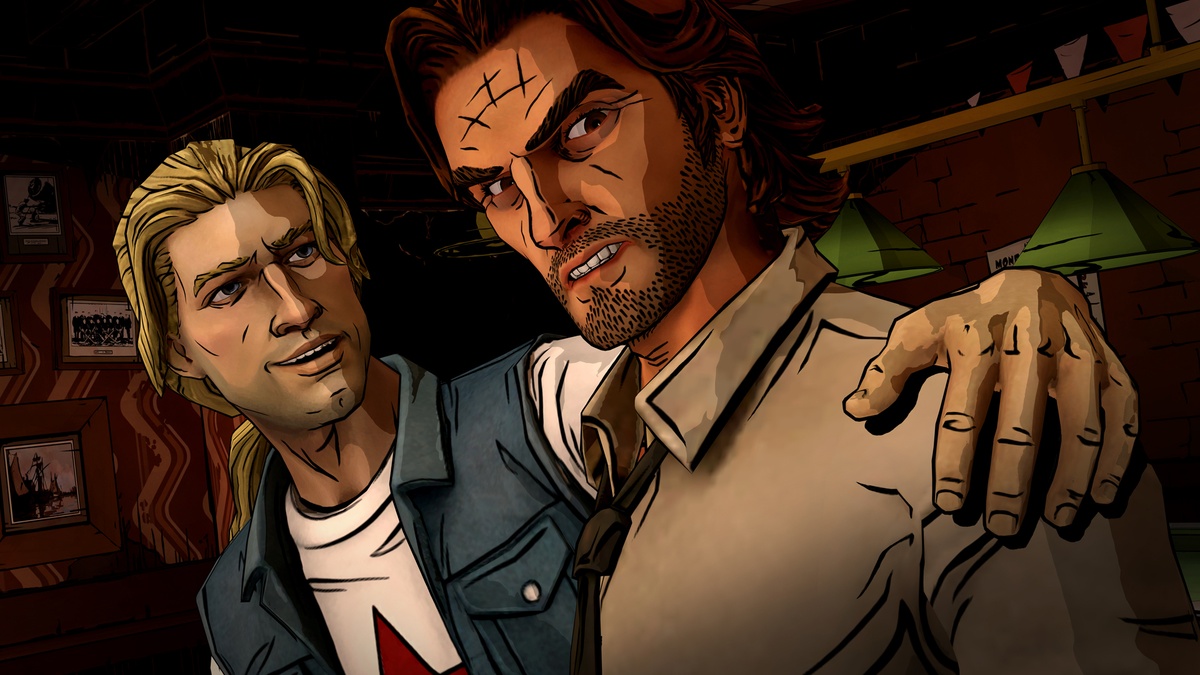
Preserving the signature aesthetic of Fabletown required modernizing the cel-shading pipeline without destroying the original graphic-novel atmosphere. The Wolf Among Us Switch Delay allowed artists to hand-tune high-contrast ink outlines and cross-hatching textures across every character model.
In the original 2013 presentation, character lighting was largely static, relying on pre-baked textures that looked flat under modern scrutiny. The remaster introduces physically informed neon ambient lighting, casting authentic atmospheric glows across rain-slicked city streets and smoke-filled apartment interiors.
Adapting these complex volumetric lighting effects to run smoothly on handheld displays represents a primary driver behind the Wolf Among Us Switch Delay. Programmers developed custom low-overhead bloom shaders that mimic high-end lighting while minimizing rasterization overhead on mobile graphics hardware.
Character rendering also received substantial attention, bringing higher-polygon models for Sheriff Bigby, Snow White, and Colin the Pig. High-resolution facial morph targets ensure subtle emotional expressions convey authentic noir tension during intense character interrogations and dramatic conversational branching.
Color grading profiles have been specifically calibrated for the vibrant OLED display panel, delivering inky blacks and vivid chromatic saturation. These meticulous artistic adjustments demonstrate how the Wolf Among Us Switch Delay elevates the production value beyond an ordinary commercial port.
Hardware Architecture Comparison: Docked Versus Handheld Performance Targets
Achieving visual parity across differing console configurations requires distinct rendering profiles tailored to dock and battery operational modes. Investigating the Wolf Among Us Switch Delay highlights how engineers created flexible dynamic scaling algorithms to preserve crisp image reconstruction.
When docked, the console increases GPU clock speeds, allowing the remaster to employ an aggressive dynamic resolution buffer. The engine targets a native 900p baseline that reconstructs up to 1080p, delivering clean edge definition on large television displays.
Conversely, undocked mode restricts clock frequencies to preserve battery life, necessitating a native 720p target across the integrated display. The Wolf Among Us Switch Delay allowed technicians to refine handheld downsampling filters, eliminating unsightly shimmering along dense geometric geometry.
Analyzing the operational trade-offs across current gaming hardware reveals how the Switch conversion balances visual fidelity against battery endurance. The comprehensive matrix below breaks down target resolutions, frame stability, texture filtering, and estimated battery longevity across various play configurations.
| Platform & Configuration | Target Resolution | Target Frame Rate | Anti-Aliasing / Filtering | Expected Battery / Power Draw |
|---|---|---|---|---|
| Nintendo Switch (Docked Mode) | Dynamic 900p-1080p | 30 FPS Locked | Custom FXAA / 4x Anisotropic | 12-15 Watts (Wall Power) |
| Nintendo Switch (Handheld Mode) | Native 720p | 30 FPS Locked | Subpixel FXAA / 2x Anisotropic | 3.5 to 4.5 Hours Longevity |
| PlayStation 5 & Xbox Series X | Native 4K (2160p) | 60 FPS Fixed | Temporal TAA / 16x Anisotropic | 180-210 Watts Continuous |
| PC Master Build (Enthusiast) | Unlocked Ultra Wide / 4K | 120+ FPS Capable | Full MSAA / 16x Anisotropic | Platform Dependent (High Draw) |
This hardware breakdown clarifies the substantial performance gap between fixed desktop consoles and portable lithium-powered devices. Overcoming these fundamental power constraints explains why the Wolf Among Us Switch Delay was necessary to guarantee enjoyable on-the-go playtime.
Managing stringent thermal budgets in compact mobile systems parallels the architectural insights covered in our analysis of the Apple M4 Mac mini redesign specifications, where thermal design limits govern sustained performance.
Prospective buyers planning their digital libraries can monitor official availability through the Nintendo eShop platform storefront, where pre-orders and digital download sizes will finalize prior to release.
Memory Management and Asset Streaming: Overcoming Legacy Telltale Engine Bottlenecks
One of the most notorious flaws of older narrative adventure titles was long loading screens that shattered dramatic pacing. Addressing memory allocation during the Wolf Among Us Switch Delay enabled developers to implement non-blocking background asset streaming routines.
The Nintendo Switch offers four gigabytes of unified system memory, with roughly three gigabytes accessible for active game processes. High-resolution texture packages and uncompressed audio buffers can rapidly exhaust this limited pool without aggressive garbage collection and intelligent caching.
By refactoring scene transitions, background environments now pre-load into memory during dialogue selections, virtually eliminating awkward black loading screens. The Wolf Among Us Switch Delay ensured these background streaming systems operate smoothly without causing audio desynchronization or hitching.
Furthermore, the episodic soundtrack and vocal performances have been re-encoded using high-efficiency audio codecs that preserve dynamic acoustic clarity. This optimization reduces storage footprints while maintaining pristine orchestral depth across Bigby’s investigation into the gruesome Fabletown murders.
For players seeking narrative depth across diverse devices, exploring cloud streaming options like those reviewed in our guide to Xbox Cloud Gaming pay-as-you-go pricing bundles provides an intriguing comparison to native portable execution.
Ecosystem Implications: What the Wolf Among Us Switch Delay Signals for Future Ports
The broader significance of this release postponement extends far beyond a simple scheduling adjustment for an episodic mystery. Analyzing the Wolf Among Us Switch Delay reveals how modern publishers approach legacy hardware during the twilight years of a console generation.
With over one hundred and forty million Nintendo Switch units worldwide, publishers cannot afford to release compromised conversions. The decision behind the Wolf Among Us Switch Delay demonstrates that consumer goodwill and long-term brand equity outweigh arbitrary launch day parity.
This measured release strategy also creates a promising foundation for the studio’s forthcoming projects, including The Wolf Among Us 2. Building a reliable technical foundation today ensures future Unreal Engine narrative titles can scale gracefully across future Nintendo hardware revisions.
Similar to hardware transitions and support lifecycles examined in our report on Nvidia ending Windows 10 driver support, software developers must continually modernize optimization pipelines to prolong hardware relevance.
By maintaining rigorous quality standards, Telltale validates that thoughtful porting strategies yield superior commercial and critical results. The patient reception surrounding the Wolf Among Us Switch Delay proves that handheld audiences enthusiastically welcome delays when polished gameplay is guaranteed.
Frequently Asked Questions
Why was The Wolf Among Us Remastered delayed on Nintendo Switch?
Telltale Games delayed the Nintendo Switch version to optimize mobile frame pacing, refine dynamic resolution scaling, and ensure stable performance across both docked and handheld play modes.
What is the new estimated release date for the Switch port?
According to an updated listing on the official Nintendo eShop, The Wolf Among Us Remastered is currently estimated to launch on November 29, 2026.
Did The Wolf Among Us Remastered launch on other platforms as scheduled?
Yes, the remastered episodic adventure launched on schedule on October 29, 2026, across PlayStation 5, Xbox Series X|S, PlayStation 4, Xbox One, and PC.
What performance and visual upgrades are included in the Switch remaster?
The remaster features updated cel-shaded character models, dynamic neon ambient lighting, locked thirty frames per second frame pacing, and faster background scene streaming.
Has Telltale Games announced a dedicated Nintendo Switch 2 edition?
Telltale Games has not announced a dedicated Nintendo Switch 2 edition, though the current Switch release will run seamlessly on future hardware via backwards compatibility.
Definitive Port Verdict: Balancing Visual Ambition and Handheld Portability
Postponing a high-profile narrative remaster represents a courageous and prudent decision in an era crowded with rushed video game releases. The Wolf Among Us Switch Delay highlights Telltale’s dedication to delivering a refined, stutter-free handheld experience for mystery enthusiasts.
By dedicating extra development weeks to solving Tegra X1 memory limits and frame delivery, engineers avoided the disastrous porting issues that historically plagued episodic releases. With an estimated November 29 arrival, players can anticipate experiencing Fabletown with unprecedented visual vibrancy and fluid touch controls.
Ultimately, this brief postponement preserves the atmospheric integrity and narrative tension that defined Bigby Wolf’s award-winning comic adaptation. Handheld gamers should view the Wolf Among Us Switch Delay as a positive assurance of technical excellence on Nintendo hardware.
