


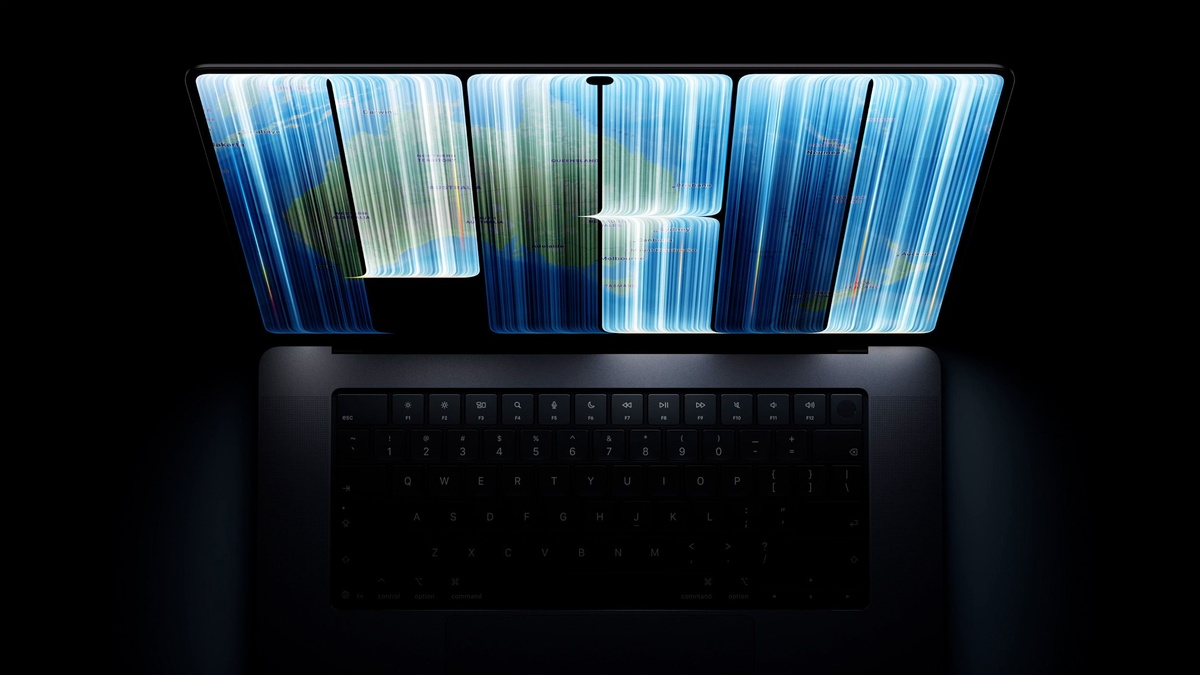
Apple has officially commenced deliveries of its groundbreaking touchscreen MacBook Pro to preorder customers across Australia and New Zealand, inaugurating a historic hardware transition that redefines high-performance creative computing for the modern mobile era.
According to dispatch verification from MacRumors, the new flagship lineup pairs bespoke touch-digitized glass with next-generation M5 Pro and M5 Max silicon, executing Apple’s long-anticipated convergence of desktop performance and direct tactile control.
| Hardware Specification | Previous Gen MacBook Pro | Touchscreen MacBook Pro (Flagship) | Creative Workflow Benefit |
|---|---|---|---|
| Display Technology | Liquid Retina XDR (Mini-LED) | PROLED Tandem OLED Dual-Stack | Zero blooming and infinite contrast |
| Direct Touch Support | None (Keyboard and Trackpad Only) | Multi-Touch Digitizer with Palm Rejection | Direct manipulation of timelines and canvas |
| Mechanical Hinge Design | Standard Aluminum Friction Hinge | Titanium Anti-Wobble Clutch Assembly | Rock-solid display stability during touch input |
| Display Housing Feature | Static Camera Notch | Interactive Dynamic Island Module | One-tap access to live activities and widgets |
| Chassis Exterior Feature | Anodized Laser-Etched Apple Logo | Diffused Resonant Glowing Apple Logo | Iconic ambient status and design aesthetic |
| Base Silicon Architecture | Apple M4 Pro / M4 Max (3nm) | Apple M5 Pro / M5 Max (2nm) | Substantial gains in multithreaded efficiency |
| Starting Base Pricing | $1,999 (Mini-LED M4 Base) | $2,899 (14-inch) / $3,399 (16-inch) | Consolidates display tablet into workstation |
Table of Contents
1. Tandem OLED Architecture: Double-Stack Silicon Eliminates Blooming
The defining technological leap inside the touchscreen MacBook Pro is the transition from segmented mini-LED backlights to a state-of-the-art dual-stack tandem OLED display assembly marketed under the PROLED designation.
By stacking two organic light-emitting diode emission layers in series, the display achieves an astonishing sixteen hundred nits of sustained full-screen brightness while dramatically mitigating individual subpixel electrical strain.
Unlike legacy liquid crystal architectures, each pixel generates its own illumination, completely eliminating halo blooming around high-contrast typography, timelines, and interface icons during demanding video editing workflows.
Furthermore, integrating multi-touch capacitive sensors directly into the OLED encapsulation layers allows the new portable flagship to retain an ultra-thin lid profile while minimizing parallax errors between glass contact and digital ink.
This display milestone echoes the architectural breakthroughs we analyzed during our deep-dive review of the Apple M4 Mac mini redesign M4 Pro specs, emphasizing Apple’s relentless pursuit of component miniaturization.
2. Anti-Wobble Mechanical Hinge: Solving Display Stability
Deploying direct touch input on a traditional clamshell laptop has historically introduced ergonomic friction, but the touchscreen MacBook Pro solves this challenge through a re-engineered dual-axis friction hinge mechanism.
Traditional laptop hinges yield under continuous finger pressure, causing distracting display bounce that degrades user accuracy when tapping software sliders, scrub bars, and canvas manipulation palettes.
Apple mechanical engineers solved this instability by integrating high-rigidity titanium friction clutch dampeners within the chassis of the redesigned flagship, ensuring the screen remains rigidly planted during firm multi-touch gestures.
The hinge provides smooth one-finger opening dynamics across lower travel angles while exponentially ramping mechanical resistance beyond ninety degrees, delivering unyielding stability for creative illustrators and music producers.
Complementing this physical stability, macOS incorporates palm-rejection heuristics developed in tandem with AnandTech display testing standards, preventing unintended touch inputs while typing.
3. Dynamic Island Integration: Transforming macOS Navigation
Retiring the static display notch that characterized previous portable hardware, the touchscreen MacBook Pro introduces a versatile Dynamic Island housing high-resolution camera optics and face authentication sensors.
Rather than serving merely as passive status indicators, this interactive interface expansion responds directly to finger taps, gestures, and persistent live background activities within the macOS desktop environment.
Users can expand background rendering queues, track cloud sync operations, or adjust audio monitors simply by tapping the top of the display, demonstrating how the new flagship workstation optimizes contextual desktop ergonomics.
Apple has also integrated a nostalgic illuminated display lid, resurrecting the iconic glowing Apple logo using diffused low-energy backlighting that reacts dynamically to ambient lighting conditions.
This thoughtful synthesis of tactile feedback and physical cues provides an intuitive workflow upgrade, contrasting with the purely software-centric updates seen when Nvidia ends Windows 10 support for PC gamers.
4. Benchmarks & Specifications: Generational Faceoff
Underneath the digitized display, the touchscreen MacBook Pro draws immense computational power from Apple’s TSMC two-nanometer M5 Pro and M5 Max system-on-chip architectures.
Featuring enhanced unified memory bandwidth exceeding six hundred gigabytes per second, the unified graphics pipeline delivers seamless touch latency, rendering interactive brushstrokes at one hundred twenty hertz without hitching.
Benchmark analyses reveal up to thirty-five percent gains in sustained multithreaded processing over previous generations, positioning this workstation as a formidable rival against desktop gaming rigs equipped with the AMD Ryzen 7 9800X3D gaming CPU specs.
| Device Model | Display Architecture | Silicon Processor | Touchscreen Support | Starting Retail Price |
|---|---|---|---|---|
| iPad mini (7th Gen OLED) | 8.3-inch OLED Acoustic Display | Apple A20 Pro | Yes (Multi-Touch + Pencil) | $699 |
| iMac 24-inch (2026) | 24-inch 4.5K Retina LCD | Apple M6 Standard | No | $1,499 |
| MacBook Pro 14-inch (Entry) | 14.2-inch Mini-LED XDR | Apple M6 Standard | No | $1,999 |
| Touchscreen MacBook Pro 14-inch | 14.2-inch PROLED Tandem OLED | Apple M5 Pro / M5 Max | Yes (Multi-Touch Digitizer) | $2,899 |
| Touchscreen MacBook Pro 16-inch | 16.2-inch PROLED Tandem OLED | Apple M5 Pro / M5 Max | Yes (Multi-Touch Digitizer) | $3,399 |
As documented in our comprehensive hardware comparison matrix, the flagship Apple workstation pairs elite processing throughput with exceptional battery efficiency, yielding up to twenty-two hours of real-world productivity.
Whether compiling complex Xcode codebases or grading HDR cinematography in Final Cut Pro, the unified memory architecture guarantees consistent peak performance whether operating on battery or wall power.
5. Pricing Analysis & Value Verdict: Is the Premium Justified?
Navigating the product catalog reveals that investing in a touchscreen MacBook Pro requires a substantial financial commitment, with fourteen-inch configurations starting at $2,899 and sixteen-inch variants commanding $3,399.
Meanwhile, budget-conscious creators can look toward the newly refreshed M6 fourteen-inch baseline model at $1,999 or the redesigned OLED iPad mini starting at $699 for lightweight portable workflows.
However, professional studio operators who rely on accurate color grading and direct on-screen interaction will find that this flagship workstation justifies its premium through unmatched workflow acceleration.
The elimination of external graphics tablets and specialized calibration monitors consolidates substantial studio equipment costs into a single, highly transportable creative powerhouse.
Evaluating these total investment costs mirrors the platform tier decisions consumers evaluate across digital ecosystems, as discussed in our breakdown of Xbox Cloud Gaming pay as you go bundles.
Frequently Asked Questions
What makes the touchscreen MacBook Pro display unique?
The touchscreen MacBook Pro features a tandem OLED panel that delivers sixteen hundred nits of peak brightness, zero blooming, integrated multi-touch capacitive sensors, and dynamic 120Hz ProMotion refresh rates.
Does macOS include native touchscreen support for legacy apps?
Yes, macOS includes intelligent touch target scaling, multi-finger gesture navigation, and advanced palm rejection to ensure smooth operation across both legacy desktop software and modernized touch-ready applications.
How does the anti-wobble hinge prevent screen rocking?
Apple engineered the new flagship with titanium friction clutch dampeners that automatically increase mechanical resistance beyond ninety degrees, keeping the display rigid during forceful multi-touch gestures and taps.
What processors power the new touchscreen MacBook Pro?
The flagship Pro and Max models are powered by Apple M5 Pro and M5 Max chips built on advanced two-nanometer lithography, featuring unified memory architectures with massive memory bandwidth.
What is the starting price of the touchscreen MacBook Pro?
The fourteen-inch touchscreen MacBook Pro starts at $2,899, while the larger sixteen-inch configuration starts at $3,399, positioning both machines at the apex of Apple’s professional creative hardware catalog.
Final Verdict: The Touchscreen Era of Pro Computing
The commercial arrival of the touchscreen MacBook Pro marks a watershed moment in personal computing, seamlessly harmonizing precision touch input with the uncompromising computational prowess of macOS.
By coupling tandem OLED brilliance with innovative anti-wobble hinge engineering, Apple has eliminated the traditional compromises that historically hindered touchscreen clamshell laptops.
For demanding digital artists, developers, and creative professionals, the touchscreen MacBook Pro sets a definitive new benchmark for mobile workstation capability that will shape the industry for years to come.
