


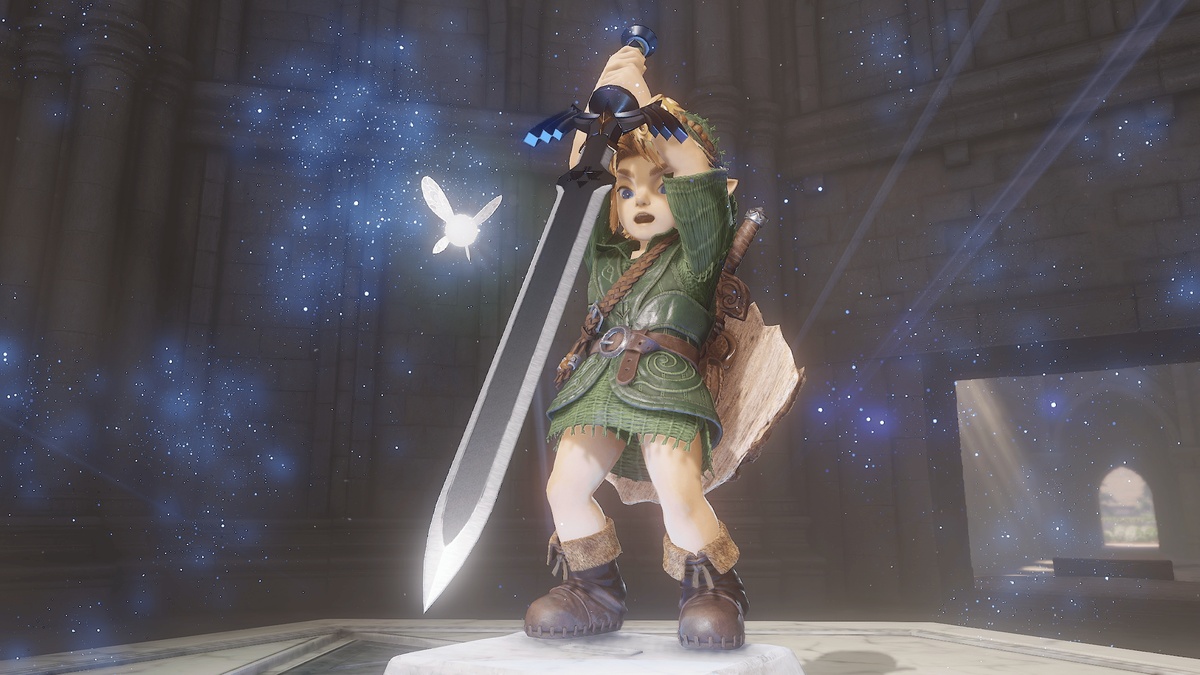
In an exclusive developer discussion regarding Remaking Ocarina of Time for Nintendo Switch 2, franchise stewards Eiji Aonuma and Hidemaro Fujibayashi revealed how fresh design perspectives guided the modernization of the legendary 1998 adventure.
By pairing veteran leads with junior engineers, Nintendo prioritized subtractive elegance over unnecessary complexity, ensuring Remaking Ocarina of Time delivers refined mechanics, seamless traversal, and contemporary audiovisual presentation without compromising the foundational emotional tone of the masterpiece.
| Design Dimension | Original N64 (1998) | Switch 2 Remake (2026) | Architectural Significance |
|---|---|---|---|
| Design Philosophy | Foundational 3D Prototyping | Subtractive Elegance & Restraint | Avoids feature bloat; preserves original emotional pacing |
| Camera Architecture | Contextual Fixed Angles & Z-Lock | Full 360-Degree Free Camera | Eliminates blind spots; modernizes combat situational awareness |
| Traversal Dynamics | Automated Ledge Hop Only | Dedicated Manual Jump Mechanics | Calibrated environmental geometry for vertical exploration |
| Guidance Systems | Frequent Repetitive Navi Pings | Chronicle Quest Log & Cues | Streamlines journey without heavy-handed interruptions |
| Water Temple Dungeon | Frequent Inventory Submenu Pauses | Real-Time Boots & Clear Visuals | Removes inventory friction while preserving puzzle depth |
| Rendering Framework | SGI Microcode & Baked Shaders | Physically Based Rendering & PBR | Delivers atmospheric realism celebrating 40 years of Zelda |
Table of Contents
1. Subtractive Elegance Philosophy: Younger Designers and the Art of Restraint
The production philosophy behind Remaking Ocarina of Time represents an intentional departure from modern industry bloat, driven by a deliberate collaboration between seasoned series architects and a new generation of younger Nintendo software developers.
As detailed in an extensive interview with The Verge, director Hidemaro Fujibayashi emphasized that junior staff members, many experiencing the title for the first time, championed the principle of what not to alter.
Rather than chasing novelty for its own sake, the development team sought true aesthetic elegance, identifying indispensable core systems and refining them rather than cluttering Hyrule with superfluous modern open-world mechanics.
This disciplined design philosophy mirrors the thermal and structural balance examined in our Apple M4 Mac Mini chassis engineering analysis, where intentional reduction and optimized form factors achieve superior long-term performance.
By establishing rigorous constraints early in production, Remaking Ocarina of Time maintains the pristine narrative flow that established the original adventure as a landmark milestone in interactive entertainment history.
2. Dynamic Jump Mechanics: Calibrating Hyrule for Modern Spatial Traversal
One of the most consequential technical transformations when Remaking Ocarina of Time is the introduction of a dedicated jump mechanic, fundamentally altering how players interact with Hyrule’s varied terrain.
In the original 1998 release, Link relied entirely on automated context-sensitive ledge jumping, a pioneering solution that solved early three-dimensional traversal hurdles but often felt rigid compared to modern standards.
Producer Eiji Aonuma acknowledged that granting manual jumping required extensive level geometry adjustments across Hyrule Field, Kokiri Forest, and dungeon interiors to compensate for expanded vertical traversal freedom.
This structural overhaul connects the classic title directly with the fluid movement dynamics celebrated across recent open-world entries, bridging the generational divide while respecting the spatial logic of original puzzles.
When Remaking Ocarina of Time, physics programmers ensured that jumping feels weighty and deliberate, preserving combat tension during encounters with Stalfos and Lizalfos without enabling sequence-breaking exploits.
3. 360-Degree Camera and Z-Targeting: Overhauling Combat Navigation
Camera navigation has undergone a complete architectural reconstruction when Remaking Ocarina of Time, replacing restrictive fixed perspective angles with full 360-degree analog right-stick controls.
The original release introduced Z-targeting, a historic breakthrough that enabled players to orbit hostile targets and revolutionized 3D action gaming during the sixty-four-bit console generation.
In the modern remake, Z-targeting returns with fluid re-centering, dynamic reticle tracking, and seamless integration alongside manual camera manipulation, giving players total spatial awareness in tight corridors.
Similar to the latency optimization paradigms explored in our AMD Ryzen 7 9800X3D gaming processor breakdown, zero-latency input mapping ensures instantaneous dodge rolls and shield deflections during intense boss battles.
This harmonious marriage between classic lock-on targeting and free-look orientation ensures that Remaking Ocarina of Time feels responsive, intuitive, and modern for veteran players and newcomers alike.
4. Water Temple Re-Engineering: Eliminating Menu Pauses and Spatial Friction
Widely regarded as one of the most grueling dungeons in gaming history, the Water Temple presented the single greatest quality-of-life challenge when Remaking Ocarina of Time for modern hardware.
On the Nintendo 64, navigating the subterranean labyrinth required constant pausing to equip and unequip heavy Iron Boots, creating severe pacing friction that repeatedly disrupted player immersion.
The Switch 2 edition resolves this legacy bottleneck by assigning footwear swapping to an instantaneous dedicated face button, allowing seamless buoyancy transitions throughout multi-tiered flooded chambers.
| Feature / System | N64 Original (1998) | 3DS Remake (2011) | Switch 2 Remake (2026) |
|---|---|---|---|
| Iron Boots Management | Submenu pause required | Touchscreen toggle icon | Real-time dedicated button mapping |
| Camera Manipulation | Fixed angles / Z-centering | Gyroscope & touch adjustments | Full analog 360-degree free orbit |
| Jump Implementation | Automated edge leap only | Automated edge leap only | Manual dedicated jump with calibrated collision |
| Navi Hint Delivery | Constant audio alerts | Hint stones & audio alerts | Streamlined audio & quest chronicle log |
| Underwater Visibility | Murky low-contrast textures | Enhanced stereoscopic geometry | High-definition PBR aquatic shaders & lighting |
Furthermore, environmental artists introduced luminous water-level markers and refined transparency shaders, transforming spatial orientation from an exercise in frustration into a rewarding masterclass in environmental puzzle design.
According to Aonuma, internal playtesters praised the revamped Water Temple for delivering the intended mental puzzle satisfaction without the cumbersome technical friction that previously burdened Remaking Ocarina of Time.
5. Generational Audio-Visual Pipeline: Navi Rework and Next-Gen PBR Fidelity
Audio direction and narrative onboarding received careful recalibration when Remaking Ocarina of Time, addressing persistent player feedback regarding Link’s fairy companion, Navi.
Rather than bombarding players with repetitive vocal alerts, the remake reduces audio frequency and introduces a comprehensive chronicle quest log accessible within the system interface.
This chronicle system records active quest objectives, lore revelations, and directional milestones, offering helpful guidance without breaking the quiet atmospheric contemplation that defines solitary exploration across Hyrule.
Much like the cloud-native infrastructure analyzed in our Xbox Cloud Gaming streaming architecture analysis, modern user interface design prioritizes low-friction access and player autonomy over intrusive hand-holding.
Prospective buyers can explore official release announcements and hardware specifications through the Nintendo official website as the company celebrates forty historic years of the Zelda franchise.
Frequently Asked Questions
Why did Nintendo focus on elegance when Remaking Ocarina of Time?
Director Hidemaro Fujibayashi explained that younger developers prioritized what not to change, embracing subtractive elegance to refine essential gameplay mechanics while avoiding unnecessary modern feature clutter.
Does Remaking Ocarina of Time include a dedicated jump button?
Yes, Remaking Ocarina of Time introduces manual jumping, replacing the legacy automatic ledge hop with calibrated environmental collision that expands player traversal freedom across Hyrule.
How was the Water Temple fixed in the remake?
The remake eliminates tedious inventory pause menus by mapping the Iron Boots to a dedicated button, while introducing dynamic water-level color cues and improved aquatic lighting.
Has Navi been changed in the new version?
Yes, Navi’s vocal interruptions have been significantly toned down, replaced with an in-game adventure chronicle that lets players review their quest objectives without disruptive audio nagging.
Does Remaking Ocarina of Time support full 360-degree camera controls?
Yes, the title provides complete analog right-stick camera freedom, seamlessly operating alongside modernized Z-targeting lock-on mechanics for superior combat situational awareness.
Final Verdict: A Masterclass in Respectful Modernization
By honoring the foundational genius of the original while thoughtfully re-engineering outdated pain points, Remaking Ocarina of Time establishes a gold standard for generational software preservation.
The collaborative synergy between veteran creators Eiji Aonuma and Hidemaro Fujibayashi and eager junior developers demonstrates that restraint and elegance produce far more resonant results than superficial reinvention.
As Nintendo celebrates four decades of Hyrule adventures, Remaking Ocarina of Time stands as an unmissable tribute that bridges generational gaming history with timeless interactive craftsmanship.
