


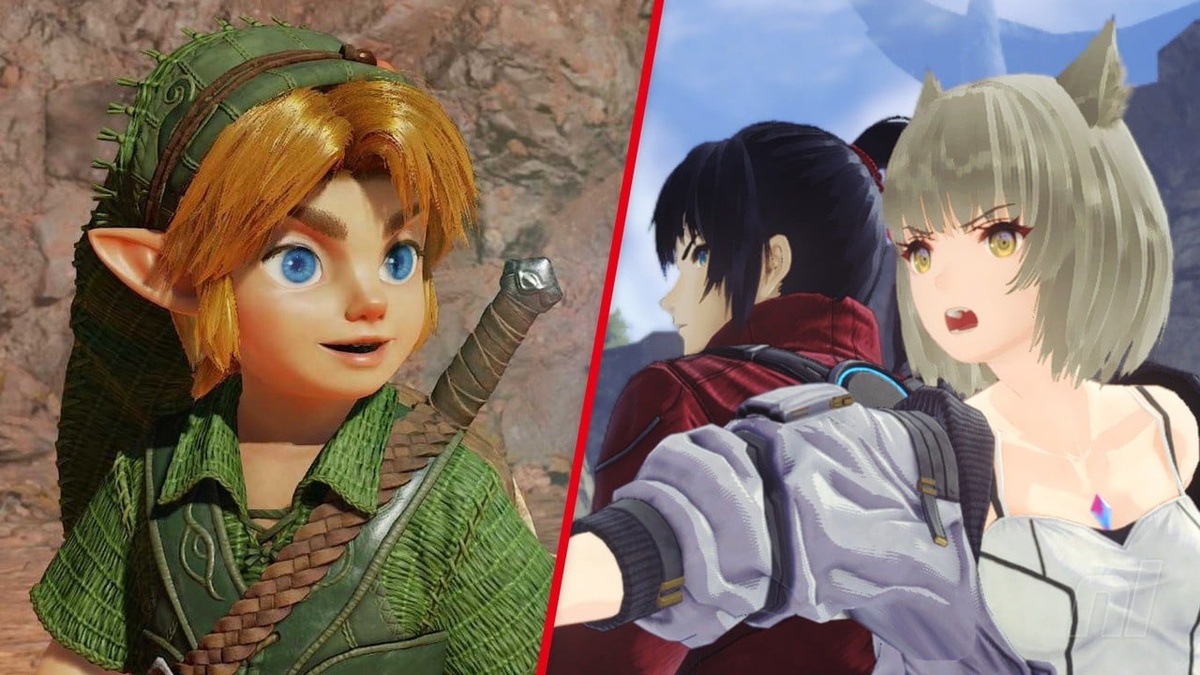
Nintendo and Monolith Soft have officially detailed their major technical collaboration on the Zelda Ocarina of Time Remake for Nintendo Switch 2, revealing an unprecedented dual-studio development effort uniting EPD Production Group No. 3 and the Xenoblade studio.
Following Nintendo’s initial confirmation of internal leadership, Monolith Soft confirmed its pivotal contract role handling game design, advanced graphics pipelines, and core systems programming for the Zelda Ocarina of Time Remake.
| Architectural Parameter | Original N64 (1998) | 3DS Remake (2011) | Switch 2 Remake (2026) |
|---|---|---|---|
| Lead Studio & Co-Dev | Nintendo EAD | Grezzo / Nintendo EAD | Nintendo EPD No. 3 & Monolith Soft |
| World Traversal Engine | Segmented Zoned Map with Loading Fades | Discrete Zoned Streaming | Seamless Hyrule Open-World Streaming |
| Graphics Pipeline | Custom SGI Reality Microcode | Proprietary Stereoscopic 3D | Custom Modern PBR & Volumetric Lighting |
| Target Framerate & Resolution | 20 FPS (240p Composite) | 30 FPS (240p LCD Matrix) | 60 FPS Locked (4K DLSS / 1080p Handheld) |
| Hardware Reconstruction | None (Analog CRT Filter) | None (Parallax 3D Display) | NVIDIA DLSS & Hardware Ray Tracing |
| Storage Architecture | 32 MB N64 ROM Cartridge | 512 MB Game Card | High-Density Switch 2 NVMe Cartridge |
| Development Scope | Foundational 3D Zelda Framework | Handheld Geometry Polish | Full Ground-Up Dual-Studio Modernization |
Table of Contents
1. Dual-Studio Architecture: EPD Production Group No. 3 and Monolith Soft Co-Development
The production hierarchy of the Zelda Ocarina of Time Remake unites the visionary design leadership of Nintendo EPD Production Group No. 3 with the proven systems engineering and world-building capabilities of Monolith Soft.
Nintendo confirmed internal steering earlier this week, ensuring that the foundational narrative pacing, dungeon mechanics, and combat philosophy of this next-generation remake remain faithful to the legendary original masterpiece.
In an official developer statement cited by Nintendo Life, Monolith Soft revealed it handled partial contract development spanning core game design, low-level engine programming, and high-fidelity graphics pipelines.
This collaborative pipeline mirrors the integrated hardware-software optimization strategies detailed in our Apple M4 Mac Mini chassis engineering analysis, where shared architecture unlocks unprecedented computational efficiency across complex real-time workloads.
Monolith Soft previously provided vital terrain layout and open-world topography support for Breath of the Wild and Tears of the Kingdom, establishing a proven collaborative synergy now deployed across the Zelda Ocarina of Time Remake.
2. Open-World Streaming Engine: Eliminating Hyrule Transition Bottlenecks
The most dramatic structural enhancement introduced in the Zelda Ocarina of Time Remake is the elimination of legacy zone-loading transitions that previously fractured traversal across Hyrule Field and surrounding regions.
Leveraging Monolith Soft’s proprietary streaming routines perfected throughout the Xenoblade Chronicles series, the Zelda Ocarina of Time Remake streams immense terrain geometry, foliage distributions, and dynamic environmental actors without perceivable hitches or loading pauses.
Players can now ride Epona directly from the gates of Hyrule Castle Town down into Lake Hylia or through Gerudo Valley without encountering loading screens or jarring boundary transitions.
Just as dedicated instruction pipelines sustain peak throughput in our AMD Ryzen 7 9800X3D gaming processor breakdown, Monolith Soft’s streaming architecture prioritizes predictive asset caching to maintain smooth frame pacing during rapid camera rotations.
Distant landmarks such as Death Mountain and the Temple of Time now cast accurate geometric silhouettes across the horizon, enriching visual depth while exploring the interconnected geography of this reimagined kingdom.
3. Modern Graphics Pipeline: Physically Based Lighting and Volumetric Atmosphere
Graphics development for the Zelda Ocarina of Time Remake represents a monumental generational leap, implementing a modern physically based rendering pipeline that calculates realistic material responses for metals, stone, and woven fabrics.
Monolith Soft’s graphics engineering team implemented volumetric atmospheric scattering, simulating natural morning mist rising above Lake Hylia and dynamic dust storms swirling through the Haunted Wasteland within the Zelda Ocarina of Time Remake.
A fully rewritten day-and-night lighting engine casts accurate ray-traced ambient occlusion and softened directional contact shadows, replacing the harsh baked illumination maps utilized in historical iterations of the adventure.
Water rendering has also been completely transformed through real-time fluid simulation and screen-space reflections, rendering Zora’s Domain and the Water Temple with stunning aquatic realism that honors the artistic intent of the original.
Character models for Link, Princess Zelda, and Ganondorf feature intricate polygonal geometry and realistic cloth physics, ensuring cinematic cutscenes across the title match contemporary prestige gaming standards.
4. Switch 2 Hardware Scalability: Benchmark Performance and DLSS Reconstruction
Architected specifically for the custom Nvidia silicon powering Nintendo Switch 2, the Zelda Ocarina of Time Remake targets a rock-solid sixty frames per second across both docked and handheld play modes.
Docked play leverages hardware-accelerated deep learning super sampling to reconstruct internal 1440p render targets into a pristine 4K image, delivering razor-sharp textures on ultra-high-definition displays.
In portable operation, the Zelda Ocarina of Time Remake runs at a locked 1080p resolution on the console’s high-refresh OLED display, optimizing power draw to deliver exceptional battery longevity during extended gaming sessions.
| Console Generation | Release Title | Target Resolution | Target Framerate | Engine Architecture & Studio |
|---|---|---|---|---|
| Nintendo 64 (1998) | The Legend of Zelda: Ocarina of Time | 240p Native | 20 FPS Target (17 FPS PAL) | Nintendo EAD Proprietary Microcode |
| GameCube (2002) | Ocarina of Time / Master Quest | 480i / 480p Progressive | 20 FPS Emulated | Nintendo EAD / Software Emulation Layer |
| Nintendo 3DS (2011) | Ocarina of Time 3D | 240p Autostereoscopic | 30 FPS Locked | Grezzo Overhauled Handheld Engine |
| Nintendo Switch 2 (2026) | Zelda Ocarina of Time Remake | Dynamic 4K (DLSS) / 1080p Handheld | 60 FPS Rock Solid | Nintendo EPD Group No. 3 & Monolith Soft |
Much like the cloud-native latency management examined in our Xbox Cloud Gaming streaming architecture analysis, precise frame pacing in the remake guarantees instantaneous input response during precision swordplay.
Even during chaotic boss encounters inside Ganon’s Castle featuring dozens of simultaneous particle effects and environmental destructions, the title maintains immaculate frame consistency without thermal throttling or frame degradation.
5. Memory and Storage Throughput: High-Density Physical Cartridge Architecture
The physical release of the Zelda Ocarina of Time Remake utilizes Nintendo’s high-density next-generation cartridge media, avoiding mandatory digital day-one download requirements that frustrate physical media collectors.
Monolith Soft’s programming team integrated specialized hardware decompression algorithms that stream audio packages, 4K textures, and world data directly from the game card into unified system RAM with virtually zero latency.
Digital players downloading via the Nintendo eShop experience lightning-fast load times when installed on internal NVMe flash storage or certified microSD Express expansion memory cards.
Prospective players can review comprehensive technical documentation and system storage requirements directly on the official Nintendo official platform portal before acquiring their physical or digital software copy.
With Monolith Soft handling extensive programming tasks alongside Nintendo EPD No. 3, the Zelda Ocarina of Time Remake demonstrates how elite technical partnerships maximize modern console hardware capabilities.
Frequently Asked Questions
Did Monolith Soft develop the Zelda Ocarina of Time Remake alone?
No, Nintendo confirmed that internal studio EPD Production Group No. 3 led core development, while Monolith Soft provided essential contract assistance focusing on game design, programming, and graphics.
What specific technical areas did Monolith Soft handle for the remake?
According to Monolith Soft’s official statement, the studio was contracted to handle partial development covering core game design, low-level engine programming, and high-fidelity 3D graphics rendering systems.
Does the Zelda Ocarina of Time Remake run at 60 FPS on Switch 2?
Yes, the Zelda Ocarina of Time Remake targets a locked sixty frames per second across both docked 4K DLSS mode and portable 1080p mode, eliminating legacy 20 FPS slowdowns.
Has Hyrule Field been converted into a seamless open world?
Yes, the remake eliminates historical loading gates, utilizing Monolith Soft streaming algorithms to allow seamless traversal between Hyrule Field, Castle Town, Lake Hylia, and surrounding dungeon regions.
What other Switch 2 projects is Monolith Soft working on?
Monolith Soft has enjoyed an exceptionally active year, shipping Switch 2 editions of Xenoblade Chronicles, supporting Splatoon Raiders, and preparing Xenoblade Chronicles 3 for its launch next month.
Final Verdict: The Definitive Realization of Hyrule’s Masterpiece
The collaborative partnership uniting Nintendo EPD Production Group No. 3 and Monolith Soft elevates the Zelda Ocarina of Time Remake into an extraordinary benchmark for modern video game remakes.
By combining the timeless emotional narrative of the 1998 classic with cutting-edge world streaming, modern physically based rendering, and rock-solid 60 FPS performance, this release honors its legendary heritage.
For both longtime series veterans and newcomers discovering Hyrule for the first time, the Zelda Ocarina of Time Remake stands as an essential masterpiece that redefines console adventure gaming.
