


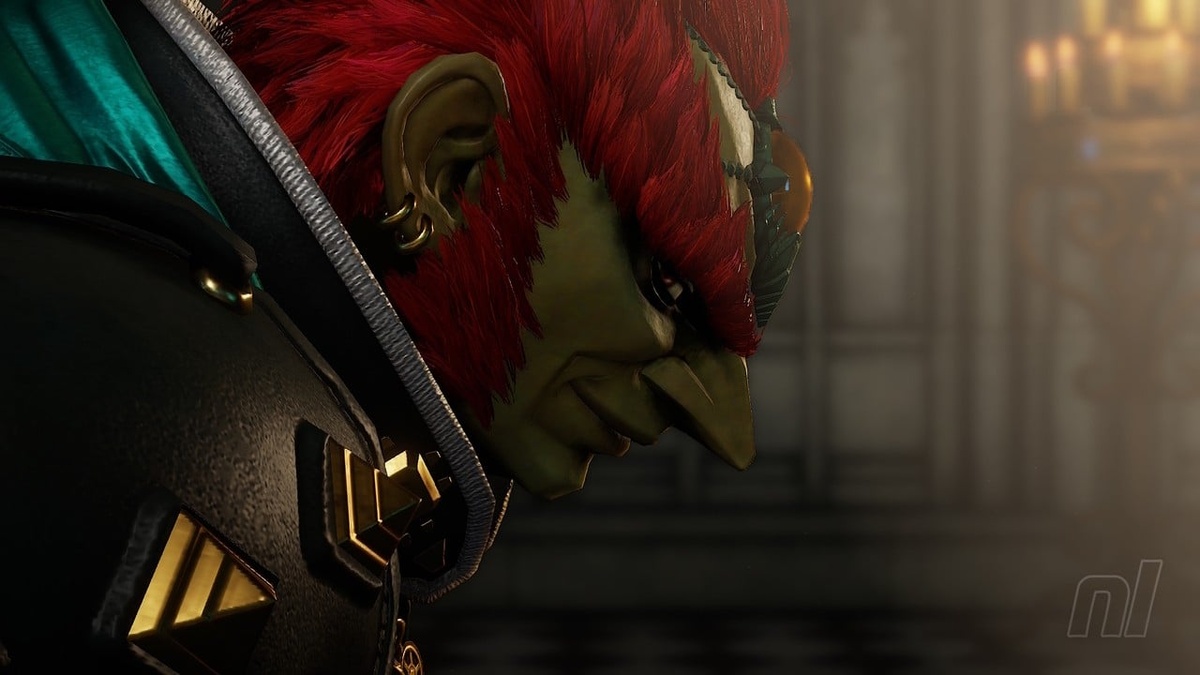
Digital Foundry has published its technical review for The Legend of Zelda: Ocarina of Time on Nintendo Switch 2. Conducted by John Linneman, this comprehensive Ocarina of Time Tech Review confirms that Nintendo’s ambitious remake is an absolute kinematic and visual tour-de-force.
According to reporting from Nintendo Life, the technical assessment heaps glowing praise on the game’s presentation, locked 60 FPS performance, and atmospheric overhauls. Aside from minor upscaling shimmering and handheld geometric scaling, the package delivers an essential experience for next-generation console owners.
At-a-Glance: Ocarina of Time Tech Review and Hardware Benchmarks
| Rendering Metric | Nintendo Switch 2 Docked | Nintendo Switch 2 Handheld | Digital Foundry Technical Verdict |
|---|---|---|---|
| Target Resolution | Dynamic 1080p – 1440p | Dynamic 720p – 1080p | Sharp output on Ultra HD displays, minor mobile scaling in Ocarina of Time Tech Review |
| Target Frame Rate | Locked 60 FPS (16.6ms) | Locked 60 FPS (16.6ms) | Consistently stable during heavy combat, micro-stutters on zone loads |
| Upscaling Technique | AMD FSR Implementation | AMD FSR Mobile Pipeline | Clean reconstruction, minor edge shimmering on fine foliage in Ocarina of Time Tech Review |
| Level-of-Detail (LOD) | Maximum geometry distance | Dynamic distance pruning | Aggressive LOD bias in handheld preserves thermal envelope and battery |
| Lighting & Shading | Volumetric fog & emissive lava | Optimized ambient lighting | Transformed Fire Temple lighting and atmospheric depth in Ocarina of Time Tech Review |
| Storage Streaming | High-speed flash bus | Low-power flash bus | Near-instant dungeon transitions, eliminates legacy loading pauses |
Table of Contents
1. Resolution Profiles: Dynamic 1440p Docked Scaling and Handheld Targets
Analyzing the display metrics in this Ocarina of Time Tech Review reveals an intelligent dynamic resolution configuration. When connected to the official dock, the software operates across a dynamic window scaling between 1080p and 1440p based on instantaneous scene complexity.
This native resolution represents a staggering generational leap over previous iterations of Hyrule. Modern flat-panel 4K television owners will notice exceptional clarity across character models, environmental foliage, and ancient Hylian architectural engravings when exploring Castle Town and Lon Lon Ranch.
Transitioning to portable play demonstrates how Nintendo optimized the title for battery life and thermals. In handheld mode, this Ocarina of Time Tech Review confirms resolution targets an adaptive 720p to 1080p profile matching the system’s high-refresh mobile screen without excessive battery drain.
Digital Foundry observed during the Ocarina of Time Tech Review that handheld rendering occasionally incurs minor visual trade-offs to sustain kinematic performance. These mobile adjustments include slightly reduced texture filtering on distant terrain and subtle geometry downscaling when riding across expansive overworld zones.
These resolution management techniques align with the memory bandwidth optimizations we analyzed in our Apple M4 Pro silicon breakdown. Dynamic allocation prevents frame pipeline stalls while maintaining razor-sharp visual clarity across diverse display profiles.
2. Kinematic Performance: Rock-Solid 60 FPS Benchmarks and Frame Pacing
Frame rate stability forms the central triumph detailed throughout this Ocarina of Time Tech Review. Where the 1998 Nintendo 64 original ran at a juddery 20 frames per second, this next-generation remake targets and sustains a locked sixty frames per second.
John Linneman confirmed in the Ocarina of Time Tech Review that combat encounters maintain flat frame pacing across demanding boss battles. Slashing through Stalfos warriors in the Forest Temple or engaging Twinrova executes with instantaneous controller responsiveness and uniform 16.6-millisecond frame intervals.
The only performance variance uncovered during extensive benchmarking involves very tiny loading hiccups during zone transitions. When galloping across Hyrule Field and crossing into Lake Hylia, brief micro-stutters occur as the background streaming engine synchronizes environmental collision geometry.
These minor streaming pauses do not impact active sword combat or precision platforming challenges. The fluid sixty frames per second cadence dramatically enhances archery minigames, horse racing, and timed dungeon puzzles, making classic interactions feel remarkably modern and kinematically satisfying.
Similar to the multi-threaded computing architecture highlighted in our AMD Ryzen 7 9800X3D gaming CPU analysis, the title leverages modern CPU scheduling. Dedicated processing cores maintain background simulation logic without stealing crucial compute budget from the primary rendering pipeline.
3. Upscaling Architecture: Evaluating AMD FSR Integration and Edge Shimmering
One of the most intriguing engineering discoveries in this Ocarina of Time Tech Review is Nintendo’s image reconstruction choice. Rather than deploying hardware-accelerated Nvidia DLSS tensor pipelines, the development team opted for an AMD FidelityFX Super Resolution spatial upscaling implementation.
While AMD FSR reconstructs crisp output on high-resolution displays, it introduces notable edge shimmering artifacts across high-frequency geometry. Thin geometric elements, including chain-link fences in Kakariko Village and detailed foliage in Kokiri Forest, exhibit minor pixel crawl during rapid camera rotations.
Digital Foundry noted that these temporal artifacts represent the primary technical nitpick within this Ocarina of Time Tech Review. Gamers playing on large OLED displays may spot slight aliasing along distant castle spires and swaying tree branches under direct sunlight.
Despite occasional edge shimmering, spatial upscaling allows the hardware to preserve massive GPU compute headroom. This overhead is redirected toward sophisticated post-processing pipelines, sub-surface character skin scattering, and rich atmospheric particle simulations that elevate the entire fantasy world.
Balancing upscaler overhead against raw raster performance reflects the display pipeline engineering discussed in our Nvidia legacy platform support report. Optimizing reconstruction algorithms ensures high fidelity without demanding impractical power draw on portable console architectures.
Generational Hardware Matrix: N64 vs 3DS vs Switch 2
| Architectural Feature | Nintendo 64 Original (1998) | Nintendo 3DS Remake (2011) | Nintendo Switch 2 Remake (2026) |
|---|---|---|---|
| Native Render Target | 320×240 Progressive | 400×240 Stereoscopic 3D | Dynamic 1080p-1440p Docked / 720p-1080p Mobile |
| Baseline Frame Rate | 20 FPS (50.0ms frame time) | 30 FPS (33.3ms frame time) | Locked 60 FPS (16.6ms frame time) in Ocarina of Time Tech Review |
| Reconstruction Pipeline | Point-filtered bilinear blur | Fixed-function hardware raster | Modern AMD FSR spatial upscaling filter |
| Lighting Architecture | Vertex-colored ambient bake | Per-vertex specular highlights | Real-time dynamic emissive lighting with volumetric fog |
| Asset Memory Footprint | 32MB Game Pak ROM cartridge | 512MB 3DS Game Card | High-bandwidth DirectStorage-style NVMe flash streaming |
| Audio & Acoustic Pipeline | Compressed 4-channel MIDI | Uncompressed stereo streaming | Spatial 3D surround sound with real-time acoustic reverb in Ocarina of Time Tech Review |
4. Atmospheric Overhauls: Volumetric Fog, Emissive Lava Lighting, and Shaders
Visual enhancements examined within this Ocarina of Time Tech Review extend far beyond basic polygon counts. Nintendo implemented a modern atmospheric lighting model that breathes vivid life and cinematic mood into classic environmental locations.
The Fire Temple and Death Mountain crater serve as premier showcases for dynamic emissive illumination. Molten lava flows cast rich, pulsating amber light across stone caverns, realistically illuminating Link’s Goron Tunic and bouncing specular highlights off his Hylian shield.
Equally impressive is the volumetric fog simulation blanketing the Lost Woods, Lake Hylia, and the Kakariko Graveyard. Dynamic fog densities diffuse moonlight and sunlight shafts with remarkable realism, establishing an evocative, mysterious mood absent in earlier hardware releases.
Water rendering has received an exhaustive technical overhaul analyzed in this Ocarina of Time Tech Review, highlighted by screen-space reflections and refraction shaders. The Water Temple features translucent pools that distort underwater architecture with accurate caustics and realistic light attenuation as Link dives.
These comprehensive lighting overhauls reinforce the definitive buyer insights shared in our Ocarina of Time Switch 2 buyer guide. Modern environmental shaders honor the nostalgic 1998 art direction while delivering state-of-the-art visual immersion.
5. Hardware Profiling: Memory Streaming, Handheld LOD Pruning, and Battery Impact
Hardware efficiency benchmarks documented across this Ocarina of Time Tech Review illustrate exceptional optimization. By taking full advantage of the platform’s high-speed internal flash storage, dungeon and building transition times have been slashed to fractions of a second.
Entering homes in Kakariko Village or descending into deep underground grottos occurs almost seamlessly. As detailed in the Ocarina of Time Tech Review, eliminating prolonged black loading screens preserves environmental continuity, transforming how players explore Hyrule during extended gaming sessions.
Handheld power profiling indicates that Nintendo tuned GPU clock curves conservatively to maximize portable endurance. The software dynamically prunes distant geometry and reduces background shadow cascades, ensuring stable sixty frames per second gameplay while delivering over four hours of mobile battery life.
Official coverage from Digital Foundry’s technical portal reinforces the findings in our Ocarina of Time Tech Review. Link’s hero model, primary weapons, and immediate foliage retain maximum geometric density regardless of docked or handheld operation.
This scalable hardware performance echoes the streaming infrastructure analyzed in our cloud gaming infrastructure breakdown. Seamless memory management and disciplined thermal profiling establish this release as a gold standard for next-generation portable gaming.
Frequently Asked Questions
What resolution does the remake achieve in this Ocarina of Time Tech Review?
According to Digital Foundry’s technical analysis, the remake operates dynamically between 1080p and 1440p when docked. In handheld mode, resolution scales dynamically between 720p and 1080p to preserve mobile performance and battery efficiency.
Does the game maintain a consistent 60 FPS frame rate?
Yes, John Linneman confirmed that the title targets a fluid 60 frames per second and maintains it consistently across demanding combat and overworld traversal. Players will experience only occasional, momentary micro-stutters during seamless area loading triggers.
Why did Nintendo implement AMD FSR in this Ocarina of Time Tech Review?
Nintendo seemingly opted for an AMD FSR spatial reconstruction pipeline to optimize development efficiency across existing internal rendering engines. While effective, Digital Foundry noted minor shimmering artifacts on fine geometry and high-frequency grass meshes.
What visual upgrades stand out most in this technical assessment?
Digital Foundry highlighted atmospheric volumetric fog rolling through Lake Hylia and the Lost Woods, alongside dynamic emissive lighting from molten lava in the Fire Temple. These visual upgrades provide remarkable environmental depth without compromising performance.
Is the Switch 2 remake worth buying based on performance benchmarks?
Digital Foundry concluded that the remake is unequivocally worth your time, praising its rock-solid 60 FPS execution and stunning visual presentation. It stands as one of Nintendo’s most polished and technically impressive launch window showcases.
Final Verdict: A Masterclass in Next-Gen Remake Engineering
Digital Foundry’s exhaustive technical analysis affirms that The Legend of Zelda: Ocarina of Time on Nintendo Switch 2 is an undeniable triumph. The combination of rock-solid sixty frames per second performance, dynamic 1440p resolution, and breathtaking atmospheric overhauls revitalizes an all-time gaming classic.
While minor temporal shimmering from AMD FSR upscaling and subtle zone-loading micro-stutters exist, they do not detract from this phenomenal achievement. Nintendo has delivered an extraordinarily respectful remake that sets a high visual and technical bar for the entire platform.
Ultimately, this definitive Ocarina of Time Tech Review proves that the title is well worth your time and financial investment. It bridges retro nostalgia with modern technical excellence, standing as a must-play cornerstone in the Nintendo Switch 2 software library.
