


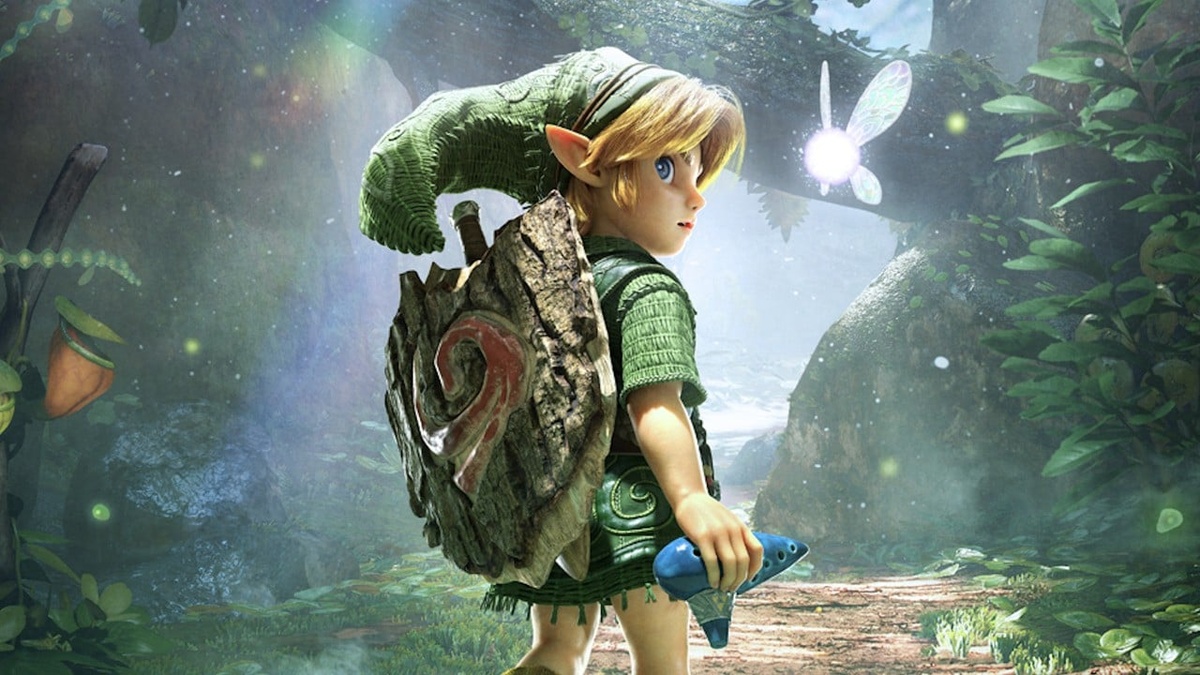
Nintendo has officially launched Ocarina of Time Switch 2, reimagining the legendary 1998 classic with rebuilt modern graphics and updated mechanics. Walking onto Hyrule Field reveals an extraordinary leap in visual ambition, bringing transformative environmental fidelity to the venerable adventure.
In their in-depth technical evaluation, reviewers at Nintendo Life awarded the title an outstanding 9/10 score. However, prospective buyers exploring Ocarina of Time Switch 2 should carefully understand key hardware compromises and notable omissions before purchasing.
At-a-Glance: Ocarina of Time Switch 2 Specification Breakdown
| Evaluation Metric | Ocarina of Time Switch 2 Specification | N64 Original Baseline | Hardware & Gameplay Impact |
|---|---|---|---|
| Visual Engine Architecture | Custom modern renderer with physical shaders | Silicon Graphics Reality Coprocessor | Delivers photorealistic textures, dynamic foliage, and physical pot debris |
| Target Frame Rate | Locked 60 FPS in docked and handheld modes | Variable 20 FPS native film cadence | Tripled frame rate provides responsive input timing during sword combat |
| Display Output Resolution | Dynamic 1440p DLSS Docked / 720p-1080p Handheld | 320×240 analogue CRT output | High-resolution presentation with occasional undocked distant edge shimmering |
| Camera Navigation System | Full 360-degree analog right-stick control | Fixed Z-targeting camera with auto-follow | Eliminates pre-rendered backgrounds; Hyrule Castle Town is fully 3D |
| Audio & Voice Implementation | Fully orchestrated symphonic score with voice acting | 4-channel algorithmic MIDI synthesis | Revamped acoustics with cheerful, vastly less intrusive Navi dialogue |
| Unique Hardware Integrations | Microphone pitch detection & Zelda Notes | N64 controller button combinations | Allows acoustic instruments, whistling, or peripherals to play melodies |
| Campaign Extra Content | Hall of Fallen Foes boss rush challenge mode | Standard linear campaign progression | Enables post-game boss replayability and time trials via resting beds |
| Omitted Features | Master Quest and multiple manual save files | Master Quest available on GameCube / 3DS | Lack of mirrored high-difficulty dungeons limits veteran replay value |
Table of Contents
1. Visual Engine Architecture: Rebuilt Geometry and Micro-Detail Overhaul
The primary triumph of Ocarina of Time Switch 2 lies in its comprehensive visual reconstruction. Nintendo has completely discarded low-polygon retro models in favor of densely textured geometric assets, realizing the visual ambitions first teased in legendary early console tech demonstrations.
Stepping through Kokiri Forest showcases breathtaking environmental complexity, from sunlight filtering through dense canopies to physical spider webs stretching across Great Deku Tree corridors. Broken ceramic pot shards persist across stone floors and shift underfoot as Link moves.
Character models display remarkable tactile nuance without sacrificing the original cast’s iconic artistic identity. Intricate metallic buckles glint along Link’s tunic, while wet subterranean stone surfaces within Zora’s Domain exhibit realistic specular light reflections under modern dynamic lighting.
Crucially, environments that previously relied on static pre-rendered background plates have been reconstructed into fully realized three-dimensional geometry. Hyrule Castle Town now stands as an active medieval market square teeming with architectural depth, atmospheric chimneys, and natural perspective.
Dungeons benefit immensely from this overhauled atmospheric fidelity, transforming familiar navigational puzzles into immersive physical encounters. Shimmering fluid dynamics and translucent underwater surfaces elevate the Water Temple into one of the most stunning centerpieces in the entire remake.
2. Handheld vs. Docked Benchmarks: 60 FPS Target and Scaler Tradeoffs
Maintaining fluid performance within Ocarina of Time Switch 2 required careful architectural optimization from Nintendo’s engineering teams. The title targets sixty frames per second across both docking states, prioritizing instantaneous controller response during demanding boss fights against Phantom Ganon.
Docked performance delivers a remarkably stable experience, leveraging temporal machine learning upscaling to reconstruct internal buffers to crisp display resolutions. As highlighted in our Ocarina of Time day-one update analysis, early firmware patches successfully resolved sporadic frame pacing stutters.
However, handheld play on portable Switch 2 displays exposes notable graphical tradeoffs. In order to sustain the rigid sixty frames per second cadence, Ocarina of Time Switch 2 reduces internal rendering resolution, creating visible softness around Link’s character model.
Distant background geometry such as Death Mountain ridges and Hyrule Field foliage also exhibits aggressive level-of-detail smoothing. When rotating the camera rapidly, subtle temporal shimmering artifacts emerge along high-contrast asset edges under portable battery power profiles.
Despite these minor handheld visual compromises, preserving seamless motion fluidity remains the correct engineering compromise for fast-paced adventure titles. The portable presentation remains thoroughly engaging, delivering reliable sixty-cycle responsiveness throughout prolonged mobile gaming sessions without performance degradation.
3. Modernized Mechanics: Full 360-Degree Camera and Audio Input Innovations
Exploring Hyrule in Ocarina of Time Switch 2 feels fundamentally modernized thanks to unrestricted 360-degree camera management. Free analog right-stick control replaces rigid vintage targeting angles, allowing players to survey expansive environments naturally while navigating tight labyrinthine subterranean passages.
Audio engineering has undergone an equally dramatic metamorphosis across the production. Koji Kondo’s timeless musical themes have been re-recorded with full orchestral instrumentation, lending symphonic richness to pastoral daytime rides across Hyrule Field and tense temple encounters.
Key cinematic story sequences now feature expressive voice acting, elevating dramatic encounters between Link, Princess Zelda, and Ganondorf. Furthermore, your fairy companion Navi has been thoughtfully re-engineered, drastically scaling back repetitive audio chimes in favor of concise, helpful prompts.
Nintendo has also incorporated innovative acoustic mechanics into Ocarina of Time Switch 2 through console microphone pitch tracking. Players can perform melodies by whistling, singing, or even strumming acoustic guitars near the console, complementing traditional gamepad button configurations.
While official third-party controllers detailed on Nintendo’s official website offer novel acoustic immersion, standard gamepad inputs remain perfectly responsive. This harmonious balance between novel hardware features and traditional controls highlights the engineering sophistication underpinning the release.
4. New Progression Features: Threads of Time and Hall of Fallen Foes
To assist modern adventurers without undermining environmental discovery, Ocarina of Time Switch 2 introduces the Threads of Time chronicle system. This unobtrusive objective ledger meticulously logs narrative milestones, providing subtle navigational guidance whenever players pause their journey for extended periods.
The most substantial structural addition in the remake is the Hall of Fallen Foes, an unlockable memorial sanctum. Accessed by resting in designated campaign beds, the sanctuary contains lifelike sculpted effigies honoring every major boss Link has defeated.
Beyond aesthetic appreciation, the hall enables players to replay individual climatic boss encounters whenever desired. Dedicated speedrunners can tackle brutal sequential boss rush challenges, tracking completion timings and refining combat tactics against formidable foes like Twinrova and Volvagia.
Although completion rewards within the sanctuary consist primarily of cosmetic accolades, perfecting combat sequences provides tremendous personal satisfaction. The mode injects welcome replayability into the package, celebrating the intricate choreography of Nintendo’s memorable three-dimensional boss encounters.
Integrated amiibo functionality also provides modest item drops including arrows and recovery hearts without destabilizing resource economies. These thoughtful supplementary additions enhance quality of life while preserving the foundational exploration rhythm defining this generational remake.
Generational Comparison Matrix: Ocarina of Time Switch 2 Evolution
| Hardware Generation | Platform Target | Frame Rate Target | Resolution Capability | Audio Architecture | Unique Defining Trait |
|---|---|---|---|---|---|
| Ocarina of Time Switch 2 (2026) | Nintendo Switch 2 | Locked 60 FPS | Dynamic 1440p DLSS Docked / 720p-1080p Handheld | Full Orchestral Score & Voice Acting | Hall of Fallen Foes & Mic Ocarina Support |
| Ocarina of Time 3D (2011) | Nintendo 3DS | Locked 30 FPS | 800×240 Autostereoscopic 3D | Enhanced Synthesized Audio Samples | Master Quest Included & Gyro Aiming |
| Ocarina of Time (1998) | Nintendo 64 | Variable 20 FPS | 320×240 Analogue Output | 4-Channel Real-Time MIDI Synthesis | Pioneered 3D Z-Targeting Mechanics |
| Master Quest Edition (2002) | Nintendo GameCube | Variable 20 FPS | 480p Progressive Scan Component | Direct Port MIDI Audio Playback | Mirrored World with Redesigned Dungeons |
5. Critical Omissions and Save Constraints: Why It Falls Short of Definitive
Despite its visual magnificence and mechanical refinement, Ocarina of Time Switch 2 carries several noteworthy limitations that prevent it from achieving definitive status. Foremost among these shortcomings is the total absence of the revered Master Quest campaign mode.
Originally bundled with GameCube promotional discs and integrated into the 3DS remaster, Master Quest provided redesigned dungeons and mirrored geography. Because the remake faithfully mirrors original 1998 puzzle designs, seasoned veterans will encounter minimal tactical resistance throughout the adventure.
Storage management also imposes surprising constraints within the release, restricting users to a single manual save slot alongside automatic checkpoints. Players wishing to preserve multiple distinct milestone saves must resort to creating entirely separate system user profiles.
Hardware silicon tradeoffs also mirror broader thermal design challenges explored across modern platforms. Much like compute scaling analyzed in our Apple M4 Mac mini architecture breakdown and our AMD Ryzen 7 9800X3D gaming performance evaluation, balancing portable power envelopes demands compromise.
Ultimately, while these omissions do not erase the project’s stellar craftsmanship, they represent clear missed opportunities. Understanding these specific boundaries allows prospective enthusiasts to evaluate the retail software with realistic expectations rather than idealized nostalgia.
Frequently Asked Questions
Does Ocarina of Time Switch 2 run at 60 frames per second?
Yes, Ocarina of Time Switch 2 targets a smooth sixty frames per second in both docked and handheld configurations. Docked play utilizes modern upscaling for high-definition clarity, while handheld mode slightly lowers resolution to maintain consistent motion fluidly.
Is Master Quest included in Ocarina of Time Switch 2?
No, Master Quest is not included in the release at launch. The remake features the complete original campaign with updated graphics and controls, meaning veteran players will encounter traditional puzzle layouts rather than mirrored hard-mode dungeons.
How does the microphone feature work in the game?
Players can use the console microphone to play Ocarina songs via real-world audio pitch tracking. Whistling, singing, or playing instruments like guitars will register notes accurately, though traditional gamepad buttons remain fully supported for navigation.
What is the Hall of Fallen Foes in Ocarina of Time Switch 2?
The Hall of Fallen Foes is an unlockable memorial mode within the game accessed by sleeping in beds. It allows players to inspect statues of defeated adversaries, replay completed boss battles, and attempt time-attack boss rush challenges.
How many save files does the remake provide?
The remake provides only one manual save slot per user profile alongside automatic checkpoint saves. Players wanting concurrent independent playthroughs must create separate Switch 2 system accounts to avoid overwriting their primary adventure progress.
Final Verdict: Is Ocarina of Time Switch 2 Worth Buying?
Nintendo’s release of Ocarina of Time Switch 2 stands as a phenomenal reimagining that revitalizes an all-time masterpiece for modern audiences. With breathtaking visual enhancements, responsive controls, and lush orchestral audio, exploring Hyrule has never felt more immersive.
While the omission of Master Quest and minor handheld resolution drops hold it back from absolute perfection, the core experience remains unmatched. Whether reliving childhood memories or experiencing the adventure for the first time, the journey remains magical.
For owners seeking a showcase title that demonstrates both emotional nostalgia and modern system capabilities, Ocarina of Time Switch 2 is an essential purchase. It redefines timeless classic adventure gaming while setting an enviable standard for future console remakes.
