


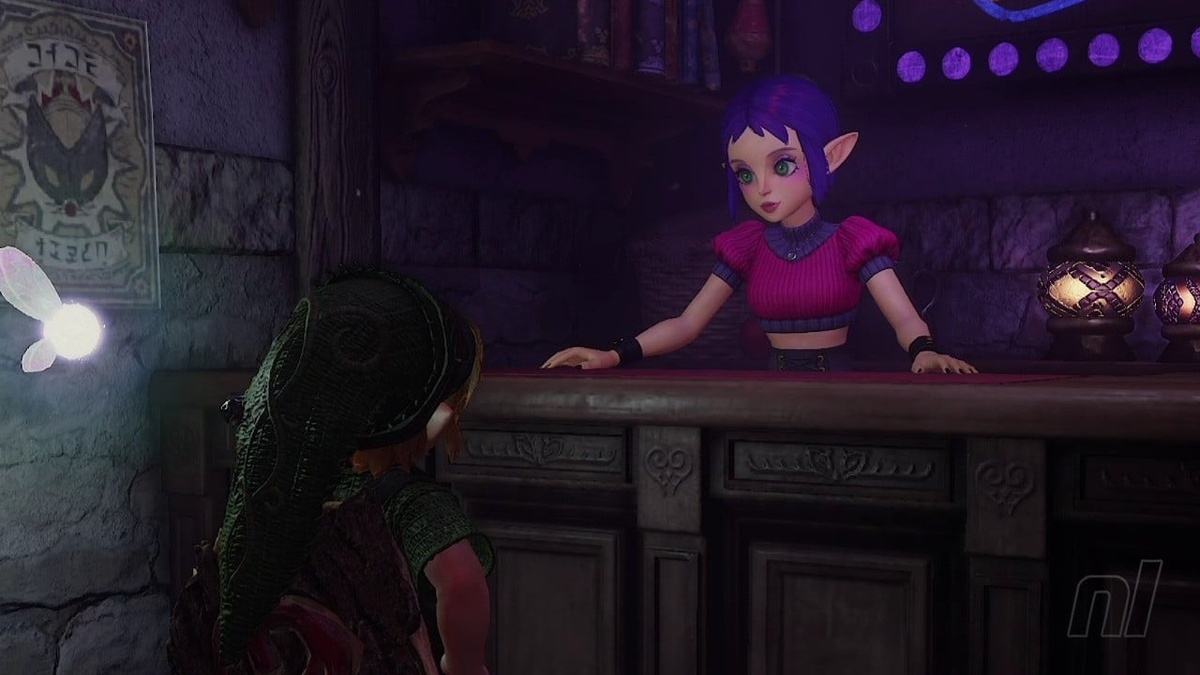
With the official arrival of Nintendo Switch 2, franchise producer Eiji Aonuma addressed long-standing player curiosity surrounding the Ocarina of Time Bombchu Girl, sparking widespread discussion across the global gaming community.
In an insightful interview with Game Informer alongside reporting from Nintendo Life, Aonuma playfully declined to define canonical relationship details, inviting enthusiasts to celebrate the classic minigame while revisiting Hyrule Castle Town.
| Remake Dimension | Nintendo 64 (1998 Original) | Nintendo 3DS (2011 Remaster) | Nintendo Switch 2 (2026 Remake) |
|---|---|---|---|
| Rendering Resolution | Native 320×240 Progressive | Dual-screen 400×240 Stereoscopic | Reconstructed 4K Docked / 1080p Portable |
| Target Framerate | 20 FPS (Variable Slowdowns) | 30 FPS Locked Performance | 60 FPS Rock-Solid Performance |
| Character Geometry | Low-polygon angular sprites | Enhanced stereoscopic geometry | Physically based rendering shaders |
| Alley Minigame Physics | Original discrete grid collision | Refined analog touch targeting | Precise real-time physics trajectory |
| Developer Commentary | Foundational game design lore | Stereoscopic technical rework | Aonuma Ask the Developer disclosures |
| Dialogue & Narrative Lore | Original ambiguous shopkeeper text | Unchanged legacy script | Preserved mystery with vocal remaster |
Table of Contents
1. Aonuma’s Viral Response: Hyrule Castle Town Lore and Fan Speculation
During promotional discussions celebrating the launch of the Switch 2 remake, journalists directly confronted series producer Eiji Aonuma regarding the romantic status and post-apocalyptic fate of the Ocarina of Time Bombchu Girl.
Rather than establishing a definitive canonical lore entry, Aonuma coyly answered that developers would not touch the subject, leaving the personal life of the character entirely to player imagination.
The playful evasion immediately went viral across online forums, where retro gaming enthusiasts have debated the charming purple-haired merchant backstory since the original Nintendo 64 debut in November 1998.
Nintendo creative leadership frequently adopts this deliberate ambiguity, allowing atmospheric environmental storytelling to flourish without over-explaining minor character motivations or diminishing player nostalgia.
By keeping quiet on the matter, Aonuma cemented the Ocarina of Time Bombchu Girl as a timeless pop culture icon whose enduring charm continues to captivate players nearly three decades later.
2. Bombchu Bowling Alley: Minigame Mechanics and Prize Progression
Tucked away within the vibrant back alleys of Hyrule Castle Town, the establishment operated by the Ocarina of Time Bombchu Girl remains one of the most mechanically inventive minigames in franchise history.
For an admission fee of thirty Rupees, young Link receives ten crawling explosive Bombchus and attempts to guide them into target holes while avoiding wandering obstacles like moving spikes and distracting Cuccos.
The minigame rotates through five randomized reward tiers, offering high-value prizes including a Piece of Heart, a prestigious Biggest Bomb Bag capacity expansion, purple Rupees, and explosive munitions.
In the newly released Switch 2 remake, physics programmers refined environmental collision dynamics, ensuring that each Bombchu rolls predictably across floor planes without frustrating erratic bounces.
Mastering these challenging obstacle patterns allows dedicated players to earn the admiration of the Ocarina of Time Bombchu Girl while stockpiling indispensable inventory upgrades for their grand quest.
3. Seven-Year Adult Timeline: Environmental Storytelling in Ruined Castle Town
The sudden transition from Link childhood innocence to Ganondorf dystopian adult reign marks one of the most dramatic narrative shifts in video game history, heavily affecting the Ocarina of Time Bombchu Girl.
When adult Link awakens seven years later and returns to Castle Town, the bustling commercial district has been transformed into a harrowing wasteland haunted by grotesque, paralyzing Redead creatures.
The iconic bowling establishment stands abandoned and inaccessible behind closed doors, prompting generations of fans to wonder where the purple-haired shopkeeper fled during the kingdom devastation.
Environmental clues throughout Hyrule suggest several civilian shopkeepers evacuated safely toward Kakariko Village, although the bowling operator true whereabouts remain intentionally unconfirmed by official Nintendo records.
This poignant contrast between childhood cheerfulness and adult melancholy underscores why the environmental mystery surrounding the Ocarina of Time Bombchu Girl continues to resonate deeply with modern audiences.
4. Technical Specifications & Visual Fidelity: Switch 2 Rendering Breakdown
Rebuilding Hyrule Castle Town on modern hardware demanded significant graphics architecture upgrades, allowing the venue of the Ocarina of Time Bombchu Girl to showcase advanced modern shaders.
Powered by custom Nvidia Tegra silicon featuring DLSS reconstruction, the Switch 2 delivers pristine 4K image quality at sixty frames per second while docked, completely outperforming legacy hardware revisions.
Character models receive high-resolution texturing and expressive facial rigging, giving the Ocarina of Time Bombchu Girl subtle emotional gestures that enhance dialogue interactions during gameplay.
| Platform Profile | Resolution Target | Target Framerate | Upscaling Architecture | Interior Asset Detail | Frame Time Consistency |
|---|---|---|---|---|---|
| Switch 2 Docked Mode | 4K Reconstructed (2160p) | Locked 60 FPS | Nvidia DLSS Neural Model | 4K PBR Textures & Ray Shaders | Flat 16.6ms Pacing |
| Switch 2 Portable Mode | Native 1080p OLED | Locked 60 FPS | Hardware Native Scaling | High-res Textures & Soft Bloom | Flat 16.6ms Pacing |
| Nintendo 3DS System | 400×240 Stereoscopic | Locked 30 FPS | Fixed Raster Pipeline | Compressed Mobile Meshes | Stable 33.3ms Pacing |
| Nintendo 64 Original | Native 240p Composite | Variable 20 FPS | Analog SGI Reality Coprocessor | Legacy Gouraud Shading | Erratic 50.0ms Spikes |
Detailed hardware benchmarks by Digital Foundry confirm stable frame times across all interior environments, eliminating the severe twenty-frame-per-second drops that plagued original 1998 Nintendo 64 hardware.
Much like modern desktop processors optimized for high compute efficiency—analyzed in our AMD Ryzen 7 9800X3D gaming benchmarks review—the Switch 2 architecture effortlessly handles dense geometric geometry.
This hardware evolution mirrors wider industry transitions toward machine learning silicon, similar to strategic platform shifts when NVIDIA ends Windows 10 support for PC gamers.
5. Quality-of-Life Architecture: Water Temple Fixes and Legacy Modernization
Beyond the viral discussion surrounding the Ocarina of Time Bombchu Girl, producer Eiji Aonuma revealed extensive mechanical refinements introduced across the entire Switch 2 adventure.
Addressing decades of player feedback, developers implemented comprehensive quality-of-life adjustments to the infamous Water Temple, replacing clunky inventory navigation with dedicated quick-equip boots and dynamic water level indicators.
Aonuma admitted that refining the aquatic dungeon felt like completing overdue homework, ensuring contemporary gamers experience puzzle satisfaction without artificial administrative friction.
Furthermore, audio engineering teams restored original voice assets from the 1998 release, blending nostalgic auditory cues with modernized orchestral arrangements across every Hyrule district.
These thoughtful modernization initiatives ensure that visiting the Ocarina of Time Bombchu Girl and conquering daunting regional dungeons feels remarkably fluid on current-generation hardware.
Frequently Asked Questions
Who is the Ocarina of Time Bombchu Girl?
The Ocarina of Time Bombchu Girl is the purple-haired proprietor of the Bombchu Bowling alley in Hyrule Castle Town, famous for hosting one of the most popular minigames in the adventure.
What did Eiji Aonuma say about the Bombchu Bowling operator?
When asked by Game Informer about her relationship status and post-seven-year fate, producer Eiji Aonuma declined to elaborate, stating that Nintendo would leave the answer entirely to player imagination.
What prizes can players win from the Bombchu Bowling alley?
Players competing in the alley can earn five distinct rewards, notably including a Piece of Heart, the Biggest Bomb Bag expansion, purple Rupees, and bundles of Bombchus or standard bombs from the Ocarina of Time Bombchu Girl.
Where does the character go during the adult timeline?
After Ganondorf destroys Castle Town during the seven-year time skip, the alley becomes boarded shut. Nintendo has never canonically disclosed whether the Ocarina of Time Bombchu Girl relocated to safety.
How does the Switch 2 remake improve the bowling encounter?
The Switch 2 remake enhances the venue with modern dynamic lighting, smooth sixty-frames-per-second performance, updated character animations, and refined Bombchu physics for more consistent aiming during gameplay.
Final Verdict: Preserving Nostalgia and Mystery on Next-Gen Hardware
Nintendo deliberate decision to keep the personal lore of the character shrouded in mystery honors the playful charm that defines the legendary adventure.
By combining beloved nostalgic characters with transformative visual overhauls and responsive 60 FPS performance, the Switch 2 edition delivers the definitive realization of an interactive masterpiece.
Whether you are testing your aim at the bowling alley or exploring Ganondorf ruined kingdom, the Ocarina of Time Bombchu Girl remains an unforgettable fixture of gaming history.
