


The mobile computing landscape has undergone a monumental architectural transformation today as hardware makers release the first wave of NVIDIA RTX Spark laptops. These next-generation Windows machines package unprecedented workstation compute power directly into sleek ultraportable form factors built for developers, creators, and gamers.
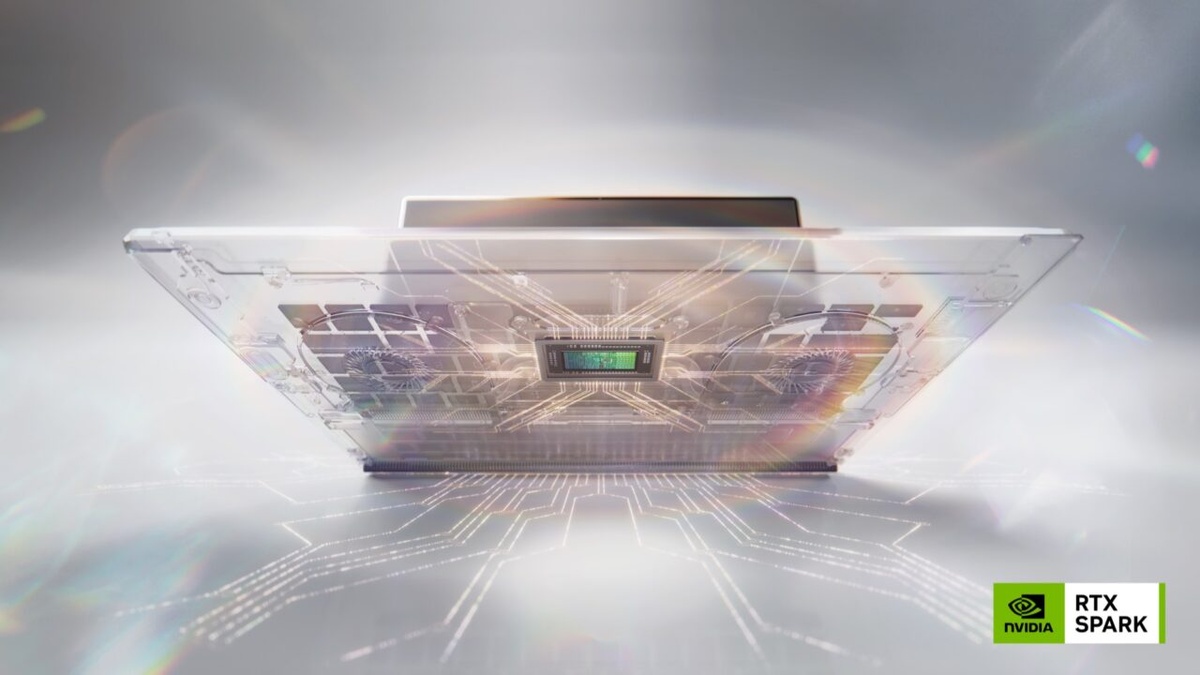
At the heart of this revolution lies an integrated superchip uniting a Blackwell RTX graphics architecture with an energy-efficient Grace processor. Inside NVIDIA RTX Spark laptops, this coherent silicon foundation eliminates traditional mobile bottlenecks through up to 128GB of high-speed unified memory.
According to official announcements published directly on the NVIDIA Blog announcement, this unified design yields up to one petaflop of FP4 tensor performance, turning mobile computers into self-contained personal AI supercomputers.
The pursuit of extreme thermal efficiency and dense packaging mirrors ongoing developments across personal computing, where the Apple M4 Mac mini redesign recently showcased how unified memory architecture streamlines intensive compute workflows.
Similarly, desktop enthusiasts witnessed breakthroughs in silicon cache architecture when the AMD Ryzen 7 9800X3D revealed how specialized 3D V-Cache packaging mitigates memory latency bottlenecks during demanding computing tasks and frame rendering workloads.
As older legacy operating systems gradually reach the end of their lifecycle and NVIDIA ends Windows 10 support, modern laptops demand sophisticated runtime scheduling capabilities designed specifically for modern 64-bit Windows platforms.
Modern users increasingly expect seamless multitasking whether gaming locally or offloading to distributed services like Xbox Cloud Gaming pay-as-you-go bundles, requiring dynamic resource management across silicon compute engines and active software pipelines.
Beyond raw silicon specifications, the arrival of NVIDIA RTX Spark laptops introduces an expansive ecosystem of local intelligence tools, open speech reasoning models, agent-directed workflows, and groundbreaking graphics pipelines engineered to run entirely on untethered local hardware.
In this exhaustive architectural analysis, we explore how NVIDIA RTX Spark laptops redefine mobile workstations through Grace Blackwell silicon, Nemotron speech intelligence, dynamic GPU arbitration, DLSS 4.5 rendering, and premium thin-and-light partner hardware designs.
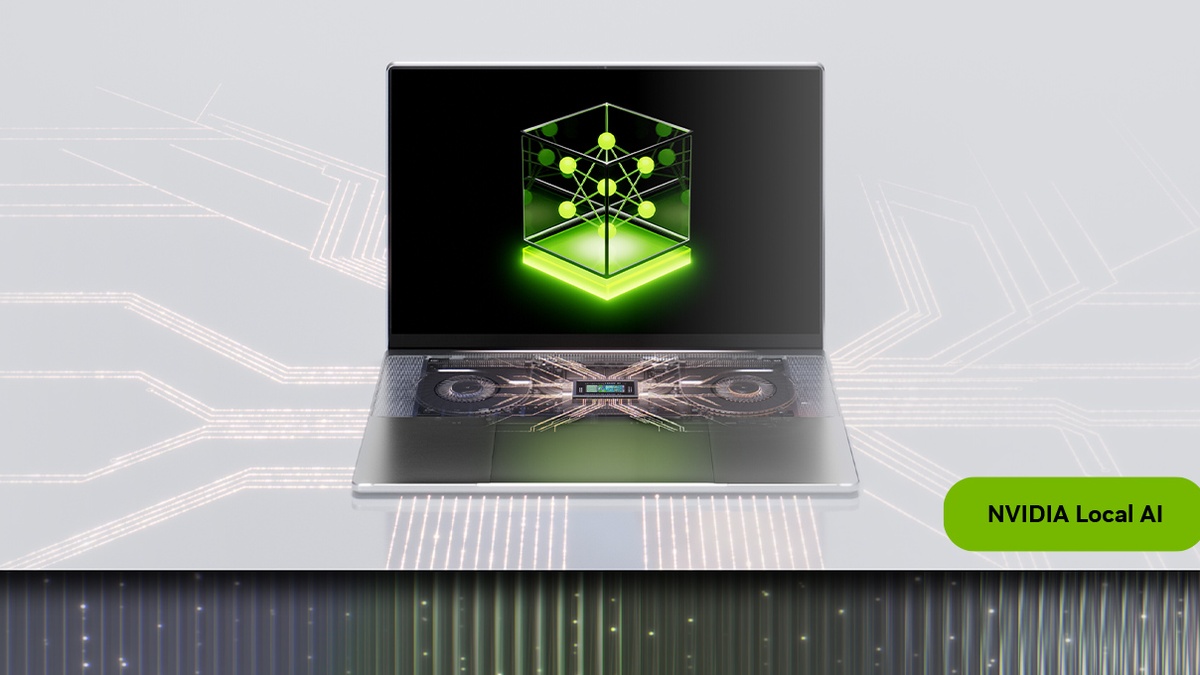
Table of Contents
1. Grace Blackwell Superchip Architecture: 128GB Unified Memory and FP4 Tensor Cores
The defining engineering milestone of NVIDIA RTX Spark laptops is the integration of the Grace Blackwell superchip into a laptop motherboard. By combining an energy-efficient ARM-based Grace processor and a Blackwell RTX GPU onto a single substrate, latency is drastically curtailed.
Traditional high-performance mobile laptops have long suffered from memory partitioning bottlenecks where discrete graphics cards maintain isolated VRAM pools separated from system RAM by narrow PCIe lanes. This architectural separation created immense serialization latency when loading massive model checkpoints.
In contrast, the unified memory fabric on these machines scales up to 128GB, allowing both the CPU and GPU to share a cohesive address space. Independent analysis by AnandTech confirms unified memory pools resolve chronic out-of-memory errors.
Compute throughput across NVIDIA RTX Spark laptops reaches up to one full petaflop of FP4 AI performance through fifth-generation Tensor Cores. Microscopic 4-bit floating-point precision enables unprecedented token generation speeds while preserving numerical stability and task accuracy during complex autonomous agent reasoning loops.
Crucially, this immense computational throughput operates within aggressive mobile thermal envelopes. Advanced power balancing intelligently shuttles dynamic wattage between processor cores and graphics clusters depending on whether an application requires intensive single-threaded compilation or parallel matrix multiplication.
By consolidating enterprise-grade supercomputing silicon into portable consumer hardware, NVIDIA RTX Spark laptops eliminate the historic compromise between desktop workstation performance and all-day mobile battery life. Creative professionals and researchers can now train and deploy complex workflows completely untethered from external wall outlets.
2. NVIDIA Nemotron 3.5 Transcribe: Unified Speech Intelligence and Local Audio Reasoning
Alongside the launch of NVIDIA RTX Spark laptops, NVIDIA introduced Nemotron 3.5 Transcribe, a groundbreaking open-weight speech model engineered specifically for efficient on-device execution. This model fundamentally consolidates multiple conversational speech pipelines into an elegant unified promptable architecture.
Historically, processing spoken audio required deploying disconnected pipelines for speech recognition, diarization speaker labeling, and language translation. Nemotron 3.5 Transcribe unifies these disparate capabilities into a single multimodal model that even answers conversational questions regarding the recorded content.
On NVIDIA RTX Spark laptops, the architecture natively supports 40 spoken languages, including comprehensive coverage for seven major Indic dialects. Users can provide natural-language instructions to automatically extract action items, generate chronological meeting minutes, or identify individual speaker dialogue directly from raw audio tracks.
Benchmark evaluations place Nemotron 3.5 Transcribe at the very top of Hugging Face Open ASR leaderboards and rank it second among open-weight models on Artificial Analysis. It achieves superior accuracy with only 4.3 billion active parameters.
By utilizing 80% fewer parameters than competing state-of-the-art open speech models, it runs effortlessly within local memory budgets. Developers can deploy quantized NVFP4 variants using NeMo-Speech.cpp or vLLM runtimes, achieving real-time streaming audio transcription without incurring recurring cloud API costs.
The arrival of Nemotron 3.5 Transcribe demonstrates how NVIDIA RTX Spark laptops transform local machine intelligence from basic text completion into rich audio perception. Professionals in healthcare, finance, and legal sectors can now parse confidential spoken recordings with complete privacy and zero data leakage.
Hardware Architecture: NVIDIA RTX Spark Laptops vs. Traditional Mobile Workstations
To appreciate the generational leap delivered by NVIDIA RTX Spark laptops, we must examine the architectural differences between modern unified superchips and conventional mobile workstation designs. The comprehensive engineering matrix below details the structural contrasts across both mobile computing paradigms.
| System Metric | Traditional Mobile Workstations | NVIDIA RTX Spark Laptops |
|---|---|---|
| Silicon Architecture | Discrete CPU and GPU Sockets | Integrated Grace Blackwell Superchip |
| CPU Architecture | x86-64 Mobile Processors | High-Efficiency ARM Grace CPU |
| GPU Architecture | Discrete Mobile RTX Ada Generation | Next-Gen Blackwell RTX Architecture |
| Memory Organization | Split Host RAM and Dedicated VRAM | High-Bandwidth Coherent Unified Memory |
| Maximum Memory Pool | 16GB to 64GB Split RAM Pools | Up to 128GB Fully Shared Unified Memory |
| AI Tensor Compute | Up to 300 INT8 TOPS | Up to 1 Petaflop FP4 AI Performance |
| Chassis Thickness | 24mm to 35mm Bulky Enclosures | Ultra-Thin Chassis Down to 14mm |
| Base Starting Price | $3,299+ for Mobile Workstations | Starting at $2,599 for Flagship Systems |
As the hardware matrix demonstrates, traditional mobile platforms struggle with isolated memory pools that severely restrict local generative model execution. NVIDIA RTX Spark laptops bypass these limitations by giving developers direct access to up to 128GB of coherent, shared memory bandwidth.
This coherent architecture allows researchers to load expansive large language models and diffuse generative algorithms entirely within physical memory. Workstation users no longer experience crippling thermal throttling or severe PCI Express bus saturation when iterating over large enterprise datasets.
3. NVIDIA App Dynamic GPU Resource Scheduling: Foreground Priority and Agent Workflows
Running concurrent background artificial intelligence agents alongside demanding foreground applications has traditionally caused severe frame drops and operational latency. To solve this contention, NVIDIA RTX Spark laptops introduce an intelligent dynamic GPU resource management feature inside the updated NVIDIA App.
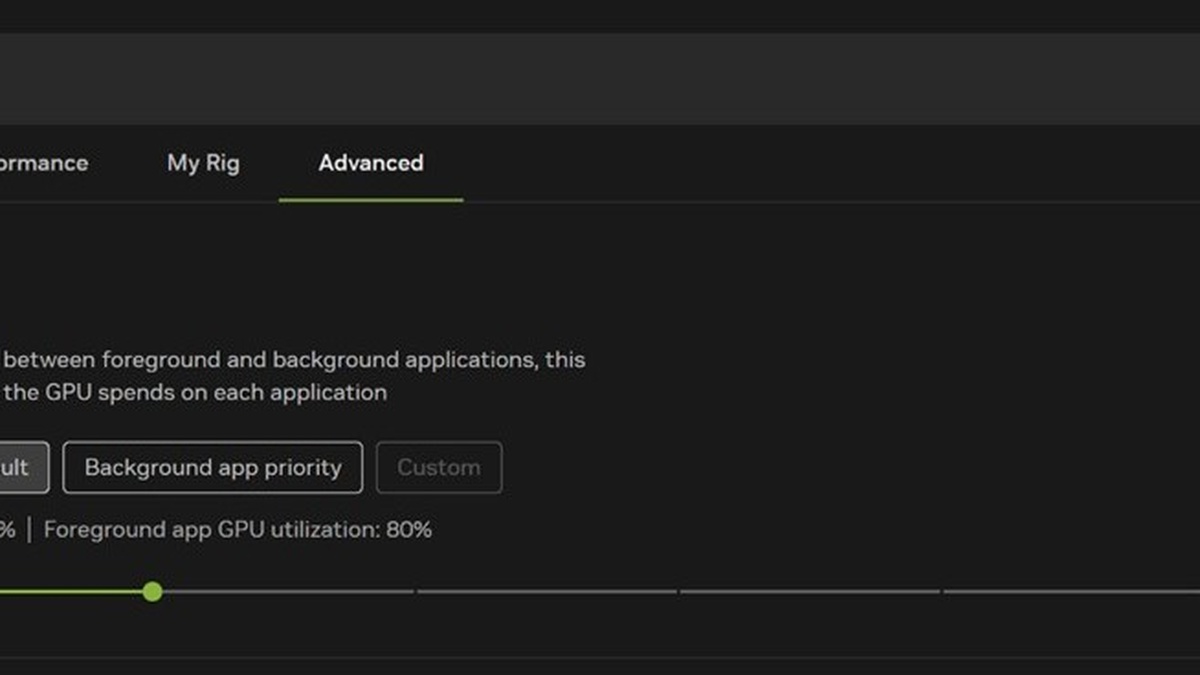
Located within the System Advanced settings panel, this utility enables users to dynamically arbitrate compute priority across active processes. Users can prioritize their active foreground game or 3D viewport, or alternatively allocate maximum compute headroom to background autonomous agent workflows.
Implemented across NVIDIA RTX Spark laptops, the system leverages Windows Hardware-Accelerated GPU Scheduling to divide graphics execution queues with sub-millisecond precision. Foreground gaming frame rates remain smooth and consistent even while an autonomous agent executes heavy document indexing or code refactoring in the background.
This scheduler works in harmony with modern foundation models such as Liquid AI LFM3 and Nemotron 3.5 Bolt. These lightweight architectures run locally inside frameworks like Hermes Agent, Pi, and OpenClaw to triage email inboxes, organize calendars, and inspect application viewports autonomously.
For creative professionals, the scheduler enables background video rendering or neural upscaling while maintaining fluid interactive video editing. Engineering tests documented by Tom’s Hardware confirm intelligent queue prioritization prevents application crashes during intensive concurrent processing tasks.
Dynamic resource scheduling is an essential technological cornerstone for NVIDIA RTX Spark laptops. By giving users explicit control over silicon allocation, NVIDIA ensures that personal supercomputing never compromises everyday application responsiveness or interactive creative productivity.
4. Next-Gen Gaming Pipeline: DLSS 4.5 in Phantom Blade Zero and RTX Remix 1.6
Gaming performance on NVIDIA RTX Spark laptops receives a monumental boost with the official launch of S-GAME’s martial arts action title Phantom Blade Zero. Releasing tonight on Steam and the Epic Games Store, the title showcases cutting-edge ray-traced lighting, reflections, and contact shadows.
NVIDIA partnered closely with S-GAME Studio to implement DLSS 4.5 featuring Dynamic Multi Frame Generation. This revolutionary neural rendering engine generates up to six interpolated frames, or dynamically scales its frame multiplier on the fly to match the user’s targeted display refresh rate.
Simultaneous with this launch, NVIDIA has deployed RTX Remix 1.6, introducing neural remastering tools to the global Minecraft Java Edition modding community. Creators can now apply full path tracing, physically based materials, and DLSS acceleration to classic blocky sandbox worlds.
RTX Remix 1.6 incorporates DLSS 5 with 3D-Guided Neural Rendering, enhancing lifelike surface reflections across Portal with RTX and Half-Life 2 RTX. Both classic remasters feature native optimization profiles tailored specifically for NVIDIA RTX Spark laptops and the Grace Blackwell architecture.
Modders also benefit from a redesigned ComfyUI node workflow embedded directly into the RTX Remix editor. Creators can batch-generate high-resolution physically based materials without requiring external API tokens, while agentic modding skills assist creators in automating tedious scene conversion steps.
These gaming breakthroughs prove that NVIDIA RTX Spark laptops deliver uncompromising enthusiast gaming fidelity alongside serious machine learning compute. Gamers can experience flagship visual fidelity and fluid frame rates in the thinnest, most portable chassis designs ever engineered.

Software Ecosystem Matrix: Local AI Models, Gaming Pipelines, and Runtime Frameworks
The software ecosystem powering NVIDIA RTX Spark laptops spans cutting-edge speech models, compact liquid foundation networks, high-end neural upscaling, and robotic simulation suites. The structured comparison table below outlines the core models, execution runtimes, and practical user applications.
| Technology & Framework | Parameter Footprint | Supported Runtimes | Primary Workload Role |
|---|---|---|---|
| Nemotron 3.5 Transcribe | 4.3B Active Parameters | NeMo-Speech.cpp, vLLM, Hugging Face | Multilingual Speech & Audio Q&A |
| Nemotron 3.5 Bolt | 4GB (E4B) & 24GB (74B-A9B) | llama.cpp, vLLM, Ollama, Unsloth | Autonomous Multistep Agent Workflows |
| Liquid AI LFM3 | 1.7B Base Architecture | llama.cpp, vLLM, Hermes Agent | Contextual Multimodal Desktop Triage |
| FLUX 3 Image Klein | 5.6B Open Weight Model | NeMo AutoModel, ComfyUI, TensorRT | High-Speed Local Generative Image Synthesis |
| DLSS 4.5 & DLSS 5 | Real-Time Neural Engine | GeForce Game Ready Drivers | Dynamic Multi Frame Generation up to 6x |
| RTX Remix 1.6 Engine | PBR Neural Shading Toolkit | ComfyUI Nodes, Omniverse Connector | Path Tracing Remastering for Classic PC Games |
The diversity of this software stack underlines the unique multi-role versatility inherent to NVIDIA RTX Spark laptops. Whether executing 4-bit quantized speech pipelines or rendering dynamic multi-frame gaming sequences, the software runtime communicates directly with unified silicon.
By supporting open-source runtimes like llama.cpp and vLLM alongside proprietary CUDA optimizations, developers maintain total software flexibility. Users can experiment with cutting-edge open weights without being locked into proprietary cloud infrastructures or restrictive developer platforms.
5. OEM Hardware Ecosystem: Ultra-Thin Form Factors and Personal Supercomputing
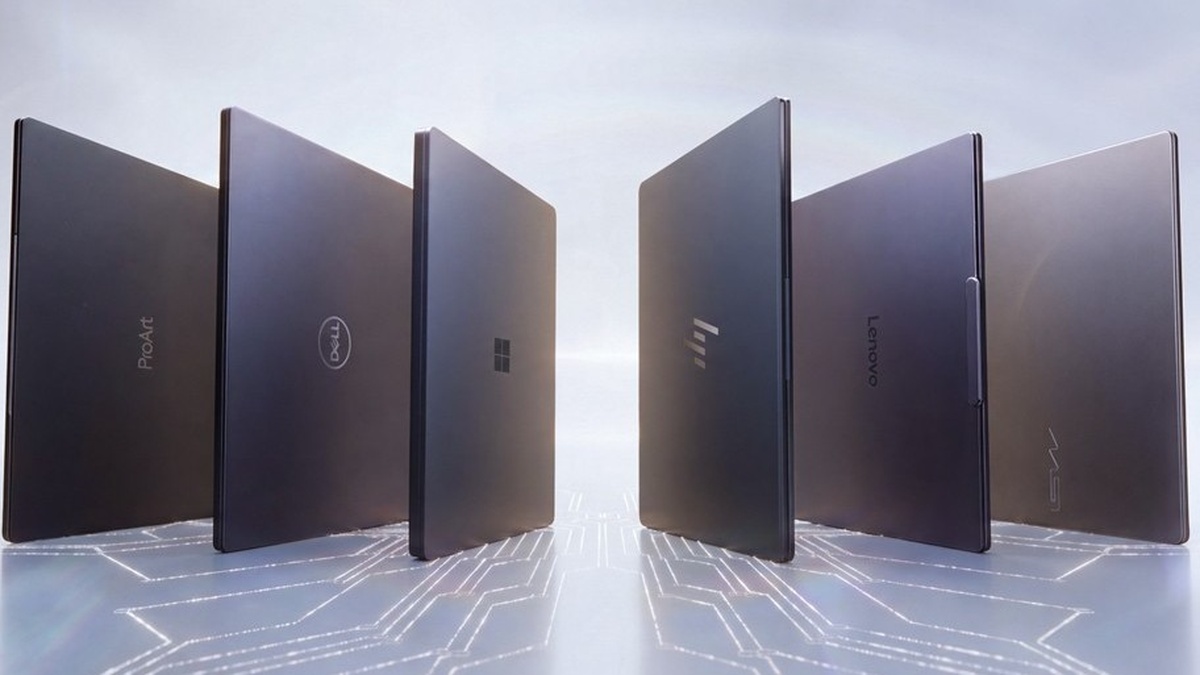
Hardware enthusiasts can now purchase NVIDIA RTX Spark laptops from premier computer manufacturers worldwide, including ASUS, Dell, HP, Lenovo, Microsoft, and MSI. Partner designs range from ultra-thin ultraportables to versatile two-in-one convertibles with active stylus pen support.
By placing the Blackwell GPU, Grace CPU, and high-bandwidth unified memory onto a single integrated superchip, manufacturers have achieved chassis profiles as thin as 14mm. Systems weighing as little as three pounds now deliver workstation performance previously confined to massive desktop towers.
Battery efficiency on NVIDIA RTX Spark laptops is substantially improved through the unified power delivery network of the superchip. Because compute cores and memory draw from a single shared power pool, users sustain intensive creative workflows and local model inference even when unplugged.
Retail pricing begins at $2,599 for base models, with flagship 128GB unified memory configurations available immediately on retail shelves. This aggressive pricing structure positions these machines as viable alternatives to both traditional high-end gaming laptops and expensive proprietary mobile workstations.
For dedicated lab deployments, NVIDIA has also made the DGX Spark 64GB desktop developer unit available through OEM partners. Powered by the GB10 Grace Blackwell Superchip, it offers researchers a silent desktop companion for agentic model tuning and synthetic data generation.
The comprehensive OEM rollout marks an important milestone in making enterprise-grade accelerated computing accessible to individual creators and researchers. The widespread availability of NVIDIA RTX Spark laptops ensures that developers worldwide can build the next generation of intelligent software on open local hardware.
Final Verdict: A Personal Supercomputing Breakthrough for Mobile Creators
The commercial arrival of NVIDIA RTX Spark laptops represents a landmark convergence of desktop workstation horsepower, energy-efficient silicon architecture, and thin-and-light consumer portability. By uniting Blackwell graphics and Grace processing on a single superchip, NVIDIA has successfully rewritten the rules of mobile performance.
From breakthrough speech intelligence with Nemotron 3.5 Transcribe to dynamic GPU arbitration and DLSS 4.5 neural frame generation, these systems provide a complete ecosystem for the future of computing. Developers, gamers, and digital creators no longer need separate machines for work and play.
With immediate availability across leading OEM hardware partners and expansive open-source software support, NVIDIA RTX Spark laptops establish the definitive gold standard for personal AI supercomputing. These machines deliver the untethered freedom, memory capacity, and raw compute necessary to pioneer the next computational era.
