


Table of Contents
A massive Navy Federal Credit Union outage crippled digital banking platforms across North America, as confirmed by Neowin breaking reporting, leaving millions of military families and defense personnel unable to access accounts or initiate digital transfers.
Arriving shortly after high-profile failures at Microsoft Azure, national banks, and United Airlines, this unexpected Navy Federal Credit Union outage intensified consumer scrutiny over interconnected digital banking architecture.
| Impacted Institution | Disruption Vector | Primary Operational Symptom | Current Resolution Status |
|---|---|---|---|
| Navy Federal Credit Union | API Gateway & Auth Deadlock | Mobile app lockouts, transfer delays & balance errors | Digital access restored; database queues clearing |
| Microsoft 365 & Azure | Cloud Infrastructure Fault | Exchange Online credential rejections & Teams latency | Global edge routing rebalanced via out-of-band patch |
| Wells Fargo & Bank of America | Interbank Clearing Latency | P2P transfer stalls & delayed ACH posting logs | Core settlement pipelines operating under normal parameters |
| United Airlines | Central Dispatch System Fault | Aircraft weight-and-balance calculation lockouts | Dispatch servers recovered following nationwide ground stop |
| JPMorgan Chase | On-Premises Software Defect | Third-party transfer throttling & intermittent portal lag | Internal patch applied; systemic security threat ruled out |
Widespread Member Lockouts and Digital Service Disruptions
The Navy Federal Credit Union outage triggered a dramatic surge of user incident reports across monitoring platforms, with metrics on the Downdetector incident tracker spiking sharply as mobile application login screens repeatedly generated connection timeouts.

Navy Federal Credit Union serves over thirteen million active service members, veterans, and civilian defense personnel, meaning digital connectivity problems instantly paralyzed payday deposits, recurring bill payments, and personal funds transfers nationwide.
As the Navy Federal Credit Union outage unfolded, account holders encountered ambiguous error prompts on mobile devices, while web portals generated gateway warnings indicating that authentication servers were completely unresponsive to member credentials.
Physical branch locations remained operational with tellers attempting manual account lookups, though branch terminals also experienced significant latency while processing database transactions against overwhelmed internal credit union servers.
Despite severe online banking disruptions during this Navy Federal Credit Union outage, automated teller machines and point-of-sale debit card swipes functioned through secondary payment authorization networks, preventing members from being completely stranded.
Core Banking Mainframes and API Gateway Deadlocks
Engineering telemetry suggests that the Navy Federal Credit Union outage originated from severe concurrency deadlocks inside the institution’s API gateway layer, which mediates mobile client requests and legacy core banking mainframes.
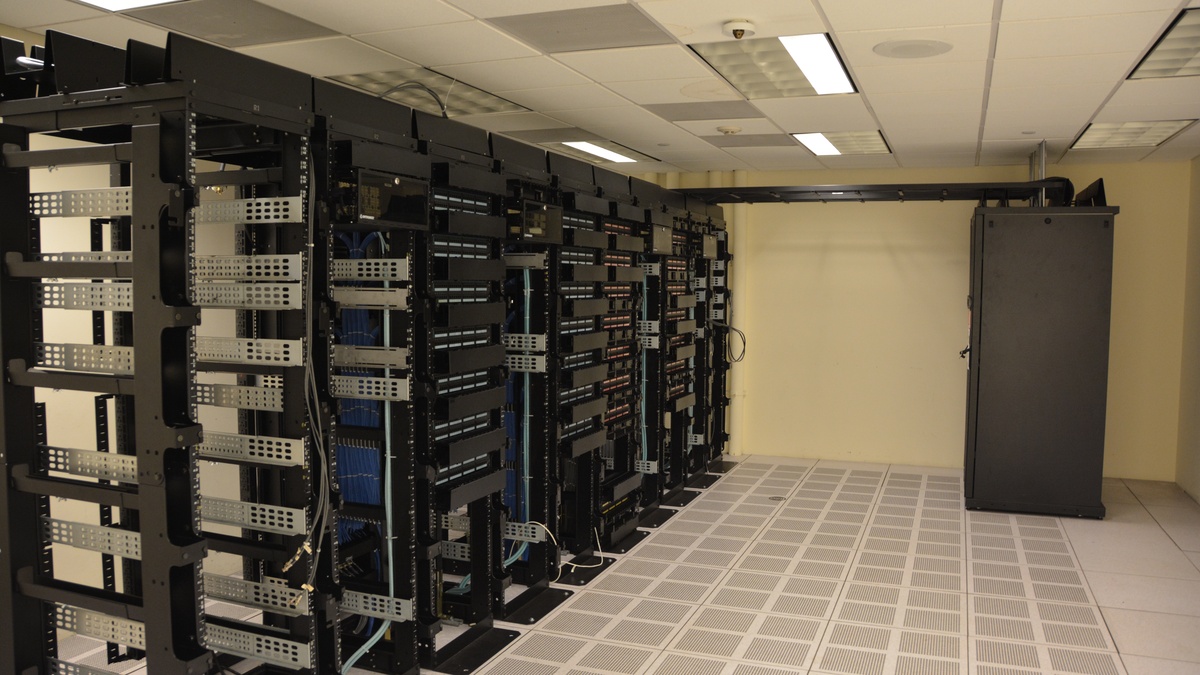
When millions of automated client applications simultaneously refresh account data or request session tokens, ingress gateways can quickly exhaust available thread pools unless dynamic rate limiting actively protects vulnerable internal microservices.
Similar architectural bottlenecks routinely threaten enterprise systems during platform transitions, as analyzed in our review of enterprise computing migration lifecycles, where unoptimized software stacks struggle under unpredicted database concurrency loads.
During the peak of the Navy Federal Credit Union outage, exhausted connection pools triggered cascading request timeouts that propagated throughout the institution’s digital delivery pipelines and customer-facing mobile banking interfaces.
Systems engineers initiated emergency thread dump captures and isolated failing microservices, gradually restarting API gateway nodes to drain stale session cookies and restore deterministic transaction processing across primary clusters.
Interbank Clearing House Stress and Cascading Transaction Delays
The sudden Navy Federal Credit Union outage escalated consumer anxiety because it coincided with widespread interbank transaction slowdowns that recently impacted major commercial lenders including JPMorgan Chase, Wells Fargo, and Bank of America across the country.
A recent software defect inside on-premises transaction routing systems at JPMorgan Chase created ripple effects throughout shared payment clearinghouses, delaying peer-to-peer transfers and Automated Clearing House settlement batches for multiple institutions.
Because the Navy Federal Credit Union outage coincided with broader clearinghouse latency, members transferring money between different financial entities experienced compounding delays, leading many to suspect a coordinated nationwide banking failure.
Financial sector regulators confirmed that customer funds remained entirely secure throughout the incident, clarifying that transaction backlogs represented routing and synchronization delays rather than monetary loss or systemic ledger corruption.
Clearinghouse operators eventually accelerated batch processing cycles overnight, enabling delayed payroll distributions and external electronic funds transfers to complete successfully once participating financial gateways re-established reliable handshakes.
Single Points of Failure Across Shared Cloud Infrastructure
The rapid emergence of this Navy Federal Credit Union outage alongside Microsoft and airline disruptions highlights an alarming systemic reliance on a remarkably narrow collection of hyperscale technology providers and cloud networks.
| Infrastructure Layer | Legacy Enterprise Design | Vulnerability Exposure Point | Modern Resilient Alternative |
|---|---|---|---|
| Ingress API Gateways | Monolithic Hardware Proxies | Authentication thread pool exhaustion during spikes | Distributed Envoy mesh with dynamic token throttling |
| Core Ledger Databases | Synchronous SQL RDBMS | Deadlocks across simultaneous transaction reconciliation | Event-driven Kafka streaming with distributed ledgers |
| Interbank Clearing | Batch-Processed ACH Queues | Cascading delays from upstream institution timeouts | Multi-rail payment routing with ISO 20022 compliance |
| Identity & Access (IAM) | Centralized OAuth Clusters | Total service blackout upon credential server timeout | Federated multi-region SSO with local biometric fallback |
| Disaster Recovery | Cold Warm Standby Sites | Multi-hour manual failover causing prolonged outages | Active-active multi-cloud clusters with zero-loss sync |
When organizations centralize critical operations on shared infrastructure, localized software bugs or configuration faults can cascade unpredictably, echoing operational challenges highlighted in our analysis of cloud platform infrastructure economics.
During this recent Navy Federal Credit Union outage, speculation circulated online regarding shared cloud hosting dependencies, prompting credit union leadership to clarify that internal routing faults were isolated to proprietary application environments.
Financial enterprises face immense regulatory pressure to maintain operational continuity, necessitating multi-cloud failover strategies that eliminate single points of failure across identity management, core ledgers, and customer portals.
Implementing automated active-active multi-region replication ensures that when a primary datacenter or gateway cluster stumbles, traffic reroutes seamlessly without subjecting millions of account holders to debilitating service interruptions.
Incident Response Protocols, Data Integrity and Service Restoration
In response to the Navy Federal Credit Union outage, technicians worked alongside software vendors to stabilize internal routing tables and restore digital functionality across the official Navy Federal online portal.

Representatives issued public reassurances confirming that zero unauthorized intrusions occurred, emphasizing that the Navy Federal Credit Union outage was strictly caused by operational software failures rather than malicious cyberattacks.
Engineering teams systematically cleared stalled database locks, deployed targeted memory management patches, and verified cryptographic ledger balances before reopening public access to mobile and web banking applications.
Members logging back into accounts were advised to verify recent transaction histories and monitor pending electronic payments to confirm that scheduled recurring bills were successfully queued for scheduled settlement.
Customer service phone channels experienced lengthy hold times as staff resolved individual member inquiries, while automated messaging confirmed that all digital features had returned to normal operating parameters.
Frequently Asked Questions
What caused the recent Navy Federal Credit Union outage?
The Navy Federal Credit Union outage was caused by an internal technical glitch and API gateway deadlock, rather than a cyberattack or external security breach, according to official engineering reports.
Were member funds or personal accounts compromised during the outage?
No member deposits, savings, or personal credentials were compromised during the Navy Federal Credit Union outage, and all financial balances remained completely secure within primary accounting ledgers.
Did debit cards and ATM withdrawals work during the Navy Federal Credit Union outage?
Yes, automated teller machine withdrawals and physical debit card point-of-sale transactions continued to function through secondary processing networks while mobile apps and online portals remained offline.
Was the disruption linked to the Microsoft or United Airlines system outages?
Officials confirmed that the Navy Federal Credit Union outage was entirely separate and not connected to recent software failures experienced by Microsoft, United Airlines, or other major commercial banks.
What should members do if pending transfers were delayed by the glitch?
Members should review recent account statements and transaction histories online, contacting Navy Federal customer support if any recurring bill payments or peer-to-peer transfers require manual reconciliation.
Final Editorial Verdict: Architectural Resilience in Critical Financial Systems
The recent Navy Federal Credit Union outage serves as a stark reminder of how fragile digital banking infrastructure remains when legacy core mainframes interact with modern high-traffic consumer mobile interfaces.
While funds remained completely safe, the simultaneous disruption of critical services across banking, aviation, and cloud ecosystems underscores the urgent necessity for modern architectural resilience and proactive redundancy standards.
As financial institutions accelerate modernization programs, closing architectural gaps and hardening API gateways will be essential to prevent future Navy Federal Credit Union outage incidents from paralyzing military community finances.
