


Table of Contents
Apple has officially expanded Apple Intelligence in China to compatible iPad and Mac hardware via the second developer betas of iPadOS 27.3 and macOS 27.3, as verified by MacRumors technical reporting.
Following an initial smartphone trial, this substantial update delivers generative writing utilities, image synthesis, and automated notification filtering to users adopting Apple Intelligence in China while adhering strictly to regional regulatory frameworks.
| Implementation Metric | Mainland China Ecosystem | North America & Global | Regulatory & Silicon Impact |
|---|---|---|---|
| Cloud LLM Partner | Alibaba Qwen (Tongyi Qianwen) | OpenAI ChatGPT & Private Cloud Compute | Complies with Cyberspace Administration rules |
| Regulatory Oversight | Shanghai CAC Generative Filing | Voluntary AI Safety Frameworks | Requires strict algorithm auditing |
| Initial Beta Target | iPadOS 27.3 & macOS 27.3 (Beta 2) | iOS 18.1 / macOS 15.1 Baseline | Phased multi-device developer rollout |
| Siri Agent Capabilities | Type-to-Siri with Qwen query relays | Full Siri AI app-intent framework | Advanced autonomous actions deferred |
| Public Launch Target | December 2026 Scheduled Release | Rolling General Availability | Synchronized across all product lines |
Shanghai Cyberspace Filings: Clearing On-Device Silicon for Chinese Distribution
The expansion of Apple Intelligence in China required extensive regulatory coordination, culminating when the Shanghai Cyberspace Administration confirmed that Apple filed mandatory generative model documentation on November 9, as documented on the CAC official portal.

China enforces stringent statutory oversight on commercial machine learning deployments, mandating that domestic algorithms prevent systemic hallucinations, uphold data privacy standards, and register specific training datasets before public distribution.
While Apple deployed the preliminary beta for iPhone handsets earlier this autumn, rolling out Apple Intelligence in China for larger tablet and desktop screens lagged behind until regional compliance teams reviewed localized user interfaces.
By securing official administrative validation, Cupertino resolved months of supply chain uncertainty, unlocking key marketing advantages for high-end workstations and productivity tablets across major metropolitan retail outlets.
Developers throughout Shenzhen, Shanghai, and Beijing can now initiate live software testing immediately upon downloading developer configuration profiles, validating workflow performance ahead of general consumer releases planned for December.
Alibaba Qwen LLM Integration: Domestic Cloud Foundations Replace Western Services
To deploy Apple Intelligence in China without violating domestic sovereignty laws, Apple partnered directly with Alibaba Cloud, replacing Western cloud infrastructure like OpenAI ChatGPT with advanced Chinese foundation models from the Qwen family.
Alibaba developed the Tongyi Qianwen series to excel in Mandarin linguistic nuances, semantic reasoning, and structured data processing, making it an optimal technological partner for handling intricate system prompts on macOS.
When users engage with Apple Intelligence in China for creative writing extensions or contextual queries, the operating system transparently routes encrypted prompts to Alibaba cloud endpoints after obtaining explicit user confirmation.
This modular architecture demonstrates Apple’s adaptable software design, decoupling the on-device user interface from specific backend providers while maintaining strict cryptographic sandboxing between application data and remote servers.
Consequently, Apple Intelligence in China achieves parity with international releases for text generation and document summarization, ensuring enterprise customers enjoy reliable assistance without compromising governmental data residency mandates.
Silicon Architecture Matrix: Compatible Apple M-Series and A-Series Hardware
Hardware eligibility for Apple Intelligence in China remains anchored to hardware containing at least eight gigabytes of unified memory, matching specifications highlighted in our Apple M4 Mac Mini deep dive analysis.
This strict memory threshold ensures that every Mac running an M1, M2, M3, or M4 processor can execute on-device three-billion-parameter language models locally without experiencing system swapping or background application eviction.
For tablet owners seeking Apple Intelligence in China, the compatibility matrix encompasses all iPad Pro and iPad Air models equipped with M-series silicon, alongside newly introduced iPad mini tablets powered by A17 Pro chips.
Standard base iPads utilizing older A-series processors lack sufficient bandwidth within their integrated Neural Engines, echoing generational transition cycles previously observed across the legacy computing hardware market.
By enforcing dedicated silicon standards, Apple Intelligence in China delivers rapid local response times, allowing operations like photograph object removal and text proofreading to execute entirely offline whenever cloud connections drop.
Core Operating System Features: Writing Tools, Clean Up and Visual Intelligence
The beta releases introduce an expansive suite of intelligent utilities, headlined by system-wide Writing Tools that allow users to rewrite, condense, and proofread technical prose across Mail, Pages, and third-party communication software.
| Device Category | Silicon Processor Architecture | Neural Engine Throughput | Apple Intelligence Support |
|---|---|---|---|
| Mac Desktop & Laptop | Apple M1 through M4 / M5 Series | 11 to 38+ TOPS Neural Engine | Full Writing Tools, Clean Up & Qwen Relays |
| iPad Pro & Air | Apple Silicon M1, M2, M4 | 11 to 38 TOPS Unified Engine | Supported via iPadOS 27.3 Developer Beta |
| iPad mini | Apple A17 Pro & A20 Pro | 35 TOPS High-Efficiency NPU | Supported with hardware model caching |
| Legacy iPad (Standard) | A14, A15, A16 Bionic Silicon | Sub-16 TOPS Engine / Limited RAM | Unsupported due to 8 GB RAM requirement |
| Audio Peripherals | Apple H2 Headphone Silicon | On-chip DSP & ANC Processing | Live Translation with AirPods Pro 2 & 4 ANC |
Within the Photos application, Apple Intelligence in China powers the Clean Up utility, allowing users to remove distracting background objects or pedestrians using generative diffusion patches that seamlessly match surrounding lighting.
Natural language indexing enables intuitive media searches, letting photographers pinpoint specific assets using conversational queries like searching for sunset portraits or family reunions without manually sorting tagged albums.
Visual Intelligence also expands under Apple Intelligence in China across supported tablets, providing instant contextual lookups for botanical specimens, architectural landmarks, and localized street signs captured directly through optical camera sensors.
Notification management gains priority summaries and smart interruption reduction, algorithmically filtering background application chatter so that critical corporate alerts and urgent personal messages receive prompt visibility.
Localized Audio Processing: Cross-Platform Live Translation and AirPods Pairing
Voice communications benefit substantially under the new beta builds, introducing real-time call transcription and automated conversation summaries that synchronize securely into the native Notes database across linked desktop workspaces.
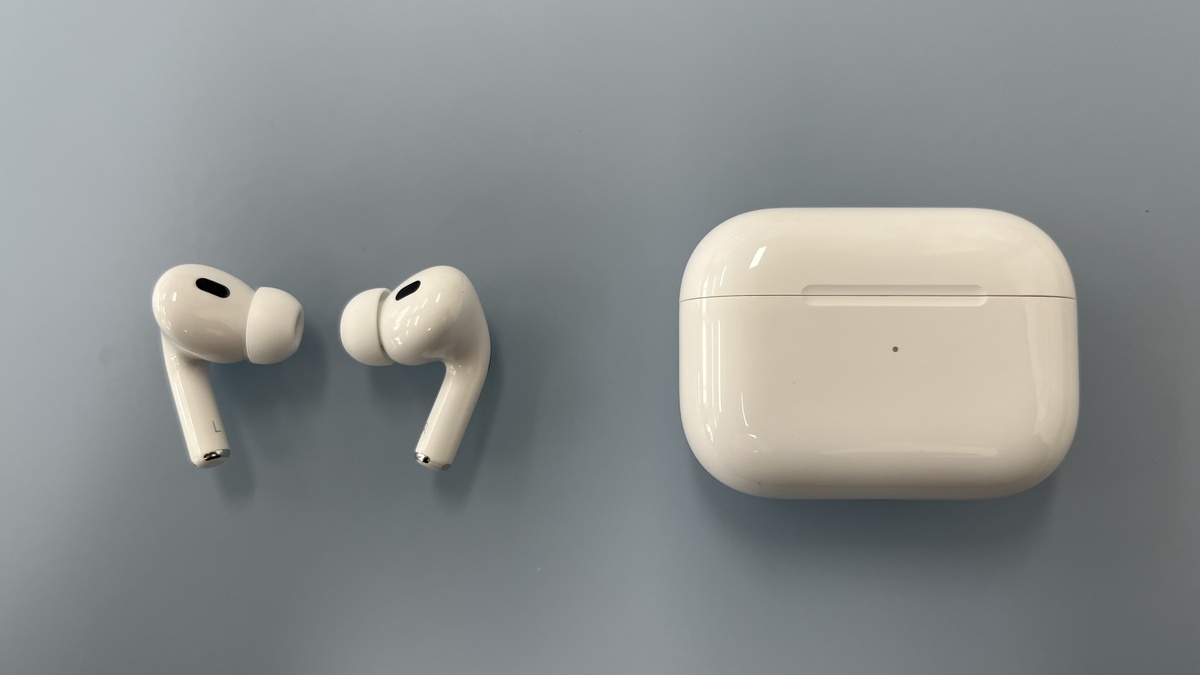
Cross-platform Live Translation powered by Apple Intelligence in China now extends seamlessly into Messages, FaceTime conferences, and direct Phone calls, translating multilingual dialog dynamically to accelerate international commerce.
When paired with compatible AirPods Pro 2 or fourth-generation AirPods with Active Noise Cancellation, the system projects real-time spoken translations directly into the user’s ears while suppressing external ambient acoustic interference.
Audio recording tools embedded inside the Notes application generate structured summaries from lengthy university lectures or corporate meetings, highlighting essential action items and speaker contributions automatically without manual transcribing.
This tight integration illustrates how Apple Intelligence in China leverages specialized acoustic silicon alongside neural coprocessors, delivering cohesive user experiences that span personal computing, wearable accessories, and mobile hardware.
Frequently Asked Questions
Which iPad and Mac models support Apple Intelligence in China?
All Mac and iPad devices containing M1, M2, M3, or M4 silicon support Apple Intelligence in China, alongside iPad mini models equipped with A17 Pro or A20 Pro processors.
Why does Apple use Alibaba Qwen instead of OpenAI ChatGPT in China?
Chinese cyberspace regulations mandate domestic algorithm certification and local data residency, leading Apple to integrate Alibaba Cloud’s certified Qwen models rather than foreign Western cloud intelligence providers.
Does this update include the autonomous Siri AI application?
No, the current iPadOS and macOS betas focus on baseline writing tools and photo utilities, deferring complex multi-step Siri agent capabilities for future regulatory reviews in 2027.
When will these features roll out to public non-beta users?
Apple plans to launch iPadOS 27.3, macOS 27.3, and iOS 27.3 publicly in December, bringing Apple Intelligence in China to all compatible consumer and commercial devices.
Can users perform generative writing tasks without an internet connection?
Basic proofreading, tone rewriting, and text summarization run entirely on-device via the Neural Engine, while complex generative drafting queries route securely to Alibaba’s cloud servers with user approval.
Final Editorial Verdict: Apple’s Strategic AI Play in Mainland China
The arrival of Apple Intelligence in China across Mac and iPad platforms marks a pivotal milestone in Cupertino’s global strategy, proving that localized partnerships can bridge regional regulatory hurdles without fragmenting core user experiences.
By substituting Western cloud backends with Alibaba’s proven Qwen foundation models, Apple secures a compliant and performant artificial intelligence ecosystem capable of competing vigorously against domestic Android and Windows hardware alternatives.
As public deployment approaches this December, Chinese enterprise customers and creative professionals gain unified neural computing, reinforcing the enduring value proposition of Apple Intelligence in China across professional desktop environments.
