


Table of Contents
Rockstar Games published an unprecedented visual preview highlighting the GTA 6 dynamic weather screenshots, showcasing the atmospheric engine powering Leonida days ahead of launch. Created with The Weather Channel, the reveal highlights unpredictable tropical microclimates and volumetric moisture simulation.
These groundbreaking GTA 6 dynamic weather screenshots demonstrate how advanced cloud voxels, dynamic asphalt saturation, and coastal fog transform Vice City into an intensely reactive open world. Lighting engineers have rebuilt atmospheric scatter from scratch to deliver unprecedented visual immersion across current-generation console hardware.
| Atmospheric System | RAGE Engine Architecture | Environmental Simulation Effect | Gameplay & Tactical Impact |
|---|---|---|---|
| Volumetric Cloudscapes | Ray-marched 3D cloud voxels with thermodynamic density | Towering cumulonimbus clouds and dynamic shadow casting | Alters line of sight during aerial flight and outdoor lighting |
| Road Surface Saturation | Multi-layer screen-space roughness & normal mapping | Dynamic puddle accumulation and specular headlight reflections | Reduces tire traction and induces high-speed hydroplaning |
| Coastal Sea Fog | Depth-aware atmospheric scattering and suspended vapor | Dense marine fog rolling across Vice City waterways and Keys | Severely reduces visibility and scatters vehicle high beams |
| Tropical Squalls & Storms | GPU particle simulation and dynamic wind vector fields | Horizontal rainfall, bending palm trees, and storm surges | Causes vehicle sway on bridges and disperses NPC crowds |
| Dynamic Microclimates | Grid-based meteorological simulation across Leonida biomes | Unpredictable localized rainfall with sudden sunshine breaks | Demands adaptive travel planning and shifts tactical pursuit paths |
Volumetric Cumulonimbus Physics: Overhauling Skybox Fidelity Across Leonida
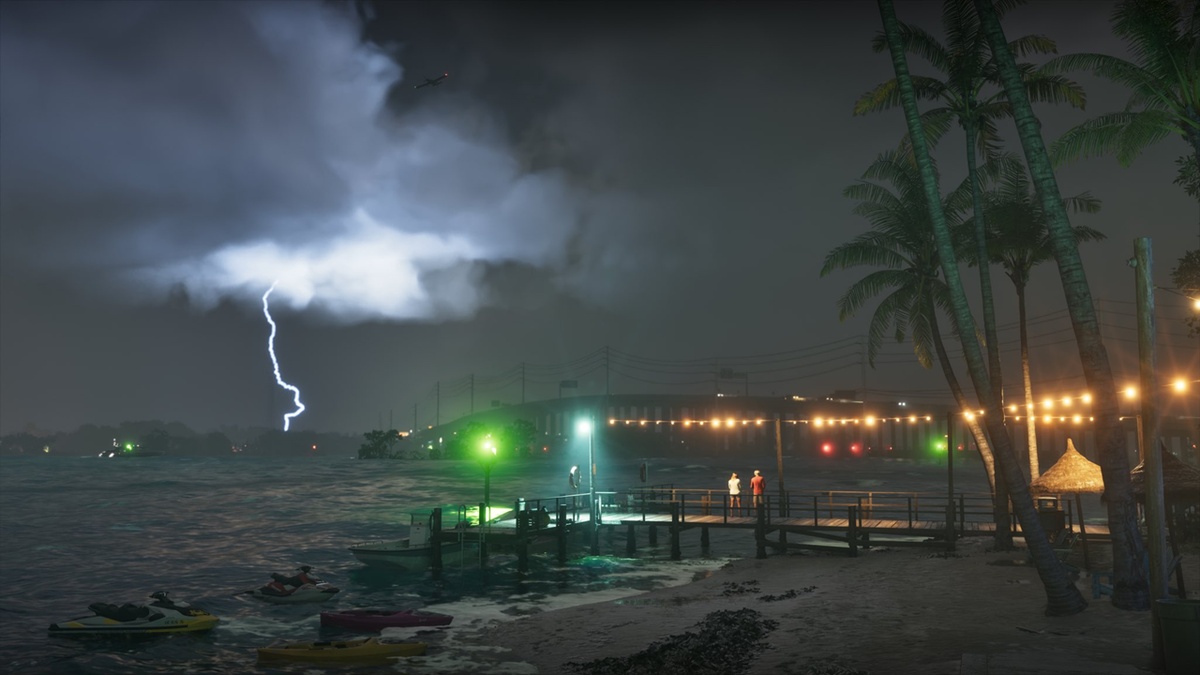
Examining the newly released GTA 6 dynamic weather screenshots reveals a monumental shift away from static skyboxes toward fully simulated volumetric cloud formations. Owen Shepherd, Rockstar’s VP of art for light and rendering, confirmed that cloudscapes now behave as living thermodynamic volumes across Leonida.
Rather than relying on flat sky textures, the updated RAGE engine calculates atmospheric density, sunlight absorption, and moisture condensation in real time. Towering cumulonimbus clouds cast sweeping, accurate shadows over city streets, darkening suburban neighborhoods while nearby coastal shorelines remain illuminated.
In published previews analyzed alongside the GTA 6 dynamic weather screenshots, meteorologists noted that the cloud structures match Florida’s subtropical weather patterns. As daytime temperatures climb, moisture rises from the ocean, creating vertical convective storm heads that produce sudden, localized cloudbursts.
These cloud systems interact directly with in-game aviation, forcing pilots to navigate around violent updrafts and low-visibility cloud banks. Aircraft cockpits experience severe turbulence, windscreen icing, and dramatic lightning strikes when traversing these thick volumetric cloud formations.
Such complex volumetric calculations mirror the immense silicon processing demands explored in our AMD Ryzen 7 9800X3D gaming CPU analysis, where modern computing architectures are pushed to their limits by multi-threaded physics calculations.
Roadway Reflection Optics: Dynamic Puddle Formation and Headlight Glare
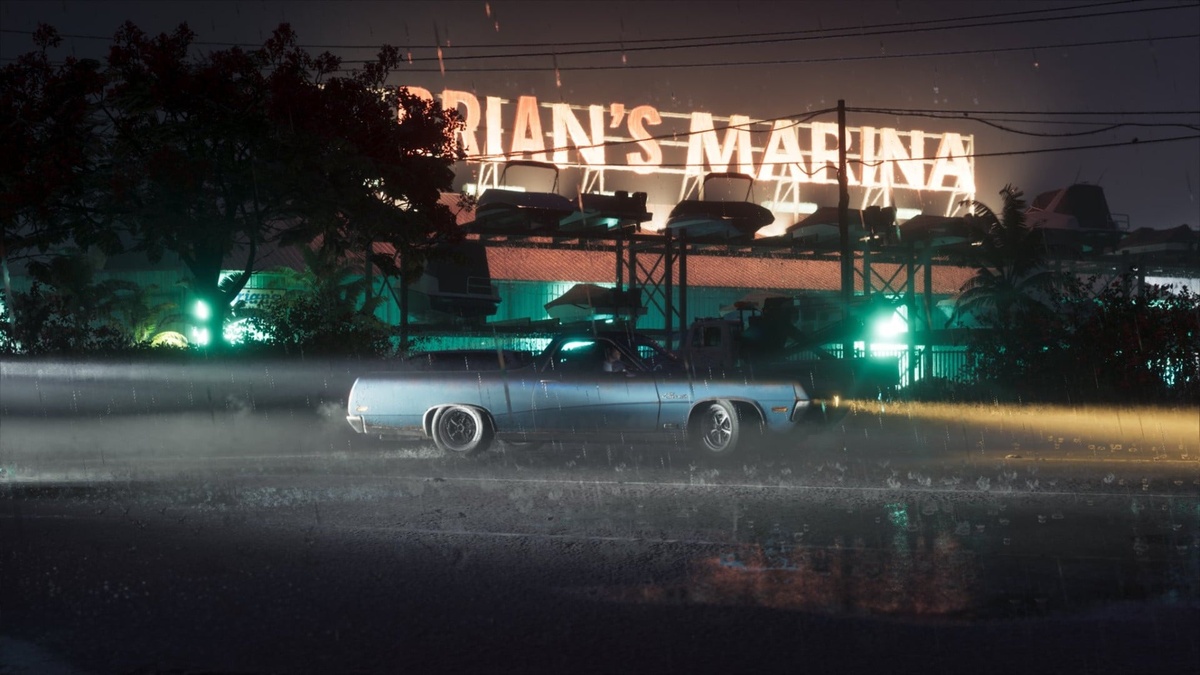
Another striking technical breakthrough visible in the GTA 6 dynamic weather screenshots centers on real-time surface hydrology and dynamic roadway wetness accumulation. Streets do not simply switch between dry and wet textures; water dynamically pools in natural pavement depressions.
According to primary reporting from IGN, torrential rain generates thick airborne spray that dramatically degrades visibility across the Keys, compelling municipal road crews to install reflective lane markers to assist nighttime motor travel.
The authentic road reflections highlighted across the GTA 6 dynamic weather screenshots leverage hybrid screen-space and hardware-accelerated ray tracing techniques. Headlights from oncoming traffic cut through surface puddles with diffused specular scattering, mimicking realistic wet-asphalt optics without excessive visual noise.
Dynamic surface saturation also directly impacts vehicle physics, lowering tire traction and extending braking distances during downpours. Drivers must navigate standing water carefully to prevent dangerous hydroplaning across slick multi-lane freeways and coastal thoroughfares.
Evaluating vehicle handling during storm sequences in the GTA 6 dynamic weather screenshots reveals that sports cars suffer substantial grip loss on flooded roads. Players must adapt driving styles or visit local auto shops to equip specialized high-traction wet-weather tire compounds.
Marine Layer Atmospheric Fog: Environmental Navigation Across the Keys
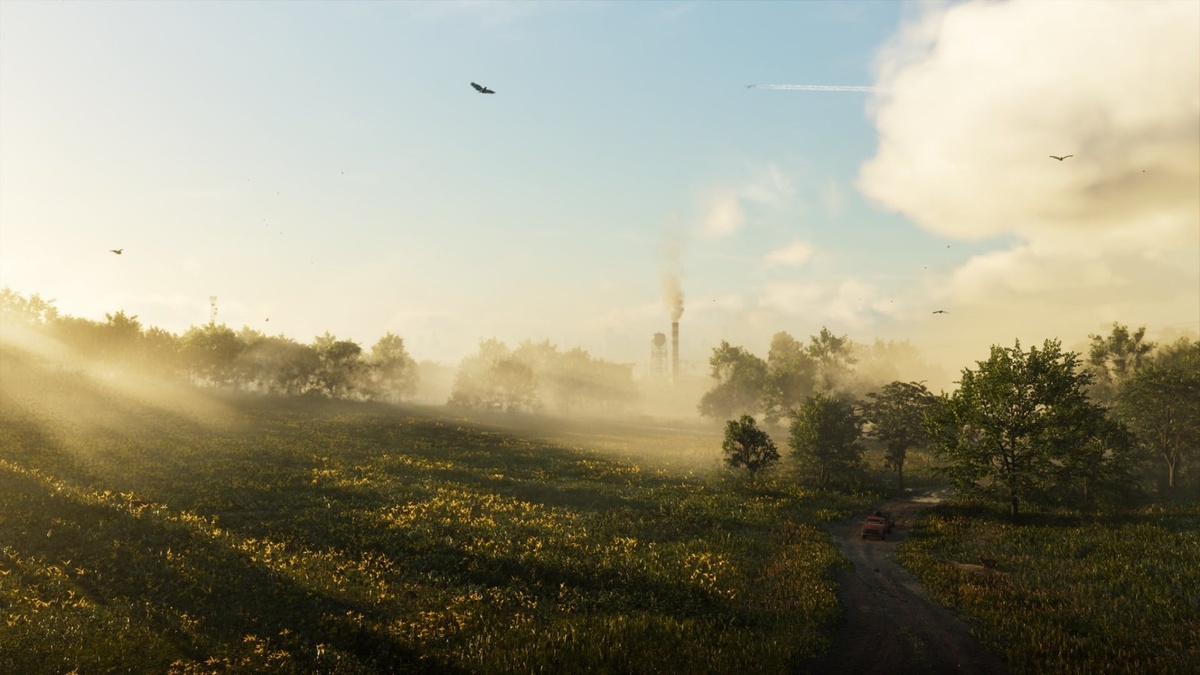
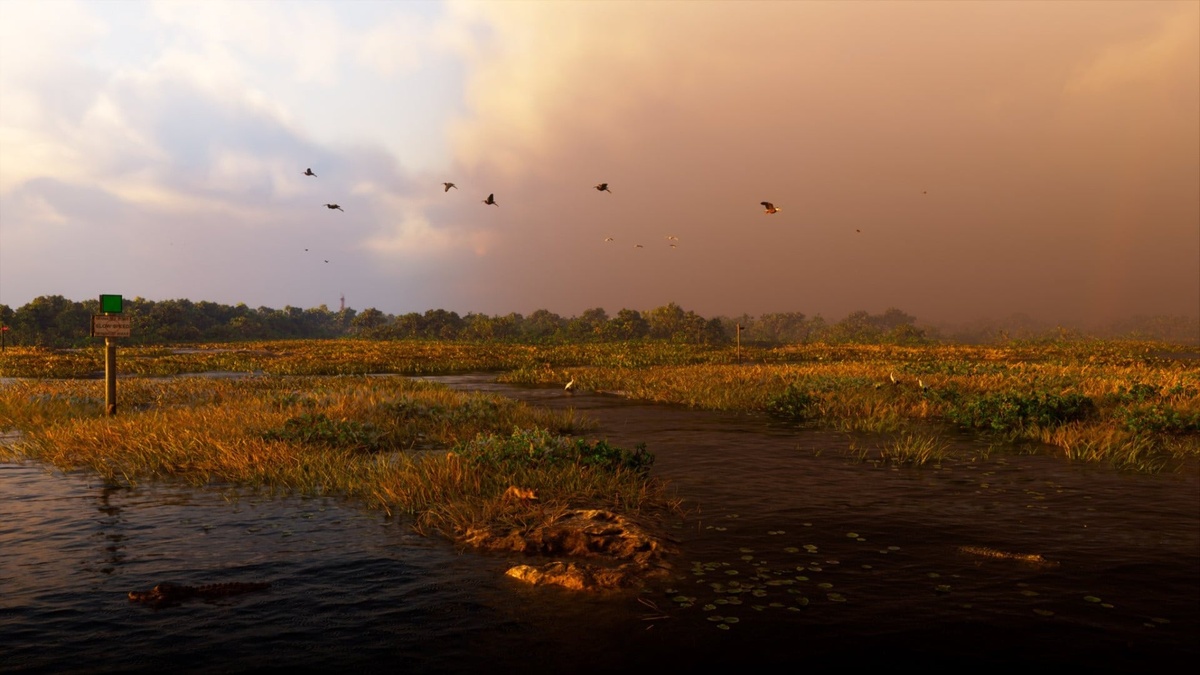
Coastal geography plays a pivotal role in the GTA 6 dynamic weather screenshots, demonstrating how warm ocean currents generate thick, drifting sea fog banks. These dense marine layers roll inland across marshy bayous and beachfront districts, creating localized low-visibility zones.
Rockstar’s environmental rendering pipeline calculates volumetric light transmission through suspended water droplets, creating realistic atmospheric halos around streetlamps. High-beam illumination reflects backward into the driver’s perspective, forcing players to toggle low beams to pierce dense coastal mist.
Official breakdowns shared by The Weather Channel complement the GTA 6 dynamic weather screenshots by detailing how thermal inversions trap marine moisture near sea level. This creates disorienting navigation conditions for maritime vessels navigating through shallow mangrove channels.
Navigating the dense ocean fog depicted in the GTA 6 dynamic weather screenshots transforms routine law-enforcement evasions into tense tactical standoffs. Helicopter searchlights struggle to penetrate the milky fog layer, allowing fleeing fugitives to slip through police cordons unseen.
Displaying such intricate volumetric light transmission parallels desktop graphics advancements documented in our NVIDIA Windows driver support architecture overview, where cutting-edge shading pipelines require modern hardware execution.
Tropical Storm Simulation: Wind Vectors and Destructive Weather Inundation
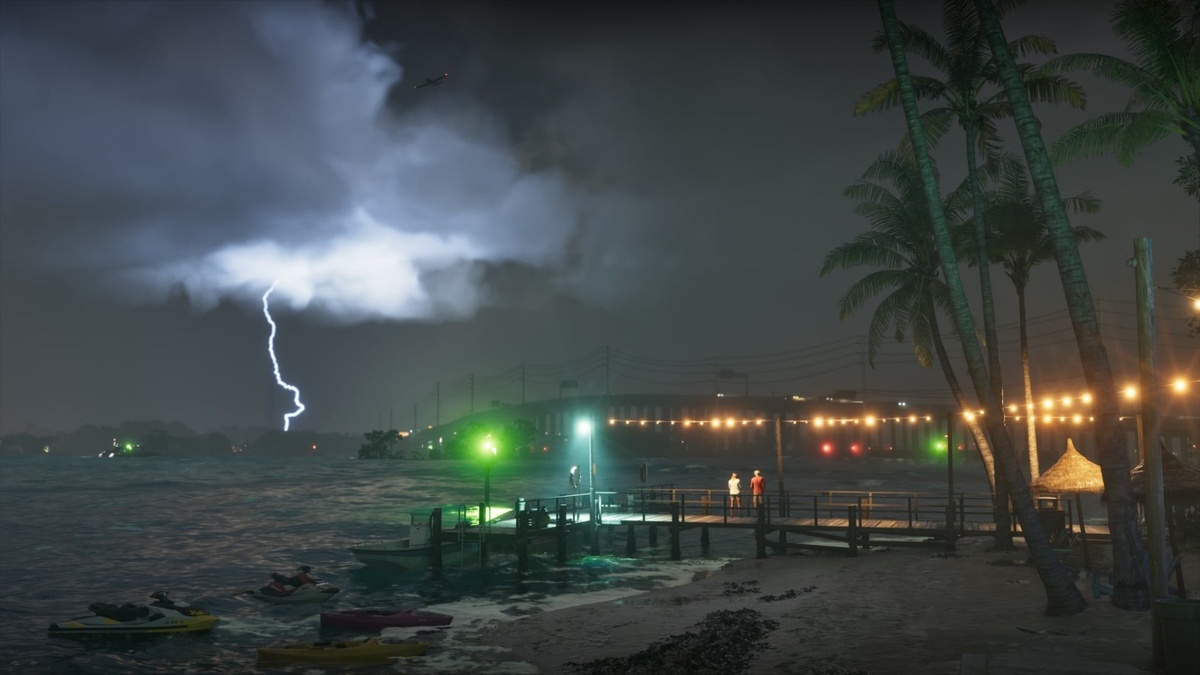
Beyond passive moisture effects, the GTA 6 dynamic weather screenshots underscore the violent fury of fully simulated subtropical squalls and tropical depressions. High-velocity wind vectors propagate through palm trees, power lines, and freestanding signage with realistic physical deformation.
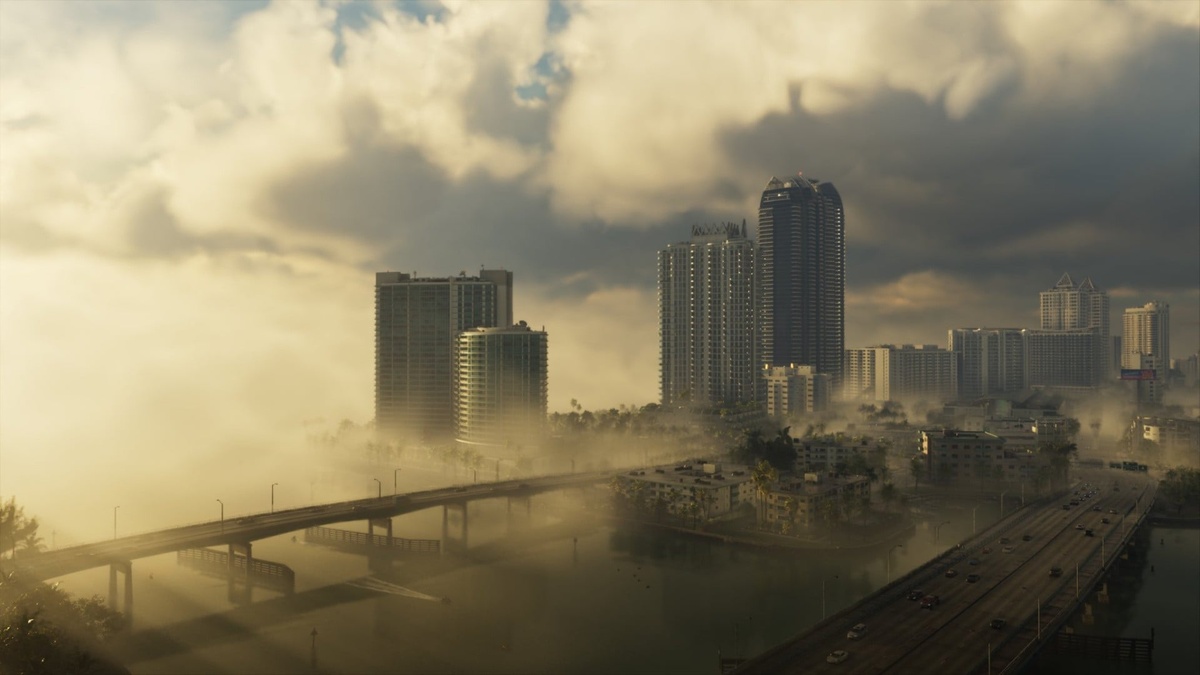
Rockstar confirmed that severe tropical storms bring heavy cloud ceilings, gale-force winds, and persistent horizontal sheets of rain. Storm surge waters gradually inundate low-lying coastal roads, leaving stranded civilian vehicles and floating debris across metropolitan intersections.
In contrast to scripted story events, the storms illustrated in the GTA 6 dynamic weather screenshots arise dynamically through background atmospheric simulation systems. A sunny afternoon excursion can rapidly deteriorate into a severe weather emergency, altering ambient audio with howling winds and thunderclaps.
NPC civilian behaviors also shift dynamically during extreme weather, with pedestrians frantically running for shelter under building awnings. Beachside promenades empty completely as storm sirens sound, transforming normally bustling tourist destinations into desolate, wind-swept landscapes.
Studying environmental volatility through the GTA 6 dynamic weather screenshots highlights the immense computational power required to simulate synchronized physics. Managing complex real-time weather grids across massive open worlds represents one of the crowning technical achievements of modern gaming engines.
Hardware Rendering Architecture: Console Scalability on PlayStation 5 and Xbox
Delivering the photographic fidelity captured in the GTA 6 dynamic weather screenshots requires sophisticated multi-tier rendering scalability across target console architectures. Sony’s PlayStation 5 and Microsoft’s Xbox Series X leverage dynamic resolution scaling to maintain steady frame pacing.
On PlayStation 5 Pro, advanced machine-learning upscaling through PlayStation Spectral Super Resolution preserves razor-sharp droplet details during storms. Enhanced compute units also enable expanded ray-traced reflections across drenched urban streets and glass storefronts.
Even with aggressive optimization shown in the GTA 6 dynamic weather screenshots, high-density atmospheric effects represent an immense workload for console hardware. Both platform holders utilize temporal accumulation and asynchronous compute pipelines to decouple volumetric fog rendering from primary geometry passes.
Such rigorous architectural tuning mirrors the efficiency benchmarks discussed in our Apple M4 Mac mini silicon architecture review, where balanced thermal headroom and unified memory architectures maximize sustained visual throughput.
Gamers seeking flexible remote gameplay options can explore cloud infrastructure detailed in our Xbox cloud gaming pricing and performance breakdown, evaluating how streaming servers handle visually demanding titles like GTA 6.
| Target Platform | Internal Resolution Target | Atmospheric Rendering Budget | Expected Framerate Target |
|---|---|---|---|
| PlayStation 5 Pro | 1440p dynamic scaling to 4K via PSSR upscaling | Hardware ray-traced reflections and dense volumetric fog | 60 FPS performance mode with balanced ray tracing |
| PlayStation 5 (Base) | 1080p to 1440p dynamic reconstruction (FSR) | Optimized volumetric cloud voxels and screen-space reflections | Stable 30 FPS fidelity target with high graphical fidelity |
| Xbox Series X | 1152p to 1440p dynamic scaling | Full atmospheric particle density and volumetric light shafts | Stable 30 FPS target with high-resolution texture streaming |
| Xbox Series S | 720p to 1080p dynamic scaling | Scaled particle count and optimized planar road reflections | 30 FPS target with reduced draw distance for weather foliage |
| PC Architecture (Projected) | Native 4K with DLSS 3.7 / FSR 3.1 frame generation | Uncapped volumetric density and full path-traced lighting | 60+ FPS high-refresh rate capability on modern silicon |
Frequently Asked Questions
What do the new GTA 6 dynamic weather screenshots reveal about Leonida?
Rockstar partnered with The Weather Channel to unveil GTA 6 dynamic weather screenshots demonstrating dynamic Florida-inspired storms. The promotional reveal highlights real-time volumetric clouds, road wetness, and dense marine fog across Leonida.
How does dynamic weather affect vehicle driving and tire traction in GTA 6?
The GTA 6 dynamic weather screenshots show that dynamic weather significantly impacts vehicle handling by creating standing water. Flooded roadways reduce tire traction, increase braking distances, and induce realistic hydroplaning during heavy tropical downpours.
Can hurricanes and tropical storm surges flood streets in Vice City?
Yes, as detailed in the GTA 6 dynamic weather screenshots, tropical storms bring severe gale-force winds and heavy rain. Localized storm surges cause ocean waters to temporarily inundate low-lying coastal roads across Vice City.
Are weather transitions in GTA 6 completely dynamic or tied to story missions?
The GTA 6 dynamic weather screenshots confirm that weather changes dynamically via an advanced background atmospheric simulation. Weather patterns shift unpredictably between sunny skies, sudden cloudbursts, and coastal fog without scripted triggers.
When is GTA 6 releasing and which consoles support these dynamic weather features?
GTA 6 will launch on PlayStation 5 and Xbox Series X/S on November 19, 2026. Both consoles utilize advanced dynamic resolution scaling to render the GTA 6 dynamic weather screenshots smoothly.
Final Atmospheric Verdict: Setting a Next-Generation Open World Benchmark
The release of the official GTA 6 dynamic weather screenshots confirms that Rockstar Games has elevated environmental world-building to unprecedented heights. By simulating dynamic weather as an active physical force, Leonida feels remarkably authentic, unpredictable, and breathtakingly alive.
From towering cumulonimbus clouds to reflective wet pavement and thick coastal fog, every atmospheric layer serves both aesthetic and gameplay functions. Weather is no longer mere visual backdrop; it directly alters driving mechanics, tactical evasion, and aviation navigation.
As the November 19, 2026 release date approaches, these GTA 6 dynamic weather screenshots solidify expectations for a generational technological leap. Rockstar’s mastery of volumetric lighting and meteorological physics sets a new gold standard for next-generation open world game design.
