



Table of Contents
In a viral broadcast partnership days ahead of launch, The Weather Channel unveiled an exclusive technical breakdown of the **GTA 6 dynamic weather system**, showcasing how Rockstar Games reimagined Florida’s unpredictable subtropical microclimates for the PlayStation 5, as reported by Push Square.
Lighting and rendering artist Owen Shepherd revealed that capturing Leonida’s volatile climate required discarding uniform skyboxes, building a localized GTA 6 dynamic weather system featuring towering vertiginous cumulonimbus formations, rolling coastal sea fog, and dynamic thunderheads.
| Atmospheric Microclimate | Volumetric Cloud Model | Dynamic Optical Scattering | Gameplay & Navigation Impact | PlayStation 5 Target |
|---|---|---|---|---|
| Vertiginous Cumulonimbus Formations | Voxelized thermal convective updrafts | Multi-scatter ray marching with sun occlusion | Blinding cockpit turbulence during aerial flight | Dynamic 4K with temporal reprojection |
| Coastal Marine Sea Fog | Persistent low-altitude condensation banks | Subsurface light attenuation and neon glow | Severely reduced line of sight along shorelines | Hardware-accelerated ray tracing at 60 FPS |
| Subtropical Thunderstorm Cells | Dynamic anvil heads with localized rain shafts | Synchronized electrostatic discharge illumination | Heavy wind shear and turbulent oceanic waves | Asynchronous compute shader allocation |
| Tropical Rain & Puddle Depressions | Real-time hydrodynamic surface saturation | Planar and screen-space hybrid puddle reflections | Hydroplaning risks and extended braking distances | Real-time physics calculation at 60 Hz |
| Ethereal Wetland Mist | Layered boundary-layer moisture density | Soft volumetric light shaft dispersion | Reduced boat visibility through marsh channels | Fixed memory buffer on ultra-fast SSD |
Volumetric Cloud Simulation: Rendering Vertiginous Cumulonimbus Formations on PS5 Hardware
Open-world sandbox environments have historically struggled with atmospheric authenticity, often relying on flat spherical sky textures that fail to convey true vertical scale, a core limitation solved by the new GTA 6 dynamic weather system.
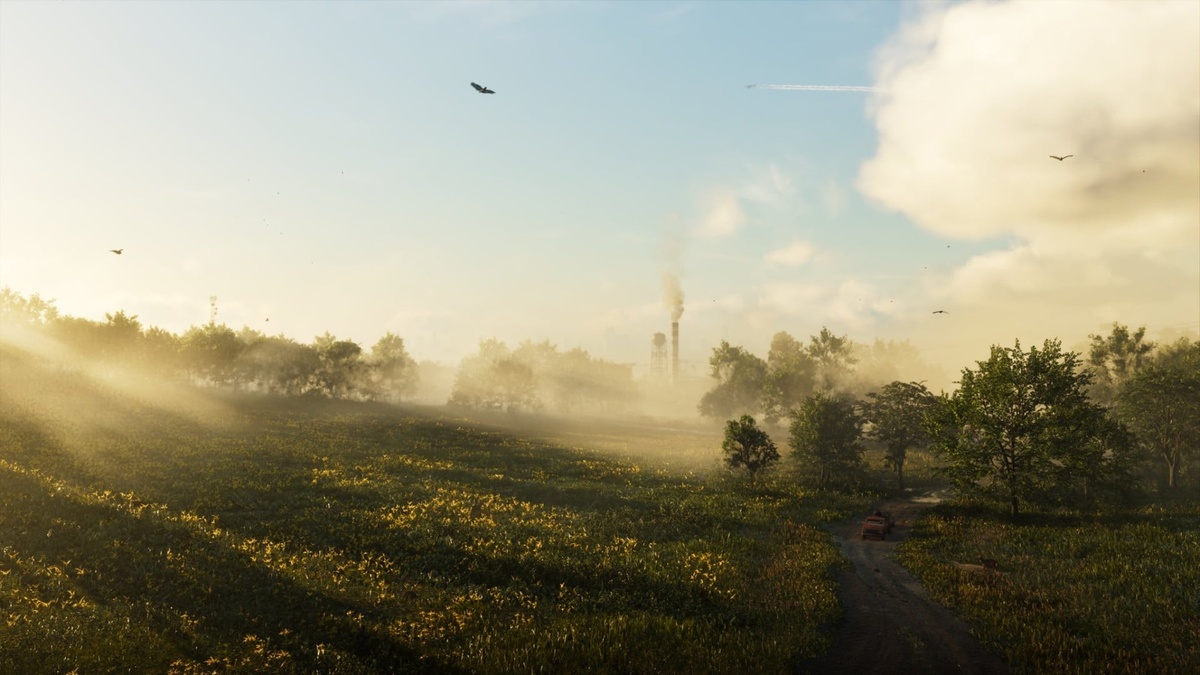
In Grand Theft Auto 6, Rockstar engineering teams transitioned toward a voxel-based volumetric cloud framework capable of simulating convective thermal updrafts that naturally spawn massive anvil-headed cumulonimbus structures across the Vice City sky.
These cloud formations possess authentic physical depth and optical density, interacting dynamically with direct sunlight to produce realistic crepuscular rays, volumetric shadows, and accurate internal multiple-scattering effects throughout changing daylight cycles.
Piloting aircraft through this GTA 6 dynamic weather system delivers tangible visual resistance, transitioning seamlessly from clear panoramic visibility into blinding condensation banks where cockpit instruments reflect localized electrostatic atmospheric illumination.
By modeling real-world tropospheric layers directly on modern console hardware, Rockstar ensures that cloud formations develop, drift, and dissipate organically based on regional humidity and barometric gradients across the map.
Localized Storm Dynamics: How Persistent Pressure Systems Influence Leonida Navigation
Unlike prior franchise iterations where atmospheric conditions shifted globally across the entire world, the GTA 6 dynamic weather system isolates meteorological phenomena into distinct geographic microclimates that track realistically across Leonida’s territory.
A sunny afternoon cruise through the high-end residential corridors of Vice City can instantly transition into blinding squalls when traveling westward into the expansive wetlands of the Leonida Keys.
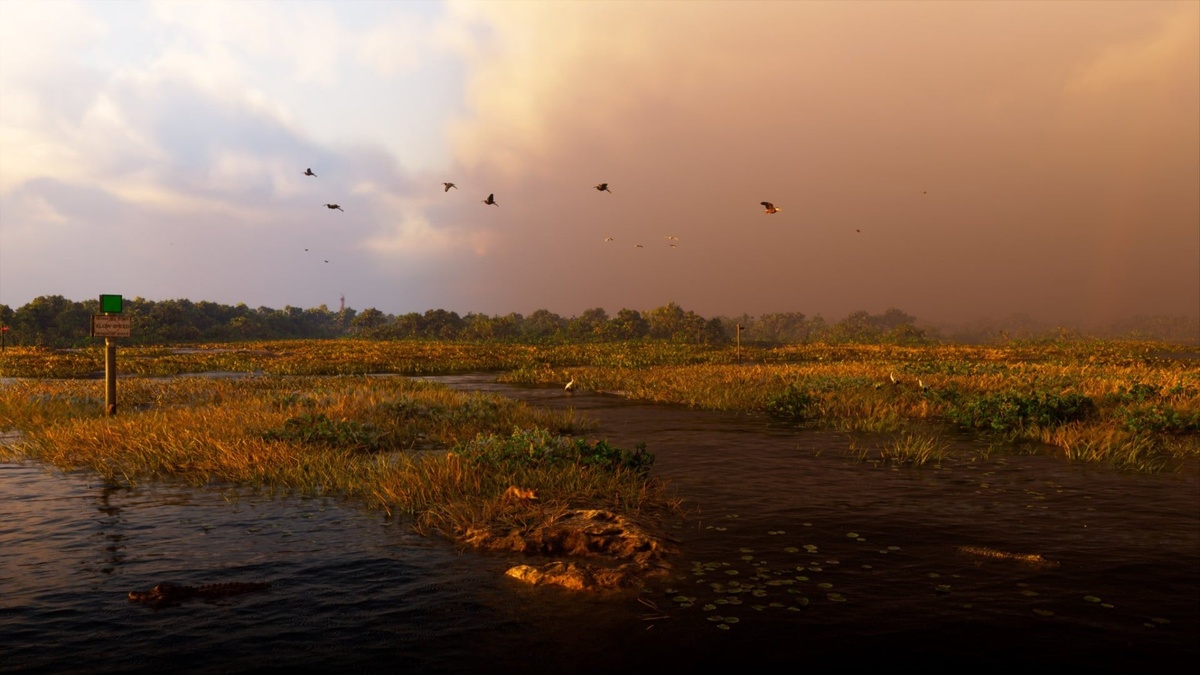
High-speed wind vectors displace palm fronds, roadside signs, and pedestrian apparel, while turbulent ocean currents produce towering swells that dynamically destabilize maritime navigation during severe offshore tropical depressions.
Driving dynamics react instantaneously within the GTA 6 dynamic weather system, forcing vehicles to counter severe hydroplaning risks, decreased tire traction, and extended braking distances across waterlogged asphalt corridors.
Much like how desktop gaming processors such as the AMD Ryzen 7 9800X3D manage parallel execution threads, Rockstar’s physics engine dynamically throttles aerodynamic drag calculations across dense vehicle traffic during peak storm intensity.
Atmospheric Lighting and Coastal Fog: Ray-Traced Scattering Across Vice City Shorelines
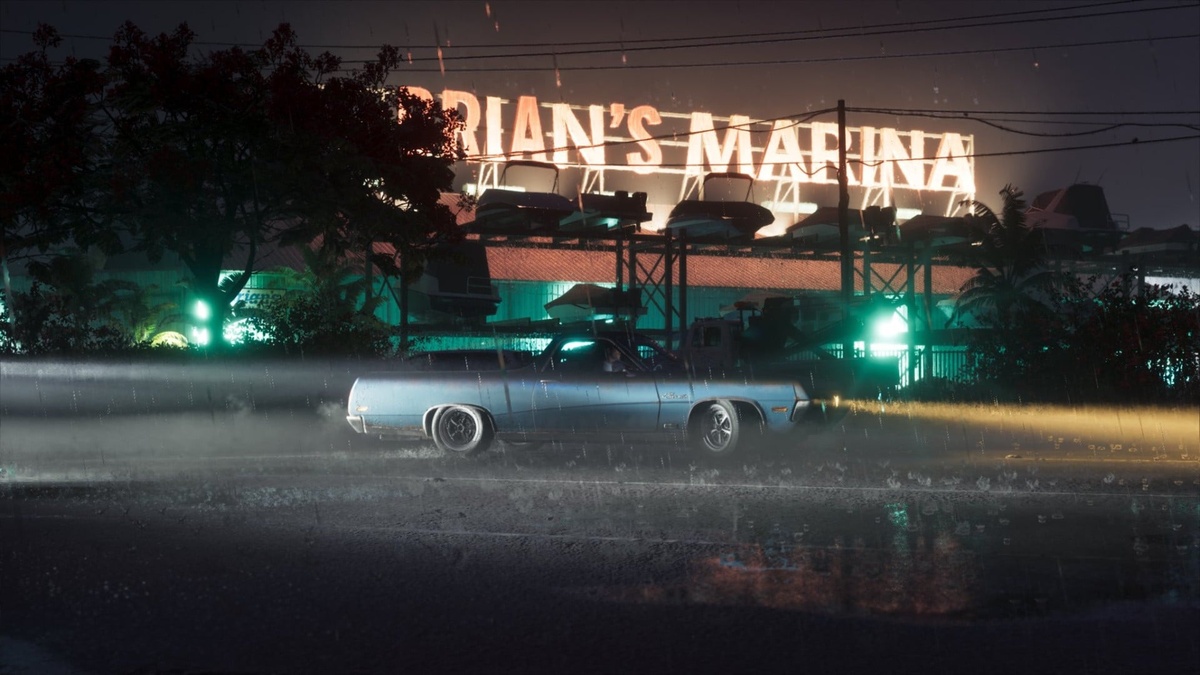
Coastal geography introduces unique lighting challenges where moisture-saturated air refracts coastal neon illumination, creating an ethereal glow that anchors the visual presentation of the GTA 6 dynamic weather system.
Rockstar deployed hardware-accelerated ray tracing to resolve complex volumetric fog scattering in the GTA 6 dynamic weather system, ensuring that streetlights, vehicle headlamps, and commercial neon signs cast soft, atmospheric halos through dense marine layers.
Early morning coastal mist blankets the shoreline with authentic light attenuation, muting horizon lines and softening distant skyscraper silhouettes before evaporating under the intense midday subtropical sun.
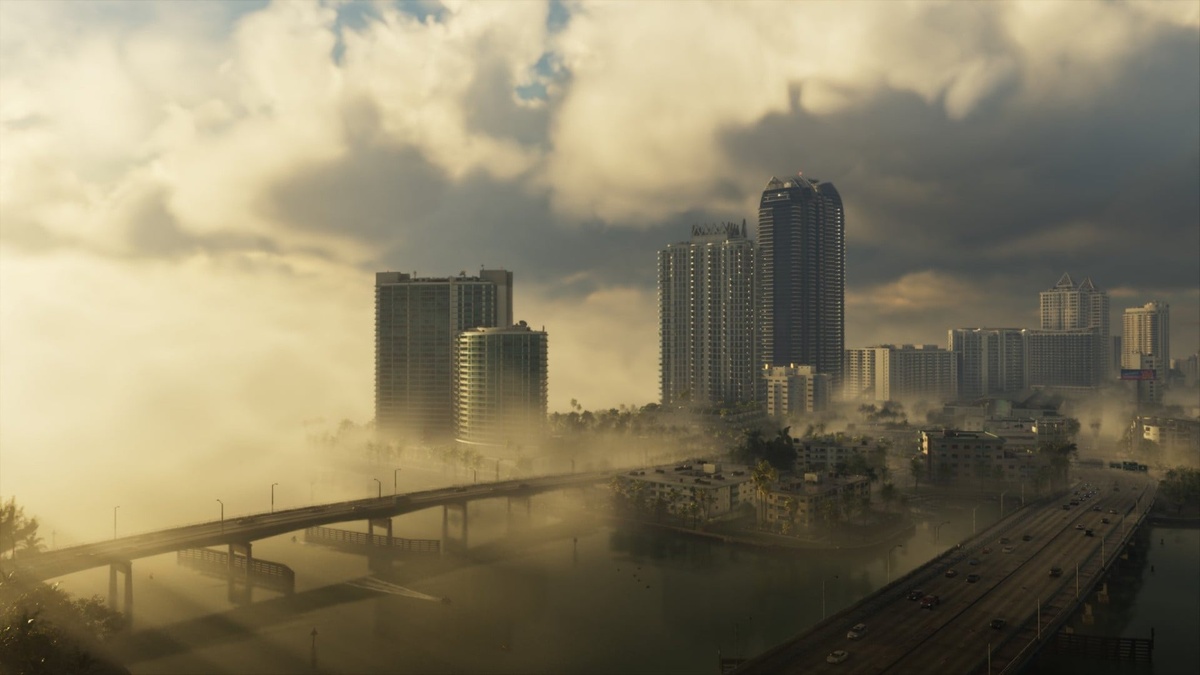
This sophisticated illumination model within the GTA 6 dynamic weather system maintains strict frame-rate targets by coupling ray-marched shadow frustums with temporal reprojection filters tailored specifically for base PlayStation 5 silicon.
Similar to display pipeline advances seen after Nvidia ended Windows 10 support, modern visual pipelines require synchronized hardware execution that ray-marched atmospheric scattering demands across high-resolution displays.
Surface Wetness and Hydrodynamics: Real-Time Puddle Accumulation and Tire Traction Physics
Precipitation in open-world titles often relies on simple specular sheen overlays, but the GTA 6 dynamic weather system introduces dynamic surface hydrology that physically accumulates water across uneven terrain geometries.
Raindrops impact road surfaces with physical particle momentum, creating localized splash rings and gradually filling road depressions, cracked pavement fissures, and gutters with reflective standing water.
| Simulation Layer | GTA V Legacy Architecture | GTA 6 Dynamic Weather System | PS5 Silicon & Memory Allocation |
|---|---|---|---|
| Troposphere Cloud Voxel Grid | Static 2D skybox textures with alpha blending | Full 3D volumetric voxels with internal scattering | Dedicated 1.8 GB unified GDDR6 memory pool |
| Atmospheric Light Attenuation | Pre-baked color lookups based on time of day | Hardware ray-traced multiple scattering | Dynamic GPU compute allocation at 10.3 TFLOPs |
| Surface Water Hydrology | Flat specular road shaders with static ripples | Volumetric puddle accumulation and physical runoff | Real-time mesh displacement and tire spray |
| Wind Velocity & Aerodynamics | Universal directional wind flags for foliage | Turbulent vector fields interacting with vehicles | Asynchronous compute thread execution |
| Audio-Visual Synchronization | Delayed generic thunder sound effects | Distance-accurate speed-of-sound sound delay | Tempest 3D AudioTech hardware DSP processing |
Tire treads actively displace standing surface water, generating volumetric spray plumes that obscure trailing vehicle windshields and temporarily blind following motorists during intense high-speed highway pursuits.
As tropical squalls taper into calm conditions, the GTA 6 dynamic weather system simulates authentic environmental drying phases, where porous concrete absorbs residual moisture while warm ambient air gradually evaporates standing pools.
This hydrological precision ensures that wet pavement reflects neon signage with razor-sharp planar clarity, creating stunning urban reflections that showcase Rockstar’s bespoke screen-space and ray-traced hybrid reflection pipelines.
Engine Architecture and Memory Budgets: Balancing Weather Compute on Base PS5 Silicon
Executing compute-heavy fluid simulations and volumetric cloud rendering across vast draw distances places immense strain on shared memory pools, demanding radical architectural ingenuity from the GTA 6 dynamic weather system.
Rockstar engineers leveraged the PlayStation 5 ultra-fast NVMe storage bus to stream high-density meteorological assets and voxel grids instantly without causing frame drops or visual pop-in.
Echoing thermal and memory optimization breakthroughs observed in the Apple M4 Mac mini, Rockstar engineers structured dedicated memory bandwidth pools exclusively for atmospheric voxel computations.
By allocating fixed compute budgets for the GTA 6 dynamic weather system, the development team preserved essential silicon overhead for complex artificial intelligence, pedestrian crowd densities, and destructible world physics.
This balanced systems architecture guarantees that even during catastrophic tropical storms with torrential rainfall and lightning strikes, gameplay responsiveness within the GTA 6 dynamic weather system remains fluid and uninterrupted across every action set-piece.
Frequently Asked Questions
Why did The Weather Channel showcase Grand Theft Auto 6?
The Weather Channel partnered with Rockstar Games because the GTA 6 dynamic weather system authentically mirrors Florida’s real-world subtropical meteorology, highlighting complex cloud formations and localized storm systems in Leonida.
How does the GTA 6 weather system differ from GTA 5?
Unlike GTA 5’s global weather cycles, the GTA 6 dynamic weather system features localized microclimates where heavy tropical downpours occur in one district while adjacent coastal regions enjoy completely clear skies.
Does weather affect vehicle handling and driving in GTA 6?
Yes, torrential rainfall and standing road water dynamically reduce tire friction, producing authentic hydroplaning hazards, longer braking distances, and treacherous vehicle handling during severe storm events.
Can players fly through volumetric storm clouds in GTA 6?
Yes, the GTA 6 dynamic weather system renders fully volumetric cumulonimbus formations that players can navigate through, experiencing realistic turbulence, cockpit condensation, and blinding cloud density while piloting aircraft.
What hardware enables GTA 6’s volumetric weather on PS5?
The GTA 6 dynamic weather system leverages asynchronous compute pipelines, RDNA 2 graphics capabilities, and the high-speed PS5 SSD to stream dense voxel grids and fluid dynamics without dropping frames.
Atmospheric Immersion Reimagined: The Benchmark Set by Rockstar’s Weather Engine
Rockstar’s collaboration with The Weather Channel underscores how the GTA 6 dynamic weather system establishes a transformative technological benchmark for environmental simulation, redefining how open-world video games render dynamic atmospheric physics.
By moving beyond decorative skyboxes into physically based volumetric fluid simulations, Leonida feels like a living, breathing ecosystem where weather actively shapes player exploration and tactical encounters.
As launch day arrives, the groundbreaking GTA 6 dynamic weather system confirms that Grand Theft Auto 6 is not merely expanding map scale, but delivering unprecedented atmospheric realism that sets the standard for console gaming.
