


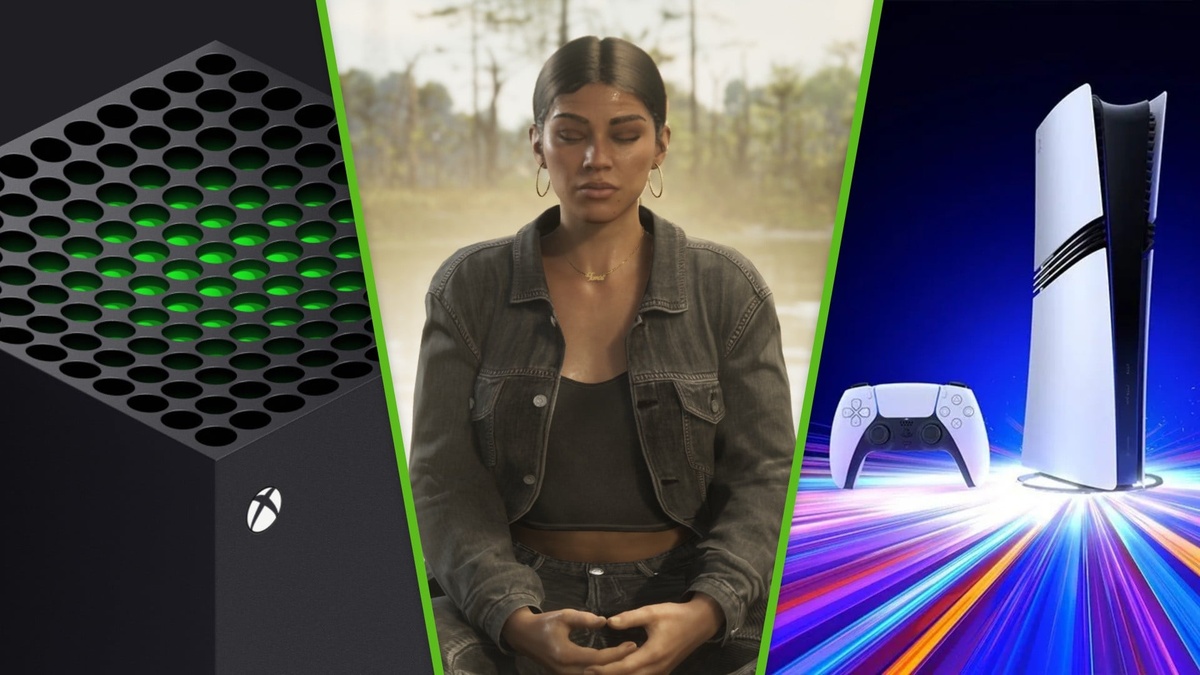
Following years of intense platform rivalry and high-profile marketing campaigns, an in-depth GTA 6 Xbox Series X Comparison has unveiled unexpected technical advantages for Microsoft’s flagship console over Sony’s standard PlayStation 5 baseline.
Independent frame-rate analysis conducted by Digital Foundry demonstrates that the Xbox Series X sustains superior frame pacing during intense vehicular chaos while exploiting system-level variable refresh rate features to eliminate perceptible judder.
| Console Platform | Target Resolution | Performance Profile | VRR System Integration | Digital Foundry Rank |
|---|---|---|---|---|
| PlayStation 5 Pro | Dynamic 4K (PSSR Upscaling) | Locked 30 FPS (Rock-Solid) | HDMI 2.1 VRR (120Hz Capable) | 1st Place (Definitive Quality) |
| Xbox Series X | Dynamic 4K (DRS Reconstruction) | Stable 30 FPS (Minor Traversal Dips) | Native 120Hz System-Level VRR + LFC | 2nd Place (Best Standard Console) |
| PlayStation 5 (Base) | Dynamic 4K (DRS Reconstruction) | Unstable 30 FPS (Mid-20s Drops) | Standard HDMI 2.1 (48Hz-120Hz Range) | 3rd Place (Frequent Heavy Stutter) |
| Xbox Series S | Dynamic 1080p / 1440p Target | Fluctuating 30 FPS (Sub-30s Dips) | Native 120Hz System-Level VRR + LFC | 4th Place (Visual & Audio Trade-offs) |
Digital Foundry GTA 6 Xbox Series X Comparison Breakdown
Technical analysis published by Pure Xbox features in GTA 6 Xbox Series X Comparison comprehensive benchmark testing across all four current generation consoles running Rockstar’s ambitious open world release.
Senior technology specialists at Digital Foundry evaluated Grand Theft Auto 6 across PlayStation 5, PlayStation 5 Pro, Xbox Series X, and Xbox Series S in GTA 6 Xbox Series X Comparison.
Prior to retail availability, extensive marketing arrangements positioned Sony hardware as the definitive platform for the blockbuster crime thriller, leading many gaming enthusiasts to anticipate clear PlayStation graphical supremacy.
Real-world telemetry reveals an entirely different technical narrative, as shown in GTA 6 Xbox Series X Comparison routinely outperforms the standard PS5 when rendering demanding urban simulations and rapid traversal sequences.
While high-end enthusiast desktop configurations powered by the AMD Ryzen 7 9800X3D will eventually dominate open world computing, analysts in GTA 6 Xbox Series X Comparison immediate architectural distinctions.
This detailed technical teardown guides GTA 6 Xbox Series X Comparison readers millions of prospective players determining which home hardware platform delivers the smoothest Vice City experience.
This empirical evidence reframes the conversation around ninth-generation console engineering, proving that subtle hardware design choices yield tangible benefits when powering complex open world simulation titles.
Frame Pacing and Dynamic Resolution Stability in Vice City
Across GTA 6 Xbox Series X Comparison, a native thirty frames per second cadence, yet stress testing demonstrates clear divergences in frame rendering stability under extreme computational load.
Traversing densely populated metropolitan intersections at high velocity triggers substantial draw call spikes and complex physics calculations that push modern console hardware to its architectural limits.
During these high-intensity vehicle sequences, the PlayStation 5 experiences recurrent frame drops plunging directly into the mid-to-upper twenties, documented in GTA 6 Xbox Series X Comparison pursuit gameplay.
Conversely, the Xbox Series X version leads GTA 6 Xbox Series X Comparison metrics, absorbing violent asset streaming surges without suffering identical prolonged rendering bottlenecks across detailed urban districts.
In GTA 6 Xbox Series X Comparison, standard PS5 hardware suffers substantially more frequent frame drops than Series X during dense airport crowd scenes and multi-car collisions.
This superior frame-time consistency validates GTA 6 Xbox Series X Comparison findings, driving remain responsive, granting Xbox players noticeably cleaner gameplay feedback throughout unpredictable open world campaign encounters.
While casual observers might dismiss occasional dips, enthusiasts playing on traditional fixed refresh rate televisions will experience significant visual disruptions whenever the PlayStation 5 stumbles below its baseline cadence.
The 120Hz Variable Refresh Rate Advantage Across High-Load Scenes
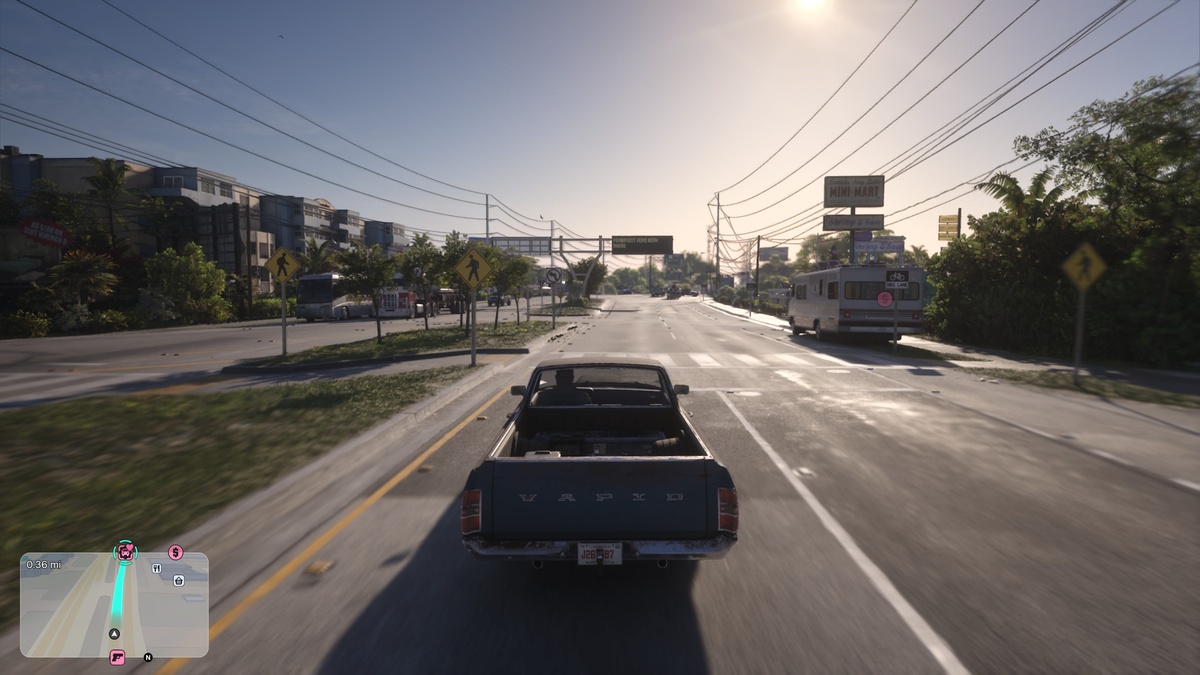
Central to GTA 6 Xbox Series X Comparison, the two home consoles involves Microsoft’s advanced system-level variable refresh rate container operating across compatible high-bandwidth modern displays.
Under GTA 6 Xbox Series X Comparison, an active 120Hz signal container, allowing low frame-rate compensation algorithms to duplicate frames seamlessly when rendering speeds slip beneath thirty frames per second.
When heavy particle effects or weather events pull performance down into the twenty-six frame range, the Xbox display pipeline improves GTA 6 Xbox Series X Comparison output jarring cadence hitches.
As shown in GTA 6 Xbox Series X Comparison, PlayStation 5 relies on an HDMI 2.1 VRR implementation that typically deactivates beneath forty-eight hertz, leaving thirty-frame titles vulnerable to abrupt stuttering.
Similar to how portable gamers optimize performance through Xbox Cloud Gaming architectures, display-level synchronization enhances GTA 6 Xbox Series X Comparison gameplay challenging visual sequences.
Benefiting from GTA 6 Xbox Series X Comparison, contemporary 120Hz television panels enjoy an extraordinarily smooth gameplay experience that disguises the title’s occasional open world performance valleys.
By handling frame duplication at the operating system level, Microsoft decouples rendering hiccups from physical display refresh cycles, setting an exemplary benchmark for modern variable refresh rate television integration.
Memory Bandwidth and GPU Compute Hardware Architecture
Crucial to GTA 6 Xbox Series X Comparison, metrics are fundamental silicon differences engineered directly into the respective system-on-chip architectures of both flagship home gaming machines.
Within GTA 6 Xbox Series X Comparison, 52 compute units running at a constant 1.825 GHz clock speed, paired with 560 gigabytes per second of high-speed memory bandwidth on its primary bus.
Contrasting with GTA 6 Xbox Series X Comparison, compute units clocked up to a variable 2.23 GHz, offering a narrower unified memory pipeline rated at 448 gigabytes per second across its memory subsystem.
| Architectural Component | Xbox Series X | PlayStation 5 (Standard) | Hardware Advantage Impact |
|---|---|---|---|
| GPU Compute Units | 52 CUs @ 1.825 GHz (12.15 TFLOPS) | 36 CUs @ up to 2.23 GHz (10.28 TFLOPS) | Series X offers wider parallel compute pipeline |
| Memory Configuration | 10GB @ 560 GB/s + 6GB @ 336 GB/s | 16GB Unified @ 448 GB/s | Xbox provides 25% higher peak memory throughput |
| System Storage Throughput | 2.4 GB/s Raw NVMe SSD | 5.5 GB/s Raw Custom NVMe SSD | PS5 leads raw storage, but GPU bottlenecks prevail |
| Low Framerate VRR (LFC) | Full System-Level Support (<48Hz) | Unsupported below 48Hz without LFC flag | Series X eliminates judder when dropping to 25 FPS |
| Atmospheric Heat Haze | Full Precision Shader Pipeline | Reduced Precision Shader Fallback | Series X renders richer tropical atmospheric effects |
Much like workstation silicon seen in the Apple M4 Mac Mini, memory throughput plays a vital role throughout GTA 6 Xbox Series X Comparison benchmarks and asset streaming routines without pipeline starvation.
Within modern GTA 6 Xbox Series X Comparison, and Nvidia ends Windows 10 support, modern console hardware continues to leverage fixed silicon advantages to optimize next-generation rendering pipelines.
When processing heavy volumetric illumination, global ray tracing reflections, and dense crowd geometry, the greater compute width and memory throughput of the Xbox platform provide vital breathing room.
These architectural contrasts illustrate how raw bandwidth and parallel shader array configurations remain decisive factors when developers push ambitious physics engines and real-time lighting systems to their absolute limits.
Definitive GTA 6 Xbox Series X Comparison Console Rankings
Digital Foundry summarized GTA 6 Xbox Series X Comparison findings into an authoritative generational console hierarchy, ranking all four hardware configurations by raw visual fidelity and performance stability.
The PlayStation 5 Pro decisively claims the premier position, utilizing custom machine learning upscaling and enhanced ray tracing compute to establish the ultimate premium console presentation.
However, the second tier sees the Xbox Series X capture an undeniable victory over the base PlayStation 5, secured through superior frame pacing and superior display synchronization.
The standard PlayStation 5 occupies third place, delivering impressive artistic detail yet falling behind in overall frame stability when subjected to intense environmental stress.
Occupying the final ranking is the entry-level Xbox Series S, which necessitates substantial resolution compromises, reduced ambient pedestrian densities, and intermittent audio stream dropouts.
This comprehensive ranking confirms that Xbox Series X stands as the definitive standard hardware option for players who decline to purchase expensive mid-generation hardware revisions.
Prospective buyers deliberating between base hardware models should weigh these verified benchmark results carefully, as sustained gameplay stability directly impacts immersion throughout hundreds of hours in Vice City.
Visual Presentation Fidelity and Heat Haze Atmospheric Rendering

Beyond raw frame rates, Digital Foundry meticulously compared static image quality, shadow cascades, geometric draw distances, and texture filtering between both flagship platforms.
In the vast majority of side-by-side gameplay sequences, image resolution and visual fidelity remain virtually indistinguishable between the Xbox Series X and standard PlayStation 5 versions.
Both versions employ sophisticated dynamic resolution scaling coupled with temporal reconstruction to deliver crisp presentation across standard ultra-high-definition living room television panels.
Curiously, technical analysts identified a subtle visual distinction during an opening narrative cutscene, where the Xbox Series X renders noticeably more pronounced atmospheric heat haze distortion.
This atmospheric distortion accurately simulates soaring tropical temperatures across Vice City, highlighting minor shader precision nuances between the competing graphics hardware architectures.
Aside from this minor atmospheric variance, neither platform exhibits superior geometric complexity, ensuring that artistic intent remains faithfully preserved across both home consoles.
Both development teams deserve commendation for maintaining remarkable parity across lighting models and texture quality, ensuring that artistic presentation remains exceptional regardless of preferred home console hardware.
Next-Gen Console Optimization and Future 40FPS Target Modes
The revelation of performance stability on Xbox Series X has ignited vigorous community discourse regarding the potential implementation of specialized high-framerate display modes.
Enthusiasts and display engineers are currently examining whether Rockstar Games could introduce a dedicated forty-frame-per-second fidelity mode tailored specifically for modern 120Hz display panels.
A forty-frame mode sits perfectly within the twenty-five millisecond frame-time window, offering a thirty-three percent latency reduction over traditional thirty-frame delivery without crippling visual fidelity.
Given the proven efficacy of Series X variable refresh rate hardware, a calibrated 40FPS profile could establish an ideal compromise between rich ray-traced visuals and responsive controller handling.
While Rockstar has not formally confirmed future performance patches, ongoing telemetry analysis suggests that developer optimization teams frequently refine rendering efficiency following worldwide retail launches.
Until future software revisions materialize, Xbox Series X owners can rest assured that their existing hardware delivers the benchmark standard console experience.
Until software engineers release targeted patches, players demanding rock-solid responsiveness can enjoy the current release knowing that Xbox Series X extracts the greatest stability possible from standard ninth-generation silicon.
Frequently Asked Questions
Why does Xbox Series X perform better than PS5 in GTA 6?
Digital Foundry testing revealed that Xbox Series X experiences fewer frame drops during heavy vehicle traversal and benefits from system-level 120Hz VRR support, smoothing out minor framerate dips far more effectively than standard PS5.
Does GTA 6 look better on Xbox Series X compared to PS5?
Visually, the Xbox Series X and base PS5 versions are virtually identical in resolution and asset quality, though Series X displays slightly more pronounced atmospheric heat haze effects during select opening cutscenes.
How does the PlayStation 5 Pro compare to Xbox Series X in GTA 6?
The PlayStation 5 Pro leads all consoles with enhanced ray tracing, higher internal resolutions, and rock-solid 30fps stability, outperforming both Xbox Series X and standard PS5 through its larger GPU and machine learning hardware.
What are the performance limitations of Xbox Series S for GTA 6?
The Xbox Series S ranks lowest in console comparisons due to aggressive resolution reductions, lower pedestrian counts, unstable frame pacing during dense urban driving, and occasional audio streaming hitches under heavy load.
Will Rockstar Games release a 40FPS mode for GTA 6 on consoles?
While not officially confirmed, technical analysts suggest a 40FPS mode within a 120Hz VRR container could provide Xbox Series X and PS5 Pro players with significantly smoother gameplay without sacrificing high-detail visual assets.
Technical Verdict on Base Console Performance Leadership
The authoritative performance verdict from Digital Foundry shatters pre-launch assumptions, establishing the Xbox Series X as the superior standard console platform for Grand Theft Auto 6.
By combining greater frame-time resilience during heavy rendering loads with advanced 120Hz variable refresh rate capabilities, Microsoft’s flagship hardware provides players with an unmistakably smoother journey across Vice City.
While the high-cost PlayStation 5 Pro remains the supreme graphical showpiece, standard console gamers receive unmatched performance stability and premium display integration on Xbox Series X.
