


Table of Contents
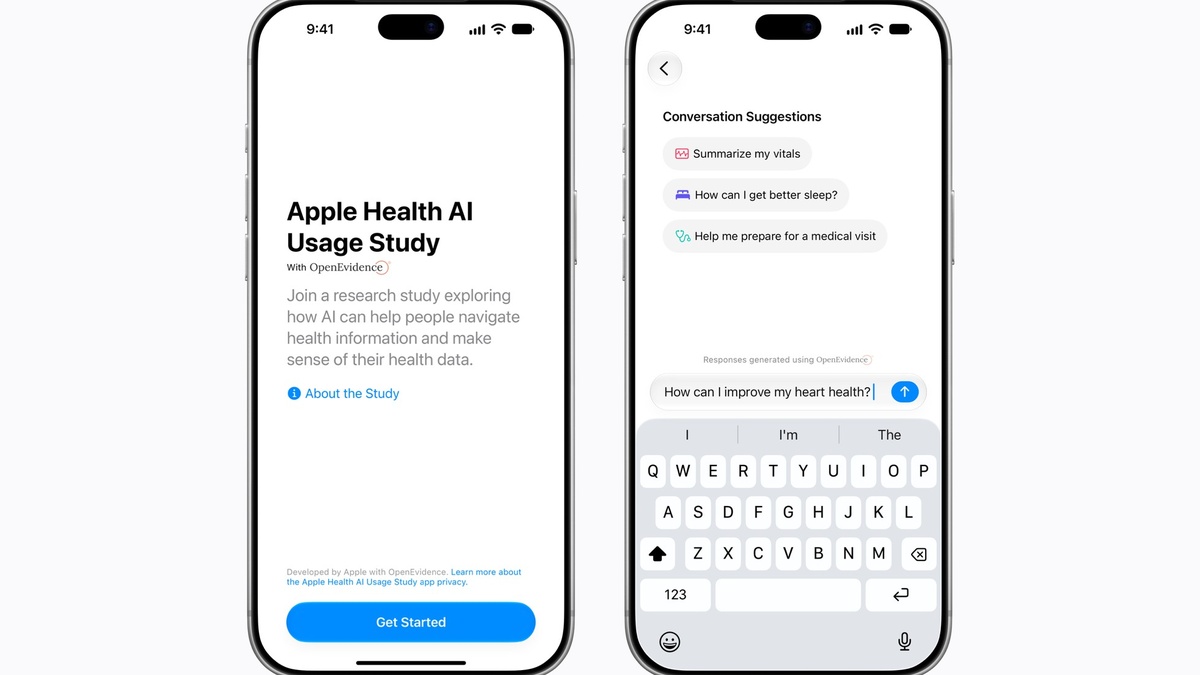
Apple has officially announced the launch of the Apple health AI study across the United States today, partnering with clinical platform OpenEvidence to evaluate how conversational machine learning interfaces influence everyday user comprehension and medical decision-making.
Detailed in an official announcement on the Apple Newsroom, the virtual initiative invites up to two hundred thousand eligible American participants to explore peer-reviewed medical guidance directly on their personal mobile devices.
| Research Architecture Parameter | Apple Health AI Study Specification | Clinical & Operational Objective |
|---|---|---|
| Clinical Foundation Partner | OpenEvidence Medical Platform | Direct Indexing of Peer-Reviewed Literature (NEJM, JAMA, Nature) |
| Participant Cohort Target | Up to 200,000 Eligible Individuals | Nationwide Behavioral Comprehension & Patient Telemetry Assessment |
| Hardware Platform Standard | iPhone 15 Pro, iPhone 15 Pro Max or Later | Local Apple Intelligence Neural Engine Acceleration on iOS 26 |
| Sensor Telemetry Pipeline | Opt-In Encrypted HealthKit Streams | Longitudinal Integration of Resting Heart Rate, Sleep & Lab Data |
| Safety & Privacy Mandate | Zero Model Training on Patient Data | Automated Emergency Triage Guardrails & Total Data Sovereignty |
Clinical Foundation Architecture: Grounding Conversational Models in Peer-Reviewed Medicine
The technical cornerstone of the Apple health AI study is its direct collaboration with OpenEvidence, a specialized clinical platform widely consulted by practicing healthcare professionals to query medical information without risk of generative hallucinations.
Rather than querying unconstrained consumer chatbots that index unverified forum discussions, the underlying computational architecture pulls citations directly from premier peer-reviewed publications such as The New England Journal of Medicine, Nature, and JAMA.
Every synthesized response surfaced through the Apple health AI study interface includes interactive citation tags, allowing participants to examine the primary scientific literature that substantiates specific medical explanations and therapeutic overviews.
Dr. Sumbul Desai, Apple vice president of Health and Fitness, emphasized that responsible health innovation requires scientific rigor, ensuring conversational tools provide clinically grounded guidance that genuinely supports patients across everyday wellness routines.
By evaluating how non-specialist participants digest complex terminology, investigators overseeing the Apple health AI study aim to refine natural language explanations, eliminating misleading medical jargon while maintaining meticulous scientific nuance and accuracy.
This methodology addresses a notorious weakness in consumer generative software, replacing speculative algorithmic guesswork with verified medical literature that both patients and practicing clinicians can independently inspect and trust.
HealthKit Biometric Integration: Synthesizing Resting Heart Rate and Sleep Telemetry
A core architectural differentiator of the Apple health AI study is its optional biometric telemetry pipeline, which links encrypted HealthKit sensor logs directly with conversational context windows for personalized context.
Participants can selectively authorize the study application to analyze historical physiological markers, including nocturnal resting heart rate variance, peripheral blood oxygen saturation trends, daily active exertion levels, and polysomnographic sleep cycles.
Synthesizing longitudinal sensor records allows the conversational assistant within the Apple health AI study to evaluate user inquiries against individual physiological baselines rather than offering generic platitudes that fail to reflect real health context.
This on-device processing pipeline shares architectural efficiency goals with modern workstation hardware, such as our benchmark analysis of Apple M4 Mac mini silicon performance, where dedicated neural engines accelerate complex inference locally.
Evaluating how continuous biometric ingestion alters consumer comprehension represents a major milestone, paving the way for ambient wearable telemetry to transition from passive activity logging toward proactive clinical triage.
Understanding individual baselines also prevents unnecessary panic, allowing the conversational interface to reassure users when biometric readings remain comfortably within their documented historical variations.
Clinical Consultation Workflows: Transforming Personal Telemetry Into Doctor Visit Prep
Beyond addressing everyday medical questions, the Apple health AI study introduces sophisticated clinical consultation workflows designed to enhance the diagnostic efficiency of routine physician office visits.
Patients frequently encounter substantial difficulty articulating fleeting symptoms or recalling physiological anomalies during brief appointments, creating informational bottlenecks between patients and their primary care practitioners.
To resolve this clinical communication barrier, the Apple health AI study software synthesizes logged biometric fluctuations and personal questions into organized pre-visit summaries formatted specifically for physician intake review.
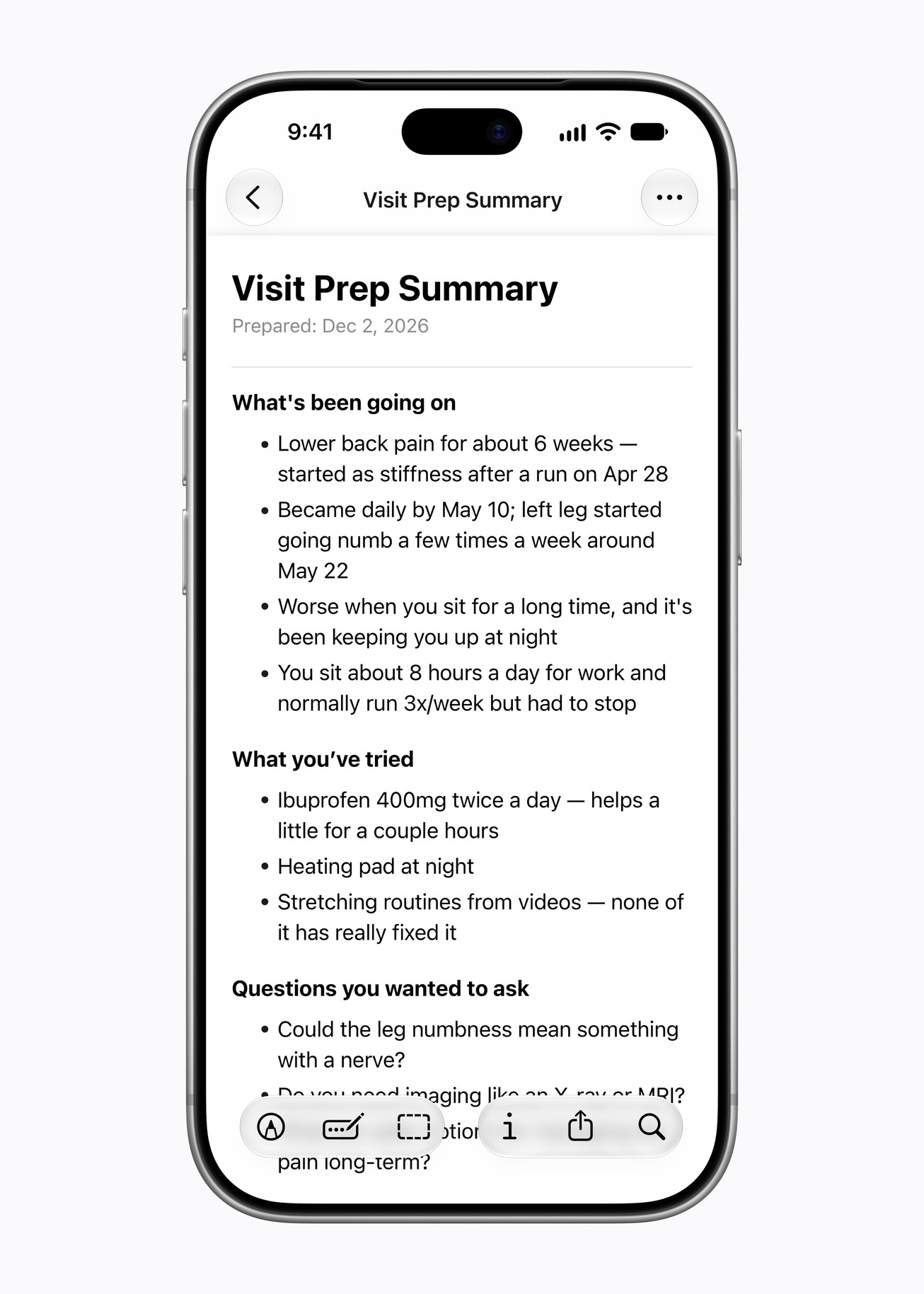
Dr. Robert M. Wachter, chair of the Department of Medicine at UCSF, highlighted that connecting patient tools with professional clinical platforms guarantees patients arrive thoroughly prepared for collaborative diagnostic conversations.
Standardizing these consultation summaries ensures clinicians participating in the Apple health AI study ecosystem spend less time taking repetitive administrative histories and more time tailoring targeted therapeutic regimens for individual patients.
This structured workflow transforms passive digital logging into an actionable clinical asset, establishing shared conversational ground between patients and licensed healthcare professionals.
Privacy Architecture and Safety Guardrails: Protecting Patient Metrics Without Model Training
Data privacy represents the foremost foundational safeguard of the Apple health AI study, erecting strict cryptographic barriers between participant telemetry and commercial large language model training pipelines.
Apple has formally confirmed that participant biometric metrics and conversational inquiry logs collected throughout the Apple health AI study will never be used to train generative machine learning models.
Automated on-device safety guardrails continuously inspect conversational queries to detect acute life-threatening symptoms, instantly prompting participants with immediate emergency telephone helplines and nearby hospital directions when anomalies appear.
| Data Governance Domain | Implementation Architecture | Generative Model Training Policy | Participant Administrative Control |
|---|---|---|---|
| HealthKit Biometric Streams | Granular Per-Metric Permission Scopes | Strictly Excluded From Commercial Model Training | Instant User Revocation via iOS Privacy Settings |
| Conversational User Inquiries | Ephemeral End-to-End Transport Enclaves | Zero Retention for Foundation LLM Fine-Tuning | Local Interaction Log Erasure on Demand |
| Acute Symptom Detection | Deterministic On-Device Triage Logic | Zero Generative Hallucination in Emergencies | Immediate Automatic Referral to Qualified Care |
| Longitudinal Research Datasets | Anonymized Cryptographic Research Storage | Restricted Exclusively to Certified Investigators | Comprehensive Right-to-Forget Compliance |
These stringent data isolation protocols mirror modern security principles found across enthusiast hardware, echoing insights from our analysis of AMD processor architecture and thermal scaling regarding system partition integrity.
Providing transparent consent toggles throughout the Apple health AI study guarantees users retain absolute sovereignty over their medical information, allowing participants to revoke metric access or erase stored transcripts instantly.
This uncompromising privacy framework is essential for establishing sustained consumer trust, proving that cutting-edge medical machine learning can flourish without exploiting sensitive patient health telemetry.
Hardware Eligibility and Deployment Scope: Requirements for Apple Intelligence Devices
Participation in the Apple health AI study is open to eligible individuals aged twenty-one and older who reside within the United States and possess supported mobile hardware.
Prospective subjects must utilize an Apple Intelligence-compatible smartphone, specifically an iPhone 15 Pro, iPhone 15 Pro Max, or newer hardware executing the modern iOS software ecosystem.
These hardware prerequisites ensure the research application can leverage local neural processing hardware to execute on-device cryptographic screening before transmitting scrubbed inquiries to secure research endpoints.
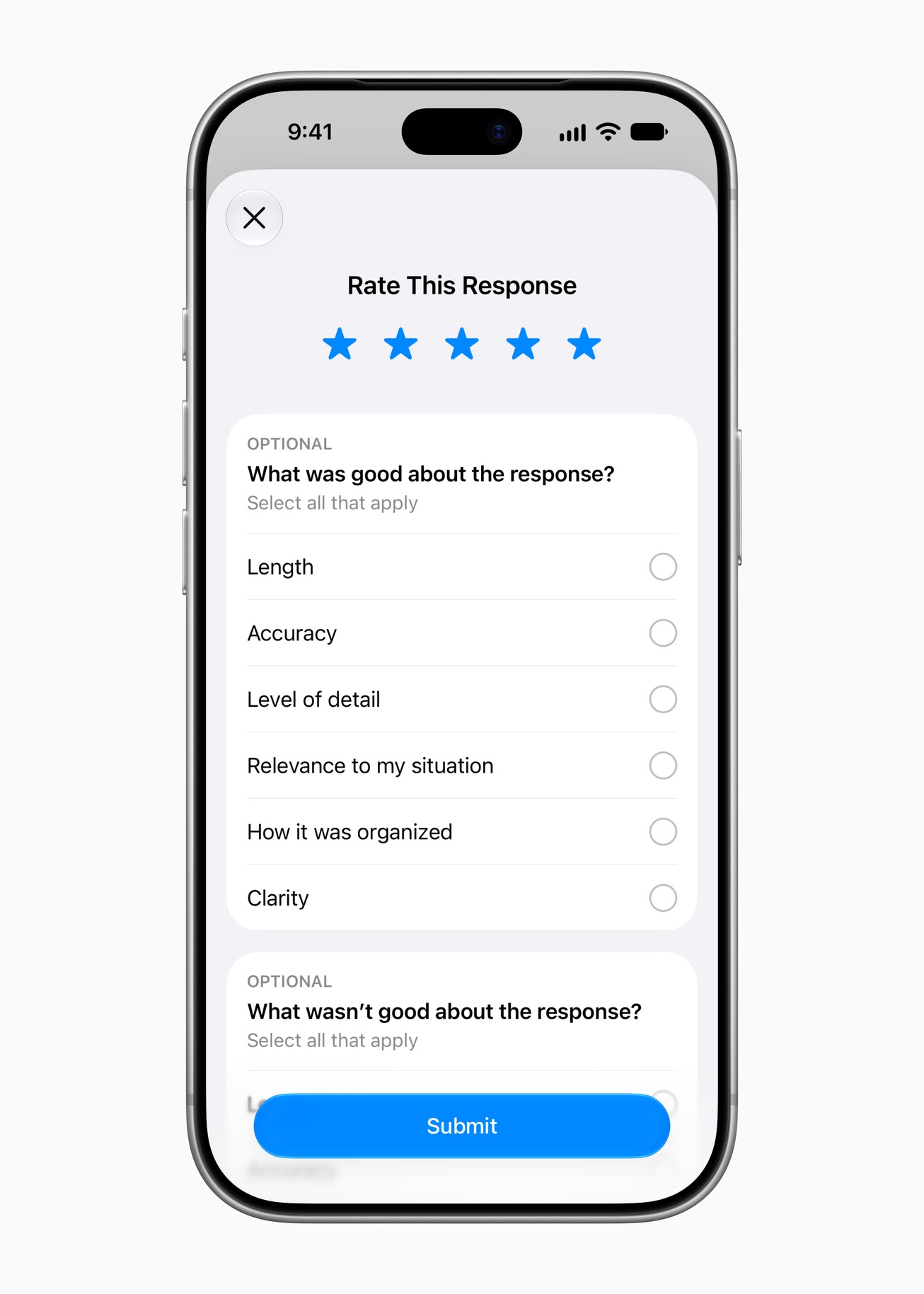
Eligible users can download the dedicated research software directly from the iOS App Store, proceeding through an interactive digital onboarding workflow that outlines study parameters and gathers informed consent.
With total enrollment capped at two hundred thousand participants, the Apple health AI study is positioned to compile one of the most comprehensive real-world conversational clinical datasets in digital health history.
Researchers anticipate that findings gathered from this nationwide cohort will establish enduring regulatory and interface design benchmarks for the entire consumer medical technology sector.
Frequently Asked Questions
What is the primary scientific objective of the Apple health AI study?
The Apple health AI study evaluates how everyday consumers understand, trust, and interact with conversational health tools grounded in validated clinical literature and personalized wearable telemetry.
Who qualifies to participate in this nationwide research initiative?
Eligible participants must be United States residents aged twenty-one or older who own an Apple Intelligence-capable device like an iPhone 15 Pro running current iOS software.
Will personal HealthKit records or chat logs be used to train AI models?
No, Apple and OpenEvidence have strictly engineered the research protocol so that study metrics and conversation logs are never used to train generative AI models.
What medical literature database powers the clinical answers in the app?
Responses are powered by the OpenEvidence platform, which synthesizes answers using peer-reviewed medical publications from leading journals including The New England Journal of Medicine, Nature, and JAMA.
How does the research software respond to acute medical emergencies?
The application incorporates automated safety guardrails that detect life-threatening symptoms and immediately urge users to contact emergency services or consult licensed medical professionals.
Final Verdict: Bridging Consumer Wearables and Clinical Medicine
The launch of the Apple health AI study marks a crucial turning point in consumer medicine, shifting conversational artificial intelligence away from speculative consumer chatbots toward clinically validated healthcare tools.
By uniting peer-reviewed OpenEvidence literature with granular HealthKit biometrics and unyielding privacy safeguards, the Apple health AI study establishes a rigorous scientific blueprint for future digital health innovation.
If this nationwide study proves that conversational tools improve patient preparation and clinical comprehension, the Apple health AI study will redefine how millions of wearable users manage their long-term health.
