


Table of Contents
Video game publisher Ubisoft has ignited fresh controversy across the gaming industry after implementing a strict Ubisoft Generative AI Policy that requires internal creative teams to explicitly justify avoiding machine learning tools during early project pitches.
According to an explosive investigative report from Vertical Slice and subsequent corroboration by Nintendo Life reporting, developers who refuse to integrate synthetic content generation must formally defend their decision before executives will greenlight production budgets.
| Production Workflow Vector | Traditional Studio Pipeline | Ubisoft Mandated AI Protocol | Creative Staff Impact | Executive Rationale |
|---|---|---|---|---|
| Project Pitch Approval | Design merits & gameplay demo | Mandatory generative AI roadmap | Requires formal omission defense | Accelerates prototype velocity |
| World Building & Environment | Handcrafted bespoke terrain & art | Procedural generative synthesis | Diminishes artisan environmental craft | Drastically cuts scene costs |
| Narrative & NPC Dialogue | Human writers & script table reads | Motherbrain Ghostwriter toolset | Restricts human script authoring | Expands ambient voice volume |
| Prototyping Cycle Time | Multi-month manual concepting | Rapid weekly synthetic testing | Fast concept churn & discard | Identifies market hits early |
| Staffing & Studio Capacity | Specialized studio team scaling | Lean automated strike squads | Positions left vacant after cuts | Offsets AAA budget inflation |
| Intellectual Property Rights | Unambiguous copyright ownership | Unsettled machine asset legality | Heightened legal vulnerability | Dismissed as manageable friction |
Executive Directives: Machine Learning Justifications in Project Pitches

The new editorial mandates mark an unprecedented shift in AAA video game production workflows, transforming experimental automation tools into corporate prerequisites for prospective project approval across global production branches.
Anonymous developers within the publisher revealed that pitches under the Ubisoft Generative AI Policy will be rejected outright if design leads cannot demonstrate how machine learning pipelines will accelerate asset production or prototype iteration.
Leadership informed staff that agile production models require rapid prototyping, where teams iterate swiftly and discard unsuccessful concepts before allocating major development budgets to full-scale world building.
Executives view artificial intelligence as an essential accelerator to maintain breakneck development schedules while operating with leaner staff numbers across regional design offices.
This top-down requirement leaves zero room for ambiguity, forcing veteran game directors navigating these corporate directives to adapt their foundational creative processes to meet corporate efficiency metrics.
Creative teams now find themselves drafting defensive technical arguments simply to preserve traditional manual design pipelines against executive mandates demanding automated synthetic output.
Ubisoft Generative AI Policy: Mandatory Workflow Disclosures in Pre-Production
Understanding the administrative mechanics of the Ubisoft Generative AI Policy clarifies how corporate management intends to enforce compliance across diverse international development studios.
Whenever a creative director submits a concept document, pitch slide deck, or functional prototype, the submission must feature an exhaustive machine learning integration plan detailing intended pipeline efficiencies.
If a development team elects to build bespoke environments, hand-crafted quest dialog, or custom character models without automated assistance, the proposal must include detailed financial and logistical justifications.
Staff report that justification reviews are conducted by central executive committees, establishing a powerful systemic incentive for creative leads to adopt automated workflows simply to avoid pitch rejections.
Much like hardware transitions analyzed in our review of Apple M4 Mac mini workstation architecture, top-down workflow consolidation fundamentally alters how creative talent interacts with production infrastructure.
This structured administrative friction subtly transforms voluntary technological adoption into an inescapable corporate mandate, ensuring that the Ubisoft Generative AI Policy dictates the trajectory of future game development.
Motherbrain Ecosystem: Automation Across Prototyping and World Building

At the center of this corporate initiative stands Motherbrain, Ubisoft proprietary artificial intelligence division created to research, develop, and deploy neural network architectures across active production pipelines.
Motherbrain oversees an expanding suite of generative utilities for production teams, including procedural dialogue generators like Ghostwriter alongside procedural environment synthesizers and non-player character interaction engines.
Executive management envisions integrating these automated neural pipelines into the Ubisoft Generative AI Policy to generate expansive open worlds with a fraction of the historical human labor investment.
By automating ambient crowd banter, texture tiling, and systemic mission generation, corporate planners argue that production cycles can shrink from seven years back down to sustainable multi-year schedules.
Silicon performance scaling explored in our breakdown of AMD Ryzen 7 9800X3D gaming benchmarks demonstrates the power of hardware optimization, but creative automation introduces unpredictable qualitative consequences.
Many developers argue that Motherbrain synthetic generation deployed through the Ubisoft Generative AI Policy produces homogeneous, uninspired game worlds that lack the nuanced intentionality and environmental storytelling of handcrafted level design.
Ubisoft Generative AI Policy: Internal Morale and Creative Studio Resistance
The rollout of the Ubisoft Generative AI Policy has precipitated widespread demoralization among studio staff, who describe internal working conditions as an atmosphere bordering on executive psychosis.
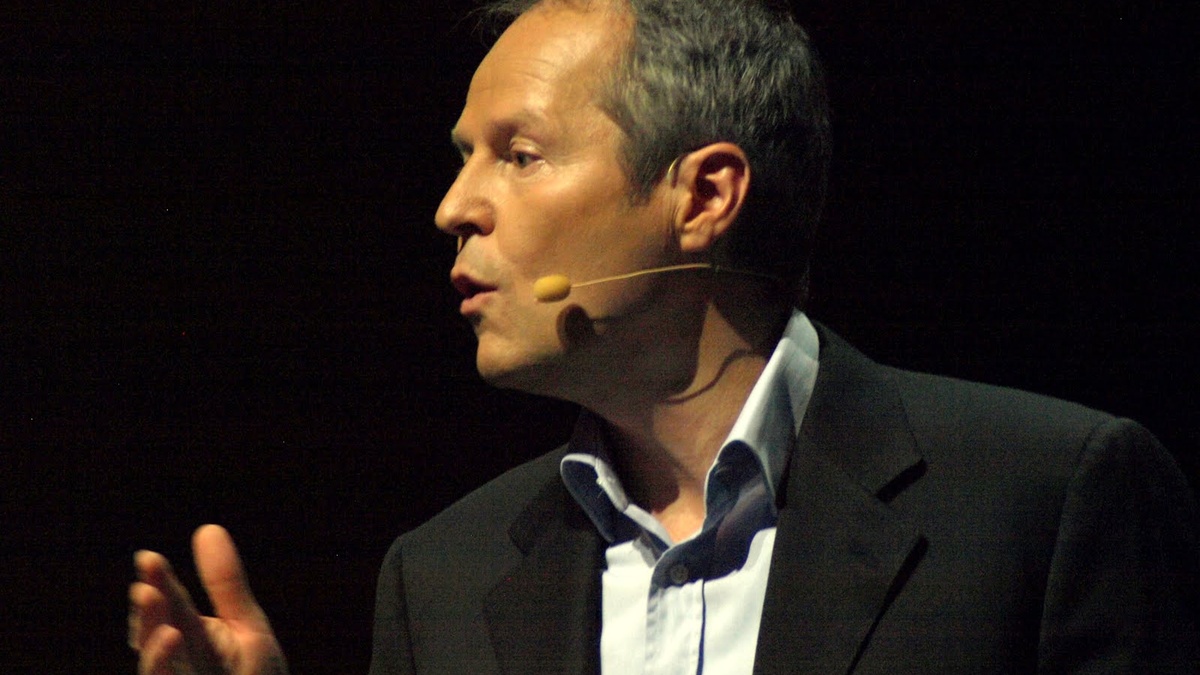
Insiders report that chief executive Yves Guillemot has personally tethered the publisher future to generative automation, dismissing internal artist hesitations as obsolete resistance to inevitable technological progress.
Under prevailing corporate guidelines, company leadership operates under the assumption that mainstream consumers do not care about generative technology, treating widespread player backlash across social platforms as an irrelevant fringe reaction.
Staff characterize this executive perspective as deeply out of touch with gaming culture, pointing to fierce public backlashes against synthetic assets in competing entertainment franchises.
Enterprise platform management highlighted in our report on Nvidia Windows 10 support retirement shows the danger of ignoring consumer sentiment during sweeping structural transitions.
Creative personnel express frustration that the Ubisoft Generative AI Policy devalues artistic integrity, treating game design as a generic content assembly line rather than human artistic expression.
| Studio Automation Layer | Primary AI Toolset | Targeted Game Pipeline | Expected Cost Reduction | Production Risk Factor |
|---|---|---|---|---|
| Pre-Production Pitches | Synthetic Concept Mockups | Rapid mechanic prototyping | 40% to 50% cycle speedup | Derivative gameplay concepts |
| Script & Voiceover | Ghostwriter & Voice Synthesis | Ambient world dialogue | 60% script authoring savings | Lack of emotional nuance |
| Asset & Texture Synthesis | Neural Texture Generation | Environmental photogrammetry | 35% 3D modeling expense | Visual asset homogenization |
| Non-Player NPC Logic | Motherbrain Behavioral Engine | Systemic open world AI | 30% engineering overhead | Unpredictable state bugs |
| Quality Assurance & Testing | Automated Reinforcement Agents | Build regression & pathing | 50% manual QA timelines | Misses contextual user bugs |
Production Velocity Realities: Fast Prototyping vs Human Authorship
Executive advocates defend these mandates by arguing that rapid prototyping is essential for surviving modern video game budget inflation, which has pushed AAA budgets past two hundred million dollars.
Under the agile model supported by the Ubisoft Generative AI Policy, small strike teams assemble experimental prototypes in weeks, allowing management to evaluate or discard mechanics with minimal financial exposure.
However, veteran designers counter that rapid prototyping through generative tools creates an illusion of progress, yielding superficial mechanics that fail when scaled into fully realized game systems.
Because neural networks recombine preexisting patterns, prototypes built through automated toolchains frequently mimic existing market tropes, stifling the genuine risk-taking that historically produces innovative breakout hits.
Similar software service complexities were investigated in our analysis of Xbox Cloud Gaming subscription architecture, where convenience often clashes with performance depth and consumer expectations.
Consequently, enforcing the Ubisoft Generative AI Policy across early prototyping may unintentionally homogenize the publisher upcoming portfolio into derivative, formulaic experiences.
Restructuring Pressures: Studio Closures, Mandated Return-to-Office, and Attrition
The aggressive push toward automation arrives amid severe organizational turmoil at Ubisoft, marked by widespread layoffs, studio closures, and contentious labor policies across its international network.
The publisher recently eliminated 166 developer positions across its flagship Montreal and Quebec studios while permanently shutting down RedLynx, the celebrated Finnish developer behind the Trials series.
Compounding this distress under these strategic shifts, management enforced a mandatory full-time return to physical offices, triggering high attrition rates among senior staff who refused to surrender flexible remote agreements.
Departing developers note that Ubisoft is deliberately leaving vacant positions unfilled, creating understaffed teams that are subsequently pressured to adopt the Ubisoft Generative AI Policy to handle unsustainable workloads.
Employees describe frequent farewell gatherings across studios, fueling perceptions that generative algorithms are intended to replace human labor permanently rather than merely augment daily productivity.
This volatile climate of cost cutting and attrition intensifies staff skepticism, transforming the Ubisoft Generative AI Policy from what leadership promotes as a productivity enhancement into a symbol of corporate austerity.
Ubisoft Generative AI Policy: Long-Term Industry Standards and Player Perception
The broader implications of the Ubisoft Generative AI Policy extend far beyond a single publisher, potentially establishing an aggressive precedent for the entire commercial games industry.
If Ubisoft successfully reduces prototyping expenditure without facing regulatory barriers or catastrophic sales drops, rival corporate publishers will inevitably replicate similar pitch mandates.
However, commercial risk under machine learning mandates remains extraordinarily high, as educated gamers increasingly identify and boycott titles that incorporate low-effort synthetic narrative, voice generation, or visual textures.
Legal uncertainties surrounding copyright protection for machine-generated assets also threaten long-term franchise ownership, creating intellectual property vulnerabilities that executives continue to downplay.
The tension between executive cost-saving imperatives and consumer demand for authentic human storytelling will ultimately dictate whether the Ubisoft Generative AI Policy succeeds or backfires commercially.
As production timelines advance in upcoming releases, the global gaming audience will deliver the ultimate verdict on whether automated game design can ever substitute for authentic creative vision.
Frequently Asked Questions
What is the new Ubisoft generative AI policy for game pitches?
The new Ubisoft generative AI policy requires development teams to formally detail how machine learning tools will accelerate production, requiring explicit justifications from anyone choosing not to use them.
What happens if a Ubisoft team pitches a game without generative AI?
Internal reports indicate that if developers plan not to use machine learning, they must provide compelling justifications, and failing to adhere to these rules prevents projects from being greenlit.
What is Ubisoft Motherbrain division?
Motherbrain is Ubisoft internal artificial intelligence division responsible for developing neural network toolsets like Ghostwriter script generation and procedural world-building engines for game development.
How are Ubisoft developers reacting to the AI pitch mandate?
Staff describe studio morale as abysmal, characterizing leadership directives as an executive obsession with automation that devalues human artistry amid severe studio layoffs and cost-cutting.
Why does Ubisoft leadership believe generative AI is essential?
Executives believe generative tools allow small agile teams to build and iterate prototypes rapidly, enabling the company to discard failed concepts quickly while curbing skyrocketing AAA development budgets.
Final Verdict
The establishment of the Ubisoft Generative AI Policy marks a decisive watershed moment in corporate game development, formalizing automation as an executive gatekeeper for future creative pitches.
While management frames algorithmic tools as necessary solutions for escalating budgets and lean prototyping, internal backlash reveals deep employee resentment toward mechanized game development.
As public scrutiny intensifies, Ubisoft faces a precarious balancing act between algorithmic efficiency under the Ubisoft Generative AI Policy and the human artistry required to produce truly memorable gaming experiences.
