



Table of Contents
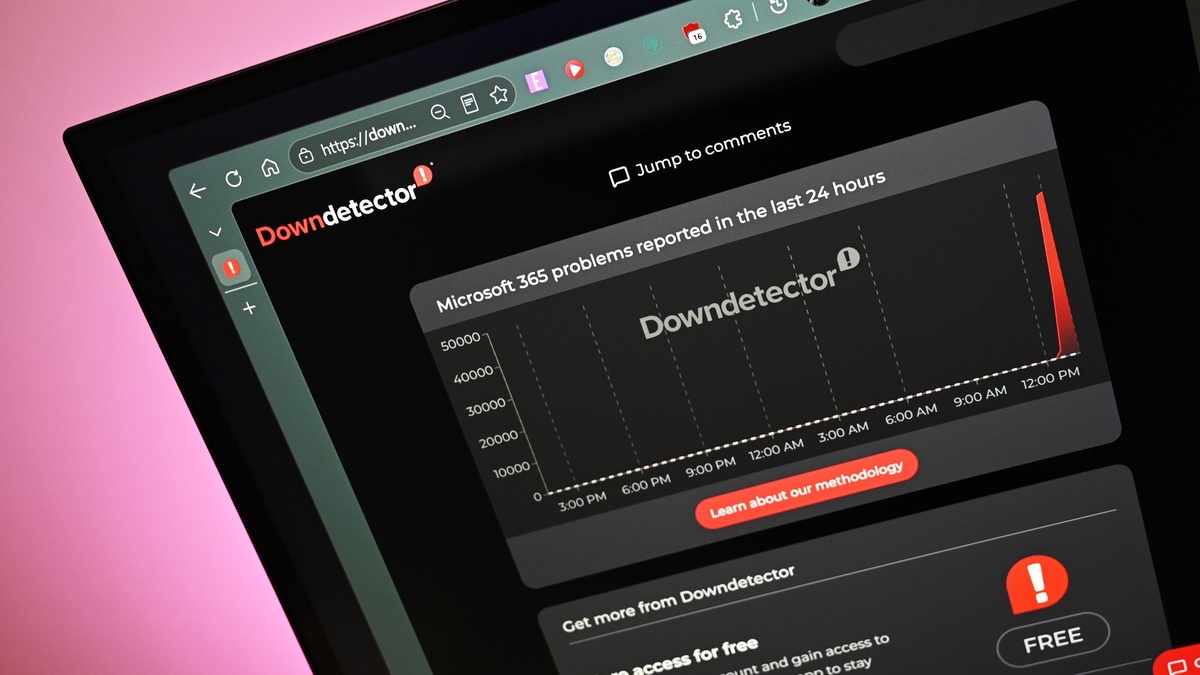
Enterprise communications ground to an abrupt halt during the recent Outlook worldwide outage, which severed Exchange Online connectivity for tens of millions of commercial workers and crippled collaborative operations globally for more than twelve consecutive hours.
According to investigative reporting from Neowin, Microsoft has now published its preliminary post-incident report, revealing that the root architectural cause actually originated in a latent code fix deployed four months earlier in July.
| Incident Timeline Phase | Affected Infrastructure Layer | Observed System Behavior | Engineering Remediation Action | Enterprise Operational Impact |
|---|---|---|---|---|
| Initial Deployment (July) | Network Gateway Servers | Latent lock contention bug introduced | Canary testing and global release | Undetected dormant state |
| Trigger Event (Nov 12) | Front-End Load Balancers | High-concurrency routing shift | Automated node eviction triggered | Initial latency and dropped packets |
| Cascading Collapse | Exchange Online Substrate | Massive health check dropouts | Traffic redirection to healthy nodes | Global Outlook and Teams failure |
| Active Remediation | Connection Gateway Clusters | Worker thread pool exhaustion | Network rollback and batch restarts | Incremental restoration of tenants |
| Final Normalization | Global Mailbox Directories | Persistent queue backlog drain | Capacity throttling adjustments | Full service restoration confirmed |
The July Root Cause: How Dormant Gateway Logic Triggered System Lock Contention
Microsoft engineering teams investigating the root causes of the Outlook worldwide outage discovered that the catastrophic disruption originated from a routine maintenance update deployed across core network gateway servers in mid-July.
That mid-summer update modified thread synchronization and memory allocation logic within critical gateway components, designed to improve processing efficiency across high-throughput enterprise communication channels without altering visible user functionality.
However, the deployment introduced an obscure race condition that caused severe thread lock contention inside an internal Windows networking process under highly specific concurrency patterns.
For over three months, the dormant code path operated harmlessly across production environments, managing standard business traffic without exposing the underlying defect to automated telemetry monitors or quality assurance frameworks.
When unexpected routing modifications and elevated connection demands converged on November 12, the conditions necessary to trigger the latent deadlock suddenly emerged across dozens of gateway clusters simultaneously.
As worker threads became hopelessly locked awaiting synchronization barriers, server processing capacity evaporated, leaving the frontline infrastructure incapable of completing incoming authentication requests during the Outlook worldwide outage.
Cascading Health Check Failures: Why Failover Protocols Buckled Under Load
The failure rapidly expanded beyond individual server nodes due to the aggressive behavior of automated high-availability systems designed to protect cloud infrastructure from prolonged operational distress.
When internal monitoring agents detected that gateway servers had stopped responding to incoming synthetic health checks, the management platform immediately designated those machines as unhealthy and withdrew them from routing pools.
Under ordinary operating conditions, automated node eviction seamlessly isolates faulty hardware, but the simultaneous removal of massive gateway capacity forced surviving server fleets to absorb enormous spikes in redirected traffic.
The sudden redistribution of millions of concurrent enterprise sessions overwhelmed surviving gateway appliances, triggering identical thread deadlocks and causing healthy servers to fail their own subsequent health inspections.
This self-reinforcing failure cascade transformed a localized software anomaly into the massive Outlook worldwide outage, paralyzing cloud mailboxes across North America, Europe, Asia, and Latin America within a remarkably brief operational window.
Such cascading capacity failures mirror systemic challenges in distributed architectures, similar to dynamics examined in our breakdown of cloud gaming infrastructure scaling and capacity management under volatile user load.
Outlook Worldwide Outage Blast Radius: Mapping Disruption Across Exchange and Teams
While initial user reports highlighted disconnected desktop email clients, the Outlook worldwide outage quickly rippled across the broader Microsoft 365 collaborative ecosystem through deeply integrated backend dependencies.
Exchange Online functions as the central communications substrate for modern tenant environments, providing critical user identity, directory indexing, and shared calendar information across diverse corporate workplace applications.
Because Microsoft Teams relies directly on Exchange services for user presence status and channel notifications, collaboration workflows suffered immediate degradation alongside traditional desktop mail delivery.

Enterprise knowledge workers leveraging Microsoft 365 Copilot encountered persistent API timeouts, as artificial intelligence agents failed to query underlying mailbox repositories and semantic data indexes required to generate workplace insights.
Simultaneously, millions of corporate smartphones operating on Exchange ActiveSync flooded recovering gateways with endless synchronization retry loops, creating severe connection storms that prolonged the Outlook worldwide outage.
These widespread knock-on effects demonstrated how monolithic cloud dependencies can transform a localized messaging problem into an enterprise-wide productivity crisis across globally distributed business operations.
Mitigation and Recovery Protocol: Rolling Back Code and Rebalancing Gateway Nodes
When the Outlook worldwide outage first materialized, Microsoft engineers initially evaluated the possibility of an external distributed denial-of-service attack before detailed performance traces confirmed internal gateway deadlock states across regional clusters.
Once telemetry linked the widespread unresponsiveness to the latent July logic update, response leaders immediately halted all scheduled global code releases and rolled back a recent network routing configuration.
Recovering the platform required delicate orchestration, because simply rebooting deadlocked gateway clusters resulted in immediate traffic inundation that instantly overwhelmed newly initialized network sockets.
| Enterprise Service Tier | Primary Protocol Affected | Mean Time to Recovery | Root Architectural Bottleneck | Recommended Enterprise Mitigation |
|---|---|---|---|---|
| Outlook on the Web (OWA) | REST / HTTPS Direct | 14.5 Hours | Front-end connection thread starvation | Hybrid server fallback routing |
| Desktop Outlook Client | MAPI over HTTP | 12.0 Hours | Gateway authentication deadlocks | Enforce cached Exchange mode |
| Microsoft Teams Chat | Exchange Substrate API | 10.5 Hours | Shared presence telemetry timeouts | Out-of-band emergency messaging |
| Microsoft 365 Copilot | Graph API Semantic Index | 16.0 Hours | Mailbox context query timeouts | Graceful offline productivity fallback |
| Mobile Sync (iOS & Android) | Exchange ActiveSync (EAS) | 11.0 Hours | Excessive connection retry storms | Exponential backoff client policies |
To safely restore throughput, engineers modified automated health-check thresholds and conducted staged batch restarts, gradually reintroducing gateway servers into regional load-balancing pools beneath strict rate limits.
This phased recovery strategy allowed connection managers to establish authenticated transport layer security sessions incrementally, preventing connection spikes from re-triggering the catastrophic Outlook worldwide outage.
The complete recovery progression required more than twelve hours of continuous engineering intervention, followed by extensive backlog draining across enterprise transport queues to ensure zero message loss.
Enterprise Resilience Playbook: Defending Corporate Tenants Against Cloud Monoculture
The profound enterprise disruption caused by the Outlook worldwide outage underscores the urgent need for organizational technology leaders to re-evaluate single-vendor dependencies across mission-critical communications infrastructure.
Enterprises that maintained hybrid server configurations or configured local cached mailbox stores preserved vital operational functionality, allowing staff to access historical correspondence while cloud gateways remained unreachable.
Technology directors navigating the aftermath of the Outlook worldwide outage must implement redundant out-of-band communications channels, ensuring incident response teams can coordinate effectively without relying on affected internal corporate domains.
Investing in robust local workstation processing capability and offline data redundancy aligns with principles highlighted in our analysis of next-generation performance processor architecture, where localized compute mitigates cloud network interruptions.
Organizations should also configure corporate mobile device management profiles with intelligent exponential backoff rules, preventing mobile fleets from executing aggressive retry loops that worsen cloud recovery efforts.
IT administrators can review comprehensive post-mortem documentation and track real-time telemetry updates through the official Microsoft 365 Service Health Portal to strengthen organizational cloud governance.
Frequently Asked Questions
What was the root cause of the Outlook worldwide outage on November 12?
Microsoft determined that a latent thread lock contention defect introduced in a July gateway code update was triggered by subsequent routing changes, freezing network gateway servers under heavy concurrency.
Why did automated health monitoring worsen the Outlook worldwide outage?
Automated monitoring detected deadlocked nodes and withdrew them from service, which dumped massive connection traffic onto surviving servers and triggered a catastrophic cascading overload across global regions.
Was the Outlook worldwide outage caused by an external cyberattack?
No, Microsoft confirmed that the global disruption resulted strictly from an internal software concurrency defect and failover imbalance, explicitly ruling out cyberattacks, ransomware, or distributed denial-of-service activity.
How did Microsoft engineers resolve the Outlook worldwide outage?
Engineers rolled back recent network changes, adjusted health check evaluation rules, shifted regional traffic routes, and conducted phased batch restarts of gateway nodes under rate-limited throttles.
Which enterprise services were impacted alongside Outlook during the disruption?
The incident disrupted Exchange Online, Microsoft Teams presence, SharePoint document access, Microsoft 365 Copilot queries, Defender XDR telemetry, and mobile synchronization over Exchange ActiveSync globally.
Final Verdict: Reassessing Hyperscale Dependency in Modern Enterprise IT
The forensic post-incident disclosure surrounding the Outlook worldwide outage reveals the extraordinary fragility underlying modern hyperscale platforms, where dormant software defects can linger undetected for months before precipitating global operational chaos.
While public cloud platforms offer undeniable operational efficiency, the concentration of global corporate communication inside a single vendor ecosystem introduces catastrophic systemic vulnerability when core gateway layers fail.
Enterprise leadership must treat this global disruption as a definitive catalyst to implement rigorous multi-channel contingency protocols, offline client safeguards, and comprehensive disaster recovery governance for future cloud operations.
