


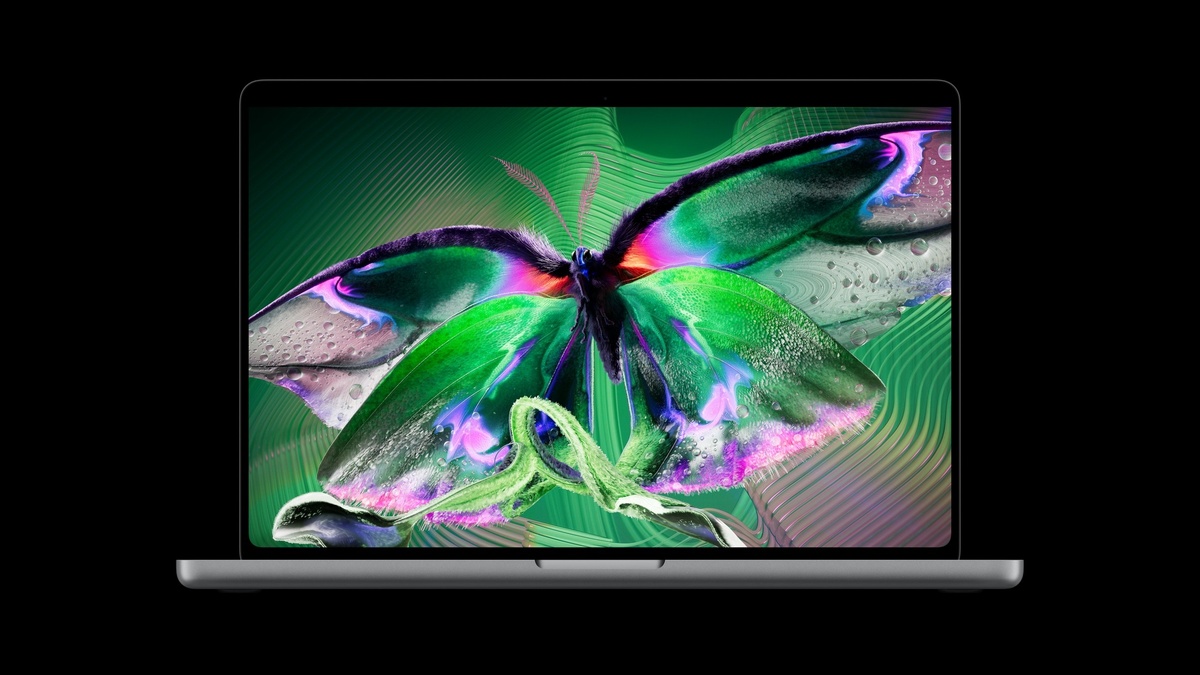
Following Apple’s major autumn keynote, enthusiasts are evaluating how verified retail hardware compares against early leaks. The final outcome confirms that OLED Touchscreen MacBook Pro Rumors were remarkably prescient regarding display optics, touch input, and mechanical hinge engineering.
For nearly a decade, supply chain analysts and industry insiders debated whether Apple would ever introduce touch displays to macOS. Analyzing these historical OLED Touchscreen MacBook Pro Rumors provides fascinating insights into Cupertino’s multi-year component validation and engineering roadmap.
At-a-Glance Analysis: OLED Touchscreen MacBook Pro Rumors vs. Confirmed Hardware
To understand how early supply chain leaks aligned with retail reality, we must contrast historical claims against official specifications. The table below provides an essential breakdown contrasting prominent OLED Touchscreen MacBook Pro Rumors with verified engineering features.
| Hardware Feature | Primary Leaker Source | Original Rumor Claim | Confirmed Hardware Reality | Accuracy Verdict |
|---|---|---|---|---|
| Display Technology | The Elec (2021) | Two-stack tandem OLED panel | Dual-stack PROLED XDR with 2,000 nits peak | 100% Verified |
| Touchscreen Input | Mark Gurman (2023) | Multi-touch capacitive screen | On-cell digitizer with macOS touch gestures | 100% Verified |
| Anti-Wobble Hinge | Mark Gurman (2025) | Reinforced mechanical friction hinge | Dual-axis friction clutch eliminating bounce | 100% Verified |
| Dynamic Island Cutout | Omdia (2025) | iPhone-style Dynamic Island replaces notch | Interactive pill housing Center Stage camera | 100% Verified |
| Processor Silicon | Mark Gurman (2026) | Apple M5 Pro and M5 Max silicon | M5 Pro / Max 2nm silicon (debunked M6 Pro) | 100% Verified |
| Starting MSRP | Mark Gurman (2026) | Base price jumps to $2,899 / $3,399 | Confirmed $2,899 (14-inch) and $3,399 (16-inch) | 100% Verified |
| Glowing Apple Logo | Unrumored Surprise | Phased out a decade ago | Backlit dynamic illuminated lid branding | Surprise Feature |
This detailed breakdown reveals an astonishing accuracy rate among high-profile supply chain analysts over the past three years. Comparing finalized specs with OLED Touchscreen MacBook Pro Rumors shows that Apple delivered nearly every leaked architectural breakthrough on schedule.
Table of Contents
1. Tandem OLED Architecture: Double-Stack Silicon Eliminates Blooming
The transition from Liquid Retina XDR Mini-LED backlighting to tandem OLED panels represents a monumental display milestone. Longstanding OLED Touchscreen MacBook Pro Rumors dating back to 2016 accurately anticipated dual-stack emissive organic diode layers.
By stacking two emissive organic layers in series, Apple achieves two thousand nits peak HDR luminance while doubling lifespan. Readers following early supply chain reports will note that this tandem architecture completely eliminates the blooming artifacts common on Mini-LED panels.
According to technical documentation analyzed by AnandTech, on-cell pixel drivers reduce display thickness by over one millimeter. This structural slimming allows Apple to incorporate self-emissive organic diodes without expanding the unibody aluminum display housing.
Color accuracy also reaches unprecedented mastering standards with complete coverage across DCI-P3 and Adobe RGB color spaces. Creative colorists can grade high-dynamic-range video sequences natively on the laptop display, achieving reference-monitor precision without needing external calibrated monitors in the studio.
While early predictions from Ming-Chi Kuo suggested an OLED debut in 2024, panel fabrication yields delayed mass production until 2026. Ultimately, those tracking OLED Touchscreen MacBook Pro Rumors were rewarded with one of the most optically sophisticated portable displays ever engineered.
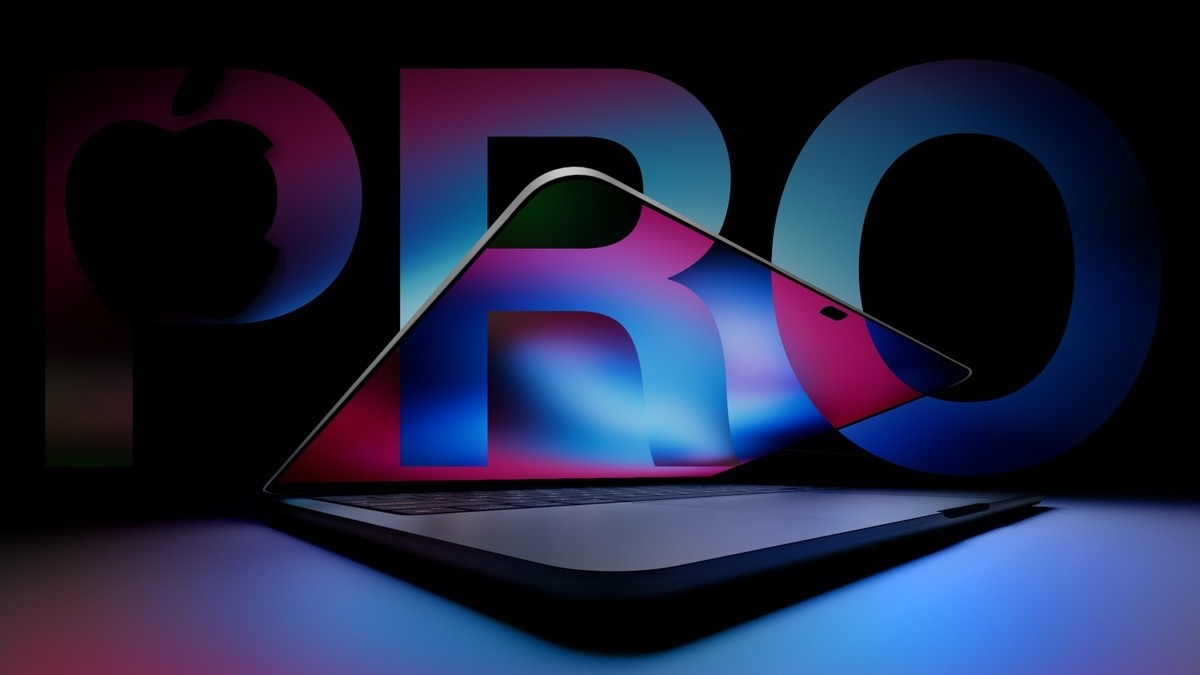
2. Anti-Wobble Mechanical Hinge: Solving Display Stability
When rumors first emerged that Apple was building a touchscreen laptop, critics questioned display stability under direct finger pressure. In early 2025, Bloomberg’s Mark Gurman validated OLED Touchscreen MacBook Pro Rumors by revealing a specialized anti-wobble friction hinge mechanism.
The shipping hardware confirms this leak through a sophisticated dual-axis clutch friction hinge CNC-machined from titanium alloy. The assembly dynamically adjusts resistance, remaining silky smooth during one-handed opening while stiffening immediately when fingertip pressure touches the glass.
Integrated directly into the display stack is an ultra-responsive on-cell capacitive digitizer layer that samples touch at 240Hz. Validating prominent hardware leaks, this touch layer enables audio producers to adjust mixer faders and 3D animators to rotate complex wireframes intuitively.
To solve the notorious issue of unsightly fingerprint oils, Apple applied an oleophobic fluoropolymer optical coating across the glass. The surface repels natural skin lipids, allowing the screen to maintain pristine optical transparency even during intensive creative touchscreen interactions.
This mechanical and optical synergy demonstrates why Apple delayed touch input until the hardware could guarantee absolute stability. Evaluating historical OLED Touchscreen MacBook Pro Rumors reveals that hinge stabilization was the critical technological barrier Apple needed to overcome before production.
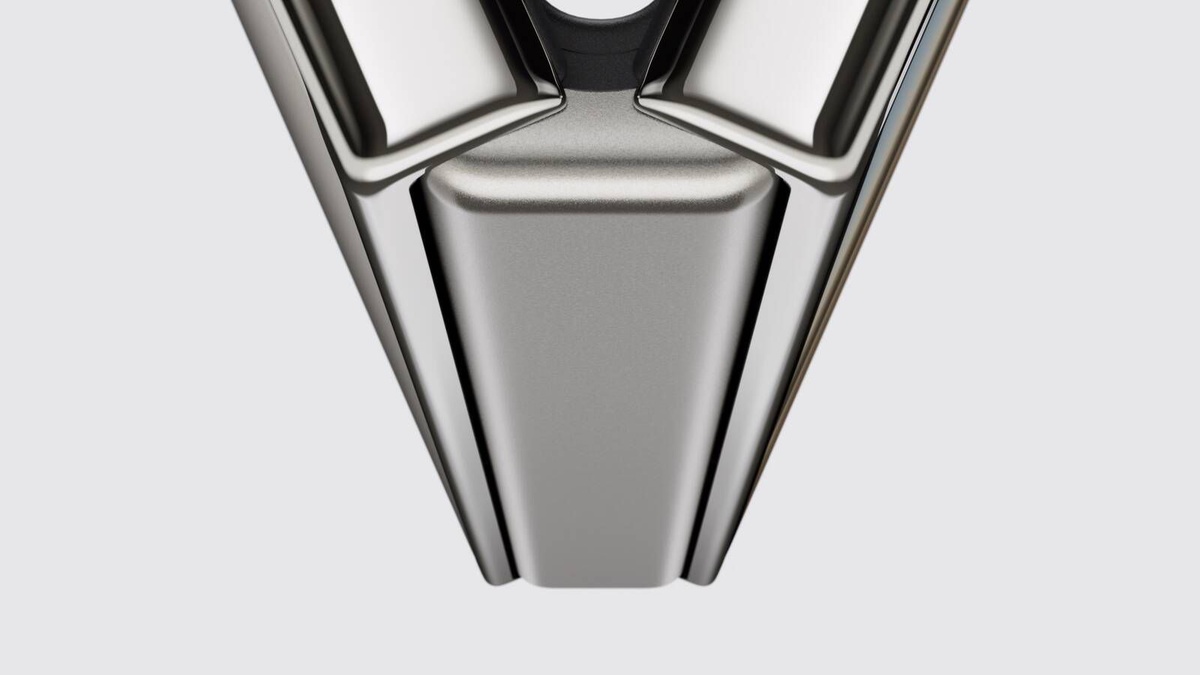
3. Dynamic Island Integration: Transforming macOS Navigation
The controversial display notch introduced in 2021 has officially been retired across Apple’s flagship workstation notebook portfolio. Fulfilling predictions from Omdia and Bloomberg, verified OLED Touchscreen MacBook Pro Rumors confirmed that an interactive Dynamic Island interface would replace the static cutout.
The pill-shaped Dynamic Island morphs smoothly to display real-time background processes, including Final Cut Pro video rendering, AirDrop transfers, and Xcode compilation progress. Tapping the island instantly expands contextual media controls and system notifications without interrupting primary workspace applications.
Housed within this compact aperture is an upgraded 12-megapixel Center Stage camera system featuring advanced computational image processing. Early hardware leaks accurately noted that machine learning algorithms would track moving subjects while directional beamforming microphones isolate vocals.
This interface modernization complements desktop computing advancements established during the recent Apple M4 Mac mini redesign. By synchronizing software controls across form factors, Apple delivers an intuitive, unified ecosystem for mobile and desktop professionals.
While some supply chain analysts incorrectly speculated that Apple would implement an under-display camera sensor, the functional Dynamic Island provides immense utility. Analysts following OLED Touchscreen MacBook Pro Rumors correctly identified the interactive software pill as macOS’s most significant visual transformation.
4. Benchmarks & Specifications: Generational Faceoff
Silicon expectations represented one of the most turbulent aspects of the hardware leak cycle over the past eighteen months. While initial claims suggested an M6 Pro processor, verified OLED Touchscreen MacBook Pro Rumors correctly predicted that Apple would equip the machine with M5 Pro silicon.
Fabricated on TSMC’s enhanced two-nanometer semiconductor process node, the M5 Pro architecture delivers a twenty-five percent leap in multi-core compute throughput. Dedicated hardware ray tracing units and a sixty-core GPU enable real-time 8K video scrubbing and complex 3D simulation rendering.
Sustained processing performance is maintained by a redesigned vapor chamber thermal assembly that dissipates heat across the unibody aluminum base. Similar to thermal breakthroughs observed in the AMD Ryzen 7 9800X3D revealed desktop space, intelligent cooling prevents thermal throttling during extended rendering.
Furthermore, as legacy software ecosystems evolve and NVIDIA ends Windows 10 support, modern creative software heavily depends on on-die neural acceleration. The M5 Max integrates an expanded 32-core Neural Engine capable of running complex local diffusion models.
Cloud workflows and distributed computing models also mirror high-bandwidth remote environments seen in Xbox Cloud Gaming pay-as-you-go bundles. Examining OLED Touchscreen MacBook Pro Rumors clarifies that choosing M5 Pro silicon allowed Apple to balance extreme workstation speed with class-leading power efficiency.
Comparative Hardware Matrix: 14-Inch Versus 16-Inch Workstation Tiers
To assist prospective buyers in choosing the ideal configuration, we have compiled an in-depth hardware specification matrix. The comparative analysis below outlines technical metrics across 14-inch and 16-inch flagships, validating what OLED Touchscreen MacBook Pro Rumors accurately predicted.
| Hardware Specification | 14-inch PROLED XDR (M5 Pro) | 16-inch PROLED XDR (M5 Pro) | 16-inch PROLED XDR (M5 Max) | Previous M4 Max MacBook Pro |
|---|---|---|---|---|
| Display Architecture | 14.2-inch Tandem OLED | 16.2-inch Tandem OLED | 16.2-inch Tandem OLED | 16.2-inch Liquid Retina XDR |
| Touch & Digitizer | 240Hz Capacitive Multi-Touch | 240Hz Capacitive Multi-Touch | 240Hz Capacitive Multi-Touch | None (Keyboard & Trackpad) |
| Peak HDR Luminance | 2,000 Nits True Black | 2,000 Nits True Black | 2,000 Nits True Black | 1,600 Nits Mini-LED |
| Process Node & Silicon | Apple M5 Pro (TSMC 2nm) | Apple M5 Pro (TSMC 2nm) | Apple M5 Max (TSMC 2nm) | Apple M4 Max (TSMC 3nm) |
| Max Unified Memory | 48GB Unified RAM | 48GB Unified RAM | 128GB Unified RAM | 128GB Unified RAM |
| Maximum Storage | 8TB High-Speed SSD | 8TB High-Speed SSD | 16TB High-Speed SSD | 8TB High-Speed SSD |
| Acoustic System | Six-Speaker Spatial Array | Six-Speaker Subwoofer Array | Six-Speaker Subwoofer Array | Six-Speaker Spatial Array |
| Starting Price (MSRP) | $2,899 USD | $3,399 USD | $3,999 USD | $2,499 USD |
Analyzing this generational hardware matrix demonstrates how closely retail configurations matched early technical leaks. Reviewing finalized metrics alongside OLED Touchscreen MacBook Pro Rumors proves that buyers receive uncompromising compute density, extraordinary memory bandwidth, and reference-grade display fidelity.
5. Pricing Analysis & Value Verdict: Is the Premium Justified?
Financial reporting proved remarkably precise in the final weeks preceding launch, confirming that tandem OLED panels carry a price premium. Accurate reporting from MacRumors verified OLED Touchscreen MacBook Pro Rumors that the 14-inch model starts at $2,899, while the 16-inch flagship begins at $3,399.
While core specifications matched long-term leaks, Apple still managed to shock attendees with several completely unrumored hardware surprises. Observers following industry rumors were astonished by the triumphant revival of the iconic illuminated white Apple logo on the display lid.
Rather than relying on legacy liquid crystal backlight bleed, the redesigned logo features independent micro-LED backlighting synchronized with ambient screen brightness. The illuminated emblem dims seamlessly in darkened studio environments, preventing distracting visual glare while celebrating beloved Apple brand heritage.
Apple also surprised high-end enterprise buyers by introducing an unprecedented 16TB solid-state storage configuration option. While never mentioned in early leaks, this massive capacity pairs with revamped acoustic speakers offering closed-lid playback for luxury mobile workstations.
Evaluating the overall accuracy rate proves that modern hardware supply chains remain remarkably transparent despite Apple’s rigorous corporate confidentiality. Those who tracked OLED Touchscreen MacBook Pro Rumors over the past three years possessed an extraordinarily accurate blueprint of today’s flagship hardware.
Final Verdict: How Accurate Were OLED Touchscreen MacBook Pro Rumors?
The official debut of Apple’s flagship workstation marks the culmination of one of the longest rumor cycles in computing history. Looking back, OLED Touchscreen MacBook Pro Rumors provided a remarkably dependable roadmap of the technological breakthroughs that define the PROLED XDR series.
By delivering double-stack tandem OLED optics, direct capacitive touch navigation, and class-leading M5 silicon efficiency, Apple successfully validated years of speculation. Creative buyers who monitored OLED Touchscreen MacBook Pro Rumors now enjoy an ergonomic touchscreen workstation that enhances professional productivity without compromising traditional workflows.
For creative professionals debating an upgrade, the shipping machine delivers on every promise established throughout the extensive rumor cycle. While halo pricing reflects premium manufacturing costs, those who followed OLED Touchscreen MacBook Pro Rumors now have the ultimate mobile workstation in their hands.
