


The portable professional computing paradigm has arrived at a historic developmental crossroads. Apple has reportedly finalized engineering plans for its most ambitious mobile hardware transformation in a decade, blending revolutionary touch capabilities with cutting-edge tandem display engineering.
The upcoming OLED Touchscreen MacBook Pro introduces radical visual and structural pivots that challenge traditional desktop ergonomics. According to groundbreaking reports from Bloomberg, this flagship laptop signals a decisive departure from Steve Jobs’ historic opposition to touch-enabled Mac computers.
For years, Apple insisted that vertical touchscreens caused severe arm fatigue, famously describing the ergonomic friction as gorilla arm syndrome. However, soaring consumer demand for versatile creative workstations has prompted Cupertino engineers to completely rethink macOS interaction models.
As detailed in recent retail coverage by MacRumors reporting, the OLED Touchscreen MacBook Pro could carry a steep starting price of twenty-eight-hundred-ninety-nine dollars. That represents a four-hundred-dollar price hike over preceding mini-LED models.
This hardware milestone follows aggressive computing overhauls across the personal workstation ecosystem. Just as the compact Apple M4 Mac mini redesign established new baseline standards with sixteen gigabytes of RAM, Apple’s mobile lineup is undergoing immense structural modernization.
Simultaneously, the broader computing landscape faces architectural inflection points across all operating systems. While PC builders upgrade their gaming rigs as AMD Ryzen 7 9800X3D revealed record-breaking framerates, mobile creators demand uncompromising display fidelity on battery power.
Furthermore, software ecosystems are evolving rapidly as NVIDIA ends Windows 10 support, pushing millions toward modern operating environments. Apple’s unified silicon architecture provides an increasingly attractive refuge for creative professionals seeking seamless long-term stability.
Here are the five major architectural upgrades behind why the OLED Touchscreen MacBook Pro represents the most transformative Mac portable release since Apple Silicon debuted, uniting tandem OLED, Dynamic Island, and M5 Pro silicon.
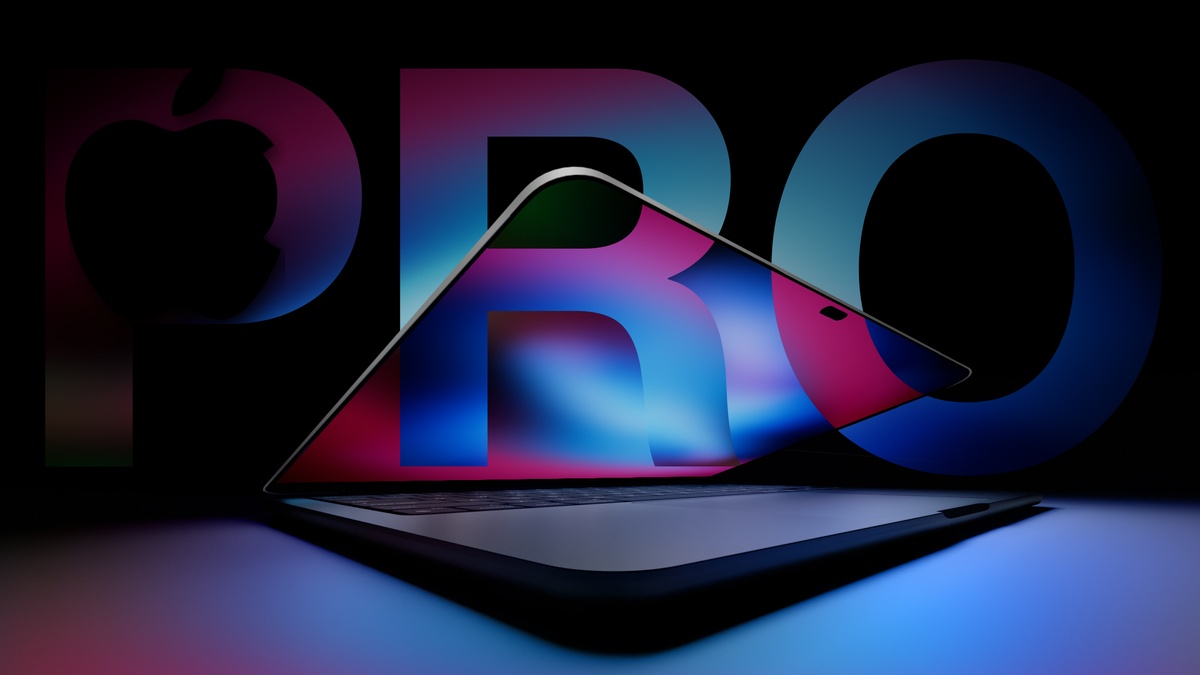
Table of Contents
1. Tandem OLED Architecture: Zero-Latency Touch & Infinite Contrast
The definitive hardware breakthrough powering the new flagship MacBook Pro centers on an advanced tandem OLED display panel. Apple engineers adapted double-stack emission layers originally pioneered in the M4 iPad Pro to conquer traditional laptop brightness limits.
Standard consumer OLED laptops frequently suffer from aggressive brightness degradation and persistent image burn-in vulnerabilities. By stacking two distinct organic emission layers together, the new flagship MacBook Pro produces unprecedented luminance while distributing electrical strain across subpixel matrices.
The resulting display achieves a dazzling one-thousand nits of full-screen sustained brightness and sixteen-hundred nits of peak HDR highlights. In the new flagship MacBook Pro, true pitch-black pixel deactivation eradicates distracting backlight blooming around dense timeline assets.
Direct on-cell touch digitization layers are fused beneath the protective glass covering without introducing bulky laminate air gaps. This integrated manufacturing approach slashes visual parallax to zero, ensuring digital pens and fingertips track precisely with on-screen graphical elements.
Creative visual editors working inside color-critical production suites will experience staggering improvements across dynamic contrast ranges. The panel supports the full DCI-P3 wide color gamut alongside ProMotion one-hundred-twenty-hertz variable refresh rates for buttery-smooth gestural manipulation.
Consequently, the new flagship MacBook Pro decisively outclasses competing Windows workstations utilizing conventional single-layer panels. Professionals gain studio-grade HDR grading accuracy directly inside a portable, battery-efficient mobile enclosure.
2. Redesigned Anti-Wobble Hinge & Chassis Thinning
Integrating a responsive touch interface onto a thin laptop lid introduces tremendous physical engineering hurdles. In earlier prototype configurations, tapping the upper corners of laptop displays caused irritating display vibrations and distracting screen wobble.
To solve this physical challenge, the new flagship MacBook Pro introduces a completely redesigned anti-wobble tension hinge. The revised mechanical hinge assembly utilizes dual-stage friction dampening that resists physical finger pressure without stiffening single-handed lid opening.
Furthermore, internal chassis architecture has been extensively re-engineered to trim physical thickness and reduce travel weight. Inside the new flagship MacBook Pro, high-density alloy materials preserve rigid structural durability while enabling a substantially sleeker overall silhouette.
The revised internal chassis also accommodates an overhauled cooling system designed to optimize airflow directly through hinge exhaust vents. Dual centrifugal blowers guide thermal heat dissipation away from critical internal components without generating disruptive acoustic fan whine.
Thinner display bezels frame the vibrant panel, providing an immersive edge-to-edge viewing environment for demanding multitasking sessions. On the new flagship MacBook Pro, users gain expansive screen real estate without expanding overall external laptop dimensions.
This clever mechanical triumph ensures that tapping, dragging, and pinch-to-zoom gestures feel rock-solid on the new flagship MacBook Pro. The laptop remains perfectly stable across lap use, airline trays, and studio workstations alike.
3. Dynamic Island Integration: Transforming macOS 16 Navigation
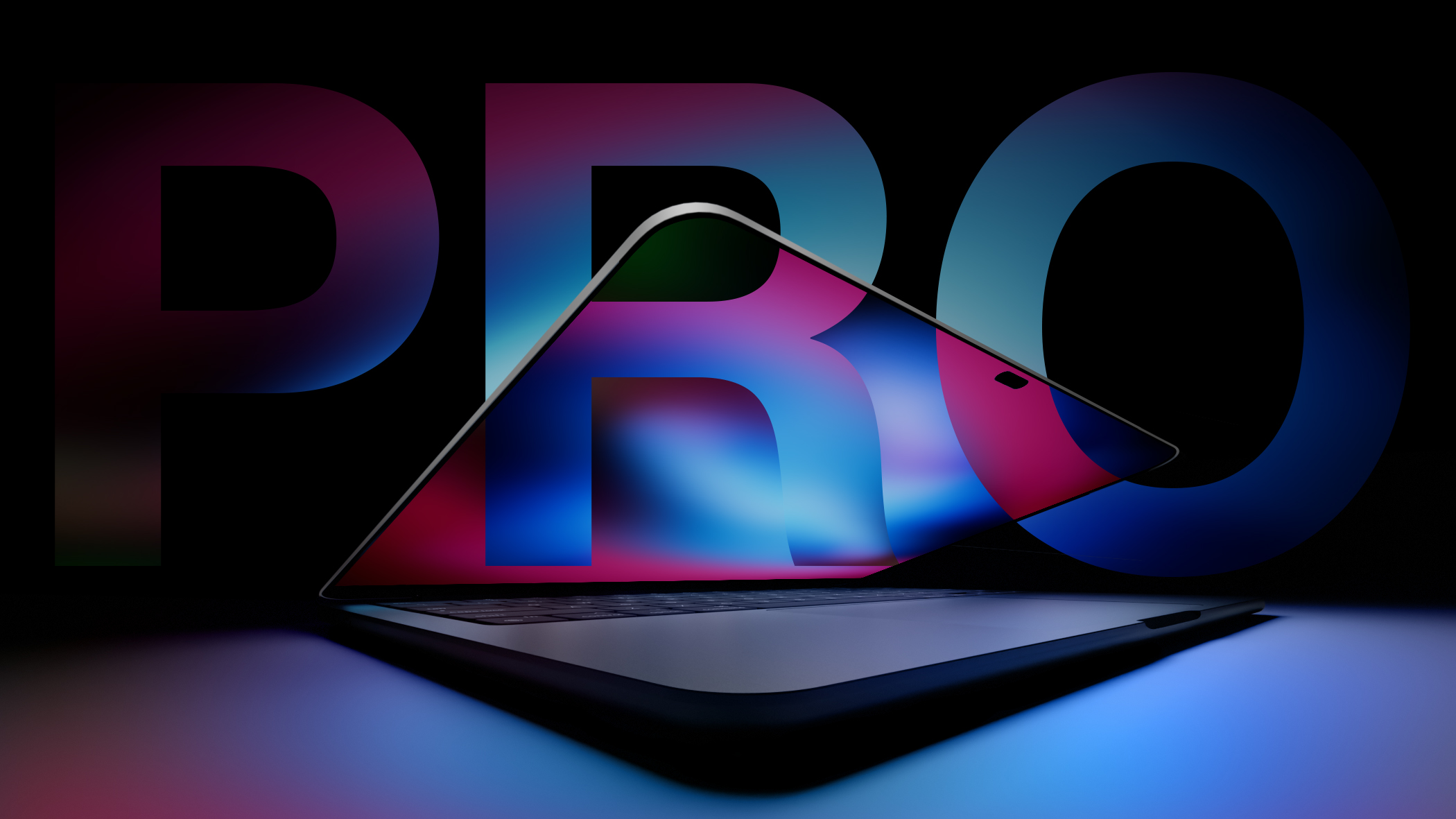
For three full laptop generations, Mac power users voiced frustration over the static camera notch interrupting top menu bars. The new flagship MacBook Pro finally addresses this aesthetic irritation by transforming the cut-out into an interactive Dynamic Island.
Migrating from modern iPhone models, the Dynamic Island on macOS adapts fluidly to foreground tasks, system notifications, and active background rendering threads. On the new flagship MacBook Pro, users can directly tap the island to expand media controls.
The interactive island expands seamlessly when handling AirDrop transfers, FaceTime video calls, and complex Apple Intelligence generative summarization workflows. Tapping active system notifications with fingertips provides instant modal expansion without requiring complex trackpad navigation gestures.
Detailed analysis by Bloomberg technology reporting indicates that macOS 16 will introduce specialized multi-touch interface optimizations. Menu items, timeline scrubbers, and contextual tool palettes automatically expand touch hitboxes upon sensing finger proximity.
Importantly, traditional trackpad and keyboard navigation remain entirely uncompromised throughout everyday workflows. The new flagship MacBook Pro treats touch as an intuitive secondary accelerator rather than an awkward mandatory trackpad replacement.
By harmonizing software and hardware through Dynamic Island gestures, the new flagship MacBook Pro elevates personal computing ergonomics. Users enjoy rapid contextual feedback without disrupting their primary creative keyboard shortcuts.
Architectural Showdown: OLED Touchscreen vs. Mini-LED MacBook Pro
Evaluating the architectural progression separating the upcoming touchscreen flagship from current mini-LED models reveals significant structural refinement. Here is the comprehensive hardware specifications showdown between both workstation tiers.
| Hardware Specification | Current Mini-LED MacBook Pro | New OLED Touchscreen MacBook Pro |
|---|---|---|
| Display Technology | Liquid Retina XDR (Mini-LED) | Tandem OLED Double-Stack Panel |
| Touch Input Support | None (Keyboard & Trackpad Only) | Multi-Touch Direct On-Cell Layer |
| Pixel Blooming / Halos | Noticeable in High-Contrast Scenes | Zero Blooming (True Per-Pixel Off) |
| Peak HDR Luminance | 1,600 Nits Peak HDR | 1,600 Nits Peak (1,000 Nits Full-Screen) |
| Top Display Notch | Static Hardware Notch Cutout | Interactive Dynamic Island Interface |
| Lid Hinge Design | Standard Friction Hinge | Anti-Wobble Dual-Stage Tension Hinge |
| Processor Generation | Apple M4 / M4 Pro / M4 Max | Apple M5 Pro / M5 Max (2nm TSMC) |
| Baseline Unified Memory | 16GB / 24GB Unified Memory | 24GB High-Bandwidth Unified Memory |
| Starting Retail Price | $2,499 USD Starting Price | $2,899 USD Starting Price (+$400) |
The comparative data illustrates how the OLED Touchscreen MacBook Pro transforms the flagship computing experience. Moving to tandem OLED eliminates backlight blooming entirely while direct touch input unlocks rapid creative editing gestures.
While preceding mini-LED models retain commendable efficiency, creative professionals working in video editing and digital photography will find the instantaneous contrast of the OLED Touchscreen MacBook Pro completely transformative.
4. The $400 Price Hike: Why $2,899 Is Apple’s New Pro Floor
The most controversial aspect of Apple’s flagship strategy centers on aggressive retail pricing. Launching at an estimated starting price of twenty-eight-hundred-ninety-nine dollars, the OLED Touchscreen MacBook Pro represents a considerable financial investment.
The substantial four-hundred-dollar price hike over baseline mini-LED configurations is primarily driven by expensive tandem OLED panel yields. Manufacturing dual-stack OLED displays at fourteen-inch and sixteen-inch scale remains extraordinarily capital-intensive across display supply lines.
To cushion the financial blow, Apple plans to continue selling existing mini-LED models alongside the OLED Touchscreen MacBook Pro. Customers who prioritize raw computing performance without requiring touch interactivity retain an accessible upgrade pathway.
For elite creative agencies, software engineering firms, and high-end video studios, the elevated pricing reflects genuine commercial productivity value. In the OLED Touchscreen MacBook Pro, integrated touch acceleration slashes production latency across interactive design workflows.
Higher initial retail pricing also helps protect Apple’s industry-leading hardware profit margins amid rising semiconductor fabrication costs. The OLED Touchscreen MacBook Pro establishes a brand-new super-premium hardware tier above standard professional mobile workstations.
Ultimately, this calculated price positioning confirms Apple’s confidence in its display supremacy. Consumers willing to pay the premium gain access to the most sophisticated visual and interactive workstation ever engineered for mobile computing.
Flagship Faceoff: Apple OLED Touchscreen vs. Windows Workstations
Selecting a high-end creative workstation requires evaluating competitive offerings across diverse hardware ecosystems. Here is how Apple’s upcoming flagship stacks up against the premier touchscreen Windows alternatives in modern computing.
| Workstation Feature | Apple OLED Touchscreen MacBook Pro | Dell XPS 16 (OLED Touch) | Lenovo ThinkPad X1 Fold 16 |
|---|---|---|---|
| Display Architecture | Double-Stack Tandem OLED | Single-Layer Samsung OLED | Flexible Folding OLED |
| Peak HDR Luminance | 1,600 Nits Peak HDR | 400 Nits SDR / 500 Nits HDR | 600 Nits Peak HDR |
| Variable Refresh Rate | 120Hz ProMotion Adaptive | 60Hz / 90Hz Max Refresh | 60Hz Fixed Refresh Rate |
| Anti-Wobble Stability | Dual-Stage Tension Hinge | Standard Laptop Clamshell | Kickstand Tablet Hinge |
| Battery Run Time | Up to 24 Hours Battery Life | 8 to 11 Hours Battery Life | 7 to 9 Hours Battery Life |
| Acoustic Thermal Fan Noise | Whisper-Quiet Dual Blowers | Aggressive Fan Acoustics Under Load | Moderate Fan Whine |
| Base Configuration Price | $2,899 USD MSRP | $2,749 USD MSRP | $2,999 USD MSRP |
The competitive showdown demonstrates the distinct architectural superiority of the OLED Touchscreen MacBook Pro. Delivering sixteen-hundred nits of peak HDR brightness with twenty-four hours of battery endurance outclasses competing x86 laptops.
While competing Windows laptops pioneered touch input years ago, none combine tandem OLED panels with the astonishing battery longevity and silent thermal operation of the OLED Touchscreen MacBook Pro.
5. M5 Pro Silicon Mastery & Dual Fan Acoustics
Under the aluminum hood, the OLED Touchscreen MacBook Pro is driven by next-generation M5 Pro and M5 Max silicon. Fabricated on TSMC’s refined two-nanometer node, these processors introduce monumental architectural throughput uplifts.
The premier M5 Pro chip features an upgraded eighteen-core CPU paired with a massive twenty-four-core GPU. In the OLED Touchscreen MacBook Pro, this immense graphics muscle accelerates real-time ray tracing calculations and AI generative diffusion models.
Dedicated on-chip Neural Engines scale to unprecedented speeds, powering real-time video rotoscoping, automated audio mastering, and localized multi-modal reasoning. Processing complex machine learning operations locally protects intellectual property without incurring cloud API subscription costs.
Unified memory configurations start standard at twenty-four gigabytes, scaling seamlessly up to ninety-six gigabytes on high-tier M5 Max configurations. On the OLED Touchscreen MacBook Pro, colossal memory bandwidth ensures zero stuttering during multi-stream ProRes 8K editing sessions.
Crucially, Apple’s relentless silicon optimization allows this monstrous performance to operate with whisper-quiet acoustics. Unlike power-hungry workstation laptops that throttle under sustained loads, the OLED Touchscreen MacBook Pro delivers sustained peak performance on battery power.
This decisive silicon mastery guarantees that the OLED Touchscreen MacBook Pro will dominate mobile benchmark charts for years. Creative professionals gain desktop-class processing power within an impossibly elegant portable form factor.
Final Verdict: The Undisputed Creative Crown
The arrival of the OLED Touchscreen MacBook Pro marks an iconic milestone in the history of personal computing. By uniting peerless tandem OLED display engineering with intuitive touch ergonomics, Apple has rewritten professional laptop standards.
While the twenty-eight-hundred-ninety-nine dollar starting price demands a considerable financial commitment, the unprecedented convergence of display fidelity, anti-wobble stability, and M5 Pro silicon justifies the premium for demanding creators.
For designers, video editors, and mobile professionals seeking the ultimate portable workstation, the OLED Touchscreen MacBook Pro stands completely peerless. It represents the definitive pinnacle of Apple hardware engineering for the modern creative era.
