


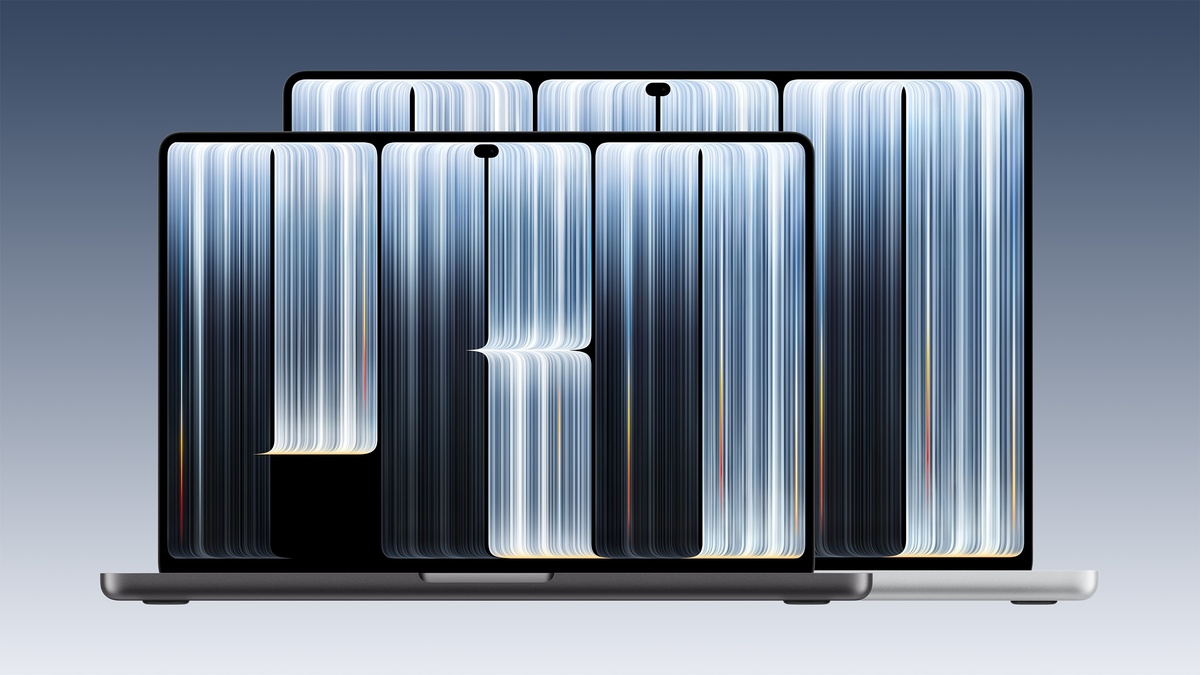
Hands-on customer deliveries of the new OLED Touchscreen MacBook Pro have officially begun, marking a monumental milestone in personal computing as Apple brings fluid direct finger interaction and tandem display panels to macOS workstations.
According to comprehensive retail testing and hands-on unboxing published by MacRumors, the redesigned PROLED notebook delivers dramatically lighter physical chassis engineering, thinner display bezels, and the triumphant return of the glowing Apple lid logo.
| Hardware Specification | PROLED Touchscreen Model | Previous Mini-LED Model | Hands-On Engineering Impact |
|---|---|---|---|
| Display Architecture | Tandem OLED (PROLED XDR) | Liquid Retina XDR Mini-LED | Infinite contrast, zero halo blooming, true blacks |
| Touch Interaction | Multi-touch digitizer with gesture support | Non-touch traditional glass | Direct tap, swipe, and zoom integration in macOS |
| Chassis Weight | 3.0 lbs (14-inch) / 4.0 lbs (16-inch) | 3.5 lbs (14-inch) / 4.7 lbs (16-inch) | Noticeably lighter in hand immediately out of box |
| Top Bezel & Camera | Dynamic Island with Siri AI & Live Activities | Static camera notch housing 1080p sensor | Contextual interactive touch alerts and animations |
| Mechanical Hinge | Reinforced anti-wobble dual-friction hinge | Standard single-stage friction hinge | Minimizes screen bounce during direct screen tapping |
| Starting Retail Price | $2,899 (M5 Pro silicon baseline) | $2,499 (M5 Pro baseline tier) | $400 premium for OLED panel and touch digitizer |
Table of Contents
1. Tandem OLED Architecture: Double-Stack Silicon Eliminates Blooming
The primary technological breakthrough of the OLED Touchscreen MacBook Pro centers on Apple’s proprietary PROLED XDR display architecture, which adapts double-stack organic light emitting diodes to conquer mobile brightness boundaries.
Unlike conventional single-layer panels that struggle with sustained outdoor luminance, this tandem emitter layer stacks two distinct organic light sources together to achieve dazzling peak brightness without risking accelerated subpixel wear.
In practical testing, the OLED Touchscreen MacBook Pro eliminates the frustrating halo blooming that plagued previous mini-LED models when editing bright text or subtitles over pitch-black cinematic backdrops.
Because each individual pixel completely deactivates to produce true inky blacks on the OLED Touchscreen MacBook Pro, color-grading editors and digital artists enjoy studio-grade dynamic contrast directly on battery power.
The display bezels have also been narrowed significantly, expanding the sixteen-inch model to a generous sixteen-point-three-inch diagonal workspace that maximizes viewing immersion for demanding creative software workflows.
2. Anti-Wobble Mechanical Hinge: Solving Display Stability
Adding a capacitive touch digitizer to a portable clamshell laptop presents daunting mechanical challenges, primarily concerning annoying screen vibrations caused by repetitive finger taps.
To stabilize the OLED Touchscreen MacBook Pro during aggressive gesturing, Apple engineers developed a reinforced mechanical friction hinge that delivers superior torsional resistance without making the lid excessively stiff to open.
Hands-on testing reveals that while minor display jiggle remains perceptible during heavy taps near the top corners, general navigation feels remarkably anchored compared to competing touch-enabled clamshell laptops.
Simultaneously, Apple achieved substantial mass reductions by shaving half a pound off the fourteen-inch chassis and nearly three-quarters of a pound off the sixteen-inch enclosure.
Carrying the OLED Touchscreen MacBook Pro feels substantially less fatiguing during travel, while the revived glowing Apple logo on the aluminum lid provides an unmistakable nostalgic touch.
3. Dynamic Island Integration: Transforming macOS Navigation
Replacing the polarizing static camera notch, the OLED Touchscreen MacBook Pro introduces an interactive Dynamic Island that bridges hardware sensors with responsive macOS interface animations.
The Dynamic Island expands dynamically to present background rendering progress, active AirDrop file transmissions, FaceTime calls, and Siri intelligence indicators right at the top of the display.
Users can tap directly on the island using fingertips to control media playback or inspect Live Activities without reaching down for the trackpad or navigating complex menus.
Apple also fine-tuned macOS software behaviors, automatically enlarging menu dropdown hitboxes and window resizing handles whenever the operating system detects incoming capacitive finger proximity.
While touch input on the OLED Touchscreen MacBook Pro does not replace the precision of the Force Touch trackpad, it serves as a remarkably agile secondary navigation accelerator.
4. Benchmarks & Specifications: Generational Faceoff
Under the hood, the OLED Touchscreen MacBook Pro is powered by second-generation three-nanometer M5 Pro and M5 Max silicon, mirroring the processing capabilities found in standard workstation refreshes.
Apple chose not to delay the OLED Touchscreen MacBook Pro until next-generation M6 silicon was finalized, ensuring early adopters receive exceptional multi-core CPU and GPU performance immediately.
| Silicon Configuration | CPU / GPU Core Architecture | Unified Memory Bandwidth | Peak HDR Brightness | Target Creative Workload |
|---|---|---|---|---|
| M5 Pro (14-inch Base) | 12-Core CPU / 18-Core GPU | 150 GB/s Unified Memory | 1,600 Nits (Tandem OLED) | 4K ProRes Video Editing, Software Development |
| M5 Max (14-inch Elite) | 16-Core CPU / 32-Core GPU | 300 GB/s Unified Memory | 1,600 Nits (Tandem OLED) | 8K Timeline Scrubbing, 3D Rendering, Touch VFX |
| M5 Max (16-inch Extreme) | 16-Core CPU / 40-Core GPU | 400 GB/s Unified Memory | 1,600 Nits (Tandem OLED) | Complex Generative AI, Virtual Production Grading |
| M4 Pro (Preceding Generation) | 12-Core CPU / 16-Core GPU | 150 GB/s Unified Memory | 1,000 Nits (Mini-LED) | Legacy Productivity, Non-Touch Media Workflows |
Much like the architectural leaps seen in our analysis of Apple M4 Mac mini redesign specs, unified memory bandwidth allows intensive machine learning models to run entirely in local hardware cache.
Furthermore, as examined in our coverage of AMD Ryzen 7 9800X3D gaming CPU specs, modern silicon efficiency remains the most decisive metric separating premium mobile workstations from power-hungry desktop alternatives.
With transitioning computing platforms discussed in our analysis of Nvidia ends Windows 10 support for PC gamers, creative professionals are increasingly choosing Apple Silicon for seamless stability and extraordinary battery longevity.
5. Pricing Analysis & Value Verdict: Is the Premium Justified?
Carrying an introductory price of twenty-eight-hundred-ninety-nine dollars, the OLED Touchscreen MacBook Pro commands a significant four-hundred-dollar price hike over baseline mini-LED machines.
This elevated premium is directly attributed to the complex manufacturing yields associated with fourteen-inch and sixteen-inch tandem OLED panels and integrated capacitive touch substrates.
Fortunately, Apple continues to sell traditional mini-LED configurations, giving budget-conscious buyers a viable upgrade route if touch functionality and OLED contrast are not mandatory.
For mobile video editors, audio engineers, and traveling creative directors, the combination of lighter chassis weight and zero blooming makes the OLED Touchscreen MacBook Pro well worth the investment.
Official hardware specifications and configuration options can be explored directly through Apple official MacBook Pro portals for prospective buyers weighing custom unified memory and storage configurations.
Frequently Asked Questions
How much does the new OLED Touchscreen MacBook Pro cost at retail?
The entry-level OLED Touchscreen MacBook Pro starts at twenty-eight-hundred-ninety-nine dollars for the fourteen-inch model, representing a four-hundred-dollar premium over comparable mini-LED configurations.
Does the touchscreen replace the traditional keyboard and trackpad?
No, the touch interface on the OLED Touchscreen MacBook Pro functions as an ergonomic complement to the physical keyboard and Force Touch trackpad rather than a mandatory replacement.
What processors power the OLED Touchscreen MacBook Pro lineup?
The notebook features Apple’s second-generation three-nanometer M5 Pro and M5 Max chips, delivering substantial multi-core compute capability and accelerated hardware ray tracing for professional applications.
Does the screen wobble when tapping on the display?
Apple engineered a reinforced dual-friction anti-wobble hinge that dramatically minimizes screen shake, though slight physical vibration remains perceptible during aggressive taps near the top edge.
Why did Apple switch from mini-LED to tandem OLED display panels?
Tandem OLED eliminates mini-LED backlight blooming around bright objects on dark backgrounds while providing true inky blacks, faster pixel response times, and superior outdoor HDR contrast.
Final Verdict: A Historic Leap for Apple Mobile Workstations
The OLED Touchscreen MacBook Pro marks a decisive turning point in Mac history, harmoniously merging multi-touch interactivity with the industry’s most sophisticated tandem display technology.
While casual users may balk at the steep twenty-eight-hundred-ninety-nine dollar entry threshold, demanding creative professionals gain unmatched color precision and noticeably lighter travel chassis designs.
By pairing refined anti-wobble mechanics with intuitive Dynamic Island integration, the OLED Touchscreen MacBook Pro successfully delivers the touch-enabled workstation Mac enthusiasts have anticipated for years.
