


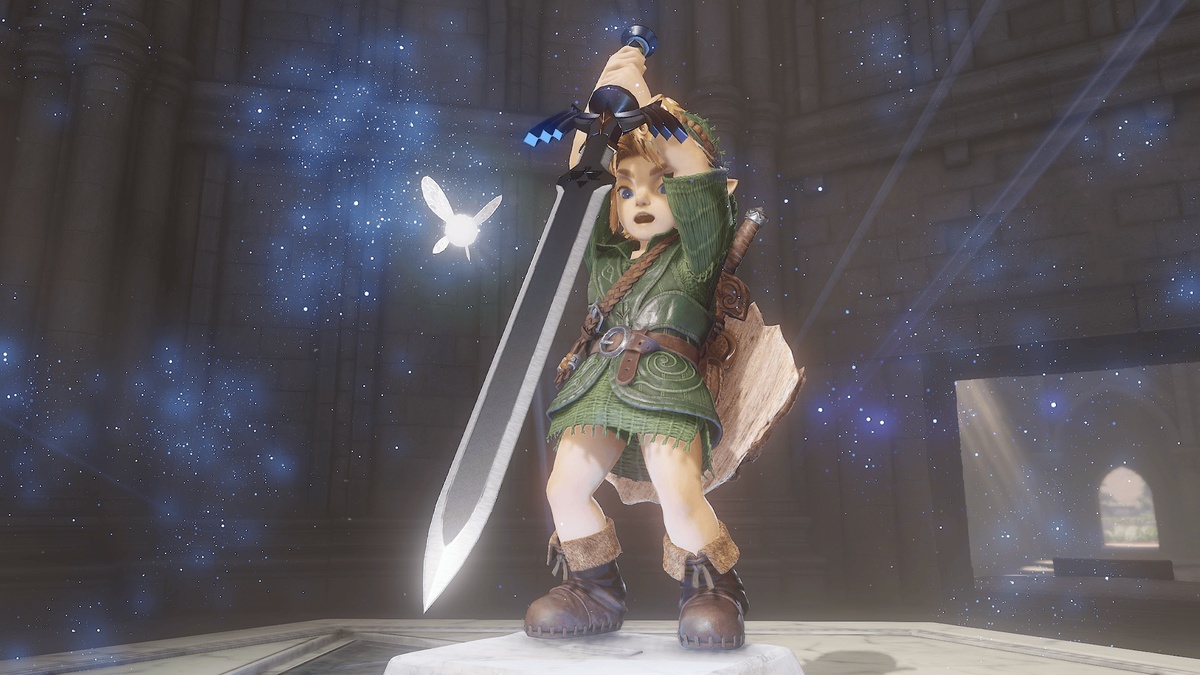
Ahead of the release of Grand Theft Auto VI, Nintendo has unveiled its own autumn blockbuster: the Ocarina of Time remake. Arriving twenty-eight years after the Nintendo 64 debut, this ground-up reimagining sets an ambitious standard on Nintendo Switch 2.
Longtime franchise producer Eiji Aonuma described the project as a faithful interpretation powered by modern technologies. Built natively on next-generation handheld silicon, the Ocarina of Time remake pairs expressive cinematic presentation with modern movement mechanics to welcome new adventurers and veteran players alike.
At-a-Glance: Ocarina Of Time Remake Specifications and Feature Matrix
| Feature Parameter | Switch 2 Remake Specification | Original 1998 N64 Architecture | Key Player Enhancement |
|---|---|---|---|
| Display & Rendering | Native 4K docked / 1080p handheld with PBR shaders | 240p analog output on CRT displays | Puppet-inspired tactile aesthetics with realistic lighting |
| Locomotion Dynamics | Dedicated manual jump button and sprint dash | Contextual auto-jump and roll attack spam | Freeform vertical platforming and swift field traversal |
| Camera & Targeting | Full 360-degree analog control with refined Z-lock | Fixed camera angles and basic Z-targeting | Unrestricted situational awareness during intense combat |
| Quest Tracking Ledger | Threads of Time pause ledger and Zelda Notes app | Manual player memory and physical guidebooks | Contextual milestone hints without invasive map clutter |
| Audio & Voice Acting | Full orchestral score and voiced story cutscenes | Synthesized MIDI tracks and text dialogue | Deep cinematic drama across pivotal narrative moments |
| Acoustic Peripheral | Hori electronic ocarina with microphone tracking | Standard controller button inputs | Tactile real-world instrument interaction for secret songs |
Table of Contents
1. Visual Architecture and Practical Artistry: Reimagining Hyrule for Modern Silicon
The aesthetic identity of the project departs radically from conventional hyper-realistic graphics pipelines. According to comprehensive reporting from The Verge, Nintendo art director Aya Shida revealed that the visual style was directly inspired by traditional puppet theatre and practical cinematic effects.
By avoiding sterile photorealism, the development team crafted a tangible fantasy atmosphere where tactile character models inhabit lush environments. In the Ocarina of Time remake, Kokiri Forest features dense atmospheric volumetric fog and dynamic foliage shaders that react naturally to character traversal.
Lighting plays a pivotal role in establishing mood across Hyrule Field, simulating realistic day-night cycles with physical sun position calculations. Dynamic global illumination bounces golden sunlight across rolling hills, casting accurate real-time shadows beneath Lon Lon Ranch fences and ancient stone ruins.
Dungeon architecture showcases significant upgrades, transforming iconic subterranean labyrinths into visually haunting showcases. Locations like the Bottom of the Well and the Shadow Temple leverage deep specular occlusion and volumetric mist, creating an ominous atmosphere far beyond the geometric limits of 1998 hardware.
Similar to advancements highlighted in our AMD Ryzen 7 9800X3D review, efficient silicon unlocks richer world simulation. In the Ocarina of Time remake, modern hardware delivers fluid frame pacing while rendering intricate character textures and realistic water refraction.
2. Fluid Locomotion Mechanics: Dedicated Jump and Sprint Dynamics
Navigating three dimensions defined the Nintendo 64 release, yet modern players often struggle with automatic jumping. To modernize exploratory agency, the Ocarina of Time remake introduces a dedicated jump button, granting immediate vertical control during platforming sequences and intense combat encounters.
Alongside manual leaping, developers added a high-velocity dash mechanic that enables Link to sprint seamlessly across expansive fields. Players no longer need to rely exclusively on repetitive evasion inputs to move efficiently, though developers deliberately preserved the iconic tactical roll attack for nostalgic purists.
Combat targeting has received an equally comprehensive ergonomic overhaul, refining the legendary Z-targeting system into modern lock-on mechanics. The Ocarina of Time remake combines responsive analogue camera controls with fluid weapon transitions, allowing players to circle enemies and aim projectile tools without camera stutter.
Climbing physics and ledge mantling now feature responsive animation blending, making vertical navigation through Death Mountain and Gerudo Valley feel organic. Link responds fluidly to geometry changes, eliminating the jarring animation pauses that previously disrupted high-speed exploration across rocky environmental terrain.
Equipping essential gear has been streamlined by utilizing modern controller layouts with d-pad shortcuts. In the Ocarina of Time remake, swapping between the Iron Boots and Kokiri Boots occurs instantaneously without pausing gameplay, resolving one of the original adventure’s most notorious friction points.
3. Threads of Time Progression: Streamlining Narrative Traversal and Quest Tracking
Tracking complex quest flags across two distinct timelines previously confused players tackling the adventure without strategy guides. To resolve narrative friction, the Ocarina of Time remake incorporates an intuitive tracking ledger known as Threads of Time, accessible directly from the pause menu.
Threads of Time visually illustrates active quest milestones, unresolved NPC conversations, and available Heart Piece opportunities without displaying invasive map markers. This contextual progression ledger preserves the thrill of organic discovery while preventing players from wandering aimlessly after returning from extended breaks.
Complementing the in-game journal, Nintendo introduced real-time second-screen utility through Zelda Notes within the official mobile application. Adventurers playing the Ocarina of Time remake can review annotated floor maps, decipher ancient Sheikah inscriptions, and examine inventory requirements on their smartphones while gaming.
Storytelling reaches cinematic heights through the introduction of comprehensive professional voice acting for key supporting characters and narrative cutscenes. Legendary figures including Princess Zelda, Sheik, and the sinister desert king Ganondorf speak their dialogue with full dramatic inflection, intensifying emotional stakes during pivotal cinematic confrontations.
Crucially, Nintendo maintained Link as an expressive silent protagonist, preserving his traditional vocal grunts while enhancing facial emotional fidelity. This thoughtful storytelling balance ensures the Ocarina of Time remake honors its historic heritage while presenting a fully modernized epic suited for contemporary gaming audiences.
4. Console Architecture and Custom Peripherals: Switch 2 Hardware and Acoustic Tracking
To commemorate Link’s return, Nintendo revealed dedicated hardware, including a custom Nintendo Switch 2 console adorned with golden Triforce motifs. The limited-edition hardware launch accompanies a matching Switch 2 Pro Controller featuring custom textured grips and precision hall-effect analogue sticks for enhanced longevity.
Third-party peripheral specialist Hori has simultaneously announced an officially licensed electronic ocarina accessory, retailing globally for forty-nine dollars. The physical instrument features tactile finger buttons and twelve pre-programmed musical compositions, operating as an authentic musical synthesizer for franchise enthusiasts.
Most impressively, the instrument integrates directly with the Ocarina of Time remake through intelligent acoustic recognition software. Players can play physical melodies on the Hori device, which the game registers through the console microphone to unlock secret passageways, alter weather patterns, and warp across Hyrule.
Audio design has also been completely rescored by a live orchestral ensemble, offering dynamic interactive transitions between peaceful exploration and combat. Just as high-efficiency architectures optimize processing in our Apple M4 Pro silicon breakdown, custom spatial audio processing immerses players in 3D acoustic environments.
Headphone enthusiasts can connect directly to the peripheral via a dedicated three-and-a-half millimeter audio jack for private jam sessions. This playful hardware synergy proves that the Ocarina of Time remake extends beyond digital software into an engaging tactile entertainment experience.
Generational Evolution: Original Nintendo 64 Versus Switch 2 Remake Architecture
| Architectural Component | 1998 Nintendo 64 Original | 2026 Switch 2 Remake | Key Engineering Advancement | Gameplay Impact |
|---|---|---|---|---|
| Locomotion Physics | Context-sensitive auto-jump, roll spam | Dedicated jump button, sprint dash, roll attack | Decoupled vertical locomotion physics | Dynamic platforming and rapid traversal |
| Visual Shading | Low-polygon geometry, 240p resolution | Puppet-inspired PBR shaders, dynamic 4K | Volumetric lighting and atmospheric fog | Immersive, tactile storybook Hyrule |
| Quest Progression | Unassisted memory, physical game guides | Threads of Time ledger and mobile Zelda Notes | Non-intrusive contextual state machine | Streamlined narrative flow without handholding |
| Acoustic Architecture | Synthesized MIDI soundscape, text boxes | Full orchestral score, voiced cinematics | Dynamic multi-track acoustic spatial engine | Heightened cinematic drama and emotional impact |
| Peripheral Synergy | Standard N64 controller, Rumble Pak | Hori electronic ocarina with acoustic tracking | Real-time microphone frequency detection | Tactile melodic gameplay interaction |
5. Launch Trajectory and Market Impact: Pricing Strategies and Release Day Rollout
Nintendo has scheduled the global launch for November 5, 2026, positioning the adventure squarely within the competitive holiday release calendar. By debuting alongside Rockstar’s Grand Theft Auto VI, the Ocarina of Time remake sets up an unprecedented commercial clash between two generational entertainment juggernauts.
Pricing structures highlight an interesting bifurcation between digital convenience and physical collector value across retail channels. The digital download edition on Nintendo eShop maintains a standard fifty-nine dollar price tag, while physical cartridge packaging carries an MSRP of sixty-nine dollars across major storefronts.
However, early adopters can capitalize on preorder promotions at major retailers, offering a ten-dollar discount that matches digital pricing. Savvy consumers securing preorders through Amazon or Walmart ensure physical ownership of the Ocarina of Time remake without paying the added retail cartridge premium.
As the gaming industry shifts toward cloud ecosystems analyzed in our Xbox Cloud Gaming subscription breakdown, Nintendo reaffirms the value of dedicated hardware flagships. The company demonstrates that standalone bespoke experiences on dedicated consoles continue to capture unmatched consumer enthusiasm worldwide.
With official confirmation published across Nintendo’s official channels, fan anticipation has reached historic heights. Launching twenty-eight years after its revolutionary predecessor, the Ocarina of Time remake stands poised to redefine legendary gaming heritage for an entirely new generation.
Frequently Asked Questions
What is the official release date for the Ocarina of Time remake?
The title officially launches worldwide on November 5, 2026, releasing exclusively for the Nintendo Switch 2 console as a flagship autumn holiday title.
What major gameplay changes are introduced in the Ocarina of Time remake?
Modernized enhancements include a dedicated jump button, a high-velocity sprint mechanic, full cinematic voice acting, the Threads of Time quest tracker, and second-screen Zelda Notes mobile integration.
How does the Hori electronic ocarina peripheral interact with the game?
The forty-nine dollar accessory features tactile note buttons and plays twelve classic melodies. The Nintendo Switch 2 game recognizes these physical notes via console microphone audio tracking.
What are the pricing options for the physical and digital editions?
The digital eShop edition costs fifty-nine dollars, while the physical cartridge carries a sixty-nine dollar MSRP, with select retailers offering ten-dollar promotional discounts for early preorders.
Does the Ocarina of Time remake retain the classic roll attack?
Yes, Nintendo preserved the iconic forward roll attack across Hyrule Field, allowing veteran players to spam rolls while introducing sprint mechanics for contemporary navigation flexibility.
Final Verdict: A Defining Benchmark for Modern Video Game Remakes
The arrival of the Ocarina of Time remake demonstrates how classic masterpieces can be modernized with reverence, artistry, and technical ingenuity. By uniting puppet-inspired visuals, fluid locomotion, and intuitive quest ledgers, Nintendo revitalizes Hyrule without diminishing the timeless magic of the 1998 classic.
From dedicated jump controls and instant gear swapping to innovative acoustic peripheral integration, every design adjustment respects player time. Whether exploring subterranean temples or rolling across Hyrule Field, the Ocarina of Time remake provides an exhilarating adventure that bridges nostalgic reverence with modern convenience.
Arriving alongside industry titans this autumn, Nintendo proves that peerless world-building and inventive game design remain unmatched. The Ocarina of Time remake is not merely an updated coat of paint, but a triumphant reaffirmation of gaming’s greatest adventure.
