


Table of Contents
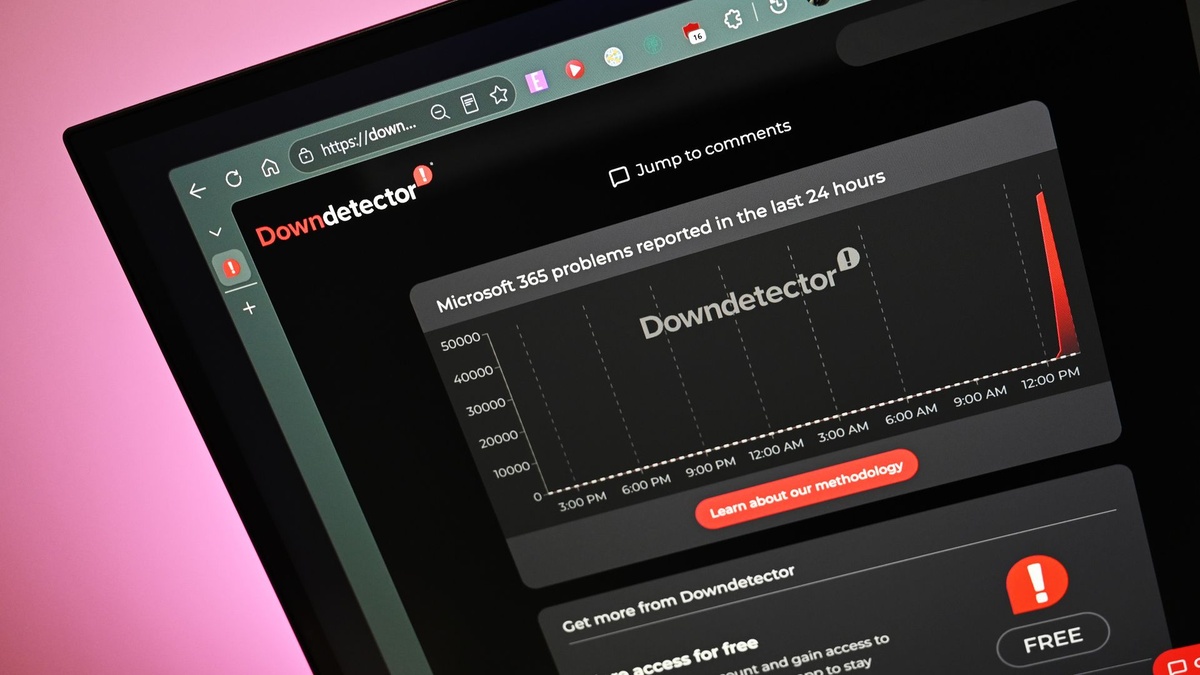
Following a paralyzing twenty-four-hour global disruption across enterprise cloud infrastructure, the official Microsoft 365 outage apology has acknowledged widespread failures across Teams, Outlook, and OneDrive. Microsoft addressed millions of stranded organizations while clarifying the precise technical breakdown.
Rather than an external cyberattack, the unprecedented service collapse stemmed from internal router maintenance. The Microsoft 365 outage apology detailed how an ambitious capacity enhancement backfired across the backbone, forcing critical public institutions and multinational corporations into emergency offline workflows.
| Incident Vector | Public Speculation & Rumors | Confirmed Technical Reality | Downstream Enterprise Impact |
|---|---|---|---|
| Root Trigger Mechanism | Unchecked AI agent code generation | Network capacity upgrade error post-routing change | Widespread border gateway packet dropouts |
| Service Blast Radius | Isolated regional Teams clusters | Microsoft 365, Teams, Outlook, OneDrive, Xbox | Global productivity halted for nearly 24 hours |
| Restoration Strategy | Immediate global configuration rollback | Phased, stage-validated traffic throttling | Extended recovery time to avoid thundering-herd crash |
| Public Sector Fallout | Negligible corporate inconvenience | UK NHS appointment delays; Japan fax reliance | Emergency fallback to analog workflows |
| Security Posture | Nation-state cyberattack or ransomware | Purely internal telecommunication misconfiguration | Zero data exfiltration or credential compromise |
Cascading Cloud Disruption: How a Routine Capacity Upgrade Crippled Core Services
The disruption began during an off-peak maintenance window when automated orchestration systems executed routing updates. Within minutes of the change, border gateway protocols experienced severe synchronization failures, transforming the incident into the catalyst for the Microsoft 365 outage apology.
Telemetry feeds instantly registered millions of packet dropouts across global data center regions. Core enterprise identity microservices failed to authenticate incoming user requests, severing corporate access to Microsoft 365 applications, Exchange mail servers, and internal SharePoint documents.
Enterprise administrators who monitored the initial dashboard alerts witnessed rolling connection timeouts rather than clean failover rerouting. As described in the Microsoft 365 outage apology, the faulty capacity upgrade overwhelmed neighboring distribution nodes, spreading transit bottlenecks across international fiber trunks.
Corporate communications ground to a halt as Outlook servers rejected queued transmissions and bounced internal threads, prompting the Microsoft 365 outage apology. As reported on Windows Central, organizations faced an abrupt communication vacuum throughout the business day.
Similar to past infrastructure bottlenecks evaluated across our Xbox Cloud Gaming pay-as-you-go pricing bundles analysis, interconnected cloud fabrics remain vulnerable to cascading edge errors. When backbone routing protocols destabilize, isolated regional failures rapidly propagate globally.
Debunking the AI Narrative: Why Autonomous Agents Were Not Responsible
As enterprise communication collapsed, social channels quickly filled with unverified speculation regarding autonomous artificial intelligence agents. The official Microsoft 365 outage apology explicitly dismissed these theories, confirming that experimental synthetic reasoning tools played no role in the cascading service interruption.
Prominent rumors had alleged that autonomous coding copilots or agentic maintenance bots committed faulty configurations without human validation. However, Microsoft telecommunication specialists clarified that standard human-supervised networking maintenance caused the catastrophic routing loop across the global backbone.
By addressing these rumors directly in the Microsoft 365 outage apology, executive leadership sought to protect ongoing enterprise automation initiatives. Clarifying that deterministic routing policies caused the failure prevented unwarranted panic regarding the deployment of generative models across enterprise production environments.
Modern cloud platforms certainly rely on automated monitoring heuristics, yet core routing tables obey strict deterministic logic. When human network architects commit incompatible gateway parameters, deterministic routing engines faithfully propagate those errors across all connected transit switches.
Understanding the mechanical separation between routing architecture and cognitive machine learning remains vital for enterprise stakeholders analyzing the Microsoft 365 outage apology. While artificial intelligence dominates modern technology coverage, conventional telecommunication fundamentals continue to govern the availability of mission-critical global cloud infrastructure.
The Staggered Recovery Protocol: Validating Backbone Router Stability
Restoring global cloud availability required engineering squads to navigate delicate load balancing thresholds. In the Microsoft 365 outage apology, technical managers explained that abruptly restoring traffic to millions of idle client applications would trigger devastating secondary request surges.
When client machines reconnect simultaneously following an extended outage, authentication services face overwhelming thundering-herd traffic spikes. To prevent secondary gateway crashes, engineers implemented progressive throttling queues, validating packet stability across each regional partition sequentially.
This phased restoration posture explained why enterprise recovery extended over nearly twenty-four hours. As highlighted in the Microsoft 365 outage apology, validating telemetry integrity at each migration tier took substantial time but ultimately prevented unrecoverable database lockups across Exchange clusters.
Network engineers systematically purged poisoned routing tables before reconnecting regional transit hubs to the primary backbone. Outlined in the Microsoft 365 outage apology, each geographic cluster underwent extensive packet loss simulations, verifying that edge proxy switches could absorb massive backlog volumes without saturating buffers.
Similar to hardware stability thresholds examined in our NVIDIA ends Windows 10 support for PC gamers report, enterprise operating systems require pristine environment variables. When routing stability was verified, global tenants finally experienced normalized synchronization across applications.
Enterprise and Public Sector Fallout: The Cost of Centralized Cloud Dependence
The prolonged downtime highlighted the immense economic vulnerability created by enterprise centralization. In the wake of the Microsoft 365 outage apology, industry analysts noted that entire economic sectors stalled due to their shared dependency on a single cloud service ecosystem.
Public healthcare infrastructure suffered acute disruptions, with clinics across the United Kingdom National Health Service struggling to coordinate appointments. Medical personnel lost access to shared scheduling calendars, forcing administrative staff to triage incoming patient queues manually using physical paperwork.
| Incident Phase | Elapsed Window | Core Operational Milestone | Global Cloud Infrastructure Status |
|---|---|---|---|
| Initial Detection | Hours 0 to 2 | Telemetry flags latency spikes on edge router interfaces | Intermittent Outlook disconnects and bouncing emails |
| Blast Radius Surge | Hours 2 to 6 | Capacity update failure propagates across virtual networks | Teams authentication fails; OneDrive and Xbox offline |
| Root Cause Isolation | Hours 6 to 10 | Engineers identify faulty routing and halt invalid paths | Backbone stabilized; throughput heavily throttled |
| Staged Queue Draining | Hours 10 to 18 | Sequential traffic restoration with synthetic health checks | Regional tenants experience progressive recovery |
| Full Stabilization | Hours 18 to 24+ | Comprehensive validation and executive communications | Normal operations restored; post-incident review initiated |
In Japan, multinational offices revived vintage analog hardware, deploying standalone fax machines to transmit critical financial transactions. The incident underscored the fragile nature of modern digital transformation initiatives when centralized hosting platforms experience total regional outages.
Corporate productivity suffered billions in estimated economic drag as remote teams lost access to scheduled video conferences and document repositories. The Microsoft 365 outage apology acknowledged this disruption, apologizing directly to enterprise partners whose operational continuity was severely compromised.
Organizations relying on Microsoft 365 for sovereign data storage found themselves completely disconnected from business intelligence files. Even peripheral consumer services, including Xbox Live authentication channels, suffered collateral performance degradation while engineers prioritized core enterprise restoration.
Microsoft 365 Outage Apology and Governance: Analyzing the Post-Incident Review
A critical component of the Microsoft 365 outage apology is the executive commitment to publish a transparent post-incident review. Enterprise compliance officers and chief information security directors are demanding detailed forensic telemetry explaining why automated canary deployments failed to catch the regression.
Modern continuous deployment frameworks are designed to isolate configuration anomalies within small test canary clusters. Cloud architects reviewing the Microsoft 365 outage apology question how an invalid capacity update managed to bypass staging safeguards and compromise production distribution backbones on a global scale.
In official incident communications on Azure Status, engineers detailed how synthetic verification gates will be integrated into router pipelines. Every future network modification will undergo mandatory cross-region blast radius simulations before propagating to live production transit points.
Furthermore, enterprise clients are actively evaluating multi-cloud disaster recovery architectures to mitigate single-provider vulnerabilities. While migrating enterprise tenants across competing ecosystems introduces logistical complexity, reliance on an exclusive vendor poses severe availability risks for mission-critical operations.
The upcoming post-incident review will set critical operational benchmarks for enterprise infrastructure reliability throughout the coming decade. As organizations review the Microsoft 365 outage apology, executive IT leaders must reevaluate their continuity protocols to prevent future blackouts from paralyzing organizational workflows.
Frequently Asked Questions
What was the confirmed root cause of the major Microsoft outage?
According to the official Microsoft 365 outage apology, the incident was triggered by an internal network capacity upgrade that conflicted with a subsequent routing change, causing catastrophic packet loss across core backbone switches.
Were autonomous AI agents or cyberattacks responsible for the failure?
No, Microsoft confirmed that neither cyberattacks nor artificial intelligence agents caused the disruption. The breakdown resulted entirely from deterministic telecommunication misconfigurations introduced during routine capacity maintenance across primary network distribution routers.
Why did the complete service recovery take nearly 24 hours?
Engineers restored services gradually across regional zones to avoid overwhelming authentication servers with thundering-herd traffic. Validating stability at each stage prevented secondary router crashes, as detailed in the Microsoft 365 outage apology.
Which critical enterprise and public services were affected by the downtime?
The blackout incapacitated Microsoft 365, Teams, Outlook, OneDrive, and Xbox authentication. Notable impacts included appointment coordination delays across the UK National Health Service and emergency analog pivots among Japanese corporate offices.
What commitments has Microsoft made to prevent similar network failures?
Microsoft apologized to global customers and promised a comprehensive post-incident review. The company is introducing stricter canary deployment gates, enhanced routing simulation models, and isolated validation checkpoints to catch configuration anomalies early.
Final Verdict: Balancing Cloud Scale Against Mission-Critical Resilience
The recent global service collapse and subsequent Microsoft 365 outage apology serve as an urgent reminder of the risks inherent in centralized enterprise clouds. When digital infrastructure consolidates under a single hyperscaler, isolated routing mistakes inevitably produce worldwide operational paralysis.
While Microsoft’s prompt debunking of artificial intelligence speculation helped quell unwarranted panic, the failure exposes systemic testing gaps. Moving forward, the Microsoft 365 outage apology must translate into permanent architectural reforms, including hardened canary deployments and autonomous blast-radius containment.
Ultimately, enterprise resilience demands proactive multi-cloud redundancy rather than blind trust in hyperscale availability service agreements. Organizations that diversify communication conduits and maintain functional offline contingencies will weather inevitable cloud disruptions without jeopardizing core operational survival.
