



A relentless series of systemic service collapses across aviation, financial networks, and enterprise productivity suites has put the technology sector on emergency footing. Intelligence leaders and executive software architects warn that Major Tech Outages will define operational reality throughout the coming year.
From nationwide FAA ground stops to protracted cloud authentication blackouts, digital fragility has emerged as a primary macroeconomic threat. These cascading Major Tech Outages demonstrate how concentrated software dependencies amplify minor configuration defects into continent-wide economic disruptions.
To evaluate the structural scope of these disruptions, our enterprise infrastructure desk compiled comparative telemetry across recent service collapses. The matrix below outlines failure vectors, operational recovery windows, and systemic impacts observed across essential civilian and corporate infrastructure systems.
| Incident Vector | Affected Sector | Primary Root Cause | Outage Duration | Macroeconomic Impact |
|---|---|---|---|---|
| FAA Flight Telemetry Failure | Civil Aviation & Transit | Legacy Database Synchronization Fault | 14 Hours Nationwide | Over 11,000 Domestic Flights Delayed |
| Microsoft 365 Exchange Blackout | Enterprise Productivity | Token Routing Gateway Regression | 72 Hours Intermittent | Global Enterprise Communications Paralyzed |
| JPMorgan Chase Gateway Freeze | Commercial Banking | API Microservice Authentication Deadlock | 18 Hours | Millions of Wire & Retail Accounts Locked |
| Agricultural Supply USDA Breach | Government Logistics | Credential Spraying & Vulnerability Chain | 48 Hours | Federal Commodity Telemetry Offline |
| Retail Supermarket POS Desync | Consumer Commerce | Centralized Cloud Cache Invalidation | 36 Hours | Multi-Chain Retail Checkout Halts Across Europe |
This technical breakdown reveals an alarming convergence of architectural fragility across distinct operational domains. Modern Major Tech Outages no longer stem from isolated hardware failures, but rather reflect deep systemic coupling within globally distributed cloud platforms.
Cascading Infrastructure Shocks Across Cloud and Aviation
The modern economy operates on an assumption of digital availability, yet catastrophic Major Tech Outages have recently shattered that premise. Commercial aviation grounded abruptly when Federal Aviation Administration systems suffered severe telemetry synchronization failures across regional control centers.
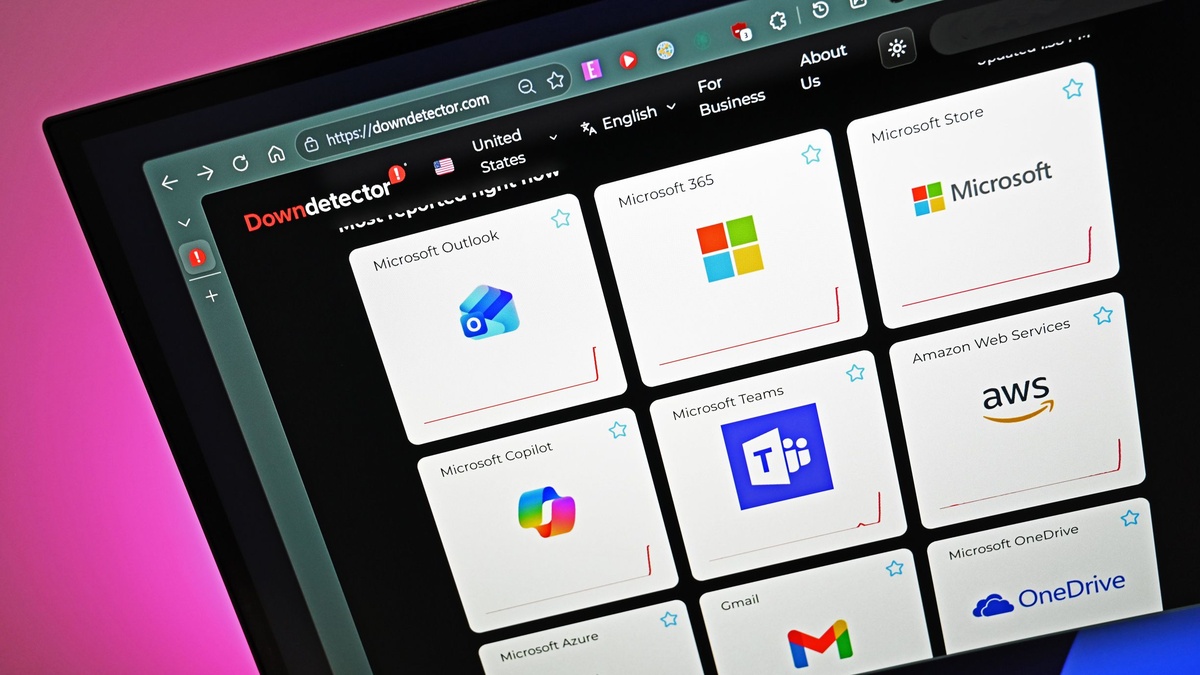
Simultaneously, corporate communication pipelines ground to a halt as Microsoft 365 endured an exhausting multi-day Outlook blackout. Millions of professionals found themselves unable to send email, verify corporate calendars, or authenticate secure internal services across distributed corporate networks.
Commercial banking proved equally vulnerable as cascading Major Tech Outages locked millions of retail customers out of JPMorgan Chase accounts. According to reporting from the Associated Press financial outage investigation, automated clearinghouse transaction settlement pipelines stalled completely across consumer branches.
Public officials have stepped forward to temper expectations of an immediate remedy for these recurring crises. Speaking on national television, Director of National Intelligence Jay Clayton stated that the American public must prepare for significant ongoing turbulence during generational technology upgrades.
Clayton stressed that sweeping investments in hardware, compute, and cybersecurity cannot prevent interim operational shocks. Whenever the global information economy undergoes a step change in underlying compute architecture, systemic friction inevitably manifests as disruptive Major Tech Outages across public services.
This candid assessment reflects a fundamental reality that enterprise systems administrators have acknowledged privately for years. Layering next-generation artificial intelligence microservices over brittle legacy mainframes creates unprecedented systemic fragility that routine maintenance cannot easily resolve.
Why Major Tech Outages Threaten Critical Enterprise Operations
Understanding why modern enterprise organizations crumble during infrastructure failures requires analyzing extreme cloud concentration. The vast majority of Fortune 500 enterprises, government agencies, and digital services rely on just three primary hyperscale cloud providers for mission-critical workloads.
When a single authentication gateway or border gateway protocol configuration degrades inside one provider, thousands of downstream companies instantly collapse. This architectural monoculture transforms localized software bugs into widespread Major Tech Outages that paralyze global supply chains.
Similar to the hardware dependency shifts evaluated in our operating system retirement impact review, architectural transitions introduce severe friction across legacy workflows. Organizations that postpone essential migrations find their operating environments exposed to escalating operational instability.
Enterprise communications suites have become acute single points of failure, where recurring Major Tech Outages instantly paralyze corporate commerce. When authentication microservices reject valid session tokens, entire multinational enterprises lose internal decision-making agility within minutes.
Furthermore, contemporary cloud applications rely on intricate chains of external software dependencies and managed third-party services. A localized database failure in Northern Virginia cascades across transcontinental payment networks, generating catastrophic Major Tech Outages before engineers can isolate root causes.
The financial consequences of these operational standstills extend far beyond immediate remediation expenditures. Regulatory penalties, lost transaction processing fees, customer compensation, and permanent brand degradation collectively cost global enterprise organizations billions of dollars annually.
Artificial Intelligence Acceleration and Vulnerability Discovery
The proliferation of generative artificial intelligence has fundamentally transformed vulnerability discovery while accelerating frequency of Major Tech Outages. While AI tooling assists defenders with automated static code analysis, it grants malicious actors unprecedented speed in uncovering complex software vulnerabilities.
Microsoft President Brad Smith issued an ominous warning regarding this asymmetric balance during a featured interview on CBS News Face the Nation. Smith emphasized that the entire information infrastructure of the planet is currently undergoing a massive, concurrent architectural overhaul.
According to the definitive report from The Verge infrastructure outage analysis, artificial intelligence makes vulnerability discovery substantially easier. Bad actors leverage machine learning models to identify zero-day flaws across proprietary enterprise codebases in seconds.
Once an automated scanning engine discovers a subtle memory corruption or token validation bug, threat actors weaponize the flaw immediately. Defenders must subsequently scramble to develop, test, and distribute emergency security patches before widespread exploitation causes catastrophic service disruptions.
This rapid patch deployment cycle paradoxically introduces additional operational risk for enterprise systems. Rushed software updates deployed under severe duress frequently introduce secondary configuration defects, culminating in preventable Major Tech Outages across complex hybrid networks.
Engineering teams find themselves trapped in a grueling battle against automated reconnaissance engines. Similar to the thermal and memory constraints detailed in our AMD Ryzen 7 9800X3D hardware architecture review, running systems near maximum operational thresholds leaves zero margin for software error.
How Major Tech Outages Expose Legacy Cloud Architecture Gaps
Beneath the sleek user interfaces of modern cloud services lies a patchwork of aging legacy architectures. Major government agencies, financial institutions, and airline operators continue to run core transactional engines on decades-old mainframe software written in COBOL.
Bridging these legacy data repositories with modern RESTful APIs and distributed microservices creates deep structural vulnerabilities. When modern transaction volumes surge, middleware translation layers buckle under memory leaks and concurrency bottlenecks, triggering devastating Major Tech Outages.
The rush to modernize digital services without rebuilding underlying foundational layers has accumulated astronomical technical debt. Infrastructure engineers frequently implement band-aid container solutions that mask architectural rot without addressing brittle database locks and unscalable query structures.
This architectural mismatch becomes acutely dangerous during unexpected traffic spikes or automated failover routing events. When legacy databases corrupt distributed locks, minor cluster hiccups rapidly snowball into protracted, multi-day Major Tech Outages that cripple consumer transactions.
| Architecture Layer | Primary Failure Vector | Legacy vs Modern Vulnerability | AI Threat Exposure | Resilience Engineering Remedy |
|---|---|---|---|---|
| Identity & Access Control | Token Invalidation Cascade | Monolithic OAuth Single-Point Failures | High (Automated Credential Stuffing) | Decentralized Cryptographic Session Sharding |
| Edge Ingress & DNS Routing | BGP Poisoning & Route Hijack | Centralized CDN Cache Invalidation | Medium (Algorithmic DDoS Amplification) | Multi-Vendor Anycast Routing Meshes |
| Transactional Core Database | Distributed Lock Deadlocks | Mainframe COBOL to SQL Middleware Rifts | Critical (Automated SQL Injection Fuzzing) | Immutable Event-Sourced Storage Clusters |
| Application Runtime Microservices | Unbounded Thread Starvation | Container Orchestration Drift | High (API Schema Exploitation) | Adaptive Circuit Breaker Rate-Limiting |
| Physical Data Center Infrastructure | Power Grid & Cooling Failure | High-Density AI Thermal Dissipation | Low (Indirect Physical Disruption) | Geographically Isolated Multi-Region Cold Sites |
As detailed in the resilience engineering matrix above, modernizing these foundational layers demands holistic structural remediation. Enterprise leaders who treat infrastructure upgrades as mere cost centers inevitably experience recurring Major Tech Outages that erode shareholder value.
Architectural modernization cannot succeed through superficial cloud migration scripts alone. Organizations must refactor monolithic data repositories into resilient, event-driven architectures capable of maintaining operational continuity when individual cloud regions experience total connectivity failure.
Nation-State Cyber Operations and Supply Chain Dependencies
While accidental configuration blunders cause numerous service collapses, hostile nation-state adversaries increasingly target civilian infrastructure. Sophisticated advanced persistent threat groups systematically probe vulnerabilities across water treatment facilities, regional power grids, and agricultural distribution networks.
The recent intrusion into the United States Department of Agriculture demonstrated how hostile actors compromise supply chain pipelines. Malicious state actors seek pre-positioned access across critical telecommunications nodes, preparing to trigger intentional Major Tech Outages during geopolitical crises.
European supermarkets recently experienced devastating Major Tech Outages when checkout terminal software was disabled by synchronized digital sabotage. These targeted strikes illustrate that consumer-facing retail networks remain acutely vulnerable to weaponized software supply chain attacks.
Software dependencies represent the soft underbelly of Western enterprise computing architectures. Open-source libraries maintained by unpaid volunteers frequently become vectors for sophisticated Trojan injections that bypass automated enterprise code reviews.
Similar to consumer streaming migrations analyzed in our cloud gaming streaming pricing report, centralized distribution hubs concentrate systemic exposure. When core delivery pipes are compromised, thousands of downstream client endpoints disconnect simultaneously.
Defending national infrastructure against state-sponsored disruption requires aggressive intelligence sharing between public agencies and private tech titans. Without unified defensive standards, hostile actors will continue exploiting fragmented network boundaries to inflict widespread economic chaos.
Engineering Mitigation Protocols for Major Tech Outages Resilience
Mitigating the escalating risk of catastrophic service failures requires software architects to abandon passive disaster recovery mindsets. Modern resilience engineering demands an assumption that individual cloud availability zones will inevitably suffer sudden and total hardware failure.
Implementing robust multi-cloud redundancy serves as the most effective defense against catastrophic platform outages. By distributing critical workloads across independent cloud providers, organizations eliminate dangerous single-vendor dependencies that foster widespread Major Tech Outages.
Similar to the advanced silicon engineering highlighted in our Apple M4 Pro desktop architectural review, hardware density requires aggressive thermal and power contingency safeguards. Enterprise data centers must implement redundant power distribution systems to prevent localized grid trips.
Automated chaos engineering frameworks allow technical teams to intentionally inject latency and failure states into production microservices. Rigorously testing failover mechanics during controlled maintenance windows exposes subtle configuration bugs before they trigger catastrophic Major Tech Outages.
Strict canary deployment pipelines further insulate enterprise networks from flawed software updates. Rolling out code modifications to a minute fraction of global servers prevents errant configuration files from precipitating continent-wide Major Tech Outages.
Finally, organizations must maintain immutable, air-gapped backup snapshots of critical transactional ledgers and identity directories. Rapid disaster recovery depends on an enterprise ability to restore baseline authentication services without negotiating with extortionist ransomware syndicates.
Long-Term Economic and Regulatory Ramifications for Global IT
The rising tide of systemic infrastructure failures is catalyzing decisive regulatory intervention across global governance bodies. Legislative committees in the United States and European Union are drafting aggressive operational resilience mandates for private sector cloud operators.
The European Union Digital Operational Resilience Act establishes strict compliance thresholds for financial institutions and critical third-party tech vendors. Financial entities face crippling monetary fines if they fail to demonstrate robust safeguards against protracted Major Tech Outages.
Corporate boards can no longer dismiss enterprise cybersecurity and cloud redundancy as discretionary IT budget line items. Chief Information Officers and executive leadership teams now face direct fiduciary accountability for infrastructure negligence that disrupts public commerce.
Insurance underwriters are concurrently restructuring cyber liability policies to exclude unmitigated single-point failure vectors. Organizations that neglect multi-region redundancy or fail to patch known zero-day vulnerabilities face skyrocketing insurance premiums or outright policy cancellations.
The macroeconomic cost of unchecked digital fragility threatens sustained global productivity. As artificial intelligence workloads accelerate electricity consumption and server cluster density, the strain on global power and network transit grids will intensify dramatically.
Enterprises that proactively modernize their engineering foundations will establish insurmountable competitive advantages. In an era plagued by recurring Major Tech Outages, verified reliability and continuous availability represent the ultimate business differentiators.
Frequently Asked Questions
What caused the recent wave of major tech outages across aviation and banking?
Recent disruptions resulted from a confluence of legacy database desynchronization at the FAA, authentication routing bugs within Microsoft 365, and API deadlocks during commercial banking migrations at JPMorgan Chase.
Why are government intelligence leaders warning about more tech outages?
Director of National Intelligence Jay Clayton warned that sweeping step changes across compute, AI applications, and cybersecurity inevitably cause severe operational friction while legacy global infrastructure undergoes comprehensive modernization.
How does artificial intelligence increase the frequency of system outages?
Artificial intelligence allows malicious actors and security researchers to discover code flaws with unprecedented speed, forcing software vendors into rushed patch deployment cycles that frequently introduce accidental secondary system failures.
What role does cloud concentration play in widespread tech disruptions?
Extreme market concentration among a small number of hyperscale cloud providers creates shared single points of failure, meaning a localized routing error can cascade across thousands of enterprise corporations simultaneously.
How can enterprise organizations protect themselves from major tech outages?
Enterprises must implement multi-cloud redundancy architectures, conduct automated chaos engineering simulations, utilize phased canary software deployments, and maintain immutable air-gapped backups of core identity directories.
Final Editorial Verdict: Navigating an Era of Constant Disruption
The warning issued by national intelligence officials and tech executives signals a profound paradigm shift for enterprise computing. Society has built an interconnected economy upon digital foundations that require immediate, structural reinforcement to withstand modern operational pressures.
Navigating this turbulent era demands that corporate leaders abandon complacency and prioritize infrastructure resilience over short-term budgetary convenience. Sustained investment in multi-cloud architectures, automated testing, and defensive engineering will determine which organizations survive escalating Major Tech Outages.
As artificial intelligence accelerates vulnerability discovery, the architectural margin for error preventing Major Tech Outages has vanished. Only through uncompromising engineering rigor and proactive modernization can global enterprise networks ensure continuous availability across an increasingly volatile digital landscape.
