



Table of Contents
With Grand Theft Auto VI finally debuting worldwide, analyzing the structural design of GTA 6 Story Missions provides crucial clarity on Rockstar Games’ narrative ambition. The studio delivers an intricate campaign featuring 93 main objectives structured deliberately across five distinct acts.
Detailed walkthrough documentation published by Insider Gaming confirms that players require approximately 50 hours to complete the primary storyline. Meanwhile, dedicated completionists seeking 100 percent trophy unlock status can anticipate investing over 200 hours across Leonida.
| Campaign Chapter | Mission Count | Primary Geographical Region | Narrative Focus & Core Themes | Estimated Completion Time |
|---|---|---|---|---|
| Chapter 1: The Grassroots Grind | 22 Story Missions | Rural Leonida, Port Gellhorn & Gator Keys | Introduction to Jason and Lucia, low-level convenience store stickups, swamp escapes, and establishing early criminal survival routines. | 8 to 10 Hours |
| Chapter 2: Subversive Expansion | 13 Story Missions | Vice City Suburbs, Commercial Corridors & Industrial Parks | Establishing local operations, coordinating fast-paced smash-and-grab jobs, acquiring dedicated getaway transport, and setting up warehouse supply networks. | 6 to 8 Hours |
| Chapter 3: Syndicate Escalation | 26 Story Missions | Downtown Vice City, Financial District & Commercial Docks | Infiltrating organized syndicates, navigating cartel friction, planning sophisticated financial heists, and executing the Sinfrontera National Bank robbery. | 14 to 16 Hours |
| Chapter 4: Apex Underworld Operations | 25 Story Missions | Ocean Beach, Luxury Waterfronts & Vice City International | Managing high-profile corporate espionage, enduring relentless federal surveillance, orchestrating maritime interceptions, and enduring the VCIA takedown. | 15 to 18 Hours |
| Chapter 5: Climax & Resolution | 7 Story Missions | Statewide Leonida Corridors & High-Stakes Offshore Waters | Confronting treacherous syndicate allies, surviving statewide tactical pursuit operations, and reaching the dramatic, high-consequence conclusion. | 5 to 7 Hours |
Campaign Architecture: How GTA 6 Story Missions Structure Open-World Pacing
Understanding the pacing of GTA 6 Story Missions requires examining how Rockstar North transitioned away from the three-character mechanic pioneered in Grand Theft Auto V. By focusing exclusively on Jason and Lucia, writers cultivate an intimate, high-stakes partnership reminiscent of modern American crime cinema.
Rather than scattering disparate narrative threads across multiple disconnected leads, the dual-protagonist design focuses player attention on mutual survival. Every mission objective reinforces their tactical codependency, whether covering an escape alleyway or hacking digital security systems during high-pressure robberies.
Furthermore, GTA 6 Story Missions organically guide players through the expansive topography of Leonida before granting unrestricted urban access. Starting in humid bayous and working-class coastal towns establishes grounded vulnerability before transitioning into the glittering decadence of neon-drenched downtown skyscrapers.
This structural restraint prevents the open-world paralysis common in modern sandbox games. By tethering exploration milestones to narrative progress, Rockstar ensures that unlocking major metropolitan districts feels like an earned achievement rather than an overwhelming checklist chore.
Early testing confirms that GTA 6 Story Missions balance cinematic set-pieces with unscripted systemic emergence. Dynamic weather systems, reactive pedestrian routines, and unpredictable law enforcement patrols transform routine transport jobs into chaotic battles requiring rapid improvisational thinking.
The seamless integration between cutscenes and playable action eliminates traditional pacing dips. Players transition effortlessly from intimate motel room arguments into high-speed highway pursuits, preserving cinematic momentum across the campaign’s opening acts.
Narrative Arc Progression: Analyzing the Five Distinct Chapter Segments
The five-chapter structure governing GTA 6 Story Missions represents a departure from the prologue and epilogue format featured in Red Dead Redemption 2. Here, the 93 story objectives flow continuously through five cohesive narrative phases without artificial structural partitions.
Chapter 1 introduces players to rural hardship across 22 missions, beginning with the introductory Prologue and progressing through gritty operations such as Gone Fishing, Lab Fees, and Discharge Time. These encounters establish the couple’s desperate financial motives.
Moving into Chapter 2, GTA 6 Story Missions contract slightly to 13 focused missions centered on establishing urban footholds. Highlights include Ambulance Chaser, Daily Driver, and Twist Wrist, Smash, Grab, emphasizing quick retail robberies and tactical reconnaissance.
Chapter 3 marks the expansive midpoint with 26 sprawling missions across downtown Vice City. Players confront major criminal enterprises in Welcome To Vice City, Car Service, and culminate in the daring Sinfrontera National Bank heist.
The penultimate Chapter 4 features 25 intense missions, highlighting escalating federal heat through VCIA Takedown and Ocean Beach sabotage. Throughout this phase, GTA 6 Story Missions test character loyalty as institutional pressure threatens to dismantle their criminal enterprise.
Finally, Chapter 5 delivers a concentrated seven-mission climax concluding with The End Of The Road. This focused finale strips away secondary diversions, propelling players through relentless, high-velocity confrontations that resolve the fate of both protagonists.
Vice City Objectives: How GTA 6 Story Missions Balance Crime and Heists
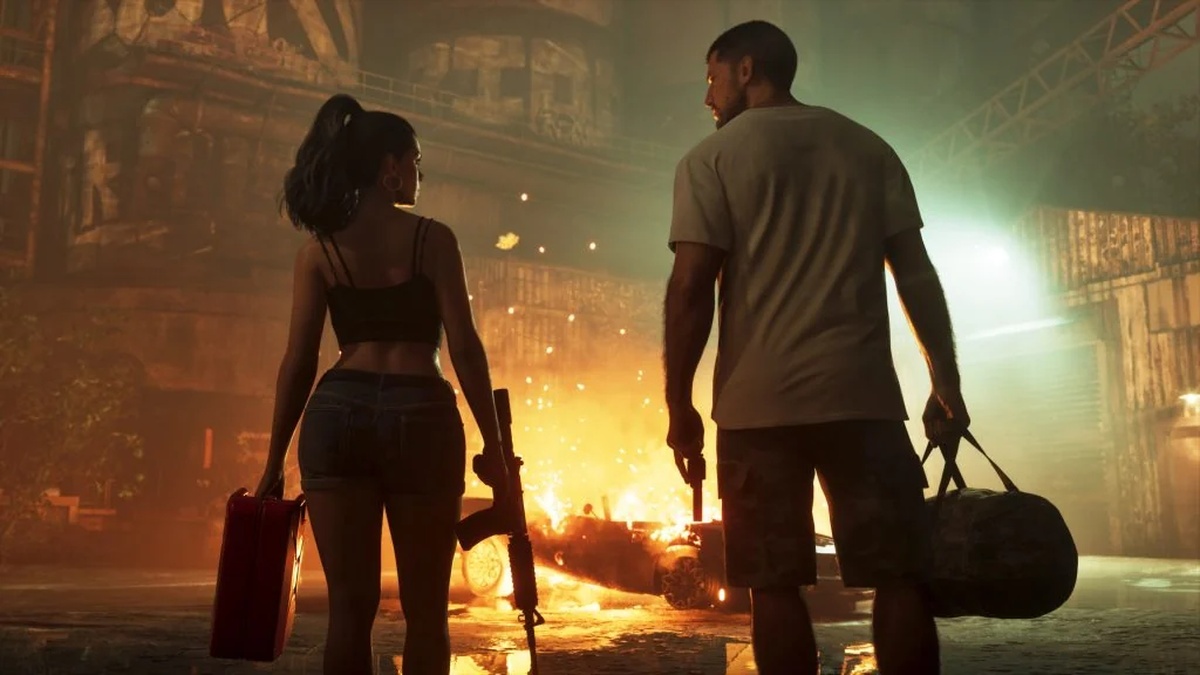
Within GTA 6 Story Missions, the design of heist operations showcases sophisticated mechanical evolution over previous franchise installments. Rather than locking players into rigid execution corridors, missions encourage dynamic reconnaissance, equipment gathering, and adaptable getaway planning.
Players choose between stealthy infiltration routes or aggressive armed confrontations during major operations. Each choice alters enemy defensive formations, police response times, and the potential financial haul available upon completing the objective.
Simulating these layered systems requires considerable processing capabilities. As evaluated in our analysis of the AMD Ryzen 7 9800X3D gaming CPU specs, dense physics calculations and complex crowd artificial intelligence form the computational backbone of modern open-world simulations.
The tactical coordination between Jason and Lucia enriches these cooperative operations considerably. Players can order tactical suppressive fire, designate flanking targets, or toggle control mid-shootout to exploit blind spots created by distracted security guards.
Furthermore, law enforcement artificial intelligence displays unprecedented situational awareness. Tactical units deploy perimeter blockades, utilize tear gas canisters, and track vehicle license plates across urban traffic surveillance networks.
This dynamic opposition ensures that GTA 6 Story Missions maintain tension throughout lengthy operations. Escaping a five-star wanted rating demands strategic route planning through back alleys, subway tunnels, and industrial drainage waterways.
Game Length Breakdown: Comparing 50-Hour Campaign to 200-Hour Mastery
| Rockstar Games Title | Story Mission Count | Main Campaign Playtime | 100% Completionist Runtime | Narrative Structure & Pacing Design |
|---|---|---|---|---|
| Grand Theft Auto: Vice City (2002) | 38 Story Missions | 18 to 20 Hours | 40 to 45 Hours | Single-protagonist linear rise to criminal power across neon retro districts. |
| Grand Theft Auto: San Andreas (2004) | 100 Story Missions | 30 to 35 Hours | 80 to 90 Hours | Sprawling tri-state gang territory conquest with massive RPG progression elements. |
| Grand Theft Auto IV (2008) | 88 Story Missions | 28 to 32 Hours | 75 to 80 Hours | Grounded immigrant revenge narrative focusing on gritty realism and moral choices. |
| Grand Theft Auto V (2013) | 69 Story Missions | 30 to 35 Hours | 80 to 85 Hours | Three-character dynamic switching model focused around large-scale scripted heists. |
| Red Dead Redemption 2 (2018) | 104 Story Missions | 50 to 55 Hours | 180 to 200 Hours | Six distinct dramatic chapters accompanied by a comprehensive two-part epilogue. |
| Grand Theft Auto VI (2026) | 93 Story Missions | 48 to 52 Hours | 200+ Hours | Five tight narrative chapters featuring cooperative dual-protagonist crime mechanics. |
Evaluating campaign duration highlights why GTA 6 Story Missions represent a golden mean for open-world narrative pacing. At approximately 50 hours for the critical path, the storyline expands significantly beyond Grand Theft Auto V while avoiding the sluggishness of extended historical epics.
Each story mission averages between 25 and 45 minutes when accounting for pre-mission dialogue, travel, tactical execution, and subsequent getaway sequences. This predictable rhythm makes the extensive 93-mission journey manageable across extended play sessions.
For completionists, GTA 6 Story Missions serve merely as the gateway into an immense sandbox ecosystem. Pursuing the coveted Platinum trophy demands tracking down rare vehicle imports, mastering underwater salvage dives, and dominating illicit street racing circuits.
Players seeking flexible access across varied setups can explore modern streaming solutions detailed in our Xbox Cloud Gaming pay-as-you-go pricing breakdown, illustrating how accessible game streaming expands high-fidelity access without requiring high-end dedicated console purchases.
Moreover, optional narrative tangents weave seamlessly alongside the main campaign. Engaging with stranger encounters, bounty hunts, and black market weapon dealers enriches character relationships without halting primary campaign progression.
The overall pacing demonstrates Rockstar’s structural maturity. By calibrating mission frequency and avoiding artificial level gates, the studio ensures that player progression remains tied directly to narrative mastery rather than repetitive grinding.
Mission Variety and Systems: Evaluating Tactical Freedom Across Encounters

Mechanical diversity across GTA 6 Story Missions extends far beyond conventional drive-and-shoot assignments. Rockstar integrates sophisticated mini-games, hacking protocols, and environmental navigation challenges that continually refresh gameplay rhythms.
Urban interiors play a pivotal role during urban encounters. Over 70 percent of commercial storefronts and high-rise lobbies feature fully modeled interiors, offering genuine multi-floor cover opportunities during chaotic police shootouts.
Technological advances in platform silicon, comparable to innovations explored in our review of the Apple M4 Mac mini redesign and hardware architecture, mirror the gaming industry’s push toward high-bandwidth unified memory pipelines capable of streaming dense urban assets without visible texture pop-in.
Stealth mechanics across these infiltration scenarios receive substantial overhauls. Players can manipulate power grids to plunge warehouses into darkness, utilize night vision equipment, and drag neutralized guards into maintenance closets to avoid triggering facility alarms.
Vehicular physics have been completely rebuilt with realistic tire friction curves and accurate vehicle mass distribution. Maneuvering a heavily armored bank van through rain-slicked boulevard turns feels drastically distinct from piloting a nimble European sports coupe.
By providing multiple tactical avenues for completing GTA 6 Story Missions, designers reward player creativity. Whether executing a flawless silent burglary or engaging in an explosive frontal assault, player agency remains paramount.
Historical Perspective: Measuring GTA 6 Story Missions Against Past Franchises
Placing GTA 6 Story Missions within franchise history illustrates how radically Rockstar’s storytelling philosophy has matured over two decades. The lighthearted arcade satire of early 3D entries has evolved into a poignant character study set against modern consumer excess.
Comparing the 93 objectives to the 100 missions in 2004’s San Andreas reveals a fundamental shift toward bespoke design quality over raw quantity. Modern missions feature multi-stage set pieces, motion-captured performances, and branching dialogue tailored to player decisions.
As hardware platforms evolve and legacy operating systems phase out—a transition examined in our report on NVIDIA ends Windows 10 support for PC gamers—game engines demand modern computing infrastructure to deliver uncompromised open-world simulation fidelity.
The creative leadership at Rockstar Games continues to demonstrate unmatched mastery of interactive world-building. Every district in Vice City reflects authentic cultural nuances, socio-economic divisions, and regional dialogue.
Ultimately, these campaign objectives satisfy more than a decade of immense global anticipation. The deliberate 50-hour campaign provides an emotionally satisfying journey that justifies the unprecedented development timeline.
Looking forward, GTA 6 Story Missions will serve as the benchmark against which all future open-world titles are measured. The seamless fusion of narrative discipline and systemic freedom sets a towering standard for the gaming industry.
Frequently Asked Questions
How many total story missions are featured in GTA 6?
There are 93 total GTA 6 Story Missions featured across the complete campaign. These objectives are distributed across five primary story chapters without separate prologue or epilogue chapters.
How many chapters make up the GTA 6 campaign?
The campaign governing GTA 6 Story Missions is split into five distinct chapters. Chapter 1 features 22 missions, Chapter 2 has 13, Chapter 3 includes 26, Chapter 4 contains 25, and Chapter 5 concludes with 7.
How long does it take to beat the main story in GTA 6?
Completing all GTA 6 Story Missions requires approximately 48 to 52 hours of focused gameplay. Actual runtime varies depending on individual player skill, travel speed, and tactical approaches taken during heist objectives.
Does GTA 6 have a separate prologue or epilogue like RDR2?
Unlike Red Dead Redemption 2, GTA 6 Story Missions do not feature separate prologue or epilogue phases. Introductory tutorial segments and the dramatic campaign finale are integrated directly into Chapter 1 and Chapter 5.
How long does it take to 100 percent complete GTA 6?
Achieving 100 percent completion beyond GTA 6 Story Missions requires upwards of 200 hours. Players must conquer side missions, stranger encounters, property acquisitions, stunt jumps, and comprehensive collectible hunting across Leonida.
Final Verdict and Campaign Outlook: A Landmark Achievement in Interactive Narrative
The comprehensive breakdown of GTA 6 Story Missions confirms that Rockstar Games has constructed an extraordinary storytelling triumph. Balancing 93 structured missions across five focused chapters delivers a compelling, character-driven narrative that never outstays its welcome.
By grounding the experience in the criminal synergy of Jason and Lucia, the campaign strikes a perfect equilibrium between cinematic drama and sandbox freedom. Every heist, pursuit, and tactical firefight feels purposeful within their overarching journey.
Whether blitzing through the 50-hour critical path or dedicating 200 hours toward total completion, GTA 6 Story Missions represent the pinnacle of modern open-world gaming. Grand Theft Auto VI redefines the possibilities of interactive entertainment.
