


Table of Contents
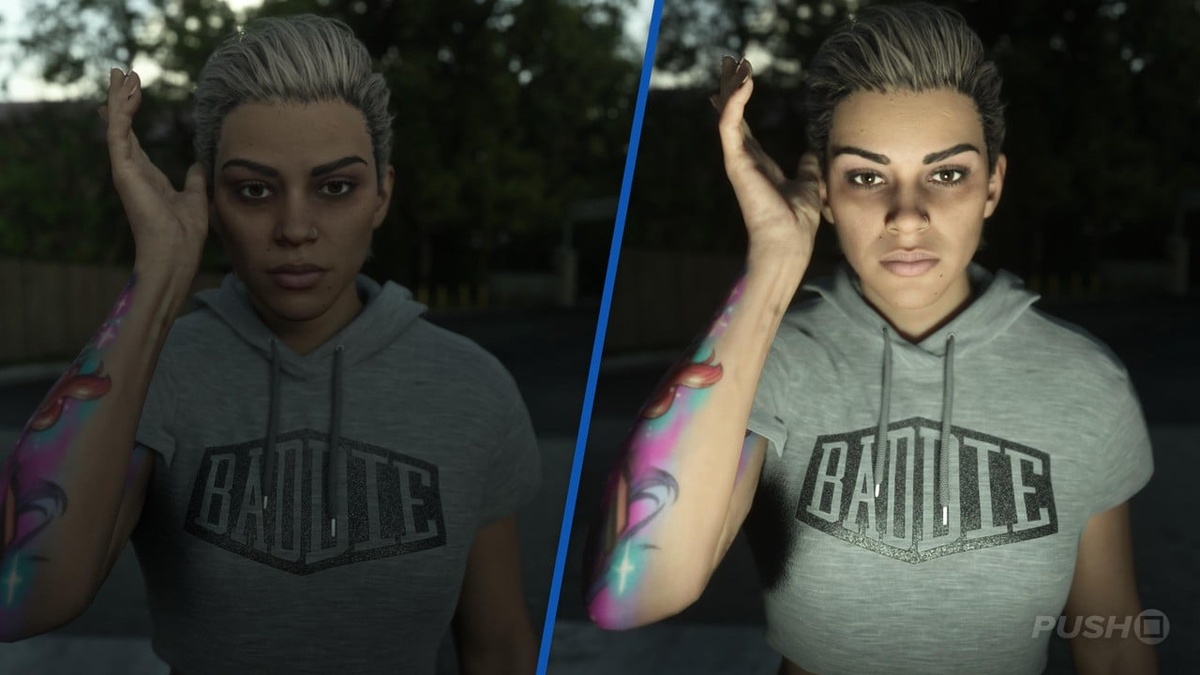
Millions of console players exploring Leonida have discovered that default GTA 6 HDR Settings plunge Vice City into near pitch-black darkness. Despite configuring high-end televisions properly, nighttime environments and shadowed interiors suffer from catastrophic near-black crushing.
Comprehensive laboratory testing conducted by display calibration specialists confirms that in-game visual calibration sliders behave counterintuitively. Fortunately, optimizing GTA 6 HDR Settings allows PlayStation 5 enthusiasts to restore breathtaking dynamic range and vibrant neon highlights across modern screens.
To solve visual muddiness, players must evaluate how internal sliders deviate from standard video mastering practices. The engineering matrix below contrasts default GTA 6 HDR Settings against measured hardware output and verified laboratory calibration targets.
| In-Game Calibration Slider | Rockstar Default Prompt Guidance | Measured Display Engine Behavior | Verified HDTVTest Target (1,000 Nits) |
|---|---|---|---|
| Maximum Brightness | Adjust until reference logo is barely visible | Severely under-tracks nominal panel luminance curves | 2,000 (roughly double rated panel peak) |
| Black Level Floor | Leave at zero for deepest cinematic blacks | Crushes shadow detail between 0.001 and 0.05 nits | 20 (lifts shadows without washing black floor) |
| Paper White Luminance | Align baseline UI text against background white | Over-saturates neon signage while dimming mid-tones | 35 (balances interface readability and streetlights) |
| System HDR Pass-Through | Implicitly assumes PlayStation 5 HGiG metadata | Completely ignores system-level console calibration | Manual in-game override strictly mandatory |
| Tone Mapping Mode | Automated internal dynamic tone compression | Clips specular highlights beyond internal boundaries | HGIG display tracking or calibrated static mapping |
As demonstrated in the measurement matrix, following the on-screen logo guide restricts dynamic range significantly. Overriding default GTA 6 HDR Settings requires custom values tailored to the game proprietary rendering architecture.
Why Default GTA 6 HDR Settings Cause Crushed Black Levels and Dark Scenes
When boot sequences initiate in Grand Theft Auto 6, users are instructed to calibrate display parameters until the studio emblem fades into obscurity. Unfortunately, applying standard GTA 6 HDR Settings creates severely compromised visual output during nocturnal gameplay sessions.
In-depth research published by Push Square emphasizes that the visual calibration screen misleads gamers by distorting shadow gamma curves. Rather than merely adjusting peak clipping boundaries, the brightness slider heavily penalizes low-end luminance.
Consequently, shadowed alleyways and darkened vehicle interiors lose critical detail, collapsing into muddy pools of uniform black. Players mistakenly believe their television is defective, unaware that uncalibrated GTA 6 HDR Settings cause the visual degradation.
This phenomenon mirrors historical rendering controversies, reminiscent of early high dynamic range implementation issues encountered in previous open-world epics. Developers frequently struggle to balance atmospheric night illumination against consumer television tone mapping behaviors.
Modern display panels demand precise electro-optical transfer function tracking to render dark scenes realistically without introducing artificial clipping. When uncalibrated GTA 6 HDR Settings fail to deliver linear luminance data, consumer hardware inevitably compresses shadow steps into illegible darkness.
Recognizing that default presets distort intended visual balance is the essential first step toward achieving optimal image clarity. By adjusting core parameters manually, enthusiasts can rescue obscured details without sacrificing rich contrast.
HDTVTest Reference Monitor Analysis: Exposing Inverted Luminance Curves
To uncover why default GTA 6 HDR Settings fail, display analyst Vincent Teoh subjected the game to rigorous laboratory analysis. Testing was conducted on a professional Sony BVM-HX310 dual-layer liquid crystal reference monitor valued at over thirty thousand dollars.
Using professional colorimeters and waveform monitors, the HDTVTest laboratory investigation demonstrated that in-game luminance values behave unexpectedly across standard mastering targets. Increasing the brightness slider does not merely elevate peak highlights; it fundamentally alters mid-tone distribution.
Photometric measurements revealed that setting baseline GTA 6 HDR Settings to nominal television specifications outputs substantially lower light levels than intended. To achieve true one-thousand-nit peak specular highlights, the in-game slider must be set substantially higher.
Furthermore, waveform readouts confirmed that the black level slider operates with extreme non-linearity near absolute zero. Leaving the slider untouched forces near-black pixel values directly into zero-signal cutoffs, obliterating subtle environmental gradations.
This rigorous technical audit demystifies why standard display calibration discs and console test patterns fail to resolve in-game murkiness. Rockstar proprietary tone mapping algorithm handles luminance curves independently of industry-standard SMPTE ST 2084 specifications.
Understanding these laboratory findings provides players with the exact mathematical foundation required to correct flawed image output. Applying scientifically validated GTA 6 HDR Settings empowers gamers to achieve reference-grade visual performance in Vice City.
The Dual-Image Boat Calibration Test: Bypassing the Misleading Logo Guide
The most critical breakthrough highlighted in recent technical investigations involves ignoring the traditional studio logo prompt entirely. Relying on default GTA 6 HDR Settings prompts distorts the actual three-dimensional rendering environments rendered by the underlying graphics pipeline.
Instead, users should press the bumper buttons on their controller to inspect the dual-image calibration scene featuring a nighttime boat celebration. This dual-image reference provides both bright ocean lighting and complex shadow gradients across water surfaces.
By toggling between sunlight and darkness, players can evaluate how adjusted GTA 6 HDR Settings affect shadow details and intense specular reflections from nautical lamps. This interactive preview provides immediate, trustworthy visual feedback.
When adjusting parameters within the boat preview, players should observe the fine woodwork on the boat deck and subtle ripples across the dark ocean. If the water appears as an undifferentiated black void, shadow lift requires immediate upward adjustment.
Similarly, illuminating neon signs along the distant shoreline should exhibit brilliant luminescence without blowing out surrounding palm tree silhouettes. Achieving this delicate harmony ensures that Vice City retains cinematic richness across diverse temporal conditions.
Relying on realistic in-game reference imagery transforms the calibration process from frustrating guesswork into an intuitive visual adjustment. Players dialing in tuned GTA 6 HDR Settings enjoy breathtaking open-world exploration with lifelike illumination.
Optimizing GTA 6 HDR Settings Across OLED and Mini-LED Displays
Display panel technology fundamentally dictates how GTA 6 HDR Settings should be calibrated for maximum visual fidelity. Organic light-emitting diode panels possess per-pixel self-lit contrast, whereas mini-LED panels utilize localized backlight dimming arrays with vastly higher peak brightness capabilities.
For OLED owners, maintaining shadow separation without introducing pixel blooming or elevated gray blacks requires meticulous calibration finesse. Setting proper GTA 6 HDR Settings ensures that deep organic black levels remain intact while subtle textures emerge from nocturnal shadows.
Conversely, high-output mini-LED displays require precise highlight management to prevent specular blinding during sunny coastal sequences. Modern gaming processors, such as the AMD Ryzen 7 9800X3D gaming processor, excel at feeding complex graphics pipelines, but displays must translate that data faithfully.
Balancing these varying panel capabilities demands tailored GTA 6 HDR Settings rather than generic one-size-fits-all recommendations. Understanding your television peak nit capability and local dimming response prevents unwanted clipping artifacts across complex scenes.
Because different display architectures interpret peak luminance and local contrast differently, selecting the right calibration matrix is paramount. The engineering comparison table below details optimized parameters across distinct modern display panel categories.
| Television Technology | Representative Models | Max Brightness Setting | Black Level Setting | Paper White Setting | Recommended Tone Mapping |
|---|---|---|---|---|---|
| Standard OLED / WOLED | LG C2/C3/C4, Sony A80L | 1,600 to 2,000 | 20 to 22 | 35 to 40 | HGiG (Dynamic Tone Mapping Off) |
| Quantum Dot OLED (QD-OLED) | Samsung S90D/S95D, Sony A95L | 2,200 to 2,500 | 18 to 20 | 35 to 45 | HGiG or Static HDR Game Mode |
| Flagship Mini-LED LCD | Sony Bravia 9, TCL QM851G | 2,800 to 3,500 | 15 to 18 | 40 to 50 | High Local Dimming with Static Mapping |
| Mid-Range Direct-Lit LED | Hisense U7N, TCL Q6 | 1,200 to 1,500 | 22 to 25 | 30 to 35 | Dynamic Tone Mapping On (Compensatory) |
| High-Refresh Gaming Monitor | ASUS ROG PG32UCDM, Dell Alienware | 1,800 to 2,200 | 20 | 35 | Console HDR Mode / True Black 400 |
Applying these panel-specific targets ensures that customized GTA 6 HDR Settings keep your display hardware operating within its optimal luminance envelope. By aligning software output with physical panel performance, players eliminate both black crush and highlight clipping.
Moreover, hardware display pipelines are evolving alongside modern operating systems, as analyzed in our review of how Nvidia discontinued legacy Windows drivers to concentrate engineering resources on advanced display architectures.
Ensuring your television firmware is completely updated guarantees that HDMI 2.1 variable refresh rate and auto low latency features coordinate seamlessly with console output. Stable communication between console and television prevents unwanted color gamut conversion errors during gameplay.
The PS5 System HDR Bypass: Why Global Console Calibration Is Ignored
A major revelation from recent engineering teardowns is that GTA 6 HDR Settings completely bypass PlayStation 5 system-level HDR calibration. Most modern console titles query system configuration data to automatically adjust clipping thresholds without user intervention.
In titles like Marvel Spider-Man 2 or Gran Turismo 7, adjusting the console three-step sun calibration creates a reliable global luminance profile. However, Rockstar proprietary rendering pipeline utilizes custom internal shaders that deliberately override system metadata.
Consequently, even if a user has configured PlayStation 5 system settings to absolute perfection, the game engine ignores those parameters entirely. Relying on system-level calibration leads to the widespread frustration currently experienced across social media forums.
This architectural choice forces every player to configure in-game GTA 6 HDR Settings manually within the options menu. Failing to execute this manual calibration leaves the game operating on arbitrary default coefficients that degrade dark scenes.
The disconnect between platform-level HDR standards and bespoke game engines highlights ongoing challenges in gaming display standards. Console manufacturers encourage unified calibration profiles, but major studios frequently prefer proprietary color grading suites.
Gamers must therefore treat Grand Theft Auto 6 as an independent visual environment requiring dedicated calibration attention. Adjusting settings directly within the game application is the only guaranteed method to achieve accurate luminance reproduction.
Recommended GTA 6 HDR Settings for 1000-Nit and Mid-Range Displays
For the vast majority of console players using one-thousand-nit televisions, setting proper GTA 6 HDR Settings produces an immediate visual revelation. Navigating to Options, selecting Settings, opening Display, and choosing HDR Calibration provides access to the necessary controls.
Display analysts recommend establishing a baseline Max Brightness value of 2,000 for standard one-thousand-nit panels. Because internal scaling compresses peak outputs, this doubled value allows the panel to achieve its true hardware potential.
Next, adjusting Black Levels from the default zero up to 20 immediately restores critical shadow visibility. This crucial adjustment lifts murky alleyways and interior rooms out of pitch blackness without compromising deep, satisfying contrast.
Setting Paper White to 35 establishes realistic illumination for user interface elements, in-game smartphone screens, and subtitles. Higher values cause text to glow uncomfortably bright, fatiguing the eyes during extended nighttime exploration sessions.
Players on budget or mid-range televisions with lower peak luminance should moderate Max Brightness slightly within their GTA 6 HDR Settings. Adjusting the black level to approximately 22 ensures that less capable backlights do not choke low-end details.
Once configured, players can return to Vice City and immediately observe dramatic improvements in environmental depth and atmospheric immersion. Neon-lit skylines shimmer against deep twilight skies with pristine visual clarity and zero shadow crushing.
Frequently Asked Questions
Why does GTA 6 look too dark on my PlayStation 5?
Default GTA 6 HDR Settings advise lowering brightness until the studio logo disappears. This drastically misaligns the internal gamma curve, crushing near-black shadow detail into illegible darkness across modern high dynamic range televisions.
Does GTA 6 use the PS5 system-level HDR calibration settings?
No, the game completely ignores system-level PlayStation 5 calibration metadata. The rendering engine relies entirely on proprietary internal shaders, requiring players to calibrate visual parameters manually within the in-game display options menu.
What are the recommended HDR settings for a 1000-nit OLED display?
Set Maximum Brightness to 2,000, Black Levels to 20, and Paper White to 35. These verified baseline settings lift crushed nocturnal shadows while unlocking authentic one-thousand-nit peak specular highlights without washing out dark tones.
Should I use HGiG or Dynamic Tone Mapping for GTA 6?
HGiG is strongly recommended for OLED displays because it prevents double tone mapping artifacts. For lower-nit mid-range LED televisions lacking adequate native luminance, engaging dynamic tone mapping can assist in brightening overly dim outdoor environments.
Why should I ignore the Rockstar Games logo during calibration?
The calibration logo behaves with extreme non-linearity compared to actual three-dimensional game assets. Using the controller bumpers to evaluate the dual-image boat preview provides realistic environmental lighting and shadow gradients for accurate calibration.
Final Verdict: Achieving True High Dynamic Range Fidelity in Vice City
The widespread frustration surrounding dark visuals in Grand Theft Auto 6 illustrates the complex hurdles of modern display calibration. While high dynamic range promises breathtaking realism, misleading on-screen prompts and broken gamma curves can severely undermine visual immersion.
By moving beyond faulty corporate logo calibration and implementing scientifically verified laboratory offsets, PlayStation 5 owners can fully unlock Leonida visual grandeur. Lighter shadow floors and expanded peak brightness transform murky streets into vibrant, lifelike playgrounds.
Applying recommended GTA 6 HDR Settings restores the stunning visual balance that Rockstar Games talented artists originally envisioned. With calibrated luminance curves and rich contrast, cruising through illuminated coastal avenues delivers the definitive next-generation visual spectacle.
