


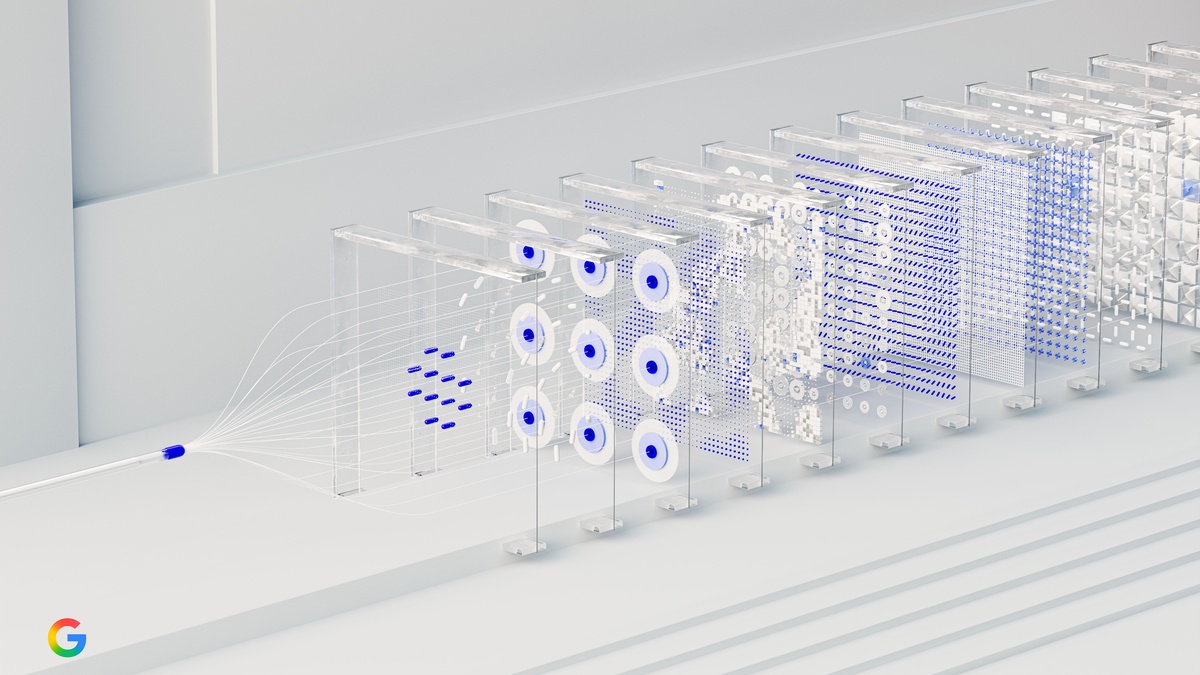
The global technology ecosystem witnessed an unprecedented computing milestone as the official Google AI Updates October 2026 unveiled a historic array of frontier models, orbital TPU infrastructure, and major quantum computing error breakthroughs.
According to detailed primary documentation from the Google Keyword announcement, the comprehensive rollout highlights how Google AI Updates October 2026 fundamentally resets enterprise reasoning benchmarks while expanding generative safety guardrails worldwide.
At-a-Glance Architectural Breakdown: Key Innovations Across Google’s October 2026 AI Releases
Evaluating the full scope of why Google AI Updates October 2026 marks a technological watershed requires examining the rapid generational progression across frontier reasoning, real-time world simulation, edge-native vector search, and spaceborne computing hardware.
Below is the complete architectural comparison matrix detailing why Google AI Updates October 2026 matters to developers, enterprise decision-makers, and researchers, contrasting these breakthrough systems against legacy artificial intelligence deployments across the tech industry.
| Technology Pillar | Flagship System Announced | Core Architectural Breakthrough | Primary Deployment Target |
|---|---|---|---|
| Frontier Reasoning | Gemini 4 Argon | Dynamic Step-by-Step Chain-of-Thought Verification | Google AI Studio, Cloud, Search & Enterprise APIs |
| Cybersecurity & Engineering | Gemini 4 Carbon | Long-Horizon Autonomous Code & Threat Defense | Fairwind Defense Program & Enterprise SecOps |
| World Simulation | Genie 4 Engine | Real-Time Interactive Physics & Native Audio Synthesis | Autonomous Robotics Proving Grounds & Virtual Worlds |
| Quantum Computing | Willow Processor | Magic State Cultivation Delivering 40x Error Drop | Fault-Tolerant Scientific & Molecular Simulation |
| Orbital Hardware | Project Suncatcher TPU | Low-Earth Orbit Space-Hardened TPU Cluster | Off-World Solar-Powered AI Satellite Infrastructure |
| Multimodal Edge Vector | EmbeddingGemma 2 | Unified Multimodal Vector Space with 6x Less Storage | Private On-Device Search Across Android & Desktop |
| Mobile User Defense | Private AI Compute | Hybrid On-Device & Cloud Gemini Conversational Shield | Android Messages Scam Protection & Call Defense |
As demonstrated in our comprehensive architectural matrix, the breakthroughs defining Google AI Updates October 2026 tackle foundational computing bottlenecks simultaneously. By deploying specialized models alongside orbital silicon, Google bridges cloud hyperscale capability with private edge devices.
This coordinated multi-tiered ecosystem ensures that enterprise developers and everyday mobile consumers benefit from accelerated reasoning speeds, robust adversarial cyber defenses, and responsive physical-world simulation tools without compromising on data privacy.
Table of Contents
The artificial intelligence industry has reached an inflection point where conventional transformer architectures and localized server racks encounter physical scaling limitations. The announcement of Google AI Updates October 2026 proves that overcoming these barriers demands radical computing diversification.
Just as desktop gamers track transformative processing breakthroughs in our coverage of the AMD Ryzen 7 9800X3D revealed, enterprise architects require specialized silicon capable of executing complex algorithmic workflows at scale.
Furthermore, much like how modular system architectures examined in our Apple M4 Mac mini redesign showcase unified memory efficiency, Google is optimizing distributed software pipelines across mobile and cloud platforms.
Meanwhile, as enterprise IT administrators evaluate platform shifts surrounding Nvidia ends Windows 10 support, modern datacenters demand purpose-built hardware to maintain computational stability.
In this comprehensive deep-dive into Google AI Updates October 2026, we analyze Gemini 4 Argon and Carbon, Genie 4 world simulations, the Willow quantum error milestone, Project Suncatcher orbital TPUs, and EmbeddingGemma 2 edge vectors.
1. Gemini 4 Argon and Carbon: Frontier Reasoning Meets Defensive Cyber Silicon
The centerpiece of algorithmic advancement within Google AI Updates October 2026 is the arrival of Gemini 4 Argon, an advanced frontier reasoning model engineered specifically for high-stakes mathematical analysis, enterprise coding, legal contract evaluation, and autonomous robotics navigation.
Available globally across Google AI Studio, the Gemini API, Google Cloud, and consumer mobile apps, Gemini 4 Argon introduces dynamic chain-of-thought verification that systematically validates intermediate deduction steps before delivering finalized outputs to enterprise users.
Merely two weeks after rolling out Argon, Google expanded Google AI Updates October 2026 by unveiling Gemini 4 Carbon, an exceptionally powerful frontier model purpose-built for long-horizon engineering challenges and advanced cyber defense operations.
To guarantee enterprise safety, Carbon is undergoing rigorous validation with the United States government and premier security analysts through the Fairwind Program, establishing an impenetrable defense against automated vulnerability exploitation and sophisticated social engineering campaigns.
According to deep architectural assessments highlighted by AnandTech engineering reviews, dual-track deployment of Argon and Carbon demonstrates unprecedented cadence in commercial frontier foundation model delivery.
The strategic rollout embedded in Google AI Updates October 2026 ensures developers can build real-time robotic agent controllers and mission-critical production pipelines backed by verified formal reasoning and military-grade adversarial protections.

2. Genie 4 World Simulator: Real-Time Interactive Physics & Audio Synthesis
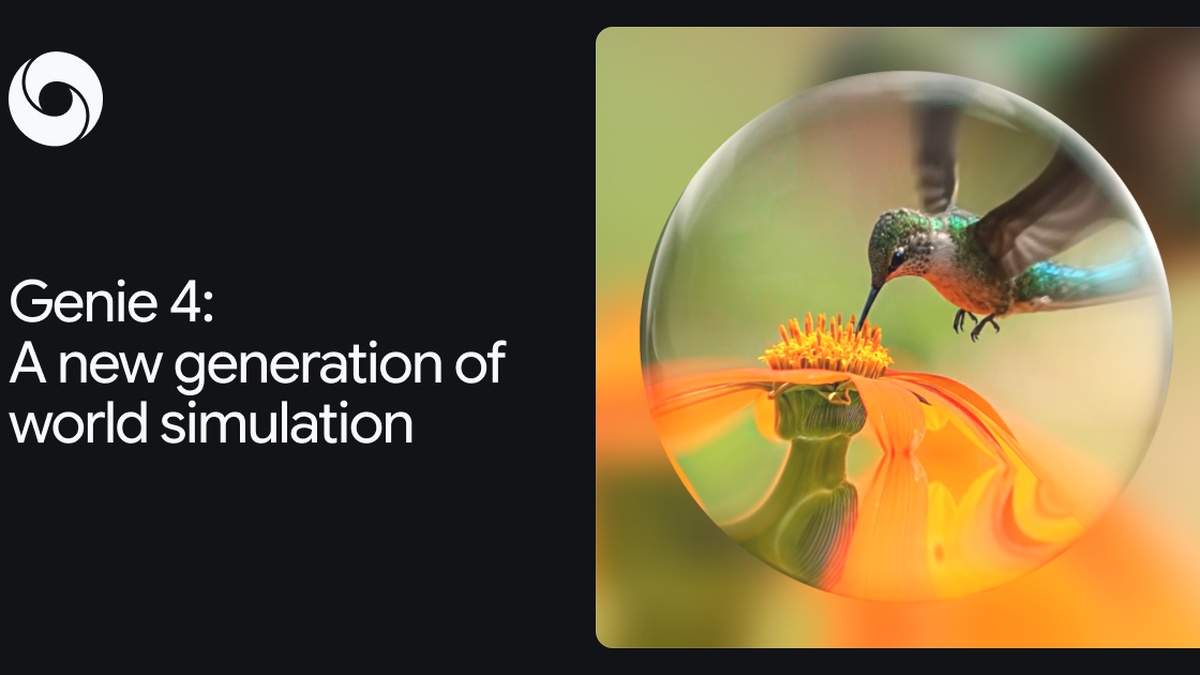
Stepping beyond conventional multimodal synthesis, Google AI Updates October 2026 introduced Genie 4, a revolutionary foundational world model capable of simulating dynamic, photorealistic interactive 3D environments at full interactive framerates with native environmental audio generation.
Unlike traditional generative video models that output static render clips, Genie 4 functions as an interactive simulation engine, interpreting real-time natural language commands and joystick inputs to steer actions, fluid mechanics, and lighting conditions instantaneously.
By incorporating authentic physical laws, deformable object physics, and articulated human skeletal kinematics, the simulation engine revealed in Google AI Updates October 2026 provides a safe, highly scalable synthetic proving ground for training autonomous robotics agents.
Rather than risking expensive physical hardware collisions in physical warehouses, robotics developers can now simulate millions of complex manipulation edge cases inside Genie 4 before compiling learned policies into production actuators.
Detailed analysis published on the Google DeepMind research hub confirms that combining generative world rendering with native synchronized acoustic modeling creates unprecedented immersion for real-time virtual simulation.
Through the launch of Genie 4, the engineering teams behind Google AI Updates October 2026 have established a crucial stepping stone toward artificial general intelligence by grounding neural agents in persistent, responsive physical environments.
3. Willow Quantum Processor: Magic State Cultivation Solves 20-Year Error Bottleneck
Perhaps the most historic hardware breakthrough celebrated in Google AI Updates October 2026 occurred at Google Quantum AI, where researchers dismantled a 20-year theoretical bottleneck that has stalled fault-tolerant quantum development.
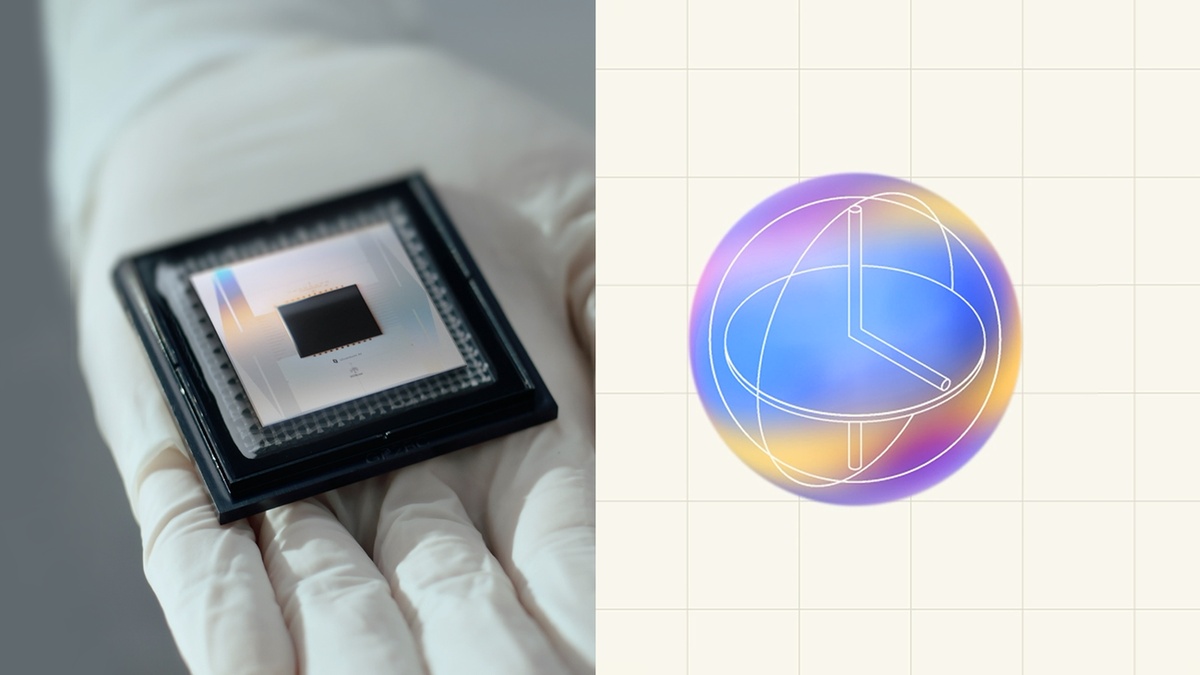
In a landmark scientific evaluation published in Science, researchers demonstrated that magic state cultivation successfully operates on the proprietary Google Willow quantum processor, driving down physical execution errors roughly 40-fold compared to uncultivated quantum states.
Because generating clean, high-fidelity magic states historically threatened to consume up to 95 percent of all available quantum computing resources, the breakthrough featured in Google AI Updates October 2026 fundamentally alters the feasibility timeline for practical quantum supremacy.
By purifying non-Clifford quantum gates without exhausting qubit overhead, the Willow processor can execute deep algorithmic circuits necessary for simulating complex molecular bonds, catalyst chemistry, and high-temperature superconducting materials.
Semiconductor manufacturing analysis on Tom’s Hardware highlights that achieving sustainable error suppression on functional silicon transitions quantum computing from theoretical experimentation into scalable commercial engineering reality.
The quantum validation documented in Google AI Updates October 2026 confirms that Google’s hybrid hardware strategy, combining cryogenic superconducting processors with classical AI clusters, leads the global high-performance computing frontier.
Generational Hardware Matrix: Comparing Google’s Next-Gen Compute Silicon
Examining the diverse hardware specifications unveiled in Google AI Updates October 2026 illustrates how modern computational demands exceed the limits of traditional datacenter graphics processors. Specialized execution targets dictate modern efficiency.
The comparative hardware matrix below outlines the fundamental differences between the specialized silicon platforms announced in Google AI Updates October 2026, contrasting quantum error profiles, orbital deployment capabilities, and edge-native memory footprints.
| Hardware Specification | Google Willow Quantum Processor | Project Suncatcher Orbital TPU | Google Cloud TPU v5p Cluster | On-Device Private AI Silicon |
|---|---|---|---|---|
| Physical Operating Environment | Cryogenic Sub-Kelvin Dilution Refrigerator | Low-Earth Orbit Space Satellite Platform | Hyperscale Liquid-Cooled Datacenter | Mobile SoC / Smartphone Tensor Engine |
| Primary Target Workload | Fault-Tolerant Non-Clifford Quantum Logic | Autonomous Orbital Telemetry & Deep Space AI | Large-Scale LLM Frontier Training | Local Semantic Search & Fraud Defense |
| Core Silicon Architecture | Superconducting Qubits with Magic State Gates | Space-Hardened Tensor Processing Cores | Terrestrial Sparse Matrix Cores (3D Torus) | Power-Optimized Edge Neural Processing Unit |
| Error Mitigation Strategy | 40x Magic State Cultivation Suppression | Triple-Modular Redundancy & Radiation Shield | ECC Memory & Redundant Network Fabrics | Private AI Compute Hardware Isolation |
| Power & Energy Source | Dedicated Cryogenic Chiller Infrastructure | 100% Unfiltered Orbital Solar Radiation | Industrial Multi-Megawatt Power Grid | Ultra-Low-Power Mobile Battery (~2W – 5W) |
| Ecosystem Integration | Google Quantum AI Cirq Toolchain | Spaceborne Gemma 4 Micro-Runtime | Google Cloud Vertex AI & JAX / PyTorch | EmbeddingGemma 2 & Android Messages Core |
Evaluating our hardware breakdown reveals why Google AI Updates October 2026 represents a monumental structural pivot. Rather than relying exclusively on monolithic terrestrial GPU clusters, Google is deploying heterogeneous silicon spanning from low-Earth orbit to localized mobile chips.
This architectural diversification enables enterprise organizations to allocate specific operational workloads to the most cost-effective, thermally efficient platform, drastically reducing overall inference expenses while maintaining peak responsiveness.
4. Project Suncatcher Orbit: First Datacenter TPU Constellation in Space
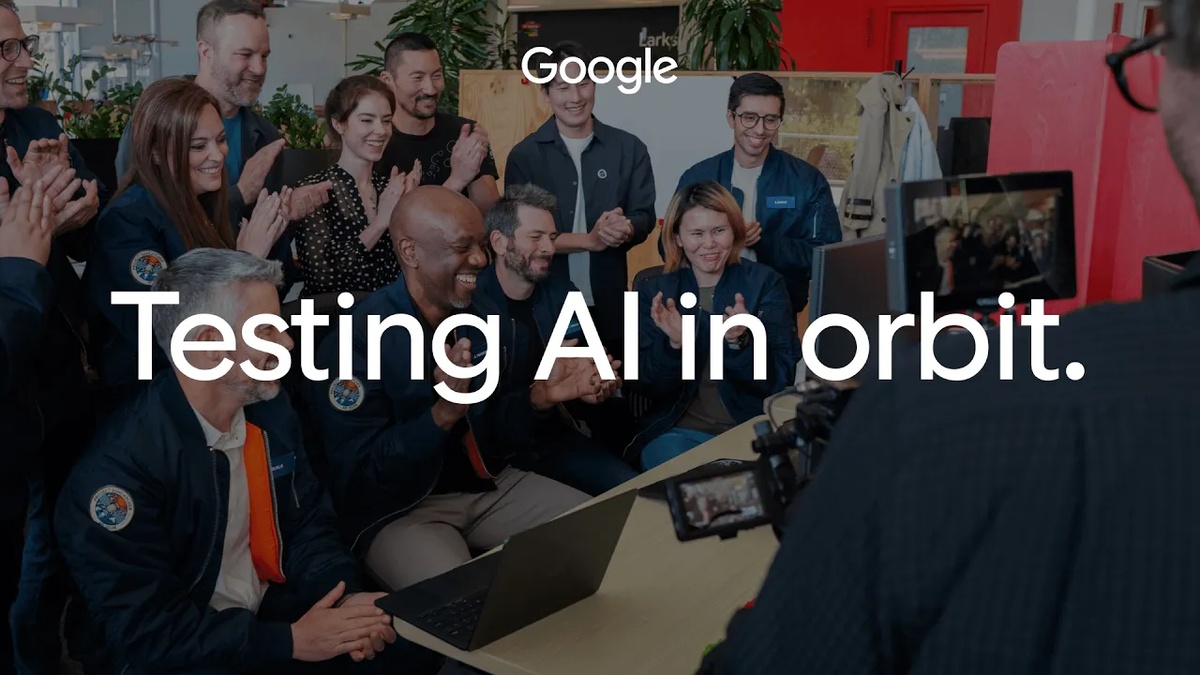
Expanding the boundaries of physical infrastructure, Google AI Updates October 2026 marked the first time in aerospace history that a datacenter-class Google Tensor Processing Unit operated successfully in low-Earth orbit aboard the Project Suncatcher satellite.
Following orbital insertion, the Project Suncatcher prototype satellite beamed back its inaugural AI response: an original haiku composed directly in space by a specialized Gemma 4 model running on the spaceborne TPU array.
This historic orbital achievement in Google AI Updates October 2026 proves that commercial AI silicon can survive the extreme mechanical vibrations of rocket launches, solar radiation bombardment, and severe thermal temperature fluctuations.
By directly harvesting abundant, uninterrupted solar radiation outside the Earth’s atmosphere, Project Suncatcher establishes the foundation for scalable orbital datacenter constellations that bypass terrestrial power grid and cooling constraints.
Similar to the flexible cloud compute delivery highlighted in our analysis of Xbox Cloud Gaming pay-as-you-go bundles, orbital computing represents a disruptive shift in remote infrastructure provisioning.
The orbital demonstration embedded within Google AI Updates October 2026 showcases Google’s ambitious vision to expand computational capacity beyond planetary limitations, setting the stage for self-sustaining off-world computing clusters.
5. EmbeddingGemma 2 & Android Edge: On-Device Vector Search with Private AI Compute
On the consumer and edge computing front, Google AI Updates October 2026 delivered EmbeddingGemma 2, a highly efficient 740-million-parameter open embedding model designed to run locally on everyday smartphones and client workstations.
Built upon the Gemma 4 neural architecture, EmbeddingGemma 2 moves beyond text-only semantic search to project source code, images, audio files, and video streams into a unified high-dimensional vector space right on the device.
Because the innovative model design reduces required vector storage capacity by up to six times, Google AI Updates October 2026 enables software developers to build lightning-fast, private offline applications without incurring recurring cloud API costs.
Users can now search hours of personal audio recordings using quick text prompts or retrieve specific moments from uncaptioned video libraries without uploading sensitive media to external corporate servers.
Simultaneously, Android introduced an opt-in Enhanced Protection mode utilizing Private AI Compute alongside cloud Gemini models, safeguarding users by proactively intercepting conversational scams and deceptive screen-sharing exploits in real time.
These synchronized edge advancements within Google AI Updates October 2026 prove that Google is equally committed to democratizing local artificial intelligence while defending user privacy across billions of active Android hardware endpoints.
Final Verdict: A Transformative Milestone for Next-Gen Computing
The sweeping breadth of innovations highlighted across Google AI Updates October 2026 confirms Google’s commanding technological leadership in foundational research, specialized hardware engineering, and scalable enterprise deployment.
From solving foundational quantum error bottlenecks to beaming neural responses from low-Earth orbit and putting private multimodal vector search directly on smartphones, Google has delivered a transformative roadmap for next-generation computing.
As commercial industries transition toward autonomous agents and cyber resilience, the architectural advances in Google AI Updates October 2026 provide developers and enterprise decision-makers with the definitive tools to shape the future of technology.
