


Table of Contents
Google has officially launched Gemini Android Go, fundamentally re-architecting its flagship mobile artificial intelligence application for lower-memory smartphones. The update eliminates long-standing hardware barriers, bringing real-time generative capabilities to devices operating with as little as 2GB of physical system memory.
For hundreds of millions of international consumers, entry-level smartphones serve as their sole computational connection to modern education, commerce, and digital employment. Google engineers restructured core memory pipelines, ensuring budget hardware delivers responsive conversational assistance without exhausting restricted platform hardware.
| Architecture Dimension | Gemini on Android Go (2026 Re-Architecture) | Full Gemini Mobile App (Standard Flagship) | Legacy Google Assistant Go (Previous Generation) |
|---|---|---|---|
| Minimum System RAM | 2GB physical RAM (LPDDR4X / LPDDR3) | 4GB to 16GB physical RAM | 1GB to 2GB physical RAM |
| Primary AI Runtime | Dynamic streaming cloud inference engine | Hybrid on-device Gemini Nano + cloud TPUs | Monolithic cloud voice query pipeline |
| Multimodal Vision | Real-time camera optical parsing and Nano Banana | Live camera sharing, screen parsing, Imagen 3 | Google Lens static snapshot integration |
| Spoken Voice Engine | Gemini Live full-duplex audio (45+ languages) | Gemini Live with live screen context | Turn-taking synthetic speech assistant |
| Activation Method | Long-press physical power button gesture | Always-on “Hey Google” hotword + power gesture | Home button long-press or search widget |
| Active Memory Budget | Strictly under 200MB during active use | 800MB to 1.5GB resident background footprint | 150MB lightweight background service |
| OEM Factory Distribution | Preloaded by Transsion (Tecno, Infinix, itel) | Preloaded by Samsung, Pixel, Motorola | Preloaded on Android Oreo/Pie Go handsets |
Memory Subsystem Re-Architecture: How Gemini Android Go Runs on 2GB RAM
Operating generative artificial intelligence models on entry-level Android hardware historically presented insurmountable memory constraints. Standard Gemini applications required at least 4GB of RAM to maintain background listeners, load model runtimes, and parse complex multimodal user queries smoothly.
To deploy Gemini Android Go successfully, Google re-architected the client runtime into an ultra-lean execution framework. The revamped application strips away heavy persistent background processes, aggressively pruning dormant memory caches whenever users switch between active mobile workflows.
Conventional Android smartphones dedicate significant random access memory to persistent resident services, including continuous hotword detection loops. On 2GB memory configurations, such persistent background allocations inevitably trigger the Android low-memory killer daemon, prematurely terminating active user applications.
To optimize Gemini Android Go, the development team resolved this limitation by refactoring how the application handles memory-mapped assets and client-side buffers. Rather than pre-loading hefty neural libraries into active system RAM, the client dynamically streams necessary inference assets during active query sessions.
Under Gemini Android Go, this streaming architecture maintains client process footprint strictly beneath two hundred megabytes during intensive user interactions. The application runs smoothly alongside essential daily utilities, avoiding disruptive system lag, skipped frames, or unexpected app restarts across budget smartphone screens.
In Gemini Android Go, by decoupling graphical interface rendering from heavy computational operations, Google established an extraordinarily resilient mobile architecture. The software functions reliably even under severe memory constraints, unlocking sophisticated personal assistance for emerging market demographics worldwide.
Gemini Live Audio Protocol: Low-Latency Natural Conversations in 45 Languages
Gemini Live stands as the centerpiece of this software expansion, offering continuous natural spoken conversations across more than forty-five international languages. Users can brainstorm ideas, practice employment interviews, or clarify complex topics through fluid, real-time auditory exchanges powered by Google DeepMind research.
Before Gemini Android Go, traditional mobile voice assistants enforced rigid turn-taking mechanics, requiring users to pause awkwardly and await synthetic audio synthesis. Gemini Live eliminates these conversational delays through an optimized full-duplex audio streaming protocol engineered specifically for mobile networks.
The audio pipeline compresses spoken input using advanced low-bitrate acoustic codecs before routing voice data to Google hyperscale tensor processing units. The cloud infrastructure processes conversational intent almost instantaneously, streaming back natural vocal responses with imperceptible acoustic latency.
Crucially, Gemini Android Go supports interruption handling even on hardware powered by modest entry-level silicon processors. When a speaker interrupts mid-sentence, the local audio engine immediately terminates outbound playback, recalculating conversational context without stalling the host operating system.
Within Gemini Android Go, this responsive conversational flow proves immensely valuable for educational tutoring, language acquisition, and interactive job preparation. Learners in developing regions receive nuanced feedback on pronunciation, phrasing, and technical concepts without paying for expensive private tutoring services.
With Gemini Android Go, by removing traditional keyboard input requirements, the platform democratizes digital productivity for non-technical demographics. Users simply speak naturally, transforming how hundreds of millions navigate complex government forms, educational materials, and daily business correspondence.
Multimodal Vision and Optical Grounding: Processing Documents via Camera Feed
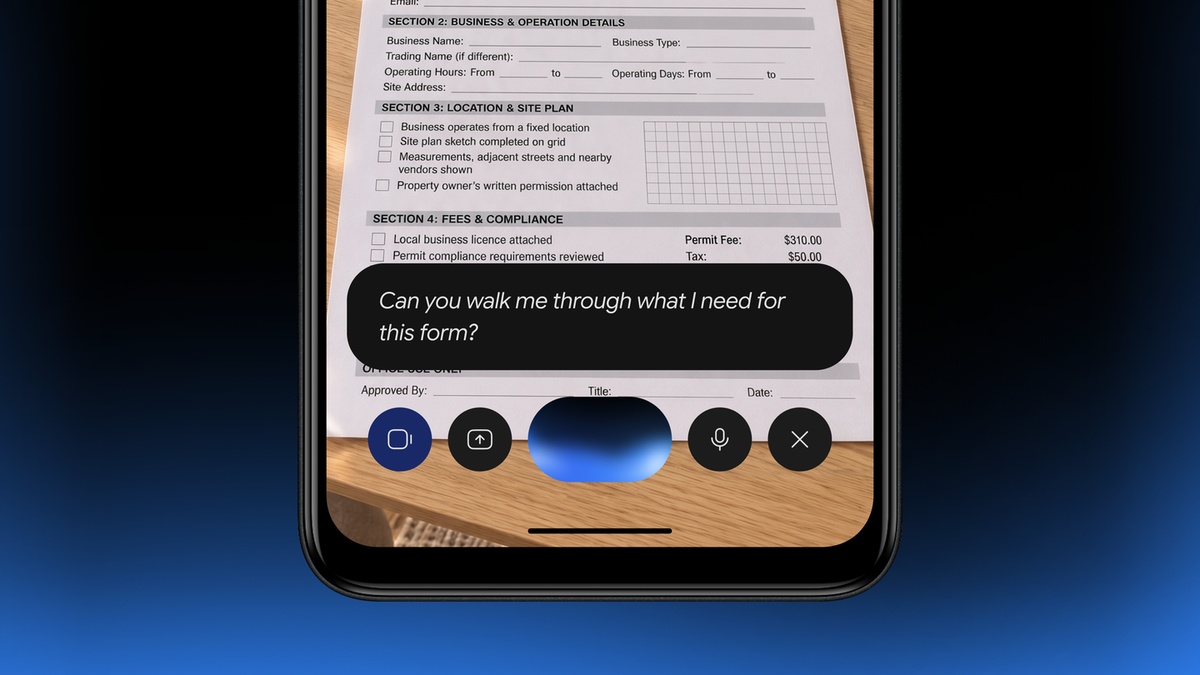
Beyond spoken interaction, the application introduces sophisticated optical understanding powered by Google advanced computer vision algorithms. Users can point their smartphone camera at handwritten notes, physical receipts, printed forms, or machinery to receive instant explanations.
For Gemini Android Go, document comprehension represents a major productivity catalyst for small business operators, students, and tradespeople worldwide. By parsing complex printed invoices or educational textbooks, the system extracts critical data points, explains technical diagrams, and translates foreign text.
To optimize camera processing in Gemini Android Go on low-bandwidth connections, the client employs intelligent optical image pre-filtering. The device captures high-resolution camera frames, applies lightweight edge-detection sharpening, and compresses visual tokens before transmission to cloud inference servers.
Through Gemini Android Go, this hybrid vision pipeline ensures lightning-fast document analysis without consuming excessive cellular mobile data allowances. Users on capped prepaid wireless plans can reliably translate instructional manuals or solve complex mathematics problems without incurring painful data overage fees.
Additionally, the system integrates Google Nano Banana image generation engine, allowing users to synthesize bespoke visual assets directly. Small business owners can generate custom promotional flyers, product posters, or social media advertisements using straightforward natural language descriptions.
In Gemini Android Go, combining computer vision with generative image synthesis transforms entry-level mobile hardware into comprehensive creative workstations. Individuals can draft professional business collateral in minutes, leveling the commercial playing field against enterprises possessing substantially larger marketing budgets.
On-Device Resource Allocation: Balancing Background Daemons and RAM Headroom
| Smartphone Hardware Tier | Typical SoC & RAM Setup | Active Memory Allocation | Supported Gemini Capabilities | Background Daemon Policy |
|---|---|---|---|---|
| Entry-Level Go (2GB RAM) | Unisoc T606 / Helio G36 (2GB LPDDR4X) | Under 200MB active heap | Gemini Live, camera parsing, image creation | Zero persistent background listeners |
| Value Smartphone (3GB-4GB RAM) | Helio G85 / Snapdragon 680 (3GB-4GB) | Under 350MB active heap | Gemini Live, camera translation, widget access | Fast memory reclamation on dismissal |
| Mid-Range Standard (6GB-8GB RAM) | Dimensity 7050 / Snapdragon 7 Gen 3 | 600MB to 900MB active heap | Full Gemini experience with screen reading | Standard background cache retention |
| Flagship Tier (12GB-16GB RAM) | Snapdragon 8 Elite / Tensor G4 | 1.5GB+ resident allocation | On-device Gemini Nano + Live avatar video | Persistent hotword daemon and real-time screen overlays |
Balancing active artificial intelligence workloads against the strict memory budgets of entry-level smartphones demands uncompromising architectural discipline. Operating systems like Android Go edition operate with strict system memory limits designed to preserve battery and responsiveness.
To maintain system stability, Google engineers made calculated functional tradeoffs regarding persistent background background listeners. In Gemini Android Go, always-on hotword listeners and pervasive screen-reading overlays are strategically omitted to conserve precious volatile memory.
Instead of running persistent background listener threads, users summon the assistant by pressing and holding the physical power button. This dedicated hardware gesture launches the assistant instantaneously while freeing hundreds of megabytes of resident memory for multitasking.
When the Gemini Android Go assistant UI closes, the runtime aggressively yields its allocated heap memory back to the Android runtime. This rapid reclamation prevents memory fragmentation, ensuring that subsequent foreground applications launch without encountering sluggish cold-start delays or performance stutter.
Similar memory management innovations have transformed desktop computing environments, as demonstrated in our architectural analysis of the Apple M4 Mac Mini redesign, where unified memory bandwidth dictates generative efficiency.
In Gemini Android Go, by respecting platform constraints rather than fighting them, Google created an application that feels snappy on modest hardware. The interface renders cleanly at sixty frames per second, delivering a premium user experience on accessible consumer devices.
Hardware OEM Partnerships: Deploying Gemini Android Go with Transsion Hardware
Software optimization represents only half the challenge when democratizing artificial intelligence across global emerging markets. Reaching the next billion mobile users requires close industrial collaboration with original equipment manufacturers who build accessible budget hardware.
Google has forged a pivotal hardware distribution partnership with Transsion Holdings, the leading smartphone manufacturer across Africa, South Asia, and Latin America. Transsion popular consumer brands, including Tecno, Infinix, and itel, will ship upcoming devices with the app preinstalled.
Pre-installing Gemini Android Go directly onto factory system partitions eliminates the friction of discovering and downloading large application packages. First-time smartphone owners can immediately access conversational artificial intelligence upon unboxing their new devices without configuring complex accounts.
To deploy Gemini Android Go, engineers from Google and Transsion collaborated closely to fine-tune silicon drivers for popular entry-level processors from MediaTek and Unisoc. These targeted driver optimizations ensure that audio capture, camera framing, and neural rendering execute smoothly across affordable chipsets.
This strategic alignment mirrors semiconductor engineering breakthroughs in the high-performance desktop sector, where custom silicon synergies—such as those analyzed in the AMD Ryzen 7 9800X3D gaming CPU specs—unlock unprecedented efficiency gains across demanding computational workloads.
With Gemini Android Go, by coupling accessible silicon engineering with pre-integrated software, the partnership guarantees widespread consumer adoption. Millions of families purchasing their first internet-connected smartphone will immediately enjoy cutting-edge generative tools once reserved exclusively for premium flagship owners.
Model Quantization and Cloud Offloading: Managing Latency on Entry-Level SoCs
Underlying this smooth user experience is a hybrid computational architecture that balances on-device responsiveness against cloud-based neural power. Entry-level system-on-chip platforms lack dedicated neural processing units capable of executing multi-billion-parameter foundation models locally.
For Gemini Android Go, Google resolved this computational bottleneck by executing heavy multimodal inference inside hyper-scale data centers powered by custom tensor processing hardware. The mobile client acts as an intelligent streaming terminal, managing sensor input, rendering user interfaces, and orchestrating network payloads.
To minimize perceived latency over variable wireless connections, Gemini Android Go implements speculative token streaming and aggressive request pipelining. As the remote foundation model generates response tokens, the client renders words incrementally rather than waiting for entire paragraphs.
Across Gemini Android Go, this streaming methodology provides instant visual feedback, making conversational interactions feel lively and interactive even on congested cellular networks. Users perceive near-instantaneous responses, eliminating the frustration of staring at static loading spinners or blank screens.
Software ecosystems must constantly adapt to evolving runtime requirements, reminiscent of how legacy platforms shift over time, as highlighted when Nvidia ended Windows 10 support to prioritize modern architectures.
By intelligently distributing computational responsibilities between device silicon and cloud infrastructure, Google achieved optimal power efficiency. The client minimizes thermal throttling and battery drain, allowing users to engage in extended conversational sessions on affordable hardware.
Global Accessibility Roadmap: Why Gemini Android Go Accelerates AI Democratization
The deployment of Gemini Android Go marks a monumental philosophical shift in the global technology landscape. For years, generative artificial intelligence advances remained disproportionately concentrated among affluent consumers possessing premium flagship smartphones costing over one thousand dollars.
By successfully adapting flagship AI capabilities to 2GB hardware, Google dismantles economic barriers that historically created digital divides. Students, educators, healthcare workers, and entrepreneurs across developing nations now possess access to the world’s most capable knowledge repository.
Multilingual conversational fluency in forty-five languages ensures that cultural and linguistic diversity are respected rather than sidelined. Users can converse naturally in regional dialects, asking complex questions and receiving culturally relevant answers that empower local communities.
As documented in the official announcement on the Google Keyword official blog, this rollout reflects Google commitment to universal technological access, empowering underserved populations through scalable mobile software innovations.
Developer guidelines published across Android Developer documentation outline how third-party creators can optimize mobile applications for memory-restricted operating environments, reinforcing system-wide efficiency standards across the broader Android ecosystem.
Looking ahead, this release sets a new benchmark for software engineering across resource-constrained devices. As machine learning algorithms become increasingly compact and efficient, sophisticated generative intelligence will become a standard utility available to every human on earth.
Frequently Asked Questions
What are the minimum hardware requirements for running Gemini on budget Android devices?
The re-architected Gemini application requires an Android device operating on Android Go edition or standard Android with at least 2GB of physical RAM. Users must have a compatible personal Google account and an active wireless network connection.
Which core artificial intelligence features are supported on 2GB Android Go devices?
Eligible budget devices support conversational Gemini Live voice chats across forty-five languages, camera-based visual document comprehension and translation, custom image generation via Nano Banana, and standard assistant tasks including phone calls, text messaging, and setting alarms.
Why are always-on hotword listeners and screen context omitted on lower-memory phones?
Continuous background hotword listeners and real-time screen parsing require significant persistent resident RAM. To prevent the Android operating system from aggressively killing active background applications on 2GB devices, Google replaced persistent background listeners with a convenient long-press power button gesture.
How can smartphone owners download and install the new application on their phones?
Users can download the Gemini application directly from the Google Play Store on supported 2GB devices. Furthermore, Google has partnered with smartphone manufacturers such as Transsion to pre-install the application on upcoming budget handsets from Tecno, Infinix, and itel.
How does the hybrid cloud streaming architecture protect device battery and data usage?
The application handles interface rendering locally while offloading complex generative inference to Google hyperscale cloud servers. Low-bitrate audio compression, intelligent image filtering, and incremental token streaming minimize cellular data consumption while preventing device overheating and rapid battery depletion.
Final Verdict: Efficient Architecture Brings True Generative AI to Budget Mobile
The launch of Gemini Android Go represents a pivotal victory for technological accessibility and inclusive software engineering. By re-architecting client memory pipelines to run smoothly on 2GB devices, Google has expanded advanced artificial intelligence access to hundreds of millions of underserved smartphone owners.
From natural voice exchanges in forty-five languages with Gemini Live to optical document analysis and custom image creation, the platform delivers uncompromising utility. Strategic OEM partnerships with Transsion ensure these capabilities reach consumers directly out of the box.
As foundation models evolve, the democratization of computational intelligence will remain technology’s most noble frontier. With this release, Google proves that world-class artificial intelligence does not require a flagship price tag, establishing a brighter, more connected future for mobile users globally.
