


When the original Gears of War launched in late 2006, it stood as the definitive graphical watershed moment of the seventh console generation, single-handedly showcasing the revolutionary fidelity of Epic Games’ Unreal Engine 3. Two decades later, developer The Coalition is preparing to recreate that exact technological shockwave. With the formal unveiling of Gears of War E-Day Unreal Engine 5, the studio is transporting players back fourteen years prior to the original trilogy to witness the cataclysmic horror of Emergence Day through a bleeding-edge architectural showcase. As detailed in technical briefings on Xbox Wire, experiencing Gears of War E-Day Unreal Engine 5 represents the most comprehensive, uncompromised deployment of Epic’s latest graphics engine ever attempted on home consoles.
Rather than simply upscaling legacy assets, The Coalition rebuilt its production pipeline from the foundation upward. Powered by a heavily customized iteration of Unreal Engine 5.6, the game introduces breakthrough rendering technologies—including the revolutionary MegaLights system, hardware-accelerated Lumen global illumination, and full-fidelity Nanite micro-geometry. For Xbox Series X enthusiasts and PC hardware purists alike, examining Gears of War E-Day Unreal Engine 5 reveals five huge technical upgrades that set an uncompromising new standard for real-time visual fidelity and visceral third-person action combat.
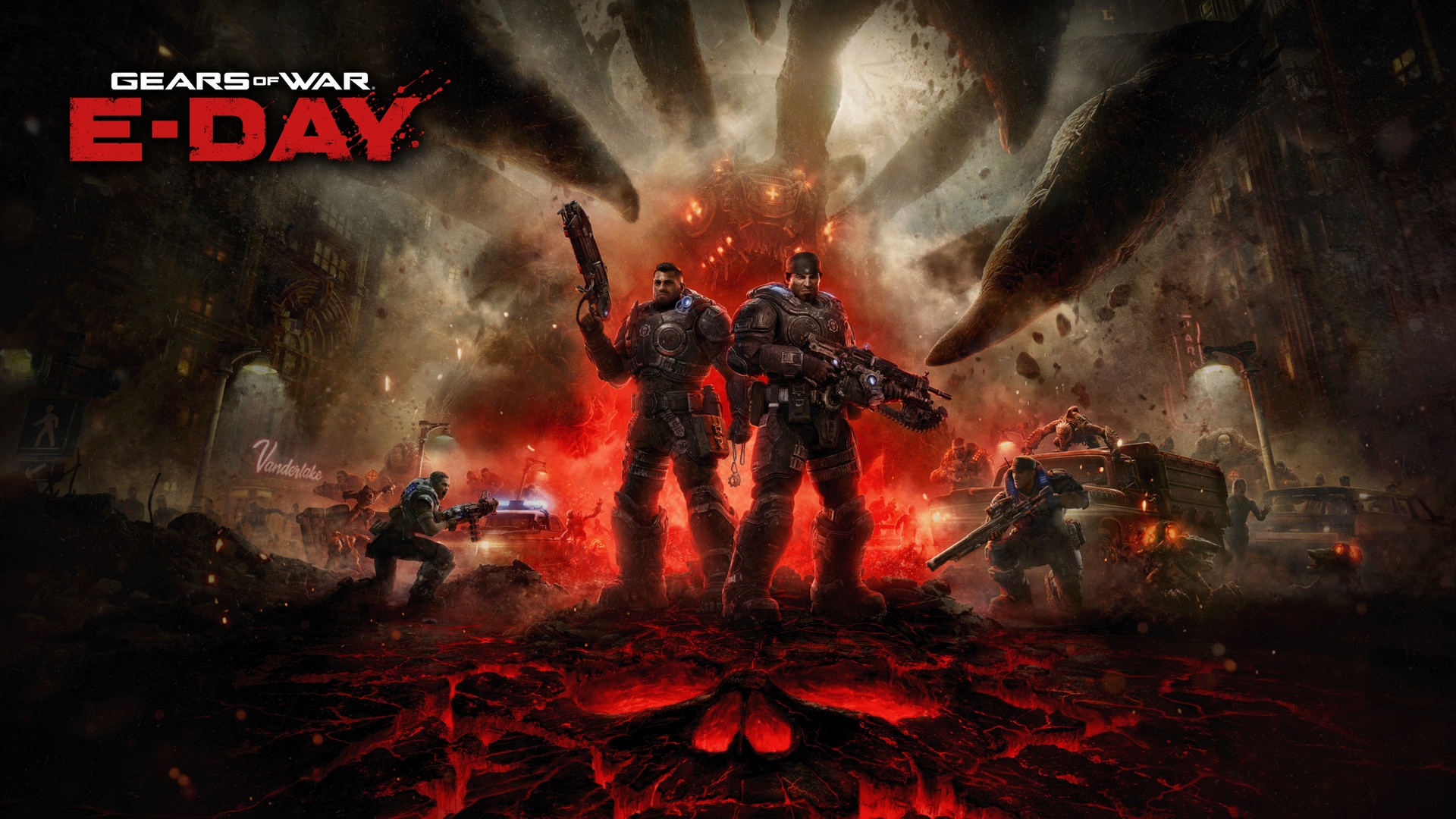
Table of Contents
The Architectural Foundation: The Coalition Custom Unreal Engine Pipeline
To appreciate the technical triumphs of Gears of War E-Day Unreal Engine 5, one must first recognize The Coalition’s unique standing within Microsoft’s gaming division. Headquartered in Vancouver, the studio has long operated as the industry’s premier Unreal Engine master technicians. During the Xbox One era, Gears of War 4 and Gears 5 served as universal benchmark titles, pushing dynamic resolution scaling, sub-surface skin scattering, and screen-space global illumination to heights rarely achieved by rival studios.
With E-Day, the studio transitions fully to modern virtualized geometry and ray-traced lighting pipelines. Working in close engineering partnership with Epic Games, the developers contributed custom source code directly into upstream versions of Unreal Engine. By tailoring the engine’s compute shaders to take full advantage of the Xbox Series X’s 12-teraflop RDNA 2 GPU and high-bandwidth GDDR6 memory bus, Gears of War E-Day Unreal Engine 5 achieves levels of asset density and dynamic lighting previously deemed impossible on fixed console hardware.
Every structural asset in the fallen Seran city of Kalona has been authored from scratch. Rather than relying on traditional normal maps to fake depth on flat polygonal surfaces, the environment in Gears of War E-Day Unreal Engine 5 is constructed with dense, uncompressed 3D geometry down to the individual mortar joints and structural rebar exposed by catastrophic seismic sinkholes.
Upgrade 1: MegaLights Breakthrough — Hundreds of Dynamic Shadow Casters
The single most revolutionary graphical upgrade in Gears of War E-Day Unreal Engine 5 is the integration of MegaLights. In conventional real-time rendering, casting shadows from dynamic light sources is among the most computationally punishing operations a GPU can perform. Traditional shadow-mapping pipelines require rendering the entire scene geometry from the perspective of each individual light source. Consequently, console games have historically capped dynamic shadow-casting lights to a mere three or four simultaneous sources on screen at any given moment.
In Gears of War E-Day Unreal Engine 5, The Coalition overcomes this multi-decade bottleneck by deploying MegaLights—Epic Games’ stochastic direct lighting framework. Instead of rendering expensive discrete shadow maps, MegaLights evaluates hundreds of dynamic lights using a fixed per-pixel ray budget. As independently verified by technical analysts at Digital Foundry, this breakthrough allows *E-Day* to render dozens or even hundreds of casting lights simultaneously without causing GPU frame-time spikes.
The visual impact in gameplay is breathtaking throughout Gears of War E-Day Unreal Engine 5. During night-time combat encounters across Kalona’s commercial districts, player flashlights, flickering television display walls, sparking electrical transformers, emergency road flares, and muzzle flashes from Marcus’s Lancer all cast realistic, overlapping soft shadows onto the environment. When a Locust Drone fires an explosive Boomshot down a darkened corridor, the projectile casts dynamic, moving shadows from every piece of physical debris along its ballistic trajectory, delivering unprecedented atmospheric depth.
Upgrade 2: Nanite & Mega Geometry — “Destroyed Beauty” at Micro Scale
A hallmark of the Gears franchise has always been its signature “Destroyed Beauty” artistic philosophy—juxtaposing ornate, neoclassical Mediterranean architecture with violent industrial destruction. In Gears of War E-Day Unreal Engine 5, this aesthetic vision is realized without geometric compromise thanks to Nanite virtualized micro-polygon geometry.
In legacy engines, artists were forced to create multiple manual Levels of Detail (LODs) for every 3D object, resulting in distracting geometric pop-in as players traversed game worlds. Nanite eliminates the concept of LODs entirely by streaming and rendering film-quality cinematic meshes in real time. Character models for Marcus Fenix and Dominic Santiago feature over one hundred times the geometric polygon density of their counterparts in Gears 5:
- Intricate Tactical Armor: The knurled steel plates, riveted buckles, and worn ballistic fabric of the classic COG combat suit feature microscopic physical detailing, completely devoid of low-resolution polygon edges.
- Locust Biological Realism: Locust Drones feature individually rendered scutes, scales, and subterranean fungal parasites clinging to their pale reptilian skin, casting self-shadows across weapon grips and facial features.
- Mega Geometry Ray Tracing: On capable hardware, Gears of War E-Day Unreal Engine 5 deploys Mega Geometry to ray-trace directly against full-detail Nanite meshes rather than simplified proxy models, eliminating light leaks and shadow detachment around complex character joints.
When standing near ornate marble archways or crumbling classical statues in Kalona, players can inspect stonework from inches away without witnessing a single jagged polygonal edge, establishing Gears of War E-Day Unreal Engine 5 as a new high-water mark for cinematic realism in third-person gaming.
Upgrade 3: Hardware-Accelerated Lumen Global Illumination
Lighting defines the terror and emotional gravity of Emergence Day. In Gears of War E-Day Unreal Engine 5, indirect lighting is computed entirely in real time using hardware-accelerated Lumen global illumination. Unlike pre-baked lightmaps that cannot adapt to dynamic environmental changes, Lumen calculates multi-bounce diffuse reflections dynamically as structures collapse and light sources move.
When an asphalt street violently caves in to reveal a glowing Locust Emergence Hole, the subterranean crimson and amber bioluminescence bounces naturally off adjacent concrete walls, illuminating the undersides of abandoned civilian vehicles with terrifying realism. As daylight filters through dust-choked atmospheric haze, sunlight reflects off marble floors to subtly illuminate dark ceiling alcoves with physically accurate color bleeding.
Furthermore, The Coalition enhanced Lumen’s rough reflection pipeline to accurately simulate metallic anisotropy on weapons and armor. Rain-slicked cobblestone streets reflect glowing street lamps with accurate perspective distortion, completely replacing the artifact-prone screen-space reflections (SSR) that plagued older releases. This real-time global illumination ensures that Gears of War E-Day Unreal Engine 5 maintains cohesive visual tone whether fighting under the blazing midday sun or navigating oppressive subterranean hive caverns, proving how essential Gears of War E-Day Unreal Engine 5 lighting innovations are.
Upgrade 4: Chaos Physics, Dynamic Destruction, and Sub-Surface Gore
Visceral, ground-shaking combat is the soul of the franchise, and Gears of War E-Day Unreal Engine 5 elevates tactile carnage to new extremes through Epic’s Chaos physics engine. Environments in *E-Day* are no longer static, unyielding arenas populated with indestructible stone barriers. Instead, architectural elements react with realistic structural fragmentation to ballistic impacts and explosive charges.
When pinned behind a neoclassical granite pillar under heavy Locust Digger or Hammerburst fire, the cover physically erodes. Concrete spalls away in volumetric chunks, exposing underlying steel rebar. Glass storefront windows do not shatter into generic pre-fractured decals; they crack organically based on projectile trajectory and velocity, with light realistically refracting through fragmented bullet holes.
Equally critical in Gears of War E-Day Unreal Engine 5 is the overhaul of character dismemberment and biological gore. The chainsaw bayonet duel—a franchise staple—has been rewritten to leverage real-time mesh slicing and sub-surface scattering:
- Volumetric Flesh Deconstruction: Striking a Locust Drone with the revving teeth of the Lancer produces procedural, localized tissue separation rather than static ragdoll animations.
- Dynamic Fluid Splatter: Blood and subterranean Imulsion fluids adhere realistically to character armor and weapons, gradually coagulating and reacting to scene lighting before washing away under rainfall.
- Sub-Surface Skin Scattering: Human skin on Marcus and Dom exhibits realistic subsurface light diffusion, capturing the translucent warmth of earlobes and knuckles under intense muzzle flash illumination.
This level of mechanical brutality reinforces the terrifying narrative reality of Emergence Day, transforming every firefight into a frantic, desperate struggle for survival.
Upgrade 5: Locked 60 FPS Target & DirectStorage Asset Streaming
Achieving breathtaking visual fidelity is meaningless if performance stutters under heavy combat loads. For competitive shooter veterans—such as those following our recent high-refresh breakdown of Black Ops 6 on PS5 Pro—framerate stability is essential. Recognising this, The Coalition established an uncompromising technical mandate: Gears of War E-Day Unreal Engine 5 targets a fluid, locked 60 frames per second on Xbox Series X during campaign gameplay.
To sustain 60 FPS alongside heavy Nanite geometry and MegaLights computations, the studio implemented advanced temporal super-resolution (TSR) paired with AMD FidelityFX Super Resolution technology in Gears of War E-Day Unreal Engine 5. The engine dynamically reconstructs an internal 1440p rendering buffer into a pristine 4K display output, preserving fine geometric detail while maintaining flatline frame-time consistency even during monumental Locust emergence events.
Additionally, the title takes full advantage of the Xbox Velocity Architecture and Microsoft DirectStorage APIs. Custom hardware decompression offloads texture and mesh decompression directly to the GPU, bypassing CPU bottlenecks entirely. Level transitions, fast-travel respawns, and high-speed vehicular sequences stream without a single millisecond of shader compilation hitching or asset pop-in, delivering a seamless, unbroken cinematic campaign experience.
Technical Hardware Matrix: Xbox Series X, Series S, and PC Compared
To quantify how Gears of War E-Day Unreal Engine 5 scales across modern gaming platforms, we compiled the confirmed technical specifications and target benchmarks across Microsoft’s console family and high-end PC configurations:
| Platform / Target | Target Resolution | Framerate Target | Lighting Pipeline | Geometry & Asset Quality | DirectStorage Support |
|---|---|---|---|---|---|
| Xbox Series X | Dynamic 1440p reconstructed to 4K via TSR | Locked 60 FPS Campaign / 120 FPS MP Target | Hardware Lumen + MegaLights (Optimized Console Profile) | Cinematic Nanite Meshes + Full Mesh Deformation | Native Xbox Velocity Architecture |
| Xbox Series S | Dynamic 1080p reconstructed to 1440p | Target 30 FPS / 60 FPS Performance Mode | Software Lumen + Scaled MegaLights Sample Budget | Optimized Nanite LODs + Reduced Shadow Casters | Native Xbox Velocity Architecture |
| High-End PC (RTX 4080 / RX 7900 XTX) | Native 4K / DLSS 3.7 / FSR 3.1 | Unlocked (120+ FPS with Frame Generation) | Full Hardware Lumen + MegaLights Ultra + Mega Geometry | Uncompressed Cinematic LOD 0 Nanite Assets | PC DirectStorage 1.2 GPU Decompression |
| Mainstream PC (RTX 4060 / RX 7600) | 1080p / 1440p DLSS Quality | 60 FPS Stable Target | Optimized Hardware Lumen + Standard MegaLights | Standard Nanite Streaming with Balanced LODs | DirectStorage NVMe SSD Required |
This technical scalability proves that while Gears of War E-Day Unreal Engine 5 pushes next-generation hardware to its theoretical boundaries, deliberate architectural optimization ensures that Series S owners and mid-tier PC gamers enjoy an exceptional, visually cohesive experience.
Narrative & Visual Synergy: Why Emergence Day Demanded a Graphical Reset
From a storytelling perspective, returning to Emergence Day was not merely a nostalgic retreat to fan-favorite characters; it was a deliberate thematic necessity. In the original 2006 title, humanity had already endured fourteen grueling years of war. The world was already broken, the COG military was reduced to desperate scavengers, and the initial shock of facing a subterranean reptilian army had faded into hardened, cynical survival.
In Gears of War E-Day Unreal Engine 5, players witness humanity’s most catastrophic day from the perspective of an inexperienced, twenty-one-year-old Marcus Fenix and his closest brother-in-arms, Dominic Santiago. Kalona is not yet a bombed-out wasteland; it is a thriving, culturally majestic metropolis enjoying peacetime prosperity following the conclusion of the Pendulum Wars. Witnessing this opulent civilization tear itself apart within a matter of hours requires staggering graphical fidelity.
The terror of Emergence Day relies on emotional vulnerability. Marcus and Dom do not possess the superhuman bravado of later sequels. They are terrified soldiers fighting an unknown, monstrous predator that claws out from beneath their boots. By rendering the sweat on Marcus’s brow, the visceral terror in a civilian’s eyes, and the catastrophic collapse of towering skyscrapers in real-time Nanite detail, Gears of War E-Day Unreal Engine 5 turns the visual engine into the primary vehicle for emotional storytelling.
Console Showcase Rivalry: Gears of War E-Day vs. Modern Blockbusters
The impending release of Gears of War E-Day Unreal Engine 5 establishes a monumental visual rivalry across the gaming landscape. As the industry approaches the mid-generation hardware transition, console manufacturers are deploying their absolute premier technical showcases to define platform supremacy.
While Sony’s ecosystem focuses on machine-learning reconstruction and high-refresh competitive shooting—as demonstrated in our deep dive on Black Ops 6 on PS5 Pro—Microsoft and The Coalition are staking their claim on holistic engine innovation. Rather than relying solely on post-process AI upscaling, *E-Day* rearchitects real-time lighting at the silicon level with MegaLights and full virtualized micro-geometry.
Furthermore, this architectural leap contrasts sharply with portable and hybrid platforms. As detailed in our analysis of the Hitman Absolution Switch 2 release and our mobile engineering study on PC emulation on Android, portable systems rely heavily on aggressive rasterization compromises, making the visual ambition of Gears of War E-Day Unreal Engine 5 stand out even more distinctly. Gears of War E-Day Unreal Engine 5 stands at the polar opposite end of the spectrum, demonstrating what becomes possible when a world-class engineering team focuses raw stationary console horsepower toward zero-compromise photorealism.
Xbox Game Pass Day One Ecosystem Impact
Beyond its technological triumphs, Gears of War E-Day Unreal Engine 5 represents a monumental commercial asset for Microsoft’s subscription ecosystem. Following Microsoft’s aggressive expansion of its first-party studio roster, the title is formally confirmed to launch Day One on Xbox Game Pass Ultimate and PC Game Pass.
As we analyzed in our coverage of Xbox Game Pass Wave 2—and in stark contrast to the rotating catalog model of PS Plus Extra October 2026—offering an industry-defining visual benchmark on Day One at no additional cost to tens of millions of active subscribers provides an unmatched consumer value proposition. Players will not need to pay the standard $69.99 AAA retail fee to experience The Coalition’s next-generation masterpiece.
According to comprehensive franchise playthrough data tracked on HowLongToBeat, mainline Gears campaigns traditionally deliver between 10 to 14 hours of intense narrative pacing, complemented by hundreds of hours of replayable cooperative Horde and competitive multiplayer modes. Having day-one access to full cross-play cooperative campaign play in Gears of War E-Day Unreal Engine 5 across Xbox Series X, Series S, and PC solidifies Game Pass as the definitive home for cooperative shooter enthusiasts.
Frequently Asked Questions
Is Gears of War E-Day running on Unreal Engine 5.6?
Yes. Gears of War E-Day Unreal Engine 5 is built on a heavily customized, bleeding-edge build of Unreal Engine (integrating features up to UE 5.6). The Coalition collaborated directly with Epic Games to co-develop and optimize headline systems like MegaLights and advanced Nanite character skinning for console hardware.
What is the MegaLights system in Gears of War E-Day?
MegaLights is Unreal Engine’s revolutionary direct lighting solution. Instead of generating traditional rasterized shadow maps that limit games to a handful of dynamic lights, MegaLights uses stochastic ray tracing with a fixed per-pixel compute budget. This allows Gears of War E-Day Unreal Engine 5 to render hundreds of dynamic, shadow-casting lights (such as muzzle flashes, neon signs, and streetlamps) simultaneously at 60 FPS on Xbox Series X.
Will Marcus and Dom star in Gears of War E-Day Unreal Engine 5?
Yes. The game serves as a direct prequel set 14 years before the events of the original 2006 title, focusing on a young Marcus Fenix and Dominic Santiago as they experience the terrifying first 24 hours of the Locust invasion in the city of Kalona.
Is Gears of War E-Day Unreal Engine 5 launching Day One on Xbox Game Pass?
Yes. As an Xbox first-party flagship title developed by The Coalition, Gears of War E-Day Unreal Engine 5 will launch Day One for all active subscribers on Xbox Game Pass Ultimate and PC Game Pass, featuring full cross-platform cooperative multiplayer.
Final Verdict: Does Gears of War E-Day Redefine Unreal Engine 5 Gaming?
When Unreal Engine 5 was first unveiled to the world in 2020, gamers were promised a future free of polygonal pop-in, fake baked lighting, and flat static environments. While numerous titles have incorporated individual elements of that vision, few have executed all components in complete, cohesive harmony at a rock-solid 60 frames per second on home consoles.
With Gears of War E-Day Unreal Engine 5, The Coalition proves once again why they are the undisputed masters of Epic’s graphics technology. By synthesizing the revolutionary shadow-casting capabilities of MegaLights, the infinite detail of Nanite micro-geometry, and the terrifying visceral impact of Chaos physics, Gears of War E-Day Unreal Engine 5 is more than just another sequel—it is the definitive technical benchmark of the current console generation. For millions of Gears fans worldwide, the road back to Emergence Day promises to be humanity’s darkest hour, illuminated by interactive entertainment’s brightest technological triumph.
