


Table of Contents
Riot Games has officially unveiled First Stand All In, an unprecedented international esports gathering scheduled for 2027 that will host more competitive teams than any previous tournament in the seventeen-year history of League of Legends.
Announced on the eve of the World Championship Finals, the massive spectacle serves as a celebratory bridge toward the next competitive generation while temporarily restructuring the global winter split calendar across every premier region.
| Tournament Milestone | Participating Teams | Regional Qualification Scope | Host Location | Draft & Competitive Format | Strategic Significance |
|---|---|---|---|---|---|
| First Stand Standard | 5-6 Regional Champions | Only Split 1 Tier-1 Winners | Seoul, South Korea (2025) | Mandatory Fearless Draft | Annual Split 1 Global Kickoff |
| First Stand: All In (2027) | 25+ Teams (Historic Record) | Multi-Seed Global Qualification | Tier-1 Arena Hub, China | Brand New Unannounced Format | Celebration of League Next Overhaul |
| First Stand (2028 Return) | 5-6 Regional Champions | Only Split 1 Tier-1 Winners | Southeast Asia (Rescheduled) | Mandatory Fearless Draft | Return to Core Annual Baseline |
| Mid-Season Invitational (MSI) | 10-12 Top Teams | Top 2 Seeds per Major League | Rotating Global Host City | Modified Double-Elimination | Mid-Year Worlds Qualification Stake |
| World Championship (Worlds) | 20-22 Elite Squads | Top 3-4 Seeds Major Regions | Global Stadium Touring | Swiss System into Single-Elimination | Pinnacle Annual Esports Trophy |
| Worlds 2017 (Previous Record) | 24 Teams (Play-Ins + Groups) | Global Wildcards & Majors | Beijing National Stadium, China | Traditional Play-In Group Stage | Former All-Time LoL Team Record |
Record International Roster: How First Stand All In Shatters Historic Attendance Marks
By expanding team invitations far beyond regional split champions, First Stand All In directly shatters the previous international tournament roster record established during the 2017 World Championship, which featured twenty-four participating organizations across play-ins and groups.
Traditional iterations of the winter championship host only five or six regional victors, but First Stand All In opens doors for secondary contenders, creating an electrifying high-stakes environment where emerging organizations clash against established Korean and Chinese powerhouses.
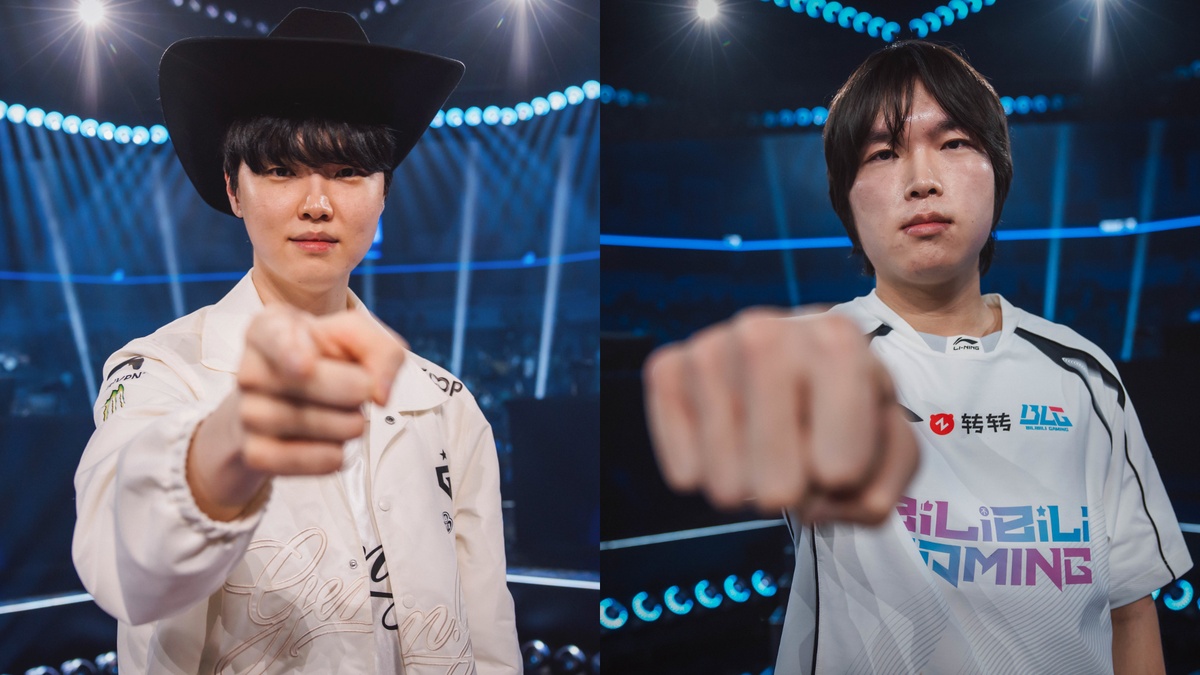
Esports historians note that international League tournaments rarely expand field sizes due to tight broadcast calendars, yet the expanded championship deliberately breaks conventional scheduling logic to deliver unprecedented cross-regional matchups for millions of global viewers.
According to reporting from Insider Gaming, Riot confirmed that the unprecedented roster size will accommodate squads from across the LCK, LPL, LEC, LCP, CBLOL, and newly consolidated Americas circuits.
Expanding the participant pool ensures that the 2027 showcase provides fans with intense international rivalries months before the Mid-Season Invitational, injecting renewed competitive fervor into early-season domestic competitions that previously struggled with lower stakes.
Strategic Venue Relocation: Why Production Scale Shifted Tournament Operations to China
Accommodating dozens of competing rosters necessitated immediate operational alterations, prompting Riot Games to relocate First Stand All In from Southeast Asia to China, where massive arena infrastructure and proven tournament logistics can handle the swollen production demands.
Southeast Asia was initially selected as the host territory for the 2027 edition, but Riot confirmed the region will instead welcome the event in 2028 when the tournament format returns to its traditional five-region championship structure.

Operating a record-setting tournament requires expansive player practice facilities, high-speed fiber interconnections, and multi-stage broadcast booths, making tier-one Chinese esports facilities the most pragmatic setting for executing the massive event without staging compromises.
Chinese esports hubs have repeatedly demonstrated world-class staging capability during international finals, providing the necessary stadium scale, state-of-the-art stage pyrotechnics, and extensive training rooms required when First Stand All In brings together hundreds of professional competitors.
The strategic venue relocation reinforces that this international gathering is treated as a landmark cultural convergence rather than a routine seasonal stop, ensuring broadcast fidelity matches the monumental scope of the expanded roster.
Competitive Architecture Evolution: Brand New Tournament Formats and Winter Split Adaptations
Global Head of LoL Esports Chris Greeley announced that First Stand All In will utilize an inventive competitive format that League of Legends has never executed, departing from standard double-elimination trees and familiar Swiss-system group stages.
To qualify dozens of rosters for this singular celebration, regional leagues worldwide will significantly overhaul their winter split schedules, altering playoff qualification metrics and accelerating match cadences throughout January and February.
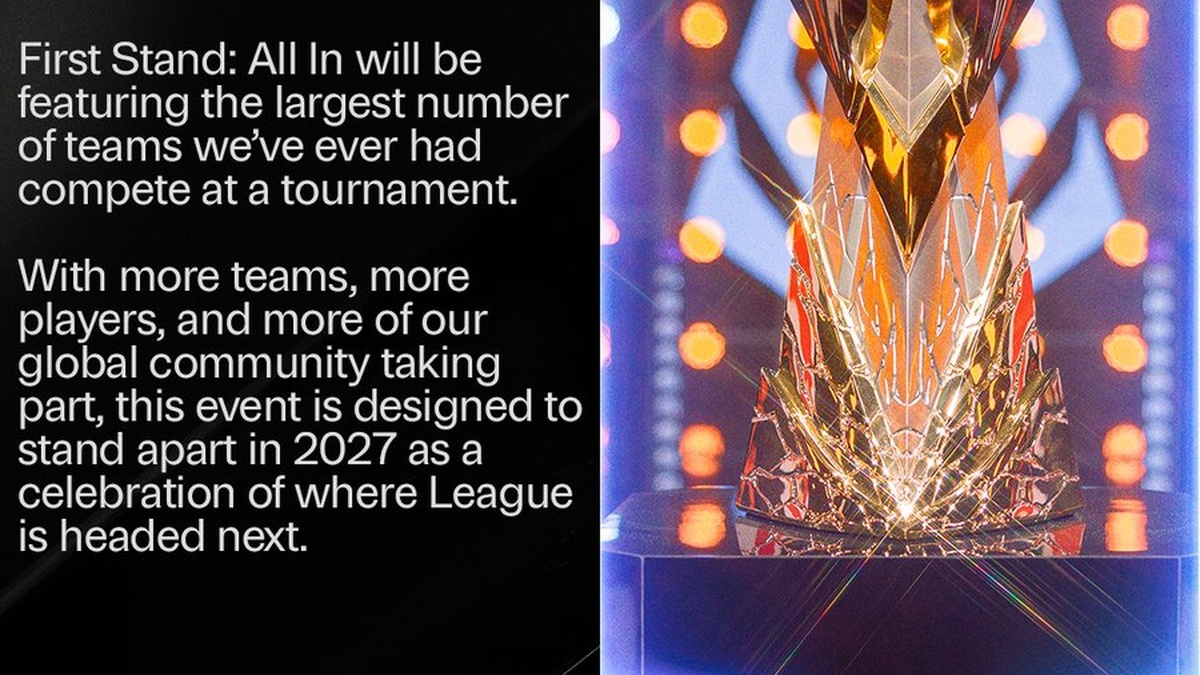
Tournament analysts anticipate that First Stand All In will expand upon the widely praised Fearless Draft ruleset, compelling competing squads to showcase deep champion mastery by permanently locking drafted characters throughout extended competitive match series.
Fearless Draft eliminates stale repetitive picks, which proves vital when the competition schedules dozens of daily games, ensuring that spectators witness unprecedented champion selections, innovative situational synergies, and high-wire tactical adaptability.
Official qualification paths and detailed bracket mechanics for the expanded tournament will remain confidential until January, giving professional coaching staffs several critical weeks to analyze rulebook nuances before regional splits kick off.
The League Next Bridge: Client Overhauls and Foundational Engine Modernization
Beyond esports pageantry, Riot Games framed First Stand All In as a monumental milestone celebrating where League of Legends is headed next, directly linking the championship to the impending technical rollout of League Next.
League Next represents Riot’s comprehensive technical overhaul designed to eliminate nearly two decades of accumulated legacy codebase debt, modernizing client UI architecture, in-game simulation pipelines, and backend networking protocols for contemporary PC hardware.
As Riot prepares client modernization, PC enthusiasts upgrading systems with high-efficiency hardware like the AMD Ryzen 7 9800X3D will benefit from enhanced simulation frame consistency and lightning-fast asset loading during intense multiplayer clashes.
Moreover, modernizing engine rendering pipelines ensures future game updates deliver optimized DirectX and Vulkan performance, particularly as Nvidia ends Windows 10 support and drives players toward modern sixty-four-bit operating environments.
Bridging professional esports with structural game overhauls confirms that First Stand All In serves as the premier global showcase where Riot can demonstrate next-generation engine improvements before worldwide live server deployment.
| Architectural Dimension | Current Legacy League Engine | League Next Modernization (2027) | Competitive Impact | Hardware & System Relevance |
|---|---|---|---|---|
| Client Frontend Stack | Chromium Embedded Framework (CEF) | Unified Low-Overhead Native UI | Eliminates Client Lag and Memory Leaks | Instant Lobby Decompression on PC |
| Physics & Game Simulation | Legacy 30Hz Server Tick Rate | Optimized High-Precision Simulation | Sub-Millisecond Skillshot Hitboxes | Enhanced Latency Alignment in Matches |
| Graphics Rendering API | DirectX 11 Legacy Wrapper | Modern DirectX 12 & Vulkan Pipelines | Efficient Draw-Call Multithreading | Maximizes Modern GPU Architectural Gains |
| Asset Decompression | Synchronous Disk File Streaming | Asynchronous DirectStorage Streaming | Instant Champion & Skin Spawns | Seamless 4K Asset Cache Management |
| Competitive Integrity Core | Standard Memory Invariant Checks | Next-Gen Vanguard Server Integration | Zero Exploit and Desync Immunity | Absolute Parity on Stage Hardware |
Global Ecosystem Economics: Emerging Regional Representation and Tier-One Competition
From an economic standpoint, First Stand All In provides secondary domestic rosters with invaluable global broadcast exposure, boosting regional sponsorship valuations and delivering essential tournament experience against elite international opponents.
Tier-two contenders and rising wildcard squads historically languish without international competition, making this open invitational a transformative developmental platform that closes the tactical gap between eastern dynasties and aspiring western teams.
According to official announcements detailed on LoL Esports, Riot designed this one-time event to celebrate seventeen continuous years of community passion, ensuring every major competitive continent shares the global spotlight.
Broadcast viewership across twitch and streaming channels is projected to reach record figures during the historic broadcast, as fans rally behind underdog qualifiers battling through uncharted, highly volatile tournament brackets.
Expanding access also generates commercial excitement for cloud streaming enthusiasts, mirroring flexibility seen when Xbox Cloud Gaming pay-as-you-go options allow casual audiences to access high-end gaming content across diverse everyday devices.
Frequently Asked Questions
What is First Stand All In and how does it differ from regular First Stand?
First Stand All In is a special one-off edition of Riot’s winter tournament in 2027 that features more teams than any event in League history, temporarily replacing the standard five-region format.
Why was the 2027 tournament relocated from Southeast Asia to China?
Riot relocated the tournament to China to leverage world-class arena logistics and broadcast infrastructure capable of supporting the massive team roster, while Southeast Asia will host the returning standard tournament in 2028.
How many teams will compete in First Stand All In?
While Riot will confirm precise figures in January, the event will feature more than twenty-four teams, eclipsing the record previously set during the 2017 World Championship play-in and group stages.
How does First Stand All In connect to the League Next initiative?
The tournament serves as an international celebration commemorating where League is headed, aligning with Riot’s comprehensive League Next initiative to modernize game client architecture and eliminate decades of legacy technical debt.
When will Riot Games announce the official format and schedule?
Riot Games will officially unveil the complete competitive format, regional winter split adjustments, and broadcast schedule for the 2027 tournament during a dedicated esports showcase in January.
Final Verdict: An Ambitious New Horizon for League of Legends Esports
The announcement of First Stand All In marks one of the most audacious competitive experiments in Riot Games history, courageously expanding the international calendar to deliver high-octane spectacle for global League of Legends enthusiasts.
By relocating to China to ensure premier staging and synchronizing with the upcoming League Next architectural modernization, Riot is establishing a high-water mark for production value, competitive variety, and grassroots regional representation.
As regional leagues restructure their winter splits in anticipation, First Stand All In promises an unforgettable celebration of elite esports, paving an exhilarating path forward for the next competitive decade of League of Legends.
