


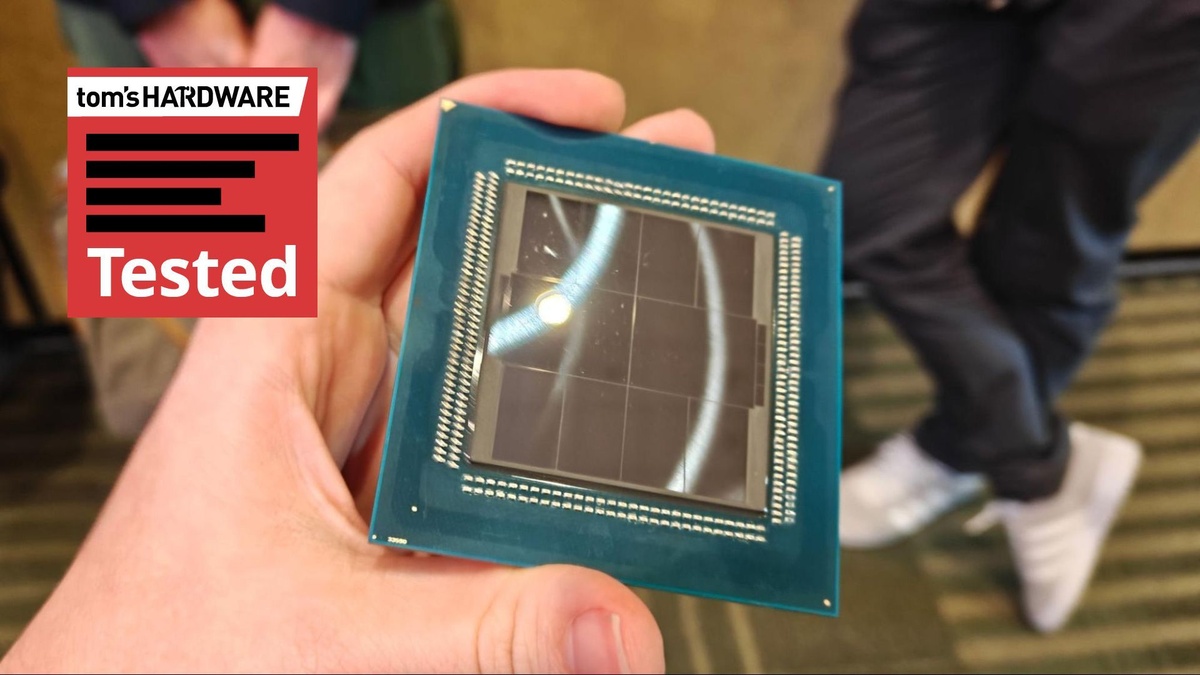
The race to power autonomous enterprise reasoning has triggered fierce marketing skirmishes across datacenter silicon, with the launch of AMD Zen 6 agentic AI EPYC Venice processors igniting a direct clash against Nvidia Vera and Arm Neoverse compute engines.
Speaking with media analysts at Tom’s Hardware, AMD chief Zen architect Mike Clark and corporate vice president Madhu Rangarajan pushed back forcefully against industry rivals claiming to have manufactured purpose-built silicon for autonomous agentic software loops.
| Architectural Metric | AMD EPYC Venice (Zen 6) | Nvidia Vera (Grace Next) | Arm Neoverse AGI | Datacenter Impact |
|---|---|---|---|---|
| Core Topology & Sockets | Up to 256 Cores / 512 Threads (Zen 6c) | 72 to 144 Custom Arm Neoverse Cores | Up to 128 Custom v9.2-A Cores | High Concurrency Tool Sandboxing |
| Manufacturing Process Node | TSMC 3nm Compute / Enhanced IOD | TSMC Custom 3N / 4N Node Variant | TSMC 3nm / Intel 18A Multi-Foundry | Transistor Density & Thermal Scaling |
| Memory Architecture | 12-Channel DDR5 & LPDDR5X (Verano) | Integrated High-Bandwidth LPDDR5X | Configurable HBM3e / DDR5 Matrix | Context Window Retrieval Latency |
| Architectural Philosophy | Diverse Multi-SKU Portfolio Strategy | Single-SKU Host Node Accelerator | IP Licensing & Custom Foundry Semi | Monolithic vs Heterogeneous Deployments |
| Lead Time Reality | 4-Year Silicon Engineering Cycle | Multi-Year Roadmap Rebranded Post-Hoc | Long-Term General Compute Roadmap | Debunking Retrospective Agent Branding |
| Host Node Positioning | EPYC 9686F (Frequency) & 9996 (Throughput) | Vera Standalone Host for Blackwell/Rubin | Autonomous Infrastructure Host Nodes | Direct Socket-Level Datacenter Rivalry |
Table of Contents
1. Silicon Lead Times: Mike Clark Debunks Instant Hardware Claims
Modern semiconductor development follows rigid multi-year timelines dictated by tape-out schedules and physical photolithography constraints. In addressing the AMD Zen 6 agentic AI rollout, AMD executives emphasized that enterprise CPU design cycles inherently require four to five years from initial microarchitecture drafting to production silicon.
Madhu Rangarajan bluntly dismissed marketing suggestions that competing silicon was designed specifically around recent software trends. He noted that the industry did not magically forecast the sudden emergence of autonomous software workflows four years ago when engineering teams commenced physical floorplanning.
Legendary silicon designer Mike Clark, who created the original Zen foundation alongside modern iterations, echoed this pragmatic reality. Clark confirmed that AMD Zen 6 agentic AI engineering began long before autonomous loop frameworks dominated technological headlines or venture capital financing presentations.
Rather than retroactively inventing fictitious design intentions, Clark explained that AMD always recognized general-purpose host processors would maintain an irreplaceable position in artificial intelligence. Software ecosystems inevitably require high-performance serial execution to orchestrate underlying tensor math clusters and model checkpoints.
This transparency provides refreshing clarity within an enterprise silicon ecosystem frequently saturated by exaggerated vendor claims. The AMD Zen 6 agentic AI microarchitecture succeeds because robust general-purpose execution scales effortlessly across emerging workloads without requiring synthetic marketing narratives to justify datacenter deployment.
Hardware engineers understand that claiming silicon was purpose-built for an eighteen-month-old software pattern violates basic physics and fabrication lead times. AMD grounded its EPYC Venice launch on genuine architectural merits rather than retrospective product repositioning.
2. Marketing Spin Versus Physical Engineering: Dissecting Nvidia Vera and Arm AGI
The public controversy erupted after promotional campaigns from Nvidia and Arm asserted their server silicon was tailor-made for autonomous agents. While examining Nvidia Vera marketing, analysts encountered official assertions labeling the processor purpose-built for enterprise agentic software stacks.
Similarly, Arm heavily marketed its upcoming compute designs as silicon engineered specifically for the demands of autonomous software agents. Both vendors sought to capitalize on surging enterprise interest, attempting to reposition standard server microarchitectures under fashionable artificial intelligence nomenclature.
AMD leadership recognized that these claims represented brand messaging rather than silicon-level differentiation against AMD Zen 6 agentic AI server processors. Datacenter architects evaluating real hardware purchase orders prioritize sustainable IPC gains, memory bandwidth, and virtualization security over catchy marketing terminology.
Much like historical transitions documented during previous hardware evolutions, including our coverage of the Nvidia legacy platform sunset, semiconductor marketing frequently outpaces practical engineering boundaries. Vendors routinely rebrand versatile host processors to align with contemporary buzzwords.
The reality is that both Nvidia Vera and Arm compute engines are high-performance general-purpose processors executing conventional instructions. The AMD Zen 6 agentic AI family directly challenges their performance without disguising traditional x86 server computing behind artificial intelligence marketing labels.
By challenging rival narratives directly, AMD highlighted the fundamental engineering discipline that separates actual hardware innovation from promotional rhetoric. Enterprise buyers require measurable throughput improvements rather than semantic reclassifications of existing processor designs.
3. Workload Diversity: Why Function Calling Demands AMD Zen 6 agentic AI Flexibility
Central to AMD’s counterargument is the technical anatomy defining autonomous software execution. The AMD Zen 6 agentic AI portfolio is engineered around the insight that agentic execution does not represent a single predictable workload, but rather a chaotic mosaic of heterogeneous computing tasks.
When an autonomous agent runs, the underlying large language model generates structured function calls that invoke external system utilities. These routine actions include database lookups, vector graph searches, web content parsing, code synthesis, and continuous execution sandboxes across isolated containers.
Because these diverse runtime operations exercise contrasting execution units, the AMD Zen 6 agentic AI strategy relies on SKU variety rather than a rigid single-chip compromise. Code compilation requires high clock speeds, while multi-tenant hosting demands massive core density and memory channels.
Similar to architectural tradeoffs observed in consumer silicon like the AMD Ryzen 7 9800X3D gaming architecture, enterprise server processors must balance cache allocation and thermal thresholds. A monolithic processor design cannot optimally satisfy every computational constraint simultaneously.
Rangarajan explained that an autonomous workflow exercises everything from Python runtimes to Rust binaries inside virtual machines. Consequently, deploying AMD Zen 6 agentic AI platforms ensures datacenter operators can match specific server nodes directly to their operational software profiles.
This flexible hardware philosophy dismantles the notion of a universal agentic processor. By acknowledging software diversity, AMD delivers tailored execution engines capable of accelerating whatever discrete tools an autonomous system chooses to execute.
4. Architectural Faceoff: EPYC Venice 9996 and 9686F Against Nvidia Vera
Independent performance evaluations validate AMD’s diversified hardware strategy across real datacenter environments. Comprehensive testing conducted by Tom’s Hardware Zen 6 deep dive reveals how AMD Zen 6 agentic AI silicon outperforms rival single-SKU server architectures across diverse server benchmarks.
The dense EPYC 9996 flagship features 256 physical Zen 6c cores and 512 execution threads within a single socket. This unmatched thread density provides unrivaled throughput for hosting hundreds of simultaneous sandboxed agent execution runtimes without suffering thread starvation.
Conversely, for latency-sensitive coordinator agents requiring rapid dispatch, the frequency-optimized EPYC 9686F delivers blistering single-core performance. In direct benchmarking comparisons, this high-clocked AMD Zen 6 agentic AI processor successfully outclasses Nvidia Vera when operating as an autonomous artificial intelligence host node.
| Hardware Specification | AMD EPYC 9996 (Venice) | AMD EPYC 9686F (Venice) | Nvidia Vera (Grace Successor) | Arm Neoverse CSS AGI |
|---|---|---|---|---|
| Physical Core Count | 256 Zen 6c Cores | 96 Full Zen 6 Cores | 72 or 144 Custom Cores | Up to 128 Cores |
| Simultaneous Multithreading | 512 Threads (2T / Core) | 192 Threads (2T / Core) | 1T per Core (SMT Disabled) | Configurable SMT / 1T |
| Target Workload Profile | High-Density Sandboxing | Low-Latency Tool Dispatch | Unified Tensor Host Node | Custom Hyperscaler Infrastructure |
| L3 Cache Allocation | 512 MB High-Speed L3 | 384 MB High-Speed L3 | Integrated System Cache | Scalable Mesh System Cache |
| Memory Channel Support | 12-Channel DDR5-6400 | 12-Channel DDR5-6400 | Integrated LPDDR5X Subsystem | DDR5 / LPDDR5X Configurable |
| PCIe Gen 6 Lanes | 128 Lanes CXL 3.0 Ready | 128 Lanes CXL 3.0 Ready | Proprietary NVLink + PCIe 6 | PCIe Gen 6 / CXL 3.0 Ready |
The benchmark results confirm that memory subsystem bandwidth remains critical during high-concurrency tool execution. By incorporating twelve DDR5 memory channels, AMD EPYC Venice server sockets maintain massive data transfer rates when multiple autonomous subagents query shared local knowledge bases.
Nvidia Vera relies on integrated LPDDR5X memory to provide low-power host capabilities beside Blackwell tensor accelerator racks. However, AMD’s modular socket architecture grants enterprise operators greater flexibility to configure memory capacity to accommodate massive context windows.
This structural disparity underscores why enterprise customers increasingly adopt AMD Zen 6 agentic AI hardware for complex multi-agent frameworks. Having the choice between dense container hosting and high-frequency dispatch allows datacenter engineers to eliminate processing bottlenecks across their software infrastructure.
5. Datacenter Roadmaps: Venice-X 3D V-Cache, Verano LPDDR5X and Helion Rack Scaling
Looking toward upcoming datacenter deployments, AMD is expanding its silicon offensive with specialized Venice variants. Next year, the AMD Zen 6 agentic AI lineup will introduce Venice-X, leveraging second-generation 3D V-Cache packaging to dramatically expand on-die memory capacity for database queries.
For operators prioritizing host-node memory bandwidth comparable to Nvidia Vera, AMD is also preparing Verano. This specialized platform integrates power-efficient LPDDR5X memory directly onto the carrier package, confronting Nvidia on its own hardware terms.
Furthermore, AMD recently unveiled its Helion reference rack architecture designed specifically for massive enterprise server clusters. Capable of interconnecting up to 32,768 AMD Zen 6 agentic AI cores, Helion provides hyperscalers with a complete turnkey blueprint for warehouse-scale agent deployments.
This ambitious roadmap illustrates how architectural foresight outshines hasty marketing pivots during fundamental industry transitions. AMD anticipated that datacenter complexity would surge, systematically building an adaptable silicon platform capable of absorbing whatever workloads emerged in future years.
Enterprise customers evaluating their multi-year datacenter investments recognize that Zen 6 EPYC Venice infrastructure provides long-term stability. Rather than locking into proprietary single-vendor stacks, operators retain full x86 software compatibility while extracting class-leading performance per watt.
As software frameworks continue evolving beyond basic conversational chat toward proactive autonomous agents, AMD stands exceptionally well-positioned. Venice demonstrates that sound engineering fundamentals remain the most reliable foundation for revolutionary computing eras.
Frequently Asked Questions
Why did AMD architects push back against Nvidia and Arm agentic CPU claims?
AMD executives noted semiconductor development cycles require four years, making it impossible for current silicon to be purpose-built for recently emerged AMD Zen 6 agentic AI software frameworks.
What did Mike Clark and Madhu Rangarajan say about agentic computing?
They admitted nobody forecasted the agentic wave four years ago, but emphasized AMD Zen 6 agentic AI processors succeed because agentic workloads require diverse, general-purpose computing capabilities across datacenters.
How does AMD EPYC Venice compete against Nvidia Vera in AI host workloads?
Testing shows the frequency-optimized EPYC 9686F outclasses Vera in host responsiveness, while the 256-core EPYC 9996 offers superior concurrent container capacity for AMD Zen 6 agentic AI deployments.
What upcoming Zen 6 processor variants will AMD release for enterprise AI?
AMD will launch Venice-X with 3D V-Cache for database acceleration and Verano with LPDDR5X memory, expanding AMD Zen 6 agentic AI flexibility against single-SKU competitor platforms.
What is the AMD Helion reference architecture for agentic server racks?
AMD Helion is an enterprise server blueprint interconnecting up to 32,768 AMD Zen 6 agentic AI cores, enabling hyperscalers to deploy high-density autonomous agent clusters efficiently.
Final Verdict: Architectural Realism in the Datacenter Era
The candid admissions from Mike Clark and Madhu Rangarajan offer a vital dose of reality to an industry often intoxicated by artificial intelligence hyperbole. The arrival of AMD Zen 6 agentic AI hardware proves that enduring engineering discipline delivers better outcomes than hasty marketing rebranding.
By designing a modular portfolio spanning high-frequency compute, massive thread density, and upcoming 3D cache variants, AMD addresses the authentic computational demands of autonomous software agents without resorting to exaggerated retrospective claims.
As enterprise organizations scale their autonomous software architectures into production environments, datacenter managers will value tangible performance over promotional buzzwords. The AMD Zen 6 agentic AI microarchitecture provides the compute versatility and proven reliability modern enterprises genuinely need.
