


Table of Contents
In a defining move for next-generation computing, the AMD World Labs acquisition has officially closed, uniting cutting-edge spatial intelligence research with high-performance datacenter semiconductor engineering.
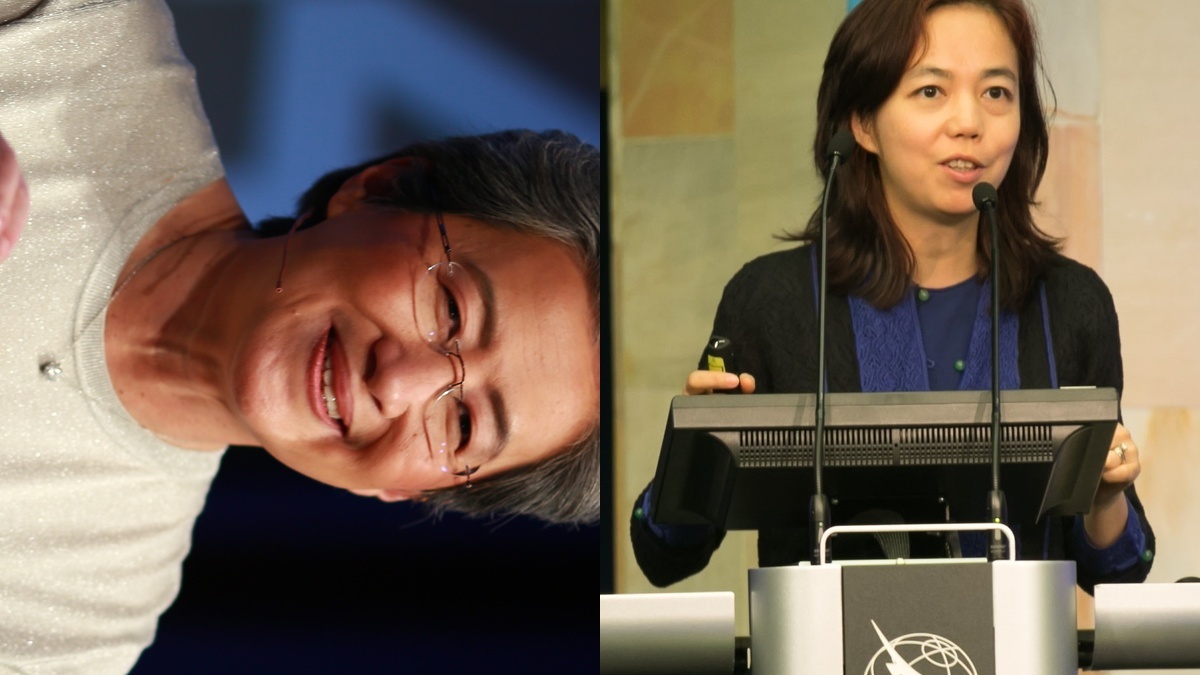
Announced via the official AMD Newsroom, the finalized transaction establishes world-renowned computer vision pioneer Dr. Fei-Fei Li as Executive Vice President and Chief Scientist at Team Red.
| Strategic Dimension | World Labs Foundation | AMD Hardware Platform | Unified Ecosystem Impact |
|---|---|---|---|
| Core Competency | Spatial Intelligence & World Models | High-Performance Heterogeneous Silicon | Full-Stack 3D Simulation Infrastructure |
| Leadership Integration | Dr. Fei-Fei Li & Model Research Team | Dr. Lisa Su & Semiconductor Engineering | Joint Hardware-Model Co-Optimization |
| Flagship Technologies | Marble, Atlas & Spark 3DGS Engines | Instinct MI300/MI325/MI350 Accelerators | Native 3D World Generation on Open Silicon |
| Software Framework | World API & Real-to-Sim Toolkits | ROCm Open AI Software Platform | Turnkey Spatial Model Deployment Pipeline |
| Primary Workloads | Interactive 3D, Robotics Simulation | Hyperscale Cloud & Enterprise Datacenters | Autonomous Systems & Spatial Virtual Worlds |
Foundational Model Strategy: Dr. Fei-Fei Li Joins AMD to Spearhead Spatial Intelligence
The successful completion of the AMD World Labs acquisition marks a pivotal turning point in how leading chipmakers structure their foundational artificial intelligence investments.
Dr. Fei-Fei Li, widely celebrated as one of the foundational minds behind modern deep learning, now reports directly to AMD Chair and Chief Executive Officer Dr. Lisa Su.
Rather than treating model development and silicon fabrication as disconnected layers, the AMD World Labs acquisition enables both disciplines to iterate collaboratively from initial architectural schematics.
World Labs brings a multidisciplinary team of elite research scientists, including renowned co-founders Justin Johnson, Ben Mildenhall, and Christoph Lassner, into AMD’s expanding software development organization.

According to research publications hosted on the official World Labs platform, bridging spatial reasoning with purpose-built silicon represents the definitive path toward superintelligence.
By establishing this elite model research unit, the AMD World Labs acquisition ensures AMD directly steers the foundational algorithms shaping tomorrow’s enterprise computing infrastructure.
Beyond Flat Pixels: Deconstructing Large World Models, Marble and the Atlas Engine
To understand the technical motivation behind the AMD World Labs acquisition, one must examine the critical limitations confronting conventional generative models across contemporary industry deployments.
While large language models excel at sequential text synthesis, they lack fundamental spatial reasoning, physical intuition, and an innate understanding of persistent three-dimensional geometry.
World Labs solved this barrier by engineering Large World Models such as Marble and Atlas, treating three-dimensional geometry as a universal interface for spatial computing.

Instead of merely hallucinating flat video pixels, the technologies integrated through the AMD World Labs acquisition output navigable 3D Gaussian Splats, volumetric depth maps, and persistent interactive scenes.
Much like how gaming processors analyzed in our AMD Ryzen 7 9800X3D gaming processor breakdown maintain flawless frametime pacing, spatial world models demand real-time computational consistency across every coordinate.
With the AMD World Labs acquisition finalized, developers gain access to unified spatial engines capable of simulating realistic physical behaviors without catastrophic geometric degradation.
Hardware-Software Co-Design: Accelerating Spatial 3D Workloads on Instinct MI350 Silicon
Executing frontier spatial foundation models demands immense computational throughput, underscoring why the AMD World Labs acquisition directly impacts AMD’s Instinct datacenter accelerator roadmap.
Generating persistent three-dimensional worlds in real time requires rapid tensor operations combined with vast memory bandwidth to sustain dense coordinate transformations and volumetric radiance fields.
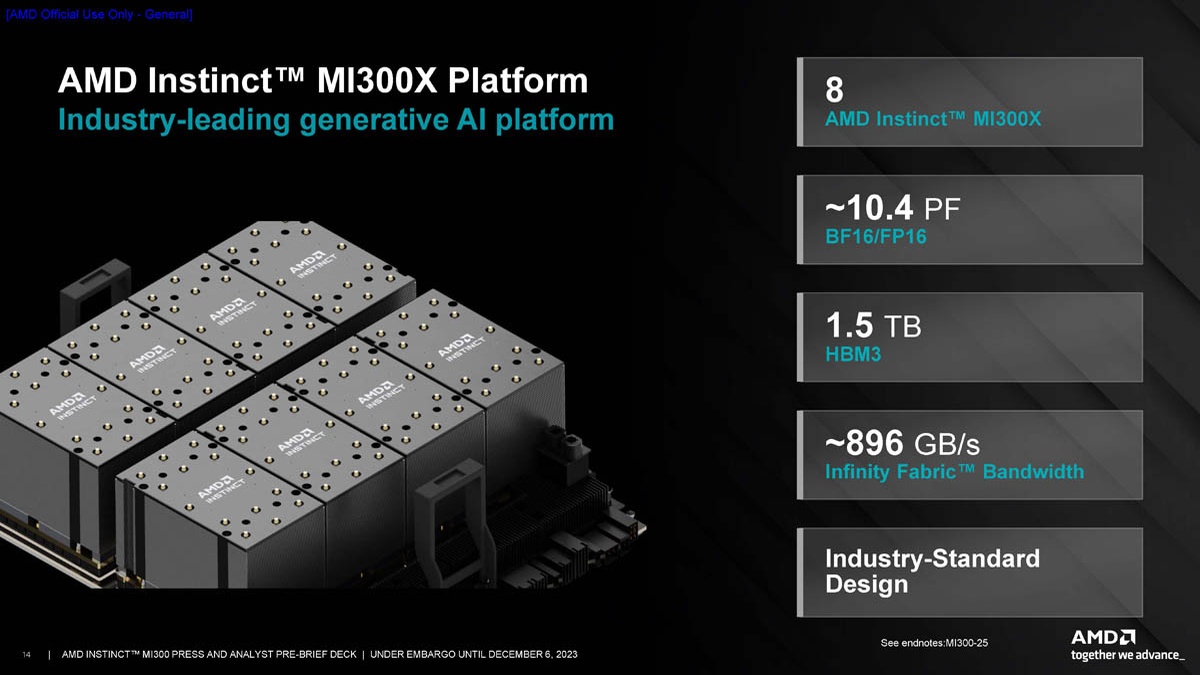
AMD Instinct MI300X and next-generation MI350 series accelerators provide the industry’s most generous high-bandwidth memory capacities, ensuring the AMD World Labs acquisition directly empowers memory-intensive spatial world simulations.
This hardware synergy mirrors system-level memory consolidation explored in our review of the Apple M4 Mac mini desktop hardware architecture, where shared unified memory eliminates communication overhead.
Engineers from World Labs will collaborate directly with AMD silicon designers to tune future CDNA graphics architectures for native spatial tensor operations and neural rendering pipelines.
Consequently, the AMD World Labs acquisition guarantees that future Instinct accelerators arrive pre-optimized for complex spatial intelligence workloads straight out of the fabrication foundry.
Open Ecosystem Infrastructure: Scaling Real-to-Sim Robotics Workflows Across ROCm
Beyond digital graphics and virtual worlds, the AMD World Labs acquisition unlocks massive commercial opportunities across autonomous robotics and industrial physical simulation.
Training robotic policies requires safe, scalable virtual environments where physical agents can practice manipulation tasks millions of times prior to physical real-world deployment.
Prior to the AMD World Labs acquisition, World Labs pioneered real-to-sim-to-real pipelines, converting raw smartphone video into physically grounded simulation environments where autonomous systems develop dexterous manipulation skills.
| Workload Characteristic | Traditional Large Language Models | Spatial Intelligence & World Models | AMD Silicon Architectural Alignment |
|---|---|---|---|
| Primary Data Modality | Sequential 1D Text & Token Streams | Volumetric 3D Gaussians, Meshes & Latents | Massive High-Bandwidth Interconnect Fabric |
| Computational Bottleneck | Memory Bandwidth During Token Generation | Spatial Matrix Math & Ray-Traced Physics | CDNA Compute Units & Dense Matrix Engines |
| Memory Capacity Demand | High VRAM for KV-Cache Retention | Extreme VRAM for Persistent 3D Geometries | Up to 288GB HBM3e Memory Pools |
| Simulation Fidelity | Static Factual & Semantic Reasoning | Dynamic Object Permanence & Real Physics | Heterogeneous CPU-GPU Shared Virtual Memory |
| Target Application | Chatbots, Enterprise Search & Code Gen | Robotics Policies, Gaming & Virtual Worlds | Enterprise Hyperscalers & Open AI Labs |
As legacy operating environments evolve, highlighted by transitions seen when Nvidia ends Windows 10 support for PC gamers, enterprise platforms demand resilient, forward-looking software ecosystems.
AMD plans to integrate these robotics simulation workflows into the open-source ROCm software stack, democratizing advanced physical training pipelines for enterprise robotics developers globally.
Through the AMD World Labs acquisition, industrial manufacturers gain a turn-key simulation framework running on open hardware without paying exorbitant proprietary cloud subscription fees.
Semiconductor Industry Impact: AMD Expands Full-Stack Enterprise AI to Challenge Nvidia
In the broader semiconductor landscape, the AMD World Labs acquisition positions Team Red as a formidable end-to-end contender against Nvidia’s dominant enterprise ecosystem.
While Nvidia relies heavily on proprietary CUDA libraries and Omniverse simulation suites, AMD champions an open-source ethos that appeals to hyperscalers and independent research institutions.
Much like how flexible infrastructure reshapes consumer access in Xbox Cloud Gaming subscription pricing models, open datacenter stacks provide enterprises with critical architectural agility.
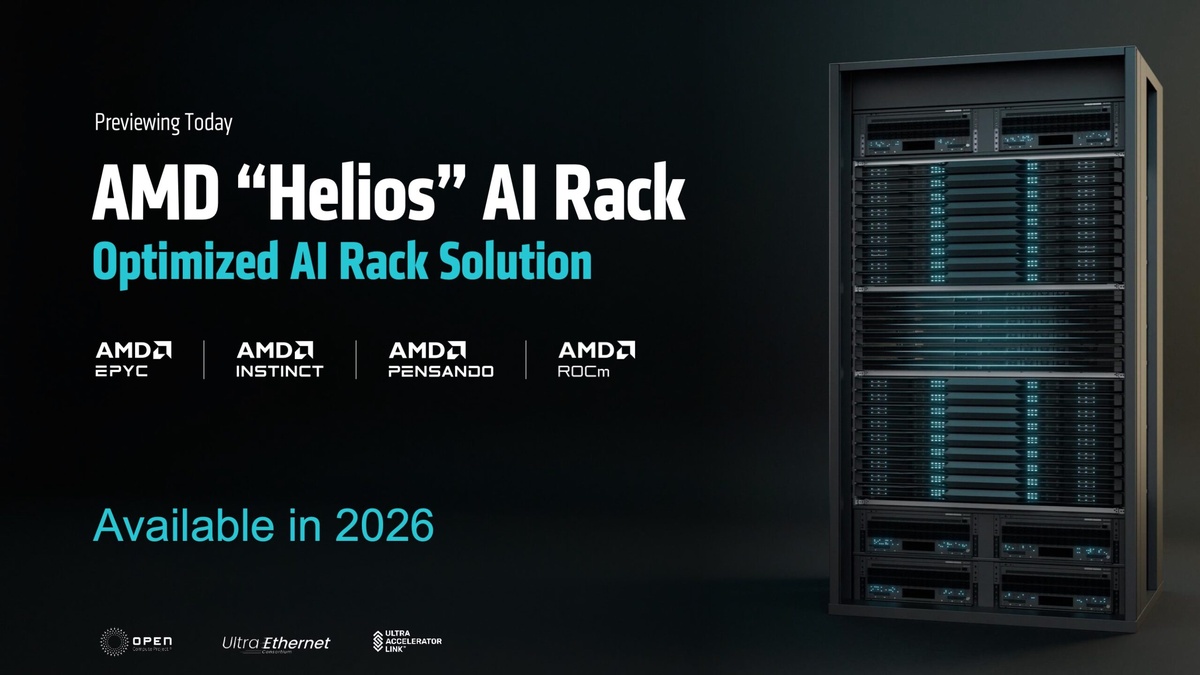
Leveraging the AMD World Labs acquisition, Team Red combines EPYC server microprocessors and Instinct accelerators with world modeling algorithms, delivering an integrated stack capable of end-to-end generative spatial computing.
Industry analysts expect this integrated strategy to accelerate enterprise adoption of ROCm, drawing cutting-edge computer vision researchers directly into AMD’s expanding software tent.
The transformative potential of the AMD World Labs acquisition ultimately redefines AMD from a pure hardware supplier into an architectural leader of the spatial artificial intelligence era.
Frequently Asked Questions
What was the motivation behind the AMD World Labs acquisition?
AMD acquired World Labs to expand its full-stack AI capabilities, pairing high-performance Instinct silicon with world-class foundational research in 3D spatial intelligence and robotic simulation.
What role will Dr. Fei-Fei Li hold at AMD?
Dr. Fei-Fei Li joins AMD as Executive Vice President and Chief Scientist, reporting directly to AMD Chair and CEO Dr. Lisa Su to guide AI strategy and hardware-model co-design.
What are Large World Models and spatial intelligence?
Unlike language models that generate text, world models generate interactive, physics-consistent 3D environments, enabling AI to reason about geometry, mass, depth, and physical object interactions.
How does World Labs technology integrate with AMD Instinct GPUs?
World Labs’ algorithms will be optimized natively for AMD Instinct accelerators and the open-source ROCm software stack, leveraging vast HBM memory pools for real-time 3D simulation.
What industries benefit most from this acquisition?
Autonomous robotics, industrial digital twins, interactive gaming, virtual production, and enterprise physical simulation benefit from scalable real-to-sim pipelines on open hardware.
Final Verdict: A Landmark Acquisition Uniting Silicon Architecture and Spatial AI
The finalized AMD World Labs acquisition establishes a historic bridge between cutting-edge foundational model research and enterprise datacenter semiconductor design.
By welcoming Dr. Fei-Fei Li alongside the brilliant World Labs team, AMD secures the intellectual property and algorithmic expertise required to pioneer three-dimensional spatial intelligence.
As generative technology transitions from static text generation into immersive physical simulation, the AMD World Labs acquisition cements AMD’s position at the vanguard of the modern AI revolution.
