


Table of Contents
Video game endings rarely achieve timeless resonance, yet the Zelda Ocarina of Time Credits remain an undisputed high-water mark for interactive narrative design. Decades after its debut on Nintendo 64, this masterclass in visual pacing continues to captivate players worldwide.
Revisiting the sequence ahead of modern hardware revisions demonstrates how Zelda Ocarina of Time Credits transcend conventional post-game staff rolls. Through delicate tonal balance and evocative cinematography, Nintendo crafted a poignant farewell that echoes across generations of gaming history.
| Cinematic Sequence Phase | Narrative Focus & Characters | Musical Motif (Koji Kondo) | Emotional Tone & Thematic Purpose |
|---|---|---|---|
| Phase 1: Panoramic Restoration | Hyrule Field, Lake Hylia, Gerudo Valley, Death Mountain | Zelda’s Lullaby (Woodwinds & Orchestral Flutes) | Serene relief; validates player sacrifice by showing healed environments |
| Phase 2: Lon Lon Ranch Festival | Malon, Ingo, Talon, Kokiri, Gorons, Zoras, Running Man | Lon Lon Ranch & Lost Woods Medley (Upbeat Accordion) | Jubilant unity; celebrates community harmony across former tribal divides |
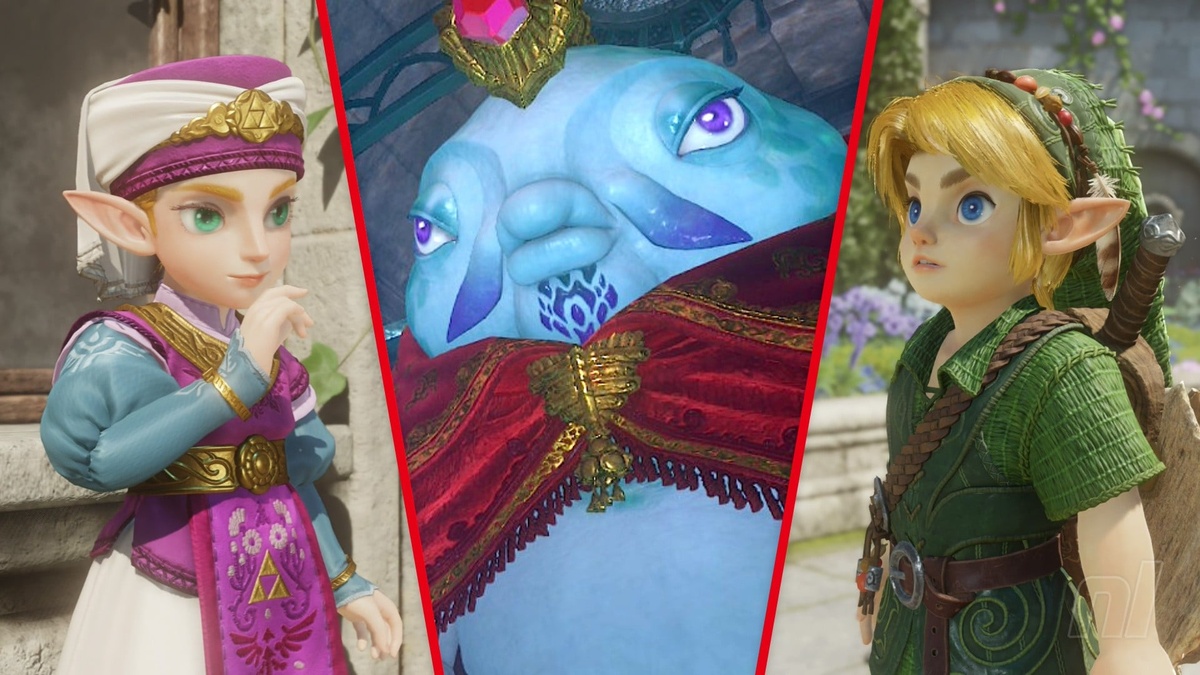
| Phase 3: The Price of Freedom | Mido (mourning Saria) and King Zora (mourning Ruto) | Subdued Melancholy transitioning to Sage Chamber Chimes | Bittersweet tragedy; highlights personal sacrifice underlying victory |
| Phase 4: Celestial Guardianship | The Six Awakened Sages atop Death Mountain summit | Main Zelda Theme & Spiritual Harmonics | Transcendental hope; confirms departed heroes watch over kingdom |
| Phase 5: The Eternal Farewell | Master Sword in Pedestal, Young Link and Young Zelda | Ocarina of Time Theme & Piano Resolution | Nostalgic permanence; closes time loop and restores lost innocence |
Bittersweet Epilogue Architecture: How Zelda Ocarina of Time Credits Anchor Narrative Closure
The journey through Hyrule concludes abruptly following the climactic collapse of Ganon’s Tower. Princess Zelda uses the Ocarina to restore Link’s lost youth, abruptly transitioning into the Zelda Ocarina of Time Credits before players can fully process the victory.
According to retrospective commentary highlighted by Nintendo Life editorial coverage, this immediate cut prevents lingering sentimentality. Instead, the sequence immediately pivots into sweeping panoramic vistas of a restored and tranquil kingdom.
The camera glides across Lake Hylia, Gerudo Valley, and Kokiri Forest, accompanied by gentle woodwind arrangements. These sweeping establishing shots allow players to appreciate the tranquil environments they spent dozens of hours liberating from Ganondorf’s malevolent curse.
Cinematic staging in 1998 faced immense polygon limits on sixty-four-bit silicon, requiring disciplined framing. Much like how modern chips optimize compute budgets—as explored in our breakdown of AMD Ryzen 7 9800X3D gaming processor specs—Nintendo maximized every frame to evoke profound immersion.
Each scenic transition reinforces the peaceful reality Link fought desperately to establish. Watching the sun rise over Hyrule Field provides genuine catharsis, proving that Zelda Ocarina of Time Credits prioritize atmospheric tranquility over triumphant fanfare.
This measured pacing invites players to reflect on their extended adventure across dual timelines. By showcasing the enduring beauty of Hyrule without dialogue, the game communicates peaceful restoration through purely visual and auditory storytelling.
Lon Lon Ranch Celebration: Community Contrast and Joyous Worldbuilding
A gentle fade to black transitions seamlessly into the energetic rhythms of Lon Lon Ranch. Here, Zelda Ocarina of Time Credits explode into unbridled joy as diverse non-player characters gather around a roaring central bonfire to celebrate liberation.
Gorons lock arms with Zoras while the Kokiri dance energetically alongside traveling merchants and castle guards. Seeing former rivals and isolated tribes dancing together under the night sky demonstrates true societal unity across a previously fractured realm.
Humorous character interactions inject warmth into the proceedings. Talon snoozes peacefully against wooden fences, while the energetic Running Man sprints across the pasture and the windmill musician joyfully plays his phonograph amidst cheering townspeople.
This communal assembly feels earned because players personally resolved the individual crises troubling each attendee. Experiencing this lively reunion provides tangible gratification, elevating Zelda Ocarina of Time Credits into a celebration of communal perseverance and shared triumph.
The choreography displays remarkable technical charm, coordinating dozens of character models simultaneously within hardware constraints. The infectious rhythm of the ranch melody transforms a solitary quest into a shared victory cherished by every citizen of Hyrule.
By contrasting previous danger with joyous communal harmony, Zelda Ocarina of Time Credits underscore the living soul of the world. Players witness firsthand how their harrowing sacrifices directly enabled these joyful, carefree lives to flourish once again.
The Loneliness of Mido and King Zora: Emotional Sacrifice in Zelda Ocarina of Time Credits
Just as the campfire festivities reach peak ecstasy, the camera quietly pulls away into shadowy outskirts. There, sitting isolated near a wooden fence, sit Mido and King Zora, completely disengaged from the raucous party.
Neither character shares in the universal revelry because both bear the profound agony of personal loss. Mido mourns Saria’s departure into the Sacred Realm, while King Zora grieves the eternal ascension of his cherished daughter, Princess Ruto.
This devastating juxtaposition forms the emotional core of Zelda Ocarina of Time Credits. Nintendo boldly acknowledges that heroic victory carries permanent scars, refusing to present an overly sanitized ending devoid of realistic emotional consequences.
As the two sorrowful figures slump forward, sparkling medallion-colored lights suddenly illuminate the twilight sky. Mido stands up, gazing toward the summit of Death Mountain where the spirits of the six awakened Sages appear, watching over Hyrule.
The Sages smile serenely down upon the land, signaling that while their physical presence has departed, their spiritual guardianship endures. This tender revelation transforms grief into enduring solace, providing Mido and King Zora the quiet comfort necessary to move forward.
Analyzing the narrative nuance of Zelda Ocarina of Time Credits reveals storytelling maturity rarely matched by contemporary blockbusters. Balancing tragedy with celestial hope ensures the emotional resolution resonates deeply within the player’s memory long after completion.
Koji Kondo’s Dynamic Score: Orchestral Motifs Across the Hyrule Tapestry
No analysis of the ending is complete without examining Koji Kondo’s peerless musical orchestration. The sonic architecture of Zelda Ocarina of Time Credits weaves diverse leitmotifs into an expansive eleven-minute symphonic journey that anchors every scene.
The overture commences with a lush rendition of Zelda’s Lullaby, emphasizing sweeping flute melodies and soothing harp flourishes. These gentle acoustic textures evoke deep nostalgia, allowing listeners to decompress following grueling boss battles against dark sorcery.
As the visual framing shifts toward Lon Lon Ranch, the score dynamically transitions into a spirited country hoe-down. Kondo blends buoyant accordions with lively string plucks, mirroring the rhythmic movements of celebratory characters with impeccable comedic timing.
When sadness encroaches with Mido and King Zora, the instrumentation dissolves into ethereal chimes and haunting piano arpeggios. This seamless tonal versatility demonstrates why Kondo’s compositions remain immortal standards analyzed by musicologists and game audio engineers alike.
Sophisticated audio staging requires meticulous hardware balance, similar to modern architectural advances examined in our overview of Apple M4 Mac mini neural hardware. Kondo coaxed breathtaking orchestral depth from modest sound chips.
The composition culminates in a stirring performance of the iconic Zelda main theme, soaring with triumphant brass before softening. This sonic crescendo ensures Zelda Ocarina of Time Credits leave an indelible acoustic imprint that defined an entire era of gaming.
Generational Ending Evolution: Nintendo Cinematic Finales Across Eras
Evaluating the historical standing of Zelda Ocarina of Time Credits requires comparing the sequence against other landmark Nintendo finales. From Super Mario 64 to modern sandbox spectacles, Nintendo has frequently experimented with ending presentation styles across multiple hardware generations.
Super Mario 64 pioneered three-dimensional staff rolls with a charming photographic tour narrated by Peach. However, its lighthearted presentation lacked the profound narrative stakes and bittersweet thematic undertones perfected within Ocarina of Time’s expansive cinematic tapestry.
| Nintendo Title & Era | Ending Presentation Style | Musical Integration | Emotional Resonance & Resolution Score |
|---|---|---|---|
| Ocarina of Time (N64, 1998) | Real-time scripted 3D cinematics across dual timelines | Dynamic 11-minute regional orchestral medley | 100/100 (Unmatched bittersweet balance & character closure) |
| Super Mario 64 (N64, 1996) | Charming 3D photo tour of castle grounds with Peach | Celebratory big-band fanfare and piano credits | 88/100 (Delightful celebration, lighthearted tone) |
| Majora’s Mask (N64, 2000) | Carnival day celebration and bittersweet wedding rites | Eerie carnival music and Deku Butler mourning motif | 96/100 (Profoundly dark, highly emotional character vignettes) |
| The Wind Waker (GameCube, 2002) | Cell-shaded voyage setting sail into unknown seas | Celtic-inspired maritime jigs and Irish whistle | 94/100 (Optimistic adventure, farewell to ancient Hyrule) |
| Breath of the Wild (Switch, 2017) | Minimalist cutscene in silent Hyrule Field with Zelda | Delicate piano accents and muted wind motifs | 86/100 (Atmospheric but sparse; relies on previous memories) |
| Tears of the Kingdom (Switch, 2023) | Freefall dive catching Zelda, Temple of Time vow | Triumphant symphonic brass and choral crescendo | 92/100 (Epic cinematic spectacle, strong emotional climax) |
Majora’s Mask embraced carnival theatricality and eerie surrealism, while The Wind Waker delivered poignant underwater finality beneath flooded Hyrule. Yet neither achieved the universal emotional equilibrium displayed throughout Zelda Ocarina of Time Credits during its sweeping transitions.
Modern open-air masterpieces like Breath of the Wild and Tears of the Kingdom chose minimalist, player-directed epilogues. While visually spectacular, their endings distributed emotional payoff across scattered memory cutscenes rather than delivering a unified cinematic crescendo.
The structured comparison table below illustrates how narrative density, musical continuity, and emotional payoff diverge across major console eras. These stylistic differences illuminate why classic structured cinematics maintain unique artistic advantages over modern procedural sequences.
Examining these evolutionary milestones reinforces why Zelda Ocarina of Time Credits represent the apex of structured cinematic epilogues. By tying character arcs directly to environmental restoration, Nintendo achieved narrative perfection that subsequent generations struggled to replicate.
Preserving the N64 Masterpiece: Visual Fidelity and Switch 2 Enhancements
Experiencing Zelda Ocarina of Time Credits on next-generation hardware like the Switch 2 reveals new visual subtleties. High-resolution rendering preserves original geometric aesthetics while eliminating muddy hardware fog and aggressive texture dithering inherent to original cartridge silicon.
Character animations render with crisp clarity at native frame rates, highlighting subtle facial expressions previously obscured by composite video cables. Seeing Talon’s satisfied smile or Mido’s downcast shoulders in pristine definition revitalizes emotional nuances for modern audiences.
Lighting algorithms render the Lon Lon Ranch bonfire with realistic volumetric glow, casting gentle dynamic shadows across dancing villagers. This enhanced contrast intensifies Zelda Ocarina of Time Credits visual warmth, amplifying the artistic intent of original Nintendo development teams.
Platform preservation is increasingly crucial for sustaining gaming heritage, echoing discussions regarding cloud infrastructure in our report on Xbox cloud gaming subscription tiers. Faithful remastering ensures historical masterpieces remain accessible across evolving platforms.
Crucially, modern hardware enhancements refrain from adding distracting post-processing bloom or anachronistic visual effects. Preserving authentic camera angles and staging honors the directorial genius of Shigeru Miyamoto, Eiji Aonuma, and Yoshiaki Koizumi.
Viewing Zelda Ocarina of Time Credits in modern high definition confirms that great artistic direction transcends technological boundaries. Even when rendered at four thousand horizontal lines, the emotional resonance of the 1998 choreography remains completely undiminished.
Cultural Legacy and Industry Impact: Why Zelda Ocarina of Time Credits Remain Unmatched
The enduring reverence for Zelda Ocarina of Time Credits reflects a fundamental shift in how interactive mediums approach narrative closure. Prior to 1998, most action-adventure endings consisted of brief congratulatory text banners or looping victory animations.
Nintendo transformed the post-game experience into an essential narrative chapter rather than a passive procedural formality. By investing substantial production value into the epilogue, developers demonstrated that saying goodbye to a game world matters as much as entering it.
Game designers across the industry frequently cite Zelda Ocarina of Time Credits as foundational inspiration for cinematic pacing. Studios creating expansive role-playing epilogues continue emulating its formula of combining communal celebration with quiet, character-driven bittersweet reflection.
Industry retrospectives often emphasize how sound technical foundations allow timeless art to endure, mirroring themes analyzed in our coverage of Nvidia software lifecycle transitions. Robust foundational design outlasts temporary technological trends.
The final iconic freeze frame—focusing on the Master Sword resting serenely in its pedestal—symbolizes peaceful rest after exhausting trial. When young Link steps into the sunlit courtyard to meet young Zelda once more, players realize their heroic sacrifice restored innocence itself.
Ultimately, Zelda Ocarina of Time Credits endure because they treat players with emotional maturity and narrative respect. This peerless sequence remains Nintendo’s crowning artistic achievement, setting a gold standard for video game endings that may never be surpassed.
Frequently Asked Questions
Final Verdict: An Unsurpassed Milestone in Video Game Storytelling
Reevaluating the Zelda Ocarina of Time Credits decades after launch confirms their status as Nintendo’s finest cinematic ending. The sequence masterfully weaves euphoric communal joy with profound personal sacrifice, refusing to compromise narrative complexity for simplistic resolution.
Elevated by Koji Kondo’s legendary dynamic orchestration and exquisite visual choreography, every scene delivers purposeful emotional impact. Whether highlighting the lively dance floor of Lon Lon Ranch or Mido’s quiet mourning, the epilogue honors every bond forged along the journey.
As modern gaming moves toward endless live-service models and fragmented narratives, the value of a definitive, poetic conclusion becomes increasingly precious. The Zelda Ocarina of Time Credits remain a triumphant testament to the narrative power of interactive art, forever etched into cultural history.
