



Video game development at the pinnacle of open-world simulation pushes creative teams through years of grueling iteration, uncompromising technical expectations, and monumental public anticipation that few creative organizations in human history have ever navigated.
Breaking an unprecedented thirteen-year silence, a revealing GTA 6 Dev Interview highlights Rockstar North co-studio head Rob Nelson sharing the raw emotional relief, artistic exhaustion, and profound disbelief experienced across global development teams as their magnum opus finally launches.
| Production Metric & Architecture | Grand Theft Auto 5 (2013) | Grand Theft Auto 6 (2026) | Generational Engineering Leap |
|---|---|---|---|
| Development Timeline | Approx. 5 Years (2008–2013) | Over 10 Years Continuous Iteration | Deepest R&D cycle in gaming history |
| Target Hardware Platform | PlayStation 3 & Xbox 360 (512MB RAM) | PS5, PS5 Pro & Xbox Series X|S (16GB GDDR6) | 32x memory pool with NVMe SSD streaming |
| Day-One Commercial Gross | $800 Million (11.21 Million Units) | $3.8+ Billion (32.5 Million Units) | Largest entertainment launch in history |
| Simulation Engine Baseline | RAGE Generation 3 (Baked Lighting) | RAGE Generation 9 (Full Ray Tracing) | Hardware-accelerated dynamic photonics |
| Pedestrian Machine Learning | Static scripted pathfinding routines | Dynamic neural tree behavioral AI | Context-aware emergent crowd reactions |
The Thirteen-Year Odyssey: Why Development Took Over a Decade
According to primary reporting published by GamesRadar and scrutinized in this GTA 6 Dev Interview, the long road toward Grand Theft Auto 6 tested the endurance of veteran developers who previously delivered legendary interactive landmarks.
Thirteen years separate the debut of Grand Theft Auto 5 from this latest installment, representing the longest developmental gap in the history of the acclaimed franchise and sparking years of widespread internet memes across gaming forums.
Between these flagship milestones, Rockstar poured immense engineering resources into Red Dead Redemption 2, establishing unprecedented standards for environmental density, non-player character behavioral simulation, dynamic lighting, and cinematic narrative cohesion across massive interactive landscapes.
As documented in the GTA 6 Dev Interview, the sheer magnitude of world design required unprecedented pre-production planning, foundational engine refactoring, and iterative prototyping before artists could construct the sprawling metropolitan districts of modern Leonida.
Furthermore, unprecedented data leaks in late 2022 forced studio leadership to audit internal security policies, restructure digital access hierarchies, and protect developer morale while preserving creative momentum during critical mid-production phases.
Through every organizational hurdle, Rockstar maintained absolute secrecy, refusing to rush unfinished builds into the wild until rendering pipelines, complex physics engines, and procedural audio systems operated in complete generational harmony.
This patient commitment to engineering excellence forms the core context of the GTA 6 Dev Interview, illustrating how generational ambition transforms agonizing release delays into groundbreaking interactive achievements for millions of worldwide players.
Inside the GTA 6 Dev Interview: Rob Nelson on Production Disbelief
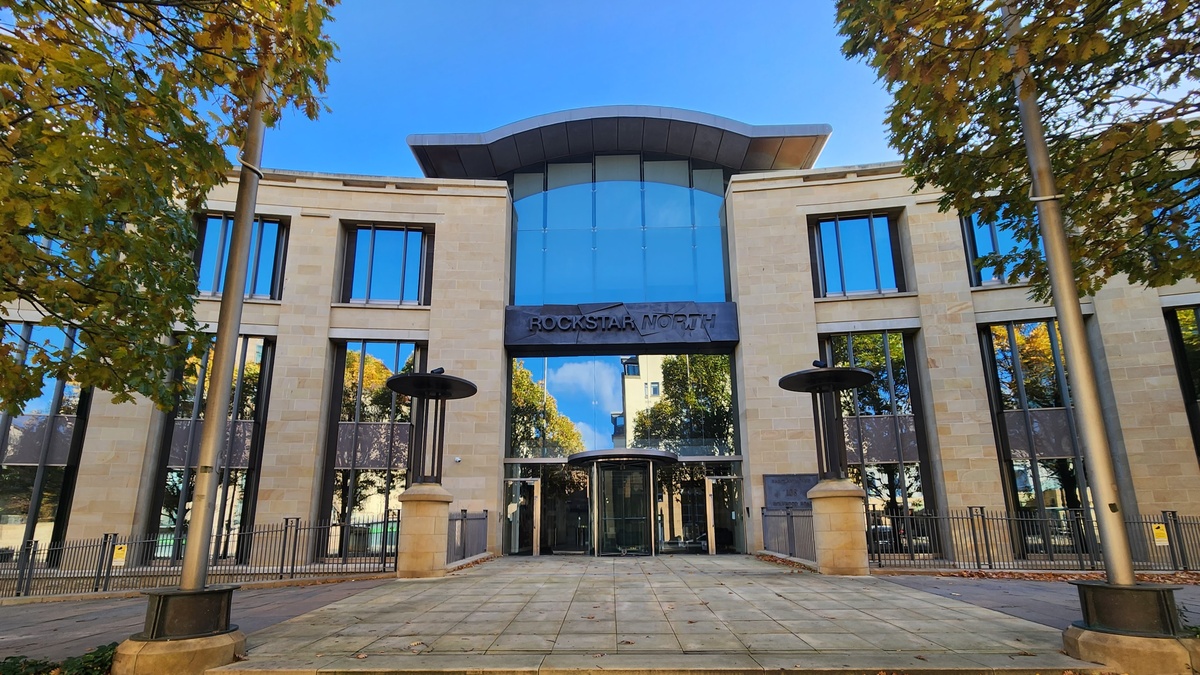
Speaking candidly about the atmosphere inside Rockstar North, Rob Nelson acknowledged that creative teams often doubted whether their monumental labor would ever conclude, describing the launch milestone as an utterly surreal experience for senior staff.
In this candid GTA 6 Dev Interview, Nelson reflected that when developers immerse themselves deeply into iterative world-building for years, their daily perspective becomes compromised, making the final finish line appear tantalizingly distant and unattainable.
Nelson explained that senior directors who previously shipped multiple iconic titles felt a distinct blend of immense relief and lingering nervousness as millions of retail copies dispersed across global distribution hubs and digital storefronts.
According to the GTA 6 Dev Interview, that lingering disbelief only begins to dissolve when genuine players across diverse communities start exploring the roads, engaging with emergent missions, and dissecting the intricate nuances of the living world.
The emotional weight carried by creative directors stems from knowing that the public will scrutinize every square inch of terrain, evaluating mechanical fluidity, vehicular physics, and atmospheric verisimilitude against impossible cultural benchmarks.
Rather than treating release week as a victory lap, Nelson described an environment characterized by quiet reverence, technical vigilance, and anxious anticipation as telemetry servers register their first multi-million user surges.
Capturing the human reality behind blockbuster software creation, the GTA 6 Dev Interview offers an authentic window into creative directors navigating the profound transition from isolated development secrecy to global cultural celebration.
Engineering Vice City: Next-Gen Simulation and RAGE Engine Scaling
Powering the vivid subtropical expanse of Vice City and greater Leonida highlighted throughout this GTA 6 Dev Interview is the latest iteration of Rockstar Advanced Game Engine, delivering architectural advancements in deferred global illumination, volumetric atmosphere, and volumetric water physics.
Unlike prior generations that relied on pre-baked lightmaps, modern consoles calculate real-time light bounces across neon storefronts, wet asphalt, and humid ocean coastlines, mimicking authentic optical physics during dynamic day-and-night cycles.
Technical breakdowns corroborating the GTA 6 Dev Interview demonstrate how pedestrian crowds utilize machine learning behavior trees, reacting dynamically to traffic incidents, fluctuating weather conditions, and spontaneous player interventions across bustling city centers.
Traffic algorithms simulate authentic metropolitan congestion, incorporating intelligent lane merges, realistic driver impatience, emergency vehicle pathfinding, and variable commuter density tailored specifically to distinct urban zoning districts throughout the day.
Vehicular deformation modeling incorporates modular material stress analysis, allowing vehicle chassis, composite body panels, and safety glass to crumple, shatter, and deform with microscopic fidelity during high-speed highway collisions.
Spatial acoustics leverage hardware-accelerated sound propagation, calculating real-time reverberation off towering skyscrapers and interior corridors, mirroring the hardware-level audio processing advancements we analyzed in modern Apple M4 Mac Mini redesign architecture.
Every rendering component outlined throughout the GTA 6 Dev Interview underscores why brute-force generational computation was mandatory to realize Rockstar’s vision of a truly reactive, living tropical metropolis on ninth-generation hardware.
GTA 6 Dev Interview Perspectives: Managing Studio Burnout and Scope
Beyond pure graphics silicon and polygon counts, managing human capital across a multi-thousand-person distributed workforce represents the greatest logistical triumph of modern interactive entertainment production.
Crucial context surrounding the GTA 6 Dev Interview involves Rockstar’s comprehensive cultural transformation following Red Dead Redemption 2, replacing mandatory overtime and crushing crunch schedules with flexible development methodologies and sustainable production pacing.
Studio executives overhauled pipeline scheduling, instituted core working hours across global satellite offices, and integrated external co-development partners to distribute heavy asset creation loads without compromising employee well-being.
Leadership recognized that avoiding burnout was vital for retaining senior engineering talent, whose specialized institutional knowledge proved irreplaceable when solving complex concurrency deadlocks and multi-threaded streaming architectures.
| Console Platform | Resolution Profile | Ray Tracing Pipeline | Target Frame Pacing |
|---|---|---|---|
| PlayStation 5 Pro | Dynamic 4K via PSSR ML Upscaling | Full Hardware RT Reflections & Ambient Shadows | Locked 60 FPS Performance Mode |
| PlayStation 5 Base | Dynamic 1440p–4K via FSR Reconstruction | Hardware RT Hybrid Shadows & Water Surfaces | Targeted 30 FPS Fidelity / 60 FPS Balanced |
| Xbox Series X | Dynamic 1440p–4K Dynamic Scaling | Hardware RT Hybrid Reflections & Occlusion | Targeted 30 FPS Fidelity / 60 FPS Balanced |
| Xbox Series S | Dynamic 1080p–1440p Reconstruction | Optimized Software Screen-Space Cubemaps | Locked 30 FPS Consolidated Fidelity |
As Rob Nelson intimated during the GTA 6 Dev Interview, taking the necessary time to figure out production mechanics allowed developers to maintain uncompromising quality standards without destroying morale during the final polishing sprints.
This cultural pivot serves as a blueprint for high-budget game publishing, proving that humane working conditions and transcendent creative output can successfully coexist at the very apex of the global technology sector.
By prioritizing sustainable development pipelines, the GTA 6 Dev Interview validates that patient development cycles ultimately safeguard both creative staff and the technical integrity of massive interactive entertainment investments.
Record-Breaking Launch Velocity: 32 Million Units and Historic Revenue
Financial filings published through Take-Two Interactive reveal commercial momentum that completely eclipses every recorded milestone in the history of cinema, music, and software.
Reinforcing points from the GTA 6 Dev Interview, Grand Theft Auto 6 secured over 32.5 million unit sales prior to release day, generating nearly four billion dollars in consumer spending across global retail distribution channels and digital console networks.
Contextualizing the revelations within the GTA 6 Dev Interview, these staggering sales figures demonstrate that over a decade of pent-up consumer demand translated into instantaneous commercial velocity across every global gaming demographic.
Hardware retailers reported historic surges in console bundle adoptions, driving unprecedented consumer demand for modern gaming rigs, echoing the enthusiast market enthusiasm documented during our coverage of the AMD Ryzen 7 9800X3D gaming processor launch.
Digital network infrastructures handled petabytes of pre-load bandwidth without catastrophic outages, validating extensive backend stress-testing conducted by Sony and Microsoft server engineers leading up to launch day.
The unprecedented commercial performance immediately cements the title as the fastest-selling entertainment product ever conceived, easily outstripping the historic opening weekend tallies of major cinematic blockbusters and entertainment franchises.
These unparalleled financial figures highlighted around the GTA 6 Dev Interview demonstrate how generational creative patience and technical craftsmanship generate unprecedented commercial returns in the modern digital economy.
Console Hardware Synergy: Leveraging PS5 Pro and Xbox Series Architectures
Highlighted throughout this GTA 6 Dev Interview, achieving visual fidelity without compromising frame pacing demanded surgical low-level hardware optimization across Sony’s PlayStation 5 Pro and Microsoft’s Xbox Series X silicon architectures.
Engineering disclosures aligned with the GTA 6 Dev Interview highlight how developers harnessed PlayStation Spectral Super Resolution machine learning models to deliver crisp 4K reconstruction from efficient internal rendering resolutions.
Hardware ray-tracing pipelines accelerate complex dynamic reflections across coastal waters, metallic vehicle exteriors, and polished marble hotel lobbies, creating transformative visual immersion without overburdening graphics compute units.
Meanwhile, high-speed solid-state storage interfaces stream gigabytes of high-resolution textures and dense world geometry on the fly, completely eliminating visible pop-in during high-speed supercar pursuits across elevated freeway interchanges.
These console architectural achievements contrast sharply with legacy desktop environments, reinforcing the industry migration away from older platforms, as explored in our analysis of how Nvidia ends Windows 10 support for PC gamers.
Even Microsoft’s compact Xbox Series S architecture benefits from bespoke memory streaming budgets, maintaining rock-solid visual consistency and stable thirty frames per second presentation across dense urban corridors.
Through dedicated hardware synergy, the GTA 6 Dev Interview illustrates how tight collaboration between console platform architects and studio engineers extracts maximum performance from every single transistor.
Ecosystem Evolution: Future GTA Online Roadmap and Long-Term Support
As clarified in this GTA 6 Dev Interview, launching the campaign represents merely the initial chapter of Rockstar’s multi-year ecosystem strategy, which will integrate a completely revamped multiplayer foundation into the vibrant geography of modern Leonida.
Insights gleaned from the GTA 6 Dev Interview indicate that Rockstar deliberately separated initial multiplayer deployment schedules to ensure database clusters and cloud matchmaking fabrics achieve flawless stability before onboarding millions.
The emerging multiplayer ecosystem will introduce dynamic criminal enterprises, user-generated mission creators, seasonal narrative expansions, and sophisticated economy balances designed to sustain dedicated player engagement across the next decade.
Rockstar plans continuous server infrastructure investment, utilizing modern distributed edge computing nodes and scalable cloud streaming fabrics reminiscent of innovations seen in our breakdown of Xbox Cloud Gaming pay-as-you-go pricing bundles.
Community feedback loops and telemetry analytics will guide recurring balance patches, anti-cheat security fortifications, and collaborative live-service events scheduled across future seasonal calendars.
By establishing modular backend microservices, developers can seamlessly inject fresh geographic islands, exotic vehicles, and elaborate heist scenarios without requiring disruptive full-client reinstallation cycles.
Ultimately, the comprehensive vision summarized in the GTA 6 Dev Interview establishes a sustainable foundation that will shape interactive entertainment, digital social spaces, and sandbox game design for years to come.
Frequently Asked Questions
Why did Rockstar Games take 13 years between Grand Theft Auto 5 and GTA 6?
Rockstar prioritized the immense scope of Red Dead Redemption 2, undertook worldwide studio restructuring, completely overhauled internal workplace workflows, and engineered advanced proprietary simulation physics for next-gen hardware architectures.
What did Rob Nelson state regarding the internal sentiment inside Rockstar North?
Nelson confirmed senior leadership and production teams felt surreal relief, admitting that several staff members frequently felt launch day would never arrive due to prolonged iteration cycles and engineering hurdles.
How many pre-orders and day-one copies did Grand Theft Auto 6 achieve globally?
Take-Two Interactive officially disclosed that Grand Theft Auto 6 surpassed 32.5 million copies sold before release, generating nearly four billion dollars in gross consumer revenue within its opening twenty-four hours.
Does Grand Theft Auto 6 support enhanced visual modes on PlayStation 5 Pro?
PlayStation 5 Pro utilizes custom machine learning temporal upscaling, accelerated hardware ray tracing, and optimized memory bandwidth allocations to deliver rock-solid dynamic 4K presentation with elevated ray-traced reflections.
Will Rockstar deploy a standalone multiplayer ecosystem alongside the campaign launch?
Rockstar is staggering the deployment of its next-generation multiplayer platform across subsequent calendar quarters to guarantee server cluster stability, prevent database concurrency bottlenecks, and refine player economy balance.
Final Verdict: A Milestone Decade in Gaming History
The emotional disclosures shared throughout the GTA 6 Dev Interview provide indispensable perspective on the immense human dedication, technical ambition, and relentless engineering discipline required to deliver gaming’s most anticipated creative milestone.
Reinforcing themes from the GTA 6 Dev Interview, by prioritizing sustainable team workflows, proprietary engine innovations, and uncompromising simulation fidelity, Rockstar Games has shattered historical entertainment records while redefining what open-world interactive software can achieve.
As players across the globe explore the sun-drenched avenues of Vice City, the GTA 6 Dev Interview stands as enduring proof that generational patience, artistic integrity, and technical brilliance triumph over hasty release timelines.
