


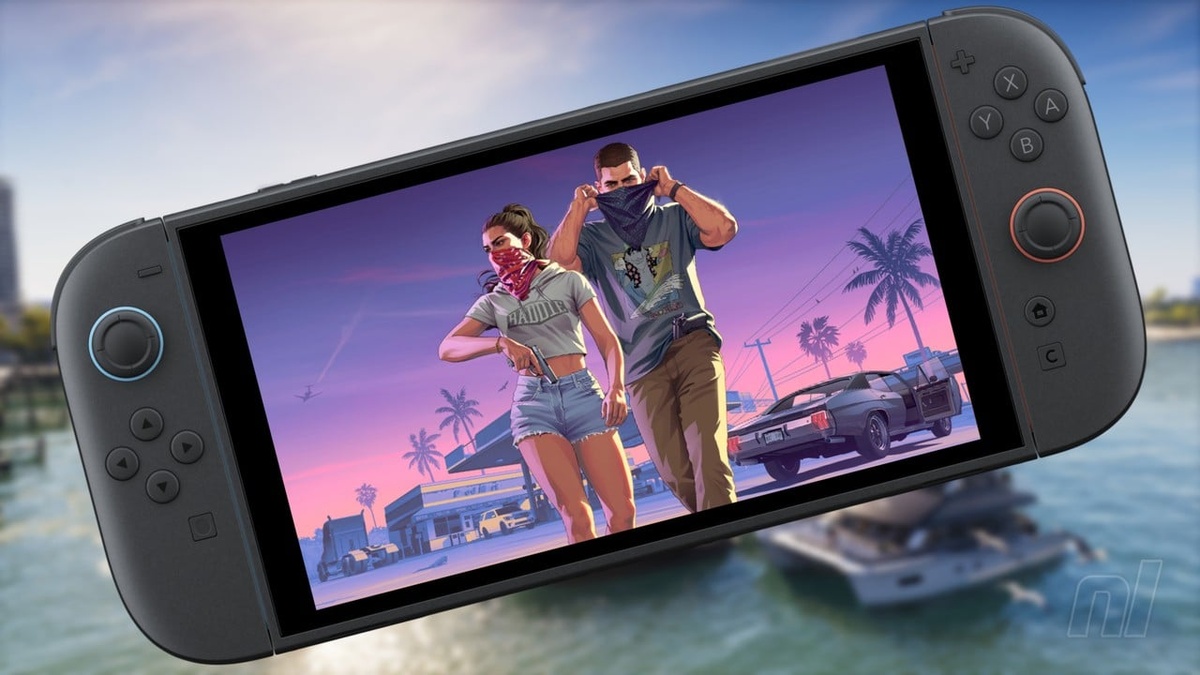
Following the record-breaking launch of Rockstar Games’ Vice City blockbuster, players worldwide wonder if a Switch 2 GTA 6 Port could ever ship on Nintendo hybrid hardware. Technical analysts at Digital Foundry recently evaluated whether this massive open-world benchmark could function portably.
While the original hybrid console hosted remarkable past-generation conversions, modern architectural barriers introduce severe complications. A viable Switch 2 GTA 6 Port must overcome steep CPU bottlenecks, constrained mobile memory buses, and substantial thermal limits inherent to battery-powered portable gaming hardware.
To understand the technical gulf between stationary home consoles and portable hardware, we assembled a comprehensive hardware comparison matrix. This comparison contrasts baseline current-generation consoles with projected Nintendo Switch 2 capabilities when handling open-world rendering demands.
| Platform Target | CPU Architecture | GPU Compute Target | Memory Pool & Bus | Reported Frame Target |
|---|---|---|---|---|
| PlayStation 5 Pro | 8-Core Zen 2 @ 3.85 GHz | 16.7 TFLOPs RDNA 3 Custom | 16GB GDDR6 (576 GB/s) | 30 FPS (Dynamic 4K PSSR) |
| PlayStation 5 Base | 8-Core Zen 2 @ 3.50 GHz | 10.28 TFLOPs RDNA 2 | 16GB GDDR6 (448 GB/s) | 30 FPS (Dynamic 1440p) |
| Xbox Series X | 8-Core Zen 2 @ 3.80 GHz | 12.15 TFLOPs RDNA 2 | 16GB GDDR6 (560 GB/s) | 30 FPS (Dynamic 1440p) |
| Xbox Series S | 8-Core Zen 2 @ 3.60 GHz | 4.00 TFLOPs RDNA 2 | 10GB GDDR6 (224 GB/s) | 25-30 FPS (Dynamic 1080p) |
| Nintendo Switch 2 (Docked) | 8-Core Cortex-A78AE (~2.0 GHz) | Custom Nvidia Ampere (~3.1 TFLOPs) | 12GB LPDDR5X (102 GB/s) | Unconfirmed / Highly Speculative |
| Nintendo Switch 2 (Handheld) | 8-Core Cortex-A78AE (~1.2 GHz) | Custom Nvidia Ampere (~1.7 TFLOPs) | 12GB LPDDR5X (68 GB/s) | Unconfirmed / Highly Speculative |
This hardware comparison illustrates why discussions surrounding a potential Switch 2 GTA 6 Port generate intense technical debate among engineers. The gulf in memory bandwidth and processor clock speeds highlights the immense hurdles standing in the way of a portable translation.
CPU Architecture Bottlenecks and Frame Rate Demands
At the heart of the debate lies the CPU burden imposed by Rockstar’s simulation systems. As analyzed on Nintendo Life, even PlayStation 5 Pro remains locked to thirty frames per second, dampening hopes for a Switch 2 GTA 6 Port.
Unlike graphical resolution, which developers scale downward using reconstruction algorithms, CPU computational tasks cannot be bypassed. Rockstar’s intricate pedestrian navigation, complex vehicle physics routines, and volumetric atmospheric simulations place unrelenting demand on processor instruction execution across every thread during intensive city scenes.
Nintendo’s upcoming hardware reportedly relies on an ARM-based octa-core Cortex-A78AE architecture engineered for handheld energy efficiency. While capable for standard mobile workloads, its downclocked cores operate far below desktop-class Zen 2 console frequencies, severely complicating any native Switch 2 GTA 6 Port.
In demanding open-world titles, single-core instructions and cache latency dictate the speed at which game engines update physics and artificial intelligence. When examining modern processor benchmarks in our AMD Ryzen 7 9800X3D gaming benchmarks, cache size directly stabilizes frame pacing.
Without substantial core clocks and ample cache pools, an unoptimized game engine inevitably suffers from catastrophic frame-time spikes during high-speed vehicle chases. Therefore, any conceivable Switch 2 GTA 6 Port would require fundamental mathematical simplification of the core game simulation itself.
Developers cannot simply dial down a visual slider to alleviate heavy mathematical calculations that dictate world interactivity. Stripping out core simulation routines risks undermining the systemic sandbox behavior that distinguishes modern Rockstar releases from conventional open-world action adventures.
Why a Switch 2 GTA 6 Port Strains Mobile Silicon
Evaluating the feasibility of a Switch 2 GTA 6 Port requires understanding the physical boundaries of handheld thermal dissipation. While desktop and stationary consoles consume up to 200 watts under load, portable hybrid systems must operate within a strict 15 to 30 watt budget.
This restrictive thermal envelope means that silicon clock speeds must remain conservative to preserve battery life and prevent excessive heat generation. Under sustained mobile workloads, the Tegra processor cannot draw high sustained voltages needed to brute-force world streaming calculations without triggering thermal throttling.
Even when docked and operating under higher wattage limits, the mobile chip architecture faces severe throughput bottlenecks when feeding graphics assets. Delivering a stable Switch 2 GTA 6 Port would necessitate lowering civilian density, pruning distant vehicle traffic, and reducing collision detection fidelity.
Reducing traffic volume transforms bustling thoroughfares into sparse avenues, diminishing immersion. Players exploring Vice City streets expect dynamic traffic jams, dense beachfront crowds, and emergent police encounters that a battery-constrained Switch 2 GTA 6 Port would struggle to simulate smoothly.
Furthermore, modern rendering engines rely heavily on unified ray-traced reflections and global illumination pipelines that demand dedicated hardware acceleration cores. While Nvidia’s Ampere architecture includes specialized RT cores, their limited count on a mobile die restricts the complexity of real-time lighting computations.
Consequently, achieving acceptable performance would force engineers to replace hardware ray tracing with legacy rasterized screen-space approximations. Re-architecting lighting pipelines for a dedicated Switch 2 GTA 6 Port represents an expensive, multi-year engineering commitment that few publishing teams can easily justify.
Memory Bandwidth Constraints and Storage Footprint Reality
Beyond raw processor clocks, unified memory bandwidth represents perhaps the steepest barrier facing a high-end Switch 2 GTA 6 Port. Stationary consoles utilize wide GDDR6 buses providing between 448 and 576 gigabytes per second of memory bandwidth to sustain dense asset streaming without stuttering.
In contrast, portable hardware utilizes LPDDR5X memory over narrow bus interfaces. With docked bandwidth hovering near 100 gigabytes per second, asset delivery pipelines would experience severe data starvation during rapid vehicle traversal, creating stutter for a potential Switch 2 GTA 6 Port.
High-speed supercar navigation requires streaming gigabytes of textures and geometry meshes in real time. Similar to bottlenecks explored in our Apple M4 Mac Mini analysis, narrow memory buses constrain sustained throughput, posing persistent roadblocks for high-speed open worlds.
Storage technology also introduces significant deployment hurdles that cannot be overlooked by commercial distributors. Grand Theft Auto 6 demands well over 150 gigabytes of high-speed solid-state storage, far exceeding the typical storage capacities bundled with modern handheld devices.
Manufacturing dedicated 128GB or 256GB proprietary flash cartridges would substantially increase retail production expenses, eating into commercial profit margins. Requiring massive mandatory digital downloads would rapidly exhaust user storage cards, generating significant friction for everyday consumers who maintain broad digital game libraries.
Compression technologies can reduce file footprints to a degree, but heavy decompression routines place additional computational strain on the already overburdened mobile processor. These compound constraints demonstrate why a Switch 2 GTA 6 Port presents unprecedented engineering friction at every level of system architecture.
Comparing Switch 2 GTA 6 Port Hurdles to Xbox Series S
Industry analysts frequently benchmark portable ports against Microsoft’s compact Xbox Series S console. As the lowest common denominator among home consoles, Series S performance characteristics offer invaluable insights into whether a Switch 2 GTA 6 Port could ever function reliably.
In their technical breakdown reported by Digital Foundry, specialists noted that Xbox Series S exhibits noticeable performance compromises. Frame rates routinely fluctuate in the mid to high twenties during chaotic downtown firefights and intensive vehicle pursuits.
If a stationary console equipped with an unthrottled desktop-class Zen 2 processor struggles with 30 frames per second, a lower-powered hybrid faces steeper hurdles. Comparing a potential Switch 2 GTA 6 Port directly against Series S metrics exposes significant architectural deficits in raw compute capacity.
The Series S benefits from constant wall power, a continuous 75-watt thermal dissipation budget, and full GDDR6 memory bandwidth that mobile hardware simply cannot match. Bridging this substantial technical gap requires far more aggressive optimizations than standard resolution scaling or texture filtering adjustments.
Developers would need to completely rebuild world streaming triggers, decimate asset geometry levels of detail, and aggressively compress audio assets. Without those drastic measures, a Switch 2 GTA 6 Port would risk exhibiting unplayable frame drops during mandatory high-action cinematic campaign missions.
To quantify the specific hardware concessions necessary for a mobile release, we have organized a dedicated engineering tradeoff matrix. This table highlights how core rendering subsystems would need to be modified compared to current home console releases.
| Engineering Subsystem | Stationary Console Standard | Proposed Switch 2 Adaptation | Expected Compromise | Feasibility Rating |
|---|---|---|---|---|
| Pedestrian & Traffic AI | Dense Dynamic Simulation | Cut by 50-60% Volume | Noticeably sparser city environments | Moderate Feasibility |
| Lighting & Reflections | Hybrid Hardware Ray Tracing | Screen-Space Rasterization | Loss of dynamic global bounce lighting | High Feasibility |
| Internal Render Resolution | 1440p – 1800p Dynamic | 540p – 720p Reconstructed | Heavy reliance on Nvidia DLSS upscaling | High Feasibility |
| Texture Resolution Pool | High / Ultra 4K Assets | Medium / Low Compressed | Reduced environmental surface fidelity | Moderate Feasibility |
| Storage Footprint | 150GB+ Uncompressed NVMe | 90GB Highly Compressed | Extensive multi-core decompression overhead | Low Feasibility |
| Target Frame Rate | Stable 30 FPS Cap | 20-30 FPS Variable / Uncapped | Frequent drops during dense action sequences | Extremely Low |
Evaluating these architectural tradeoffs clarifies why senior technical analysts remain deeply skeptical regarding a native release. Every subsystem modification required to produce a viable Switch 2 GTA 6 Port introduces significant artistic and gameplay compromises.

Moreover, platform transitions often force publishers to re-evaluate their long-term software support commitments across diverse hardware tiers. As seen during major operating system transitions detailed in our analysis of graphics driver support lifecycles, maintaining severely constrained ports introduces massive overhead.
Rockstar’s development pipeline is currently focused on optimizing online infrastructure and preparing anticipated personal computer editions for future release. Allocating hundreds of specialized engineers to construct a customized Switch 2 GTA 6 Port could divert critical resources away from these high-margin core initiatives.
Digital Foundry Technical Feasibility and Tradeoff Matrix
During their launch breakdown, Digital Foundry experts explicitly addressed whether a native Switch 2 GTA 6 Port could run on Nintendo’s hybrid. Specialist John Linneman candidly noted that without massive structural engine revisions, a native release appears exceedingly improbable.
Analysts emphasized that games scale resolution easily, but cannot scale simulation threads governing mechanics. When crowd intelligence and physics routines are hardcoded to multithreaded desktop pipelines, porting creates systemic deadlocks that hobble any prospective native port.
While Nvidia DLSS provides excellent image reconstruction from sub-720p resolutions, it cannot resolve CPU bottlenecks. DLSS reconstructs visual clarity on the GPU, but cannot accelerate sluggish physics calculations that would bottleneck a Switch 2 GTA 6 Port.
Furthermore, Nintendo’s handheld memory capacity must accommodate both the operating system overhead and the expansive game state concurrently. If the available system RAM pool proves insufficient to hold active world sectors, aggressive paging to storage creates severe micro-stuttering during open-world navigation.
Digital Foundry also highlighted that previous miracle ports, such as The Witcher 3 or Doom Eternal, originated from eighth-generation console foundations. In contrast, Grand Theft Auto 6 was constructed from the ground up strictly targeting ninth-generation hardware architectures with high-speed solid-state drives.
Attempting to scale an uncompromising ninth-generation production downward to a battery-powered device pushes existing porting techniques past their breaking point. These technical realities explain why veteran analysts categorize a native Switch 2 GTA 6 Port as an improbable scenario without radical compromises.
How Switch 2 GTA 6 Port Demands Reshape Hybrid Gaming Expectations
The broader conversation surrounding a prospective Switch 2 GTA 6 Port highlights evolving consumer expectations for handheld gaming performance. Enthusiasts who experienced impressive conversions during the previous console generation naturally hope that next-generation portable hardware will maintain pace with cutting-edge stationary platforms.
However, rapid growth in rendering complexity has widened the divide between desktop consoles and portable devices. While modern handheld chips deliver remarkable efficiency, physics simulations demand substantial silicon area that battery constraints cannot accommodate in an uncompromised Switch 2 GTA 6 Port.
Alternative delivery methods, such as interactive cloud streaming, represent a potential alternative path to bring the title to portable audiences. As explored in our deep-dive coverage of flexible Xbox Cloud Gaming delivery models, remote rendering bypasses local hardware bottlenecks entirely.
Nevertheless, interactive cloud streaming introduces latency penalties and requires constant high-speed broadband connections that run counter to Nintendo’s core on-the-go gaming philosophy. Most handheld enthusiasts prefer native offline execution that guarantees responsive controls regardless of network availability or cellular signal strength.
Alternatively, Rockstar could develop a bespoke companion experience or port earlier classics like Grand Theft Auto 4 to Nintendo’s platform. Polished legacy ports would satisfy handheld gamers while avoiding the technical compromises of a premature Switch 2 GTA 6 Port.
Recognizing hardware boundaries ensures developers focus on experiences matching hybrid strengths. As Nintendo unveils its next console, understanding these performance realities sets realistic expectations for future portable titles without relying on an improbable Switch 2 GTA 6 Port.
Frequently Asked Questions
Could Grand Theft Auto 6 realistically run on Nintendo Switch 2?
According to hardware analysts at Digital Foundry, a native release is extremely unlikely due to severe CPU bottlenecks and memory bandwidth constraints. While visual resolution can scale down using DLSS, the intricate physics and pedestrian simulations place an insurmountable load on mobile processor cores.
What are the biggest hardware hurdles for a Switch 2 GTA 6 Port?
The primary technical hurdles include downclocked ARM CPU cores, limited unified memory bandwidth of roughly 100 GB/s, and a massive storage footprint exceeding 150GB. Additionally, operating within a 15 to 30 watt handheld thermal envelope severely restricts sustained computational performance during open-world exploration.
Can Nvidia DLSS make up for lower Switch 2 hardware specs?
Nvidia DLSS excels at reconstructing high-resolution visuals from lower base render targets on the GPU, but it cannot alleviate CPU bottlenecks. Because Grand Theft Auto 6 is heavily CPU-bound by crowd artificial intelligence, physics routines, and world streaming, DLSS alone cannot resolve frame rate drops.
How does GTA 6 performance on Xbox Series S compare to Switch 2?
The Xbox Series S features a desktop-class Zen 2 CPU and GDDR6 memory, yet frame rates drop into the mid-twenties during heavy combat. Because Switch 2 features lower clock speeds and narrower memory buses, matching Series S performance requires drastic simulation compromises.
Could Rockstar release GTA 6 on Switch 2 via Cloud Gaming?
A cloud-streamed version is technically feasible and would bypass local processor and storage limitations completely. However, cloud streaming requires uninterrupted high-speed internet connections and introduces input latency, conflicting with the offline portable convenience that defines Nintendo hybrid consoles.
Final Hardware Verdict: Evaluating Port Feasibility
Assessing the technical realities of modern game development confirms that launching an uncompromised Switch 2 GTA 6 Port on portable hardware faces immense architectural roadblocks. While modern hybrid devices achieve stunning efficiency, the raw computational demands of uncompromised ninth-generation game engines exceed mobile power boundaries.
A potential Switch 2 GTA 6 Port would require stripping away foundational simulation layers, drastically pruning pedestrian populations, and accepting noticeable visual concessions. For a franchise renowned for setting uncompromising visual and systemic standards, publishing a severely downgraded conversion could diminish the series’ stellar reputation.
As players eagerly celebrate the game’s historic launch and record-tying Metacritic accolades, portable enthusiasts should maintain measured expectations regarding handheld releases. Focusing on well-optimized catalog ports and purpose-built hybrid adventures remains the most rewarding path forward for Nintendo’s next-generation gaming platform.
