



Table of Contents
In an ambitious technological expansion targeting medical infrastructure, OpenAI has officially unveiled specialized **healthcare computer-use agents** engineered to interact directly with electronic health records, insurance clearinghouses, and administrative enterprise platforms.
By enabling foundation models to navigate user interfaces like human clinicians, these healthcare computer-use agents promise to dismantle persistent administrative bottlenecks that consume billions of clinical work hours across hospital networks every year.
| Integration Architecture | Legacy EHR Connectivity | Payer Portal Automation | Development Deployment Time | Human Verification Control |
|---|---|---|---|---|
| Bespoke REST & FHIR APIs | Requires custom vendor endpoints | Incompatible with external web forms | 6 to 18 months per health system | Rule-based automated triggers |
| Traditional Robotic Automation | Fragile coordinate-based screen macros | Breaks on minor DOM layout changes | 3 to 6 months maintenance cycles | Static scripted execution rules |
| OpenAI Healthcare Computer-Use | Visual screen reading & cursor control | Native browser navigation across portals | Rapid multi-agent prompt deployment | Mandatory clinical approval gates |
| Manual Provider Documentation | Extensive clinician manual data entry | Repetitive copy-paste form submission | Ongoing physician administrative burden | Direct human oversight required |
Bridging Legacy EHR Silos: Direct Screen Interaction Without Custom APIs
The primary barrier facing modern healthcare informatics is software fragmentation, making the introduction of healthcare computer-use agents a potentially transformative development according to the official OpenAI announcement.
Hospital systems worldwide rely on legacy electronic health record installations that rarely communicate cleanly with external payer networks, leaving medical assistants trapped in endless cycles of manual copy-paste data transcription.
Rather than waiting years for universal API adoption across competing software vendors, healthcare computer-use agents interact directly with existing graphical user interfaces by observing virtual displays, clicking buttons, and entering structured patient records.
Much like how efficient silicon architectures detailed in our Apple M4 Mac mini review streamline desktop workflows, visual agent models eliminate the need for expensive custom software overhauls across healthcare networks.
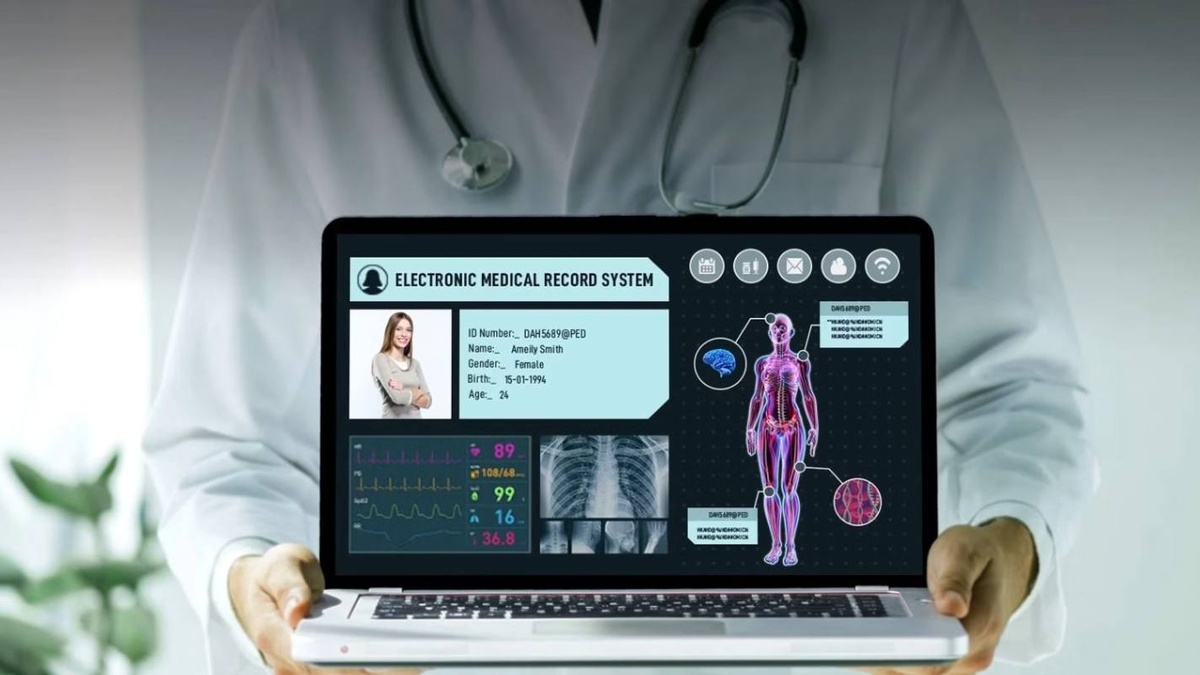
By interpreting visual screen pixels and parsing dense medical typography, these autonomous foundation models execute sophisticated multi-step tasks across disconnected operating systems without requiring alterations to underlying database schemas.
Clinical Workflow Automation: Chart Review, Inbox Triage and Order Drafting
In active clinical practice, physicians regularly spend two hours managing digital charting and administrative inboxes for every single hour spent conducting direct, face-to-face patient consultations.
To address this exhausting documentation overhead, OpenAI demonstrated healthcare computer-use agents performing comprehensive chart reviews across patient histories to synthesize pertinent diagnoses, laboratory values, and previous radiological imaging studies.
When a patient inquires about worsening chronic symptoms, clinical computer agents can automatically gather relevant historical notes, draft a personalized response, and prepare diagnostic orders for physician review.
Just as high-performance computing hardware highlighted in our Ryzen 7 9800X3D deep dive optimizes complex simulations, clinical agent architectures accelerate diagnostic preparation across high-volume ambulatory care clinics.

The operational goal of deploying clinical AI assistants is not replacing professional judgment, but eliminating the digital friction that pulls licensed healthcare professionals away from compassionate diagnostic patient care.
Payer Portal Navigation: Streamlining Prior Authorizations and Appeals
Nowhere is the administrative burden on modern medicine more debilitating than prior authorizations, where insurance companies require exhaustive medical evidence before approving essential imaging and surgical procedures.
Surveys published by the American Medical Association reveal that prior authorizations cause treatment delays for millions of patients while imposing heavy staffing overhead.
Under OpenAI new operational model, healthcare computer-use agents access proprietary insurer web portals, locate required coverage criteria, and pull matching clinical documentation directly from the hospital medical chart.
Early enterprise deployments at partners like CVS Health and Cigna demonstrate that intelligent computer agents can compress a forty-minute authorization submission into a rapid, automated background process.

When insurers reject initial coverage requests, these healthcare computer-use agents review the denial rationale, locate overlooked lab results, and construct structured appeal packets ready for human sign-off.
HealthAdminBench Evaluations: Model Accuracy Across Frontier Architectures
To rigorously assess operational reliability in complex enterprise environments, researchers developed HealthAdminBench, an exhaustive evaluation framework containing 135 simulated healthcare workflows and 1,700 validation checkpoints.
The standardized benchmark tests healthcare computer-use agents across virtualized electronic health records, legacy fax portals, and insurer clearinghouses spanning durable medical equipment orders and denial appeals.
Frontier reasoning models power these autonomous assistants, delivering high task completion scores on complex multi-step navigation routines that traditionally caused legacy robotic process automation scripts to fail.
Efficiency evaluations reveal that compact frontier variants achieve strong benchmark results while drastically reducing compute costs, allowing health networks to run autonomous clinical workflows cost-effectively at massive scale.
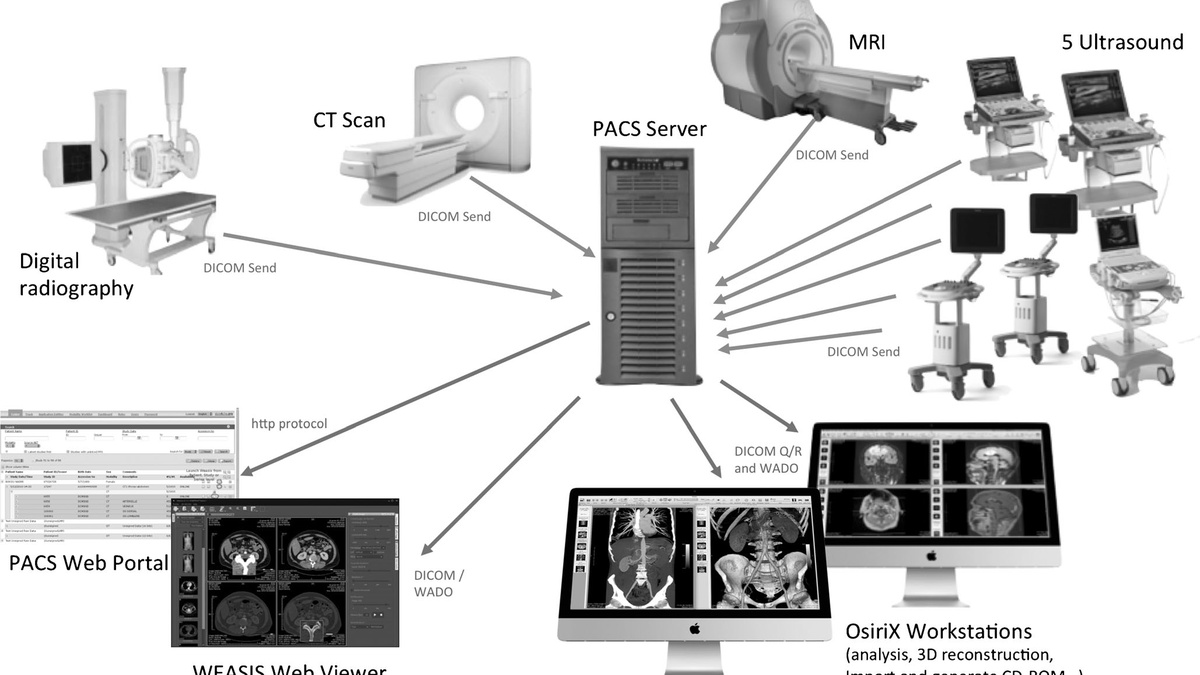
By subjecting autonomous clinical software to standardized testing batteries, developers and healthcare administrators can objectively measure error rates before approving automated software agents for production deployment.
| Clinical Administrative Task | Target Healthcare Software | Manual Completion Time | Computer-Use Agent Runtime | Mandatory Safety Gate |
|---|---|---|---|---|
| MRI Prior Authorization Packet | Epic EHR & Payer Web Portals | 35 to 50 minutes per patient | 2 to 4 minutes automated prep | Authorization specialist sign-off |
| EHR Patient Inbox Triage | Cerner Oracle Health & Inboxes | 15 to 25 minutes per query batch | 90 seconds context synthesis | Attending clinician review |
| Insurance Claim Denial Appeal | Payer Clearinghouse Web Systems | 45 to 60 minutes chart review | 3 minutes evidence retrieval | Billing compliance officer review |
| DME Equipment Order Filing | Fax Servers & Supplier Portals | 20 to 30 minutes data re-entry | 2 minutes end-to-end routing | Physician prescription signature |
| Post-Discharge Care Routing | Hospital Inpatient Management | 25 to 40 minutes coordination | 3 minutes multi-system sync | Discharge nurse verification |
HIPAA Compliance and Safety: Human-in-the-Loop Verification Frameworks
Deploying autonomous interface navigation inside sensitive healthcare environments demands unprecedented security standards, strict audit trails, and uncompromising protection of confidential patient health information.
OpenAI confirmed that all healthcare computer-use agents operate within HIPAA-compliant cloud architectures featuring end-to-end cryptographic encryption, session sandboxing, and immutable access logging for compliance audits.
Crucially, these healthcare computer-use agents enforce mandatory human-in-the-loop approval gates, preventing any prescription order, diagnostic test, or insurance submission from executing without explicit clinician verification.
If an unexpected user interface dialog or clinical ambiguity emerges, the autonomous system immediately pauses execution, flags the anomaly, and routes the task back to an attending supervisor.

This balanced governance model ensures healthcare computer-use agents safely accelerate tedious data entry tasks while keeping medical accountability and ultimate diagnostic responsibility firmly in the hands of licensed doctors.
Frequently Asked Questions
The Final Verdict: Transforming Medical Administration Through Autonomous Agents
The rollout of healthcare computer-use agents represents an evolutionary milestone for healthcare technology, solving the long-standing integration challenge that has fragmented clinical software ecosystems for decades.
By allowing artificial intelligence models to navigate legacy user interfaces without costly backend rewrites, medical centers can finally reclaim thousands of hours lost to bureaucratic computer paperwork.
With robust human oversight and rigorous safety benchmarks guiding deployment, autonomous clinical assistants are poised to restore physician focus to patient care and fundamentally modernize medical administration.
