


Table of Contents
Third-party controller manufacturers are aggressively targeting Nintendo’s upcoming console hardware with premium accessories. The CRKD Ult Pro Controller arrives as a feature-packed alternative to official gamepads, boasting tunnel magnetoresistance thumbsticks, swappable faceplates, and four rear programmable paddles at competitive retail pricing.
Priced at $69.99, the CRKD Ult Pro Controller targets competitive gamers across current and next-generation Nintendo hardware. However, our comprehensive evaluation reveals that despite premium magnetic sensors, severe ergonomics shortcomings across the bumper cluster and spongy tactile triggers significantly compromise overall gameplay reliability.
| Hardware Metric | CRKD Ult Pro Controller | Nintendo Switch Pro Controller | Gulikit KK3 Max / TT Series |
|---|---|---|---|
| MSRP Pricing | $69.99 / €79.99 / £64.99 | $69.99 / €69.99 / £59.99 | $79.99 / €84.99 / £69.99 |
| Thumbstick Technology | Tunnel Magnetoresistance (TMR) | Traditional Potentiometer | Hall Effect / Electromagnetic |
| Trigger Architecture | Dual-Mode (Smooth Pull / Tactile Stop) | Standard Digital Membrane | Dual-Mode Hall Effect / Microswitch |
| Additional Inputs | 4 Rear Paddles + 2 Auxiliary Bumpers | Zero Additional Buttons | 4 Detachable Metal Rear Paddles |
| Switch 2 Console Wake-Up | Unsupported (Manual Console Power On) | Fully Supported via Bluetooth | Supported on Select Models |
| Power & Battery System | Swappable Li-ion Pack / AA + Dock | Internal 1300mAh Li-ion (Sealed) | Internal 1000mAh Li-ion (Sealed) |
| Wireless Connectivity | Bluetooth, 2.4GHz Dongle, USB-C | Bluetooth, Wired USB-C | Bluetooth, 2.4GHz Dongle, USB-C |
TMR Electromagnetic Sensors: Convex Thumbsticks and Drift Immunity
Thumbstick reliability represents the single most crucial hardware consideration for competitive console players. To combat potentiometer wear, the CRKD Ult Pro Controller deploys advanced Tunnel Magnetoresistance (TMR) electromagnetic sensors that register micro-deflections without mechanical contact, completely eliminating stick drift over years of intensive usage.
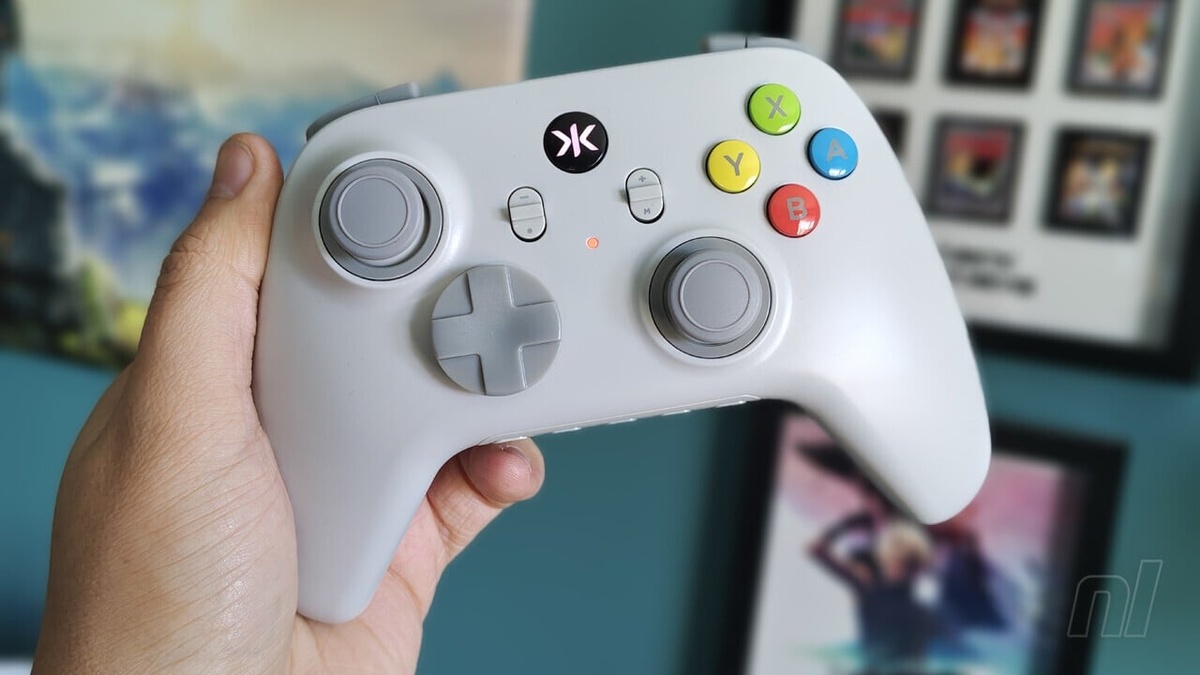
Unlike conventional Hall effect sensors, TMR architecture provides higher spatial resolution and lower power consumption. On this controller, the thumbsticks feature a distinct convex dome with a subtle perimeter ridge, keeping player thumbs oriented during intense platforming or competitive multiplayer matches.
The modular joystick caps can be detached and swapped for custom heights, though replacement designs must be purchased separately. As noted in Nintendo Life’s hardware review, standardizing an extra cap set in the retail box would have elevated the initial value.
Complementing the analog sensors, the circular directional pad features a raised cross with crisp cardinal indexing. In testing with precision 2D platformers and fighting titles, the D-pad delivered exceptional directional isolation, effectively preventing inadvertent diagonal inputs while maintaining a remarkably quiet acoustic actuation profile.
Rounding out the primary interface, the convex ABXY face buttons utilize traditional membrane switches rather than mechanical switches. While lacking clicky tactile snap, the CRKD Ult Pro Controller spaces the colored face buttons comfortably, ensuring responsive actuation during rapid gaming sequences across varied genres.
Dual-Mode Trigger Mechanics: Adjustable Travel and Spongy Tactile Switches
Trigger versatility serves as another major selling point for modern third-party controllers. The CRKD Ult Pro Controller incorporates mechanical travel adjustment switches on the rear housing, allowing players to toggle dynamically between full-throw analog pull and short-throw hair-trigger actuation for rapid-fire shooting titles.
Because Nintendo Switch and Switch 2 treat trigger inputs strictly as digital binary signals rather than analog axes, trigger travel adjustments are purely mechanical. Players seeking rapid input registration typically favor short-travel stops, whereas racing enthusiasts prefer deeper physical pulls for physical immersion.
In full-motion mode, the triggers travel smoothly with balanced spring tension and clean resistance curves. However, switching the CRKD Ult Pro Controller into short-throw tactile mode exposes an alarming flaw, replacing smooth travel with a spongy, indistinct sensation that undermines player confidence during competitive matches.
Rather than delivering a sharp, tactile click reminiscent of premium mouse switches, the short-throw stops feel frail and damp. The internal mechanical stop flexes under modest finger pressure, creating an unsettling sensation that aggressive actuation might fracture the internal plastic bracket mechanism under tournament conditions.
Similar precision engineering challenges define high-performance computing hardware, where thermal and mechanical limits dictate execution stability. Our architectural analysis of the AMD Ryzen 7 9800X3D gaming processor highlights how physical design choices dictate sustained operational performance under heavy load.
For competitive first-person shooter enthusiasts who require instantaneous, crisp trigger feedback, this mushy bottom-out sensation presents a substantial hurdle. Unless CRKD re-engineers this tactile mechanism in subsequent production batches, the controller falls short of elite competitive tournament standards.
Bumper Clustering and Ergonomics: Input Interference and Rocker Quirks
While the thumbsticks excel, the shoulder interface introduces ergonomic compromises. Designers at CRKD added secondary bumper buttons adjacent to primary L and R switches, attempting to maximize input density across the CRKD Ult Pro Controller chassis.
Unfortunately, the execution proves highly problematic during intense gameplay sessions. The auxiliary bumper inputs sit immediately flush against the primary shoulder buttons without sufficient physical elevation or tactile spacing, making it nearly impossible to rest index fingers naturally without triggering unintended secondary inputs.
Competitive players frequently misfire secondary macros when attempting standard bumper commands during rapid tactical maneuvers. Competitors like Scuf and 8BitDo prevent input overlap through distinct angular planes, whereas CRKD’s tightly packed layout forces players to adopt uncomfortable claw finger postures to avoid misclicks.
Conversely, the four rear programmable paddles on the CRKD Ult Pro Controller offer reliable utility for action titles. Players can map jump, reload, or sprint commands without lifting thumbs, though the hollow plastic housing amplifies acoustic clicks noticeably in quiet rooms.
Onboard remapping functions through a hardware Program button located beneath the D-pad, supporting four discrete configuration profiles. Regrettably, CRKD omitted comprehensive printed setup instructions, and the bundled digital QR code initially routed buyers to an unresolved error page rather than an active documentation repository.
CRKD also substituted standard Select, Start, and Capture buttons with unusual rocking toggle switches. Rocking upward activates Select while pushing downward triggers screenshot capture, creating an idiosyncratic navigation interface that demands substantial muscle memory adaptation for veteran console owners.
Switch 2 Wireless Ecosystem: Triple Connectivity and Missing Console Wake-Up
Versatile platform connectivity remains paramount for modern cross-platform accessories. The CRKD Ult Pro Controller supports three distinct connection methods: low-latency Bluetooth, high-speed 2.4GHz RF wireless via an included USB dongle, and direct low-latency wired USB Type-C communication with host hardware.
The 2.4GHz wireless dongle stows inside the base of the bundled charging dock, plugging directly into console docks for seamless wireless pairing. Much like the infrastructure detailed in our analysis of Xbox cloud gaming pay-as-you-go pricing, low packet jitter ensures responsive controls.
Despite comprehensive protocol support, the CRKD Ult Pro Controller suffers from a glaring ecosystem limitation on next-generation Nintendo hardware: the complete absence of console wake-up functionality. Players cannot power on their docked Switch or Switch 2 remotely from the sofa via the controller home button.
Having to walk across the living room to press the physical power button on the console dock disrupts modern convenience. While first-party Nintendo Pro Controllers seamlessly wake sleeping consoles via Bluetooth signaling, third-party accessories lacking official wake-up protocols introduce daily friction for docked players.
Managing hardware protocol handshakes and firmware support lifecycles requires ongoing vendor vigilance across evolving ecosystems. Similar platform transition considerations surfaced in our analysis of NVIDIA ending Windows 10 support, where generational shifts disrupt legacy hardware convenience.
Nevertheless, wireless stability across both Bluetooth and 2.4GHz connections proved flawless throughout our testing. The gamepad maintained consistent polling intervals without observable packet drops, wireless interference, or input lag across extensive docked and tabletop gaming sessions.
Modular Battery Architecture: Dual Power Rails and Magnetic Charging Stand
Battery longevity and charging convenience represent notable highlights of the CRKD Ult Pro Controller hardware package. The internal rechargeable battery pack delivers approximately fifteen hours of continuous wireless gameplay per charge cycle, providing ample endurance for extended weekend gaming marathons without interruption.
Even more impressively, CRKD implemented a modular dual-rail power architecture beneath the rear battery compartment door. Gamers can utilize the bundled lithium-ion rechargeable battery pack or instantly swap it out for two standard AA alkaline or rechargeable NiMH batteries when traveling off-grid.
This dual-power design guarantees that the pad remains fully playable even if the internal lithium pack degrades over years of service. Players are never permanently tethered to charging cables, representing a significant lifespan advantage over sealed gamepads with non-replaceable internal batteries.
| Feature Category | Hardware Implementation | Competitive Advantage | Observed Limitation |
|---|---|---|---|
| TMR Thumbsticks | Electromagnetic Sensors & Convex Caps | Zero Potentiometer Drift & Low Power | Replacement Grip Caps Sold Separately |
| Trigger Stops | Mechanical Travel Limiter Switches | Instant Digital Bottom-Out for Shooters | Spongy, Fragile Feedback in Tactile Mode |
| Auxiliary Bumpers | Dual Secondary Top Shoulder Buttons | Two Extra Remappable Macro Inputs | Clustered Too Close to Primary L/R Bumpers |
| Charging Stand | Magnetic Base with Stored 2.4GHz Dongle | Always Charged & Neat Cable Routing | Lightweight Plastic Housing Creaks Under Load |
| Modular Power | Dual-Rail Li-ion Pack + AA Battery Bay | Infinite Lifespan Beyond Battery Wear | Adds Slight Weight Compared to First-Party |
Complementing the swappable battery system, CRKD includes a stylish desktop charging dock as standard equipment. Equipped with weighted base stabilization and magnetic pins, the dock ensures that the CRKD Ult Pro Controller seats effortlessly into place, keeping power levels permanently topped up.
Such modular hardware engineering parallels the architectural efficiency gains seen in modern personal computing platforms. As highlighted in our breakdown of the Apple M4 Mac mini redesign, combining dense integration with efficient thermal and power envelopes elevates user satisfaction.
However, while the charging stand and magnetic sticks feel exceptionally robust, the lightweight exterior plastic casing feels somewhat hollow for a $70 accessory. A slightly more textured, denser polymer finish would have better aligned the controller with premium competitors.
Frequently Asked Questions
What makes the CRKD Ult Pro Controller thumbsticks immune to stick drift?
The CRKD Ult Pro Controller utilizes Tunnel Magnetoresistance (TMR) electromagnetic sensors rather than mechanical potentiometers. Because TMR technology tracks stick orientation via magnetic fields without physical friction, the sensors eliminate contact wear, preventing the stick drift common in standard gamepads.
Does the CRKD Ult Pro Controller support wireless console wake-up on Switch 2?
No, the CRKD Ult Pro Controller lacks console wake-up functionality on both Nintendo Switch and Switch 2. Players cannot turn on their docked console remotely using the Home button, requiring manual physical activation on the console dock prior to wireless pairing.
How do the adjustable dual-mode triggers perform on the CRKD Ult Pro Controller?
While the full-throw analog trigger mode feels smooth and responsive, the short-throw tactile mode feels spongy and imprecise. The internal stops lack a crisp mechanical break, flexing noticeably under modest finger pressure during competitive gaming.
What connection modes does the CRKD Ult Pro Controller support across platforms?
The CRKD Ult Pro Controller provides three connection modes: low-latency Bluetooth, 2.4GHz wireless via a bundled USB dongle, and direct wired USB Type-C communication. It connects seamlessly to Nintendo Switch, Switch 2, Windows PC, macOS, and mobile devices.
Can the controller run on standard AA batteries?
Yes, the CRKD Ult Pro Controller features a modular dual-rail battery compartment. Players can use the bundled rechargeable lithium battery pack with the desktop charging dock or swap it out for two standard AA batteries during travel.
Final Verdict: Premium Hardware Compromised by Flawed Button Ergonomics
The CRKD Ult Pro Controller showcases clear engineering ambition, combining drift-resistant TMR thumbsticks, modular dual-rail battery architecture, and a magnetic desktop charging dock into an appealing $69.99 package. Its D-pad performs admirably across retro platformers, and multi-profile rear paddle remapping adds tactical flexibility.
However, critical mechanical and ergonomic shortcomings prevent the CRKD Ult Pro Controller from claiming the third-party controller crown. The cramped bumper layout causes frequent accidental inputs during intense play, while the mushy, fragile feel of the short-throw hair-trigger stops severely handicaps competitive first-person shooter performance.
Compounded by the lack of Switch 2 console wake-up support and budget exterior plastics, the hardware remains a promising yet flawed contender. Gamers prioritizing thumbstick longevity may appreciate its magnetic sensors, but demanding players should wait for a refined hardware revision.
