


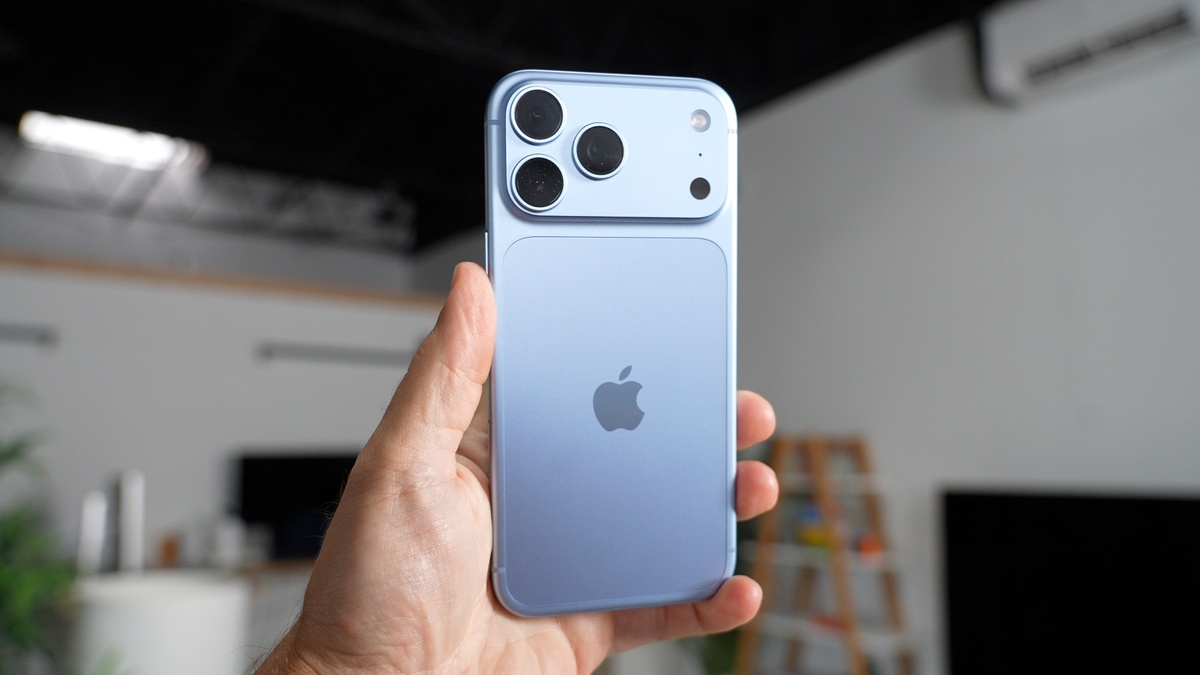
Apple has captured the premier position in modern mobile endurance benchmarking, proving that the flagship iPhone 18 Pro Max battery outlasts rival handsets across intensive real-world testing conducted across thirty-two contemporary smartphones.
According to extensive evaluations published by CNET and highlighted by MacRumors, Apple’s premier hardware secured top honors through two rigorous multi-hour tests assessing display brightness, video streaming, interactive gaming, and multimedia workloads.
| Smartphone Model & Form Factor | Mixed-Use Retention (45 Mins) | Video Streaming Retention (3 Hours) | Combined Score / Overall Rank | Hardware Platform & Battery Note |
|---|---|---|---|---|
| iPhone 18 Pro Max (Apple) | 99% (Tied 1st) | 93% (2nd) | 96.0% (Rank 1 Overall) | A20 Pro (2nm), Expanded Physical Pack & iOS 27 |
| iPhone 18 Pro (Apple) | 97% | 94% (Rank 1 Video) | 95.5% (Rank 2 Overall) | A20 Pro Efficiency Core Optimization & Smaller OLED |
| Google Pixel 11 Pro XL | 97% | 91% | 94.0% (Rank 3 Overall) | Tensor G6 Silicon, Up from 93% Mixed on Pixel 10 |
| iPhone Duo (Foldable) | 99% (Tied 1st) | 88% | 93.5% (Tied 4th Overall) | Dual OLED Panels, Matches Budget $699 iPhone 17e |
| iPhone 17e (Apple) | 96% | 91% | 93.5% (Tied 4th Overall) | High-Value Budget Flagship Matching $1,999 Foldables |
| Motorola Razr Ultra | 95% | 92% | 93.5% (Tied 4th Overall) | Leading Android Foldable Endurance Performance |
| Motorola Moto G Stylus | 94% | 91% | 92.5% (Top 10 Overall) | Budget Endurance Leader with High-Capacity Pack |
| Motorola Edge | 93% | 91% | 92.0% (Top 10 Overall) | Mid-Range Qualcomm Silicon Power Balance |
Table of Contents
1. Testing Methodology: How CNET Evaluated 32 Modern Flagships
Evaluating modern mobile hardware requires consistent testing parameters to distinguish genuine efficiency from fleeting synthetic scores. To establish reliable endurance metrics for devices including the iPhone 18 Pro Max battery, CNET deployed a standardized protocol across thirty-two contemporary smartphones spanning diverse display technologies.
The testing procedure consisted of two distinct phases totaling three hours and forty-five minutes of continuous operation. Every participating handset entered the benchmark suite at one hundred percent charge, operating under strictly calibrated environmental conditions.
The initial benchmark evaluated video streaming over Wi-Fi for three unbroken hours. Crucially, testing required maximum display brightness, forcing the iPhone 18 Pro Max battery and competing handsets to operate under peak continuous electrical and thermal load.
The subsequent phase evaluated mixed daily use across forty-five minutes of rapid task switching. Handsets cycled dynamically between streaming video playback, high-definition video calls, graphics-heavy gaming sessions, and continuous social media browsing to replicate demanding user workflows.
Upon completion of both benchmark phases, evaluators averaged the remaining battery percentages to calculate an overall endurance score. This weighted formula revealed how effectively power management systems balanced passive display drain against intensive processing bursts.
By benchmarking devices simultaneously under identical conditions, the comparison illuminated stark performance divides between manufacturers. While several premium handsets suffered under maximum brightness demands, the iPhone 18 Pro Max battery demonstrated exceptional consistency across both test phases.
2. iPhone 18 Pro Max Battery Architecture: A20 Pro Silicon and Capacity Gains
The primary catalyst behind Apple’s victory is an architectural overhaul supporting the iPhone 18 Pro Max battery. Rather than relying solely on chemical cell expansion, engineers paired an expanded physical cell with cutting-edge A20 Pro system logic.
Built on advanced sub-two-nanometer lithography, the A20 Pro introduces refined microarchitectural efficiency clusters. These low-power cores handle routine display refreshing and background network synchronization with minimal current leakage, ensuring the iPhone 18 Pro Max battery maintains steady discharge curves.
This silicon philosophy mirrors desktop advancements seen in the Apple M4 Mac mini architecture, where architectural density and thermal efficiency take precedence over brute power delivery. Similar architectural discipline within iOS 27 prevents unneeded background processes from draining reserves.
Apple also increased physical cell capacity over the preceding iPhone 17 Pro Max generation. Combined with dense internal packaging and graphite thermal spreaders, this expanded volume allows the iPhone 18 Pro Max battery to sustain heavy processing without voltage dips.
Display subsystem optimizations play an equally vital role in preserving the iPhone 18 Pro Max battery during demanding screen-on scenarios. The tandem OLED panel modulates refresh rates down to one hertz, significantly curbing power consumption at peak brightness.
These architectural innovations collectively explain why the iPhone 18 Pro Max battery outmatched competing flagships. By synchronizing low-power silicon scheduling with optimized display hardware, Apple maximized the utility of every milliamp-hour.
3. Video Streaming and Mixed-Use Breakdown: How Flagships and Foldables Ranked
Individual benchmark segments produced intriguing shifts across the thirty-two tested handsets. In the grueling forty-five-minute mixed-use evaluation, the iPhone 18 Pro Max battery setup and Apple’s maiden foldable, the iPhone Duo, shared first place by retaining ninety-nine percent charge.
Google’s Pixel 11 Pro XL mounted a credible challenge in the mixed-use phase, finishing with ninety-seven percent battery remaining. This marked a noticeable improvement over its predecessor, the Pixel 10 Pro XL, which retained ninety-three percent in identical testing.
However, three-hour video streaming revealed contrasting power profiles across different form factors. While the iPhone 18 Pro Max battery retained ninety-three percent, the smaller iPhone 18 Pro achieved ninety-four percent thanks to its more compact OLED surface area.
Foldable devices encountered heavier electrical friction during prolonged streaming benchmarks. Despite its mixed-use triumph, the iPhone Duo experienced greater power draw over three hours, dropping its combined average and tying for fourth place overall alongside Motorola’s Razr Ultra.
Meanwhile, mobile gaming workloads highlighted how graphical rendering taxes the iPhone 18 Pro Max battery. Demanding titles, increasingly augmented by services covered in our analysis of Xbox cloud gaming mobile tiers, require sustained throughput that tests thermal throttling boundaries.
Throughout these divergent scenarios, the iPhone 18 Pro Max battery exhibited the most balanced endurance envelope. By maintaining upper-tier placement in video streaming alongside its first-place mixed-use finish, the flagship locked down the ultimate victory.
4. Hardware Matrix and Generational Comparison: Endurance Across Price Tiers
One of the most revealing revelations from CNET’s shootout is how closely value-oriented smartphones mirrored the iPhone 18 Pro Max battery benchmark. While premium flagships captured headlines, entry-level devices proved that smart silicon allocation can overcome budgetary constraints.
Apple’s six-hundred-and-ninety-nine-dollar iPhone 17e emerged as a standout value champion alongside the benchmark leaders. Tying the two-thousand-dollar iPhone Duo and fourteen-hundred-dollar Motorola Razr Ultra underscores the broad reach of Apple’s unified silicon efficiency.
Motorola similarly demonstrated strong engineering execution in the budget space, placing the five-hundred-dollar Moto G Stylus and six-hundred-dollar Edge into the overall top ten. These placements validate Motorola’s disciplined battery-first optimization across mid-tier silicon.
| Device & Form Factor | Retail Launch Price | Form Factor Class | Benchmark Retention Average | Silicon Architecture & Lithography | Value Efficiency Assessment |
|---|---|---|---|---|---|
| iPhone 18 Pro Max | $1,199 | Premium Flagship | 96.0% Overall | Apple A20 Pro (TSMC 2nm N2P) | Benchmark leader with top-tier battery runtime |
| iPhone 18 Pro | $999 | Compact Flagship | 95.5% Overall | Apple A20 Pro (TSMC 2nm N2P) | Best streaming endurance across all tested models |
| iPhone Duo | $1,999 | Book-Style Foldable | 93.5% Overall | Apple A20 Pro Dual Engine | Exceptional mixed-use; high display power draw |
| iPhone 17e | $699 | Entry Premium | 93.5% Overall | Apple A19 Bionic (3nm) | Best dollar-per-minute battery endurance value |
| Motorola Razr Ultra | $1,400 | Flip Foldable | 93.5% Overall | Snapdragon 8 Gen 5 Mobile Platform | Top-tier foldable efficiency matching budget iPhones |
| Google Pixel 11 Pro XL | $1,099 | Premium Flagship | 94.0% Overall | Google Tensor G6 Silicon | Significant generational leap over Pixel 10 series |
| Motorola Moto G Stylus | $500 | Budget Mid-Tier | 92.5% Overall | Snapdragon Mid-Range 6 Series | Budget endurance standout cracking the top 10 |
Generational microarchitecture comparisons also highlight parallel trends in desktop computing, where processors like the AMD Ryzen 7 9800X3D gaming processor leverage structural cache and node efficiency to minimize wattage under heavy loads.
In the mobile arena, pairing disciplined silicon with high-capacity cells produced remarkable resilience. The iPhone 18 Pro Max battery capitalized on this architectural alignment, outlasting devices equipped with substantially larger nominal milliamp-hour ratings.
These benchmark metrics demonstrate that price tag alone does not guarantee superior mobile longevity. When evaluating the iPhone 18 Pro Max battery against lower-priced alternatives, consumers should weigh display scale against pure operational runtime.
5. Industry Stagnation and Efficiency Trends: Why Raw Capacity Is No Longer Enough
Despite Apple’s standout victory, CNET’s broader industry findings painted a sobering picture of smartphone battery progression. On average, devices tested in 2026 demonstrated virtually identical endurance figures when compared to models benchmarked across 2025 and 2024.
This technological plateau highlights why the iPhone 18 Pro Max battery achievement stands apart. While cell chemistry offers modest density improvements, those gains are frequently offset across the industry by brighter displays, higher refresh rates, and machine learning hardware.
Consequently, simply stuffing a larger battery into a chassis no longer guarantees extended runtime between charges. Without the unified tuning found in the iPhone 18 Pro Max battery, unoptimized high-frequency displays and coprocessors can rapidly cannibalize additional cell volume.
For the second consecutive year, Apple led CNET’s manufacturer ranking for average battery performance across its entire portfolio. OnePlus secured the second-place manufacturer position, demonstrating commendable charging efficiency and software resource allocation across its lineup.
The industry trajectory suggests that software scheduling will dictate future endurance, as seen with the iPhone 18 Pro Max battery. Handsets that lack deep silicon-level coordination will continue struggling to convert physical cell capacity into meaningful operational longevity.
Ultimately, the iPhone 18 Pro Max battery succeeded because Apple harmonized every component layer from silicon to display. Until rival manufacturers achieve similar system-wide efficiency, Apple will likely maintain its lead in real-world endurance shootouts.
Frequently Asked Questions
Why did the iPhone 18 Pro Max battery win CNET’s 32-smartphone comparison?
The iPhone 18 Pro Max battery finished first overall by combining an expanded physical cell with the sub-two-nanometer A20 Pro chip and iOS 27 system-level power optimizations, delivering superior efficiency across both video streaming and mixed daily usage.
Which smartphone performed best in the video streaming battery test?
The standard iPhone 18 Pro achieved the highest individual score in the three-hour video streaming test, retaining ninety-four percent of its battery charge thanks to its smaller OLED display panel and optimized A20 Pro efficiency cores.
How did foldable smartphones compare to traditional flagships in battery endurance?
While the $1,999 iPhone Duo tied for first in mixed-use testing with ninety-nine percent retention, prolonged display power consumption dropped its overall standing to fourth place, matching the $699 iPhone 17e and $1,400 Motorola Razr Ultra.
Are smartphone batteries generally lasting longer in 2026?
No, CNET reported that average smartphone battery endurance in 2026 remained virtually unchanged compared to 2025 and 2024, as larger cell capacities are increasingly offset by higher screen brightness, faster refresh rates, and demanding processing tasks.
What are the best value smartphones for long battery life?
The $699 iPhone 17e and $500 Motorola Moto G Stylus were highlighted as top value choices, delivering battery endurance that rivaled or exceeded halo flagships costing more than double their retail price.
Final Verdict: Engineering Efficiency Over Pure Cell Volume
The results of CNET’s 32-smartphone shootout establish that the iPhone 18 Pro Max battery represents the current pinnacle of mobile endurance engineering. By claiming the overall title, Apple demonstrated the decisive advantage of unified hardware and silicon co-design.
At the same time, the strong showing of value devices like the iPhone 17e proves that exceptional battery life is no longer reserved exclusively for thousand-dollar flagships. Balanced architecture and disciplined power management deliver impressive longevity across diverse form factors.
As smartphone hardware continues to push display brightness and computational limits, raw battery capacity is no longer sufficient on its own. Benefiting from deep architectural integration, the iPhone 18 Pro Max battery sets a formidable benchmark that rivals must answer.
