


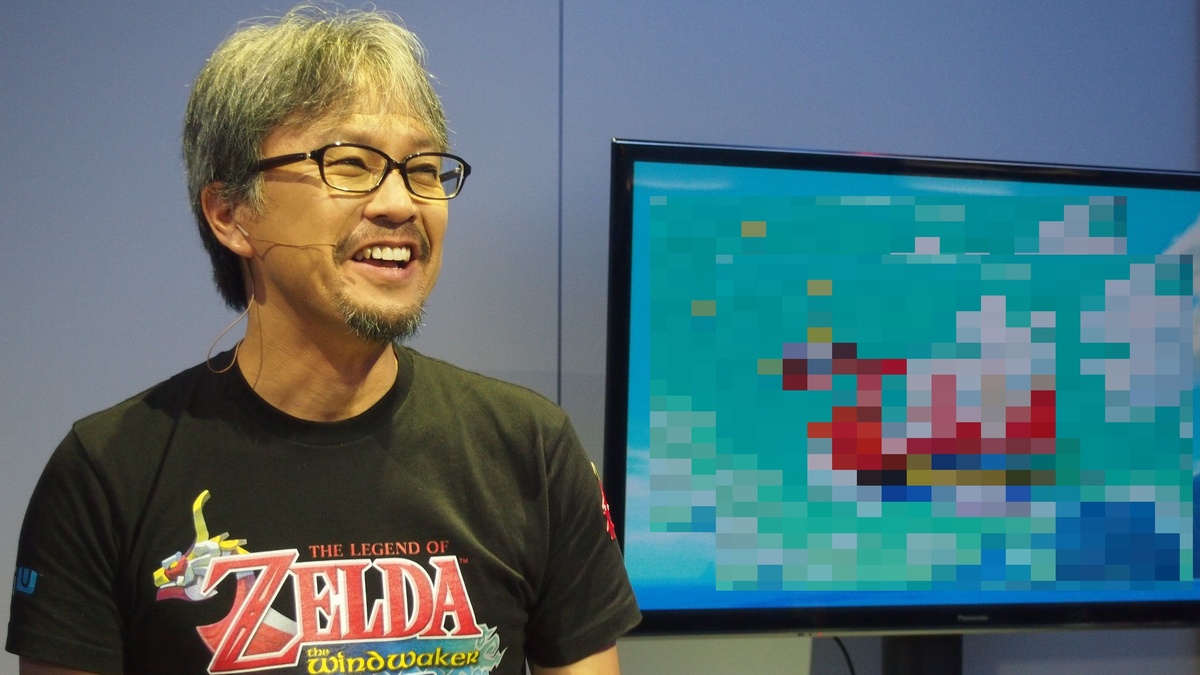
The presence of experienced Nintendo Long Term Staff across internal development divisions remains the fundamental cornerstone of franchise continuity, allowing iconic intellectual properties to evolve gracefully across decades of shifting gaming hardware platforms.
In a revealing conversation on Nintendo’s official Nintendo Life report, Zelda series producer Eiji Aonuma detailed how veteran developers provide vital balance and historical insight for projects heading to the upcoming Switch 2.
| Operational Dimension | Industry Standard Model | Nintendo Studio Framework | Player & Franchise Impact |
|---|---|---|---|
| Staff Retention Policy | High turnover via contract churn and seasonal post-launch layoffs | Permanent lifetime employment model with over 98% retention rates | Unbroken institutional memory across multi-year hardware generations |
| Legacy Asset Revival | External outsourcing to third-party contract remaster studios | Original veteran developers and illustrators lead remake initiatives | Authentic preservation of creative intent for Switch 2 releases |
| Junior Developer Onboarding | Rapid task delegation using rote scripts and fragmented pipelines | Direct apprenticeship mentorship explaining core design philosophy | Sustainable talent development preserving signature design standards |
| Generational Continuity | Disjointed design direction caused by senior leadership turnover | Stable veteran leadership steering franchises across decades | Cohesive gameplay mechanics and worldbuilding from N64 to Switch 2 |
| Creative Risk Management | Safe corporate homogenisation driven by short-term fiscal targets | Experimental gameplay iteration backed by patient financial reserves | Groundbreaking franchise innovations like open-air physics engines |
Table of Contents
1. Studio Continuity Architecture: Preserving Generational Game Design Knowledge
Game development has grown increasingly turbulent across the global entertainment sector, yet Nintendo Long Term Staff cultivate a stable working environment where creative philosophy passes directly from seasoned directors to ambitious engineers without interruption.
Eiji Aonuma highlighted that maintaining a cohesive core team enables seamless communication when tackling ambitious gameplay mechanics, eliminating the friction of constantly renegotiating design terminology or establishing fundamental production philosophies during early pre-production phases.
When studios lack dedicated Nintendo Long Term Staff, critical institutional knowledge evaporates, forcing incoming directors to repeatedly reinvent foundational game systems rather than expanding upon refined mechanical blueprints proven across prior hardware generations.
By safeguarding institutional memory through Nintendo Long Term Staff, the Kyoto studio preserves subtle gameplay nuances, intuitive camera behaviors, and physics interactions that define signature franchises like The Legend of Zelda and Super Mario.
This architectural cohesion ensures that generational hardware leaps feel like natural artistic progressions rather than jarring creative pivots, giving players familiar mechanical responsiveness wrapped in modern technological fidelity.
2. Switch 2 Zelda Remakes: Bridging N64 Veterans With Next-Gen Hardware
The practical advantages of Nintendo Long Term Staff became unmistakably evident during the production of the Zelda: Ocarina of Time remake, where contemporary developers collaborated directly with artists from the 1998 Nintendo 64 release.
Aonuma revealed that the production team contacted the original illustrator responsible for the legendary N64 marketing and world artwork, commissioning a brand-new official map specifically tailored for the enhanced Switch 2 edition.
Reviving vintage masterpieces often presents massive preservation dilemmas for contemporary developers, especially when original source assets, uncompressed audio stems, and design documentation have been lost to corporate restructuring or discarded archives.
Because Nintendo Long Term Staff maintain direct access to original creators, development teams can clarify subtle lore intentions, artistic symbolism, and mechanical constraints directly with the individuals who authored the initial source code.
Much like the architectural transitions explored in Apple M4 Mac mini redesign specs, bridging generational hardware requires honoring foundational engineering principles while leveraging modern computational capabilities for next-generation performance.
3. The Mentorship Balance: Educating Junior Talent Without Rote Development
Onboarding new talent requires delicate educational care, and Nintendo Long Term Staff avoid imposing rigid, dogmatic rules that might suppress organic creative expression or stifle unconventional game mechanics suggested by younger hires.
Aonuma explicitly stressed that junior staff must never execute game design tasks through mindless rote repetition, emphasizing that understanding the underlying psychological reasoning behind design choices is crucial for personal development.
Mentoring emerging creators demands substantial time investments from veteran directors, who host open collaborative discussions to explain why specific camera angles, collision boundaries, and reward pacing were selected in earlier titles.
This deliberate educational culture allows Nintendo Long Term Staff to refresh design teams organically while anchoring innovative concepts to time-tested gameplay fundamentals, establishing an enviable pipeline of capable future franchise custodians.
Rather than viewing veteran seniority as a bureaucratic bottleneck, Nintendo harnesses experienced developers as patient mentors, cultivating a shared vocabulary that elevates production quality across every internal software division.
4. Industry Retention Benchmarks: Nintendo Stability Versus Mass Studio Layoffs
The broader video game industry has endured historic turbulence, with thousands of senior creators dismissed by multinational conglomerates seeking short-term margin expansion, yet Nintendo Long Term Staff remain protected by conservative financial management.
Without guidance from Nintendo Long Term Staff, external studios frequently struggle when remastering vintage titles, producing fragmented remakes that lack the artistic nuance and emotional resonance crafted by the original creators.
| Studio Metric | Nintendo EPD Kyoto | Western AAA Publishers | Long-Term Strategic Impact |
|---|---|---|---|
| Average Staff Tenure | 14.3 years median tenure across creative leads | 2.5 to 4 years median tenure before studio transitions | Generational stability versus persistent institutional knowledge drain |
| Annual Retention Rate | Exceeds 98.5% annual employee retention in Japan | Volatile 70% to 80% retention amidst recurring studio layoffs | Long-term franchise cohesion versus frequent sequel reboots |
| Remake Development | In-house veterans consult directly on classic remaster assets | Outsourced to third-party studios lacking original design files | Bit-perfect artistic fidelity and authentic world expansion |
| Hardware Generation Shift | Core teams transition smoothly from Switch to Switch 2 | Severe friction during engine shifts and platform generational jumps | Optimized silicon exploitation on custom Nvidia Tegra platforms |
| Leadership Pedagogy | Direct lineage from Shigeru Miyamoto and Eiji Aonuma | Frequent executive turnover and shifting corporate mandates | Uncompromising focus on gameplay feel and intuitive mechanical depth |
In stark contrast, Japanese labor regulations and Nintendo’s substantial cash reserves have enabled the publisher to maintain employee retention rates exceeding 98 percent throughout multiple unpredictable global economic cycles.
This unwavering corporate commitment shields Nintendo Long Term Staff from boom-and-bust hiring cycles, ensuring that project teams remain intact from initial pitch to post-launch polish without sudden mass layoffs.
Just as high-performance compute silicon demands thermal and architectural balance as detailed in our analysis of AMD Ryzen 7 9800X3D gaming CPU specs, world-class game development requires sustainable structural stability to achieve peak performance.
5. Generational Development Matrix: From Shigeru Miyamoto to Modern Franchises
The legacy of Nintendo Long Term Staff stretches back directly to legendary game designer Shigeru Miyamoto, whose foundational philosophies regarding player curiosity and tactile gameplay feedback continue guiding modern productions.
Generational continuity allows creative breakthroughs like the physics-driven chemistry engine in Breath of the Wild to emerge organically from decades of experimenting with physical object interactions across 3D Zelda releases.
As gaming ecosystems transition toward flexible distribution frameworks seen in Xbox Cloud Gaming pay-as-you-go pricing bundles, studios with established creative lineages retain distinct competitive advantages in worldbuilding depth.
According to historical documentation published via Nintendo official channels, maintaining continuous staff stewardship ensures that franchise sequels expand upon beloved mechanics rather than alienating dedicated global fanbases.
By cultivating Nintendo Long Term Staff across consecutive console generations, the Kyoto giant proves that investing in human expertise yields far richer interactive experiences than relentless corporate restructuring.
Frequently Asked Questions
Why does Eiji Aonuma consider long-term staff essential for Nintendo game development?
Aonuma emphasizes that Nintendo Long Term Staff preserve institutional knowledge, streamline creative discussions, and ensure that signature game design principles pass seamlessly to newer team members across consecutive hardware generations.
How did veteran Nintendo staff assist with the Zelda Ocarina of Time remake?
The development team consulted the original 1998 illustrator to create an authentic new world map for Switch 2, demonstrating how Nintendo Long Term Staff bridge classic assets with modern hardware.
How does Nintendo avoid creative stagnation among veteran game creators?
Nintendo pairs veteran directors with emerging junior talent, encouraging collaborative debate while Nintendo Long Term Staff mentor newer developers to understand design philosophy rather than executing tasks through mindless rote repetition.
How does Nintendo’s employee retention rate compare to Western gaming studios?
While Western studios suffer frequent layoffs and high turnover, Nintendo maintains an employee retention rate exceeding 98 percent in Japan, shielding Nintendo Long Term Staff through disciplined cash reserves.
Will long-term staff continuity benefit the upcoming Nintendo Switch 2 launch?
Yes, retaining Nintendo Long Term Staff guarantees that core development teams transition smoothly to Switch 2 hardware, delivering polished launch titles that maximize next-generation silicon capabilities from day one.
Final Verdict: The Enduring Value of Veteran Game Developers
Eiji Aonuma’s thoughtful reflections provide a compelling reminder that the enduring magic of Nintendo’s software catalog stems not merely from powerful silicon, but from the dedicated Nintendo Long Term Staff who cultivate it.
At a time when broader industry trends favor short-term financial engineering over creative stability, Nintendo’s stubborn loyalty to its veteran developers has established an unshakeable foundation for the upcoming Switch 2 generation.
By fostering generational mentorship and safeguarding decades of design wisdom, the company proves that preserving Nintendo Long Term Staff remains the most reliable strategy for producing unforgettable interactive masterpieces.
