


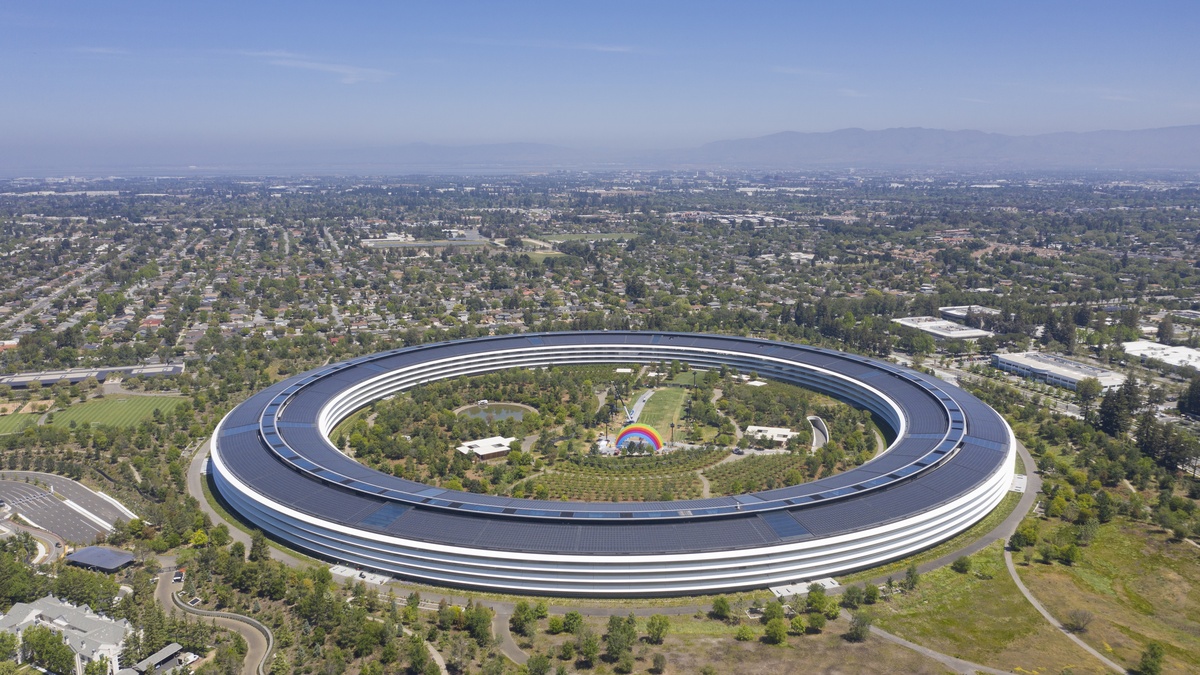
Apple leadership has officially instituted a strict Apple Employee AI Budget across its engineering and product divisions. The internal financial mandate restricts daily spending on commercial artificial intelligence models as Cupertino moves decisively to curb rapidly escalating cloud inferencing expenditures.
According to investigative reporting from Bloomberg and confirmed by MacRumors, engineers previously allowed up to three hundred dollars daily saw allowances reduced to two hundred dollars. Leadership has signaled that quotas could soon fall to one hundred dollars per day.
At-a-Glance: Apple Employee AI Budget Quotas and Cost Controls
| Operational Metric & Indicator | Previous Allocation Policy | October 2026 Phase 1 Cap | Targeted Final Spending Cap |
|---|---|---|---|
| Core Software Engineering Quota | $300 per developer daily | $200 per developer daily | $100 per developer daily |
| Non-Engineering Division Allowance | $100 per employee daily | $100 per employee daily | $25 per employee daily |
| Permitted Third-Party LLM Providers | Claude, ChatGPT, Gemini APIs | Managed commercial endpoints | Prioritizing cost-efficient small models |
| Alternative Infrastructure Mandate | Unrestricted cloud inferencing | Shift to on-device silicon models | Apple Silicon neural engine acceleration |
| Executive Budget Override Process | Discretionary team management | Senior vice president approval | Strict managerial justification required |
Table of Contents
1. Tiered Spending Caps: Slashing Engineer Allowances from $300 to $100
The implementation of a formal Apple Employee AI Budget marks a noticeable departure from Silicon Valley’s open-ended compute culture. Internal memos disclose that engineering teams faced an immediate thirty-three percent budget reduction throughout October, lowering daily ceilings to two hundred dollars.
Department leaders cautioned staff that secondary phases under the Apple Employee AI Budget will halve limits to one hundred dollars daily. Furthermore, non-engineering corporate divisions face drastic reductions, with some administrative groups capped at merely twenty-five dollars daily.
While software developers retain the highest individual allocations, establishing an Apple Employee AI Budget reflects broader operational tightening. Engineering workflows inherently demand elevated API budgets, where continuous unit testing, automated refactoring, and code review routines consume millions of tokens in minutes.
Despite the strict new rules, internal sources revealed that relatively few engineers ever exhausted their original three hundred dollar daily allotments. Consequently, analysts observe that initial financial savings may remain modest compared to the symbolic disciplinary precedent being set.
This systematic resource management echoes the architectural efficiency discussions we detailed in our Apple M4 Mac mini hardware deep-dive. Optimizing computing overhead and hardware utilization remains paramount as operating expenses face intense institutional scrutiny.
2. Token Economics in Software Engineering: Claude, ChatGPT, and Gemini Usage
Software engineering represents the primary driver of cloud API expenses across modern tech campuses. Enforcing an Apple Employee AI Budget directly addresses how modern programmers leverage frontier models like Anthropic Claude, OpenAI ChatGPT, and Google Gemini to accelerate development cycles.
Frontier models charge steep per-token pricing for massive context windows when ingesting complex multi-file codebases. When engineers query models across tens of thousands of code lines, single conversational sessions can rapidly run up substantial computing fees on corporate billing dashboards.
To mitigate these expenses under the Apple Employee AI Budget, management is actively encouraging developers to utilize lightweight, distilled language models. Routing routine syntactical queries toward smaller models preserves premium frontier tokens exclusively for complex architectural debugging and system design.
Under the official Apple Employee AI Budget, engineers requiring temporary quota increases must formally submit business justifications directly to executive management. This friction encourages thoughtful prompt caching, aggressive context pruning, and more deliberate invocation of external model APIs across developer benches.
A parallel trend towards cost-effective processing was highlighted in our AMD Ryzen 7 9800X3D gaming architecture report. Hardware engineers continually seek optimal compute efficiency, balancing raw processing power against strict thermal and financial consumption boundaries.
3. The On-Device Silicon Pivot: Migrating Workloads to Local Neural Engines
A central pillar of the Apple Employee AI Budget directive urges engineering teams to transition eligible workloads from remote cloud servers to local hardware. Apple Silicon Macs equipped with unified memory architectures offer formidable platforms for running quantized open-source models offline.
Modern M-series workstations featuring dedicated Neural Engines and high-bandwidth memory can comfortably execute seven-billion and fourteen-billion parameter foundation models. Running local inference entirely bypasses third-party API fees while ensuring that sensitive internal source code never leaves corporate storage.
Encouraging staff to adopt local inference reinforces Apple’s foundational technological philosophy of on-device intelligence. By adhering to the Apple Employee AI Budget guidelines, Cupertino effectively turns its internal developer community into a living testing ground for sovereign, edge-native computing paradigms.
Beyond desktop Apple Silicon, Apple leverages Private Cloud Compute clusters powered by custom server silicon to handle scaled enterprise inferencing securely. This hybrid topology minimizes reliance on third-party hyperscalers while providing verifiable cryptographic privacy guarantees across internal engineering pipelines.
These cloud infrastructure trade-offs mirror the enterprise dynamics explored in our Xbox Cloud Gaming streaming business breakdown. Balancing centralized cloud infrastructure against localized client compute dictates long-term scalability and margin preservation across modern digital platforms.
4. Corporate Governance Under John Ternus: Eliminating Operational Bloat
The implementation of the Apple Employee AI Budget coincides directly with the leadership transition of Chief Executive Officer John Ternus. Assuming executive stewardship on September 1, Ternus has initiated sweeping reviews aimed at streamlining corporate hierarchies and eliminating unnecessary overhead.
Cupertino leadership has engaged external management consulting firms across several divisions to audit organizational productivity and asset utilization. Paired with strict compute quotas, these structural assessments have sparked internal conversations regarding potential restructuring and workforce realignments.
Historically, Apple operated with lean functional teams that privileged razor-sharp operational focus over sprawling managerial layers. Reinforcing the Apple Employee AI Budget reflects Ternus’s commitment to returning Apple to high-output engineering execution with fewer administrative redundancies.
By enforcing the Apple Employee AI Budget, executive leadership establishes an uncompromising cultural tone regarding fiscal responsibility. Even cash-rich technology juggernauts must rationalize exploratory research expenditures when commercial monetization pathways demand measurable returns on invested silicon capital.
Similar strategic realignments and legacy support sunsets were examined in our Nvidia ending Windows 10 driver support analysis. Navigating technological inflection points requires commercial enterprises to proactively discard inefficient legacy practices in favor of streamlined modern architectures.
Enterprise AI Spending Matrix: Daily Quotas, Model Tiering, and Infrastructure Costs
| Computing Infrastructure Tier | Primary Target Workloads | Cost Structure & Daily Cap | Latency & Security Boundary |
|---|---|---|---|
| Frontier Cloud APIs (Claude, ChatGPT) | Complex architecture, deep refactoring | $100 to $200 per engineer daily | Sub-second cloud latency, egress audit |
| Cost-Efficient Distilled Models | Boilerplate syntax, routine unit tests | Under $25 daily per seat | High-throughput cloud inference |
| Apple Private Cloud Compute | Internal enterprise data processing | Capital expenditure amortized | Cryptographic silicon privacy sandbox |
| Local On-Device Apple Silicon (M4/M5) | Offline code completion, autocomplete | Zero variable API consumption | Instant zero-latency local neural engine |
5. Enterprise AI Cost Trajectory: Balancing Cloud Inferencing and R&D Margins
Apple’s introduction of an Apple Employee AI Budget signals a broader industry reckoning regarding enterprise artificial intelligence economics. As generative tools transition from exploratory novelties to institutional utilities, chief financial officers across technology sectors are demanding measurable fiscal accountability.
Uncontrolled developer API consumption can quickly accumulate into millions of dollars in monthly cloud invoices without proportionate productivity gains. By enforcing structured quotas, corporate finance teams can accurately forecast computing expenditures while curtailing speculative experimentation.
Furthermore, dependency on third-party commercial model APIs creates strategic vulnerabilities regarding proprietary code safety and vendor lock-in. Establishing an Apple Employee AI Budget incentivizes engineering groups to build durable in-house tooling that reinforces corporate intellectual sovereignty.
Other Silicon Valley enterprises are expected to adopt comparable administrative safeguards as software budgets normalize. Adopting an Apple Employee AI Budget model ensures that artificial intelligence acceleration enhances engineering velocity without undermining enterprise gross margins.
As Cupertino refines internal policies, developers worldwide are observing how Tier-1 corporations balance generative agility against disciplined governance. Enforcing sustainable compute quotas proves that long-term engineering success requires financial stewardship alongside architectural innovation.
Frequently Asked Questions
Why did Apple introduce an Apple Employee AI Budget for its staff?
Apple instituted an Apple Employee AI Budget to curb rapidly expanding third-party cloud computing expenses. As engineers query commercial models for coding and debugging, establishing daily caps ensures disciplined fiscal management across software divisions.
What are the new daily AI spending limits for Apple engineers?
In October, Apple reduced engineering daily allowances from three hundred dollars down to two hundred dollars. Leadership has communicated that quotas could soon decrease further to one hundred dollars per day for developer roles.
Which artificial intelligence models are Apple employees allowed to use?
Apple permits employees to utilize leading commercial models, including Anthropic Claude, OpenAI ChatGPT, and Google Gemini. However, leadership is actively directing teams toward smaller, more cost-effective models or local on-device alternatives.
How can Apple employees exceed their daily AI spending limit?
Employees who require compute capacity exceeding the standard Apple Employee AI Budget must submit formal business justifications to executive leadership. Senior management reviews and approves exceptions for critical research and high-priority development initiatives.
Who is leading Apple’s new operational efficiency and cost-cutting push?
Chief Executive Officer John Ternus, who assumed leadership on September 1, is spearheading the operational streamlining effort. Ternus is actively auditing division productivity and reducing corporate bloat to foster agile, high-output engineering execution.
Final Verdict: What Internal AI Caps Mean for Enterprise Software Buyers
The rollout of the Apple Employee AI Budget represents a watershed moment for enterprise generative computing. By replacing open-ended credit lines with disciplined daily allocations, Cupertino demonstrates that artificial intelligence adoption must demonstrate tangible operational return on investment.
For software buyers and IT directors, Apple’s strategy illustrates the vital importance of hybrid computing architectures. Transitioning routine tasks to local silicon while reserving premium cloud tokens for complex architectural challenges provides a sustainable blueprint for enterprise scalability.
Under John Ternus, Apple is demonstrating that uncompromising fiscal governance and cutting-edge engineering excellence can coexist harmoniously. Embracing the Apple Employee AI Budget ensures that developer productivity continues advancing rapidly within sustainable economic guardrails.
