


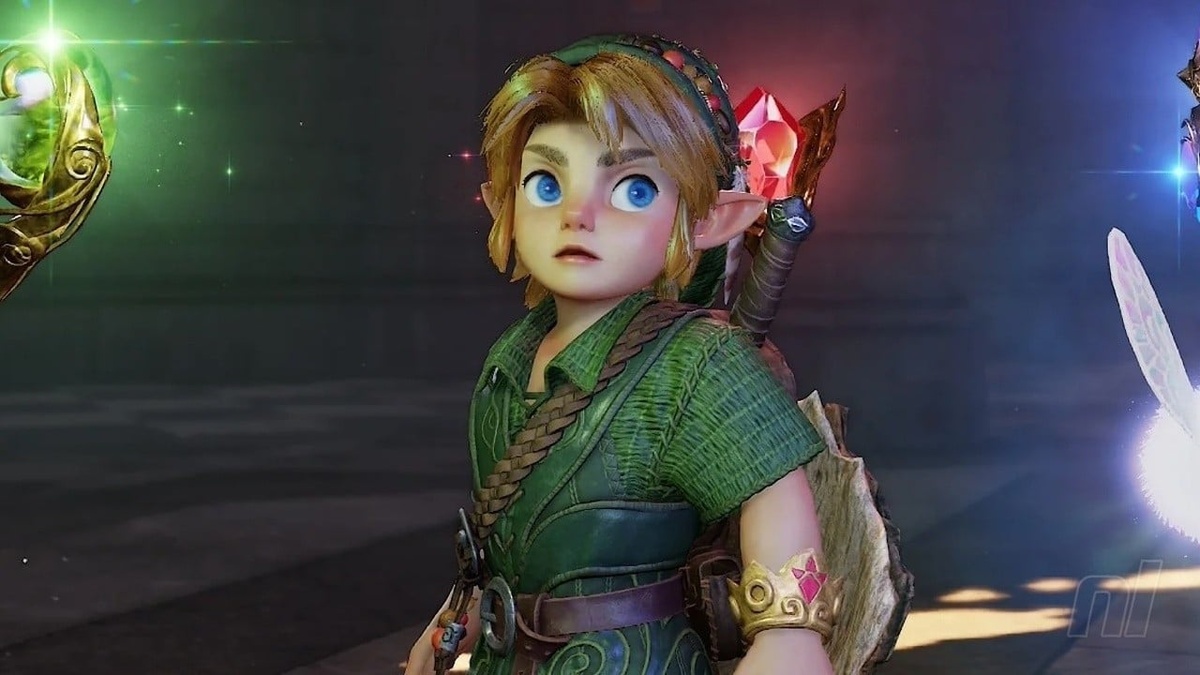
Critical acclaim has erupted across the gaming industry as initial Ocarina of Time reviews confirm a triumphant return for the Nintendo 64 masterpiece on Switch 2 hardware. With a stellar 96 Metacritic average, critics are universally celebrating this ambitious ground-up visual restoration.
According to the latest review roundup compiled by Nintendo Life, premier outlets have lavished universal praise on the project. Nonetheless, discerning gamers reading Ocarina of Time reviews must evaluate key technical tradeoffs, missing legacy modes, and platform performance before buying.
At-a-Glance: Ocarina Of Time Reviews and Hardware Specs
| Evaluation Metric | Switch 2 Specification | Original N64 Baseline | Critical Consensus & Impact |
|---|---|---|---|
| Overall Critical Reception | 96 Metascore across 81 reviews | 99 Metascore (All-Time Record) | Universal acclaim; matches historic standing in modern Ocarina of Time reviews |
| Target Frame Rate | Locked 60 FPS in docked and handheld modes | Variable 20 FPS native film cadence | Tripled frame rate provides responsive input timing during sword combat |
| Display Output Resolution | Dynamic 1440p DLSS Docked / 1080p Handheld | 320×240 analogue CRT output | High-resolution presentation with occasional undocked distant edge shimmering |
| Camera Navigation System | Full 360-degree analog right-stick control | Fixed Z-targeting camera with auto-follow | Eliminates pre-rendered backgrounds; Hyrule Castle Town is fully 3D |
| Audio & Voice Implementation | Fully orchestrated symphonic score with voice acting | 4-channel algorithmic MIDI synthesis | Revamped acoustics with cheerful, vastly less intrusive Navi dialogue |
| Unique Hardware Integrations | Microphone pitch detection & Zelda Notes | N64 controller button combinations | Allows acoustic instruments, whistling, or peripherals to play melodies |
| Campaign Extra Content | Hall of Fallen Foes boss rush challenge mode | Standard linear campaign progression | Enables post-game boss replayability and time trials via resting beds |
| Omitted Features | Master Quest and multiple manual save files | Master Quest available on GameCube / 3DS | Lack of mirrored high-difficulty dungeons limits veteran replay value |
Table of Contents
1. Critical Consensus and Metacritic Breakdown: The 96 Score Phenomenon
The global reception reflected in early Ocarina of Time reviews has been nothing short of historic. Sitting at a 96 Metascore across eighty-one verified critic publications, the remake matches the revered cultural standing of its 1998 predecessor.
Tier-one outlets including GamesRadar and VGC awarded flawless 5/5 scores, hailing the project as a masterclass in faithful restoration. Reviewers emphasized that modern graphical upgrades enrich the foundational adventure without compromising its original artistic spirit or delicate atmosphere.
Similarly, Eurogamer issued a maximum 5/5 rating, admiring how contemporary visual clarity makes the legendary journey feel freshly minted. Game Informer delivered an enthusiastic 9.25/10 review, remarking that the emotional narrative resonance of the final confrontation remains profoundly moving decades later.
Major global authorities like GameSpot and IGN both contributed stellar 9/10 scores, highlighting how respectful adaptation preserves timeless dungeon design. Reviewers noted that dense, intimate world building across Hyrule Field feels remarkably captivating when experienced through modernized high-definition rendering pipelines.
Even slightly more reserved Ocarina of Time reviews, such as RPG Site’s 8/10 assessment, acknowledged the title’s monumental legacy. Critics agreed that minor omissions do not obscure the timeless brilliance of Nintendo’s foundational three-dimensional adventure formula.
2. Visual Engine Architecture: Rebuilt Dynamic Foliage and Lighting
Delving into the technical achievements highlighted by Ocarina of Time reviews, Nintendo’s ground-up graphical overhaul represents an astonishing engineering milestone. Gone are low-polygon geometric models, replaced by high-density physical assets rendered with advanced modern lighting models.
Dense canopies throughout Kokiri Forest filter dynamic god rays across the forest floor, casting realistic soft shadows that react to Link’s movements. Intricate cobwebs stretch realistically between ancient timber beams inside the Great Deku Tree, reacting dynamically when touched by deku stick flames.
Character models receive exquisite textural refinement, from woven fabric creases in Link’s tunic to specular reflections across Goron mineral skin. Dynamic environmental reflections dance across flowing water within Zora’s Domain, demonstrating graphical fidelity previously impossible on vintage cartridge hardware.
Furthermore, urban zones that previously relied on static pre-rendered background plates have been completely reconstructed in native polygonal 3D. Hyrule Castle Town now functions as a bustling medieval metropolis filled with architectural depth, smoking chimneys, and wandering townspeople.
Dungeons benefit immensely from this overhauled atmospheric fidelity, transforming familiar navigational puzzles into breathtaking physical encounters. Across published Ocarina of Time reviews, reviewers frequently highlighted the Water Temple’s fluid dynamics and translucent underwater surfaces as standout visual triumphs.
3. Benchmark Analysis: Locked 60 FPS Fluidity and Scaler Metrics
Performance metrics detailed across Ocarina of Time reviews underscore Nintendo’s uncompromising commitment to motion responsiveness. The remake delivers a rigid sixty frames per second target across both docked and portable configurations, representing a massive leap over the original twenty-cycle N64 cadence.
In docked mode, the console utilizes advanced temporal reconstruction algorithms to upscale dynamic native buffers to a crisp 1440p presentation. Frame pacing remains remarkably consistent during complex boss encounters, ensuring flawless sword parry inputs against Dark Link and Phantom Ganon.
As documented in our Ocarina of Time update analysis, early firmware patches successfully ironed out minor frame drops. Handheld mode drops internal rendering resolution to preserve battery longevity while maintaining an unwavering sixty frames per second standard.
This handheld graphical compromise introduces subtle softness along distant geometry like Death Mountain ridges and Hyrule Field foliage. However, motion clarity during intense combat encounters remains pristine, providing portable enthusiasts with an exceptionally smooth, responsive adventure.
Much like the architectural balance analyzed in our AMD Ryzen 7 9800X3D gaming benchmark breakdown, Nintendo’s targeted hardware profiling proves that optimized silicon execution delivers a superior player experience without demanding unsustainable power budgets.
4. Modernized Mechanics: 360 Camera Controls and Acoustic Pitch Tracking
A central talking point throughout Ocarina of Time reviews is the transformative modernization of camera management. Players can now freely orbit a full 360-degree analog camera using the right thumbstick, completely eliminating the awkward blind spots inherent in classic Z-targeting navigation.
Acoustic engineering has similarly undergone a monumental upgrade, replacing vintage four-channel MIDI synthesis with full symphonic orchestral recordings. Koji Kondo’s legendary melodies resonate with majestic brass, delicate woodwinds, and sweeping strings that heighten the emotional gravitas of every narrative chapter.
Cinematic sequences incorporate voice acting for pivotal character interactions, while fairy companion Navi has been thoughtfully adjusted. Repetitive audio alerts have been dramatically reduced, ensuring hints provide concise, helpful guidance without interrupting the natural rhythm of dungeon exploration.
Nintendo has also integrated console microphone pitch tracking into ocarina performance sequences, enabling genuine acoustic gameplay. As praised in Ocarina of Time reviews, players can whistle, sing, or play real acoustic guitars near the console to perform melodies alongside standard gamepad buttons.
Additionally, the newly introduced Threads of Time chronicle logs quest milestones and NPC dialogue within an accessible interface. This ledger ensures returning players can resume complex trading sequences or heart piece hunting without consulting external walkthroughs.
Generational Comparison Matrix: Ocarina of Time Review Scores and Platform Features
| Hardware Generation | Platform Target | Frame Rate Target | Resolution Capability | Audio Architecture | Unique Defining Trait |
|---|---|---|---|---|---|
| Switch 2 Remake (2026) | Nintendo Switch 2 | Locked 60 FPS | Dynamic 1440p DLSS Docked / 1080p Handheld | Full Orchestral Score & Voice Acting | Hall of Fallen Foes & Mic Ocarina Support |
| Ocarina of Time 3D (2011) | Nintendo 3DS | Locked 30 FPS | 800×240 Autostereoscopic 3D | Enhanced Synthesized Audio Samples | Master Quest Included & Gyro Aiming |
| Ocarina of Time (1998) | Nintendo 64 | Variable 20 FPS | 320×240 Analogue Output | 4-Channel Real-Time MIDI Synthesis | Pioneered 3D Z-Targeting Mechanics |
| Master Quest Edition (2002) | Nintendo GameCube | Variable 20 FPS | 480p Progressive Scan Component | Direct Port MIDI Audio Playback | Mirrored World with Redesigned Dungeons |
5. Release Details and Critical Omissions: Save Constraints and Missing Master Quest
While praise dominates published Ocarina of Time reviews, technical analysts have highlighted several notable limitations that prospective buyers must consider. Chief among these disappointments is the complete omission of the beloved Master Quest campaign at retail launch.
First introduced on GameCube and later included with the 3DS edition, Master Quest offered rearranged dungeons and mirrored topography. Because this Switch 2 release mirrors original 1998 puzzle solutions, seasoned veterans will experience little friction deciphering familiar dungeon layouts.
File storage management also introduces surprising restrictions, limiting each console account to a single manual save slot alongside automatic checkpoints. Gamers desiring independent concurrent adventure files must configure alternate system user profiles on their Switch 2 hardware.
Silicon constraints and platform design choices mirror broader industry patterns examined in our Apple M4 Mac mini silicon evaluation and Nvidia legacy platform support analysis. Optimizing modern software architectures frequently requires focused hardware compromises.
Prospective buyers can explore our companion Ocarina of Time buyer’s guide for deeper feature comparisons. With global retail availability commencing in under twenty-four hours, understanding these specific limitations ensures realistic expectations for eager fans.
Frequently Asked Questions
What is the overall Metacritic score across Ocarina of Time reviews?
The remake has earned an exceptional 96 Metascore across eighty-one critic evaluations, cementing its status across Ocarina of Time reviews. Major publications including GamesRadar, VGC, and Eurogamer awarded the title perfect scores.
Does the game achieve a stable 60 FPS in handheld mode?
Yes, technical testing in Ocarina of Time reviews confirms a locked sixty frames per second in both handheld and docked configurations. While handheld mode uses dynamic resolution scaling to protect battery life, motion clarity and combat responsiveness remain remarkably fluid.
Is Master Quest included in the launch edition?
No, Master Quest is not included in the launch release. As detailed across Ocarina of Time reviews, the package features the original 1998 campaign with overhauled visuals, meaning dungeon layouts and puzzle solutions match the classic adventure exactly.
How does the microphone ocarina mechanic function?
Players can perform ocarina melodies using the console microphone through real-time acoustic pitch tracking. Noted across multiple Ocarina of Time reviews, whistling, singing, or playing acoustic guitars accurately triggers notes, though standard gamepad buttons remain fully supported.
How many manual save slots does the remake support?
The game provides only one manual save file per console profile, supplemented by autosaves. As clarified in Ocarina of Time reviews, players wishing to start concurrent separate playthroughs must create additional user accounts on their Switch 2 console.
Final Verdict: Do Ocarina of Time Reviews Justify the Hype?
The overwhelming consensus across Ocarina of Time reviews confirms that Nintendo has delivered an extraordinary revitalization of gaming’s greatest classic. By uniting breathtaking visual fidelity, lush orchestral acoustics, and responsive sixty-frame performance, this remake breathes vibrant modern life into Hyrule.
While the omission of Master Quest and single save slot constraint are noticeable shortcomings, they do not diminish the immense craftsmanship on display. The tactile camera overhaul and acoustic innovations showcase Nintendo’s thoughtful approach to generational preservation.
For longtime enthusiasts and newcomers alike, this stellar restoration represents an unmissable flagship addition to the Switch 2 library. As global Ocarina of Time reviews resoundingly prove, the timeless magic of Hyrule remains just as enchanting and essential today as it was in 1998.
