


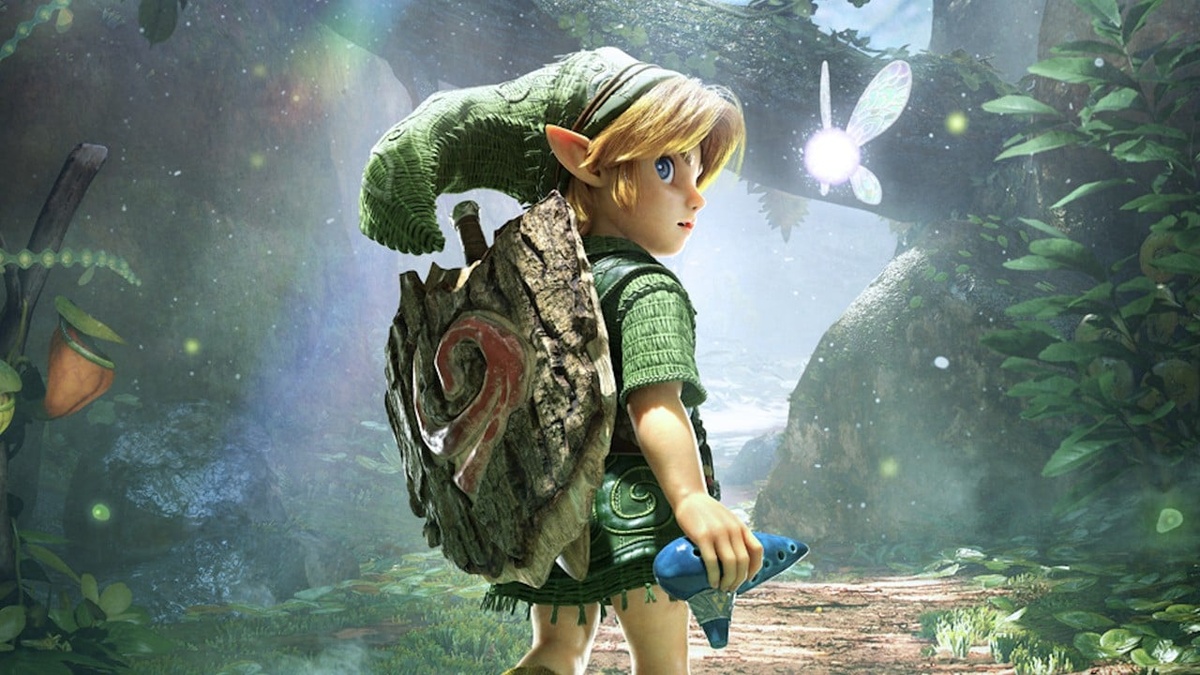
Japanese gaming magazine Famitsu has officially published the world’s first critical review for Ocarina of Time Switch 2. Delivering its highly anticipated evaluation ahead of launch, the publication awarded Nintendo’s ground-up adventure remake a glowing aggregate score of thirty-seven out of forty.
According to coverage from Nintendo Life, this initial critical assessment cements high expectations. For players evaluating the hardware release, Ocarina of Time Switch 2 showcases how modernized graphics pipelines, responsive traversal mechanics, and rock-solid sixty frames per second performance rejuvenate a historic masterpiece.
At-a-Glance: Ocarina of Time Switch 2 Specifications and Features
| Feature Parameter | Ocarina of Time Switch 2 | Nintendo 64 Original (1998) | Nintendo 3DS Remake (2011) | Player Impact |
|---|---|---|---|---|
| Famitsu Review Score | 37/40 (9/9/9/10 verdict) | 40/40 (Historic first perfect score) | 37/40 (Grezzo visual update) | Near-perfect critical consensus matching modern prestige standards |
| Target Performance | Locked 60 FPS with DLSS scaling | Variable 20 FPS (17 FPS in PAL) | Locked 30 FPS stereoscopic mode | Silky fluid combat response across all intensive boss encounters |
| Display Resolution | Dynamic 4K docked / 1080p handheld | 240p analog composite output | 240p dual-screen autostereoscopic | Unprecedented textural clarity on modern high-resolution screens |
| Locomotion & Traversal | Dedicated jump, sprint, free 360 camera | Contextual auto-jump, fixed lock-on | Contextual auto-jump, circle pad aiming | Modern platforming agency eliminating awkward ledge falls |
| Inventory Ergonomics | Real-time D-pad wheel, instant iron boots | Full pause menu switching required | Dual-screen touch item management | Instantaneous puzzle solving without halting game momentum |
| Acoustic Architecture | Fully orchestrated live symphonic audio | Sequenced MIDI chip synthesis | Enhanced synthesized arrangements | Breathtaking orchestral warmth across Hyrule’s iconic melodies |
Table of Contents
1. Famitsu Review Breakdown: Parsing the 37/40 Score and Historical Legacy
Famitsu’s review committee employs four independent critics scoring at Famitsu. For Ocarina of Time Switch 2, three reviewers awarded nines while one critic awarded a ten, culminating in a prestigious thirty-seven out of forty.
This verdict carries deep historical weight. In November 1998, Famitsu awarded the original Nintendo 64 release the publication’s first perfect forty out of forty. Matching the 2011 handheld remake’s tally, Ocarina of Time Switch 2 demonstrates remarkable consistency across three gaming eras.
Reviewers praised how the remake preserves emotional storytelling while eliminating retro technical obstacles. Mirroring architectural leaps explored in our AMD Ryzen 7 9800X3D gaming benchmarks, refined engineering transforms nostalgic design into seamless modern immersion across this ambitious new remake.
The lone dissenting criticism noted that underneath the stunning visual reconstruction, late-nineties adventure pacing remains distinctly recognizable. Players accustomed to modern open-world freedom may find early dungeon sequencing slightly structured, though Famitsu emphasized this linearity preserves narrative tension and classic dungeon complexity.
Ultimately, Famitsu’s critical praise validates Nintendo’s painstaking development cycle. The initial reception confirms that this landmark handheld remake honors its groundbreaking heritage while delivering the responsive, accessible gameplay expected by contemporary players.
2. Rebuilt Graphics Engine: High-Poly Hyrule, Dynamic Lighting and DLSS Scaling
Visually, Ocarina of Time Switch 2 represents an astonishing graphical leap powered by custom Tegra silicon. Rebuilt from scratch, the kingdom of Hyrule features physically based rendering materials, volumetric foliage, dynamic day-and-night cycles, and subtle ray-traced ambient lighting.
Character models have undergone complete artistic overhauls. Link, Princess Zelda, and Ganondorf exhibit detailed clothing geometry with authentic cloth simulation, facial nuance, and expressive eyes that elevate dramatic story cutscenes into cinematic masterclasses that far surpass earlier blocky polygonal models.
Docked gameplay leverages deep-learning super sampling to deliver clean dynamic four-thousand resolution output on large living room displays. In handheld mode, Ocarina of Time Switch 2 presents a native ten-eighty-p pixel grid across its vibrant eight-inch panel, eliminating blur and showcasing intricate architectural masonry.
Hyrule Field now feels like a living, breathing ecosystem rather than an expansive empty plain. Flocks of birds scatter dynamically as players sprint past, grass blades bend realistically underfoot, and distant landmarks like Death Mountain cast dramatic geometric shadows across rolling green hillsides.
Much like cutting-edge silicon architectures detailed in our Apple M4 Mac mini breakdown, hardware efficiency allows dense geometry without compromising thermal limits. This graphical overhaul ensures this ambitious adventure remake stands among the visually richest launch window titles.
3. Overhauled Traversal & Combat: Dedicated Jump Controls and HD Rumble 2 Feedback
Perhaps the most transformative mechanical upgrade in Ocarina of Time Switch 2 is the introduction of dedicated manual locomotion controls. Replacing the classic contextual auto-jump system, players can now execute manual jumps and tactical sprint maneuvers, granting unprecedented control during tight platforming sequences.
Camera handling receives a modern overhaul with full three-hundred-sixty-degree analog stick control, allowing players to survey surroundings freely without constantly resetting their viewpoint with targeting triggers. The iconic Z-targeting mechanic remains intact but features refined sensitivity and fluid target switching during chaotic group skirmishes.
Immersion is dramatically amplified by Nintendo’s second-generation high-definition rumble haptic technology. Joy-Con controllers deliver nuanced mechanical resistance when drawing the Fairy Bow, subtle galloping vibrations while riding Epona, and delicate acoustic resonance that mimics musical notes inside this remade classic.
Sword combat feels noticeably crisper, supported by modernized animation blending and responsive parry windows. Link transitions effortlessly between horizontal slashes, jump attacks, and shield deflections, delivering kinetic feedback that makes combat encounters against Stalfos and Lizalfos significantly more rewarding.
By harmonizing responsive input latency with refined locomotion physics, Nintendo has resolved decades-old traversal frustrations. These ergonomic enhancements prove this ground-up console remake is not merely a visual remaster, but a comprehensively modernized action-adventure that feels exceptional in hand.
4. Quality-of-Life Dungeon Refinements: Eliminating Water Temple Friction
Dungeon navigation has been thoughtfully streamlined, resolving notorious friction points that frustrated generations of adventurers. In Ocarina of Time Switch 2, the infamous Water Temple has been radically re-engineered with intuitive color-coded water level pathways, eliminating repetitive backtracking through confusing flooded corridors.
The cumbersome process of swapping footwear has finally been eradicated. Instead of requiring players to pause gameplay and navigate inventory menus, the Iron Boots and Hover Boots can now be assigned to convenient D-pad shortcuts, enabling instantaneous footwear transitions during dynamic water puzzles.
An all-new Threads of Time investigative ledger tracks side quests, heart piece locations, and Gold Skulltula tokens without external guides. Reminiscent of system monitoring tools explored in our NVIDIA driver software analysis, this spatial map tracking enhances clarity throughout Ocarina of Time Switch 2.
The iconic musical mechanics also receive welcome accessibility upgrades. While musical purists can still play the ocarina note-by-note using analog buttons, a quick-melody radial selector allows instant recital of learned teleportation tunes and environmental anthems during fast-paced exploration.
These deliberate refinements remove tedious inventory management while preserving cerebral dungeon design. Veteran players and series newcomers will appreciate how this modernized Zelda adventure respects player time without diminishing the intellectual satisfaction of conquering challenging labyrinth puzzles.
Generational Hardware Matrix: Nintendo 64 Versus Ocarina of Time Switch 2
| System Architecture Matrix | 1998 Nintendo 64 Original | 2011 Nintendo 3DS Remake | Ocarina of Time Switch 2 | Generational Evolution |
|---|---|---|---|---|
| Compute Silicon | NEC VR4300 @ 93.75 MHz | ARM11 Dual-Core @ 268 MHz | NVIDIA Tegra T239 Custom SoC | Massive generational leap in parallel compute and tensor capability |
| Target Framerate | 20 FPS fixed timing clock | 30 FPS locked target | 60 FPS silky smooth performance | Triple the temporal resolution for fluid swordplay and dodge inputs |
| Lighting Architecture | Static vertex lighting | Pre-baked texture lighting | Real-time dynamic PBR & ray tracing | Realistic optical atmospheric scattering and natural surface reflections |
| Memory Footprint | 4 MB RDRAM (8 MB with Expansion) | 128 MB FCRAM | 12 GB Unified LPDDR5X RAM | Instantaneous asset streaming eliminating loading transition screens |
| Physical Storage Media | 32 MB ROM Game Pak Cartridge | 512 MB Flash Game Card | 64 GB High-Speed Solid-State Card | Uncompressed symphonic audio scores and 4K textural assets |
5. Hardware Performance & Pricing: 60 FPS Benchmarks and Retail Value Verdict
Performance stability is where Ocarina of Time Switch 2 truly excels on Nintendo Switch 2 hardware. Digital analysis demonstrates an unflinching sixty frames per second lock across demanding set pieces, including volcanic eruptions on Death Mountain and particle-heavy boss fights that strained earlier consoles.
Load times have effectively been eliminated thanks to ultra-fast solid-state cartridge bandwidth and high-speed internal storage. Transitioning from expansive outdoor plains into dense dungeons occurs instantaneously, preserving narrative momentum and making Hyrule feel like a cohesive, uninterrupted playground.
Pricing and packaging details align with modern flagship releases. The standard edition retails at sixty-nine dollars, while a deluxe collector’s bundle includes a physical ceramic replica ocarina and hardbound art compendium, representing substantial tangible value across both physical editions.
As cloud gaming models evolve toward flexible streaming access explored in our Xbox Cloud Gaming pricing report, standalone offline gaming remains treasured. Nintendo delivers a pristine, self-contained adventure that requires zero persistent online connections for this offline campaign.
For gamers deciding whether to purchase at launch, Famitsu’s review provides strong reassurance. Between uncompromising visual fidelity, refined controls, and buttery sixty frames per second performance, Ocarina of Time Switch 2 justifies its status as an essential purchase for every platform owner.
Frequently Asked Questions
What score did Famitsu award Ocarina of Time Switch 2?
Famitsu awarded Ocarina of Time Switch 2 an outstanding aggregate score of 37/40, with three reviewers giving it a 9/10 and one reviewer awarding a 10/10.
How does this review score compare to the 1998 original?
The original 1998 Nintendo 64 release earned a historic perfect 40/40, while the 2011 3DS remake also scored 37/40, highlighting enduring critical acclaim across generations.
What target framerate does Ocarina of Time Switch 2 achieve?
Ocarina of Time Switch 2 targets and maintains a locked 60 frames per second across both docked dynamic 4K and undocked 1080p handheld modes with zero performance slowdown.
What major locomotion controls have been modernized in the remake?
The release replaces contextual auto-jumping with dedicated manual jump and sprint buttons, while adding full 360-degree analog camera navigation across all environments in the updated game.
How has the notorious Water Temple puzzle friction been addressed?
The Water Temple includes illuminated water-level pathways and instant D-pad footwear toggling for Iron Boots, completely eliminating the tedious menu pausing required in the Nintendo 64 version.
Final Verdict: An Essential Masterpiece for Switch 2 Early Adopters
Famitsu’s glowing thirty-seven out of forty verdict underscores why Ocarina of Time Switch 2 is a generational milestone. By marrying nostalgic emotional reverence with cutting-edge visual technology, Nintendo has delivered an exceptional launch-era experience that revitalizes the greatest adventure in gaming history.
Hardware enhancements elevate every aspect of gameplay, from fluid sixty frames per second sword combat and manual platforming freedom to expressive haptic feedback. Lingering late-nineties adventure pacing quirks are easily eclipsed by breathtaking visual presentation, instant load times, and smart dungeon refinements.
Whether you are revisiting Hyrule or entering the Temple of Time for the first time, this release stands as an undeniable triumph. For Nintendo Switch 2 early adopters, Ocarina of Time Switch 2 demands an immediate place in your gaming collection.
