


The global gaming landscape experienced an unexpected seismic shock when developer Pocketpair expressed formal interest in bringing their blockbuster survival crafting phenomenon to Nintendo’s next-generation console. The prospect of Palworld Nintendo Switch 2 hardware integration introduces unprecedented industry intrigue.
According to an exclusive interview conducted by IGN, Pocketpair leadership confirmed they would enthusiastically explore a port for the upcoming hybrid machine. However, this technical ambition unfolds against a complex corporate backdrop dominated by intense legal hostilities.
Nintendo and The Pokémon Company recently initiated aggressive patent litigation against Pocketpair in the Tokyo District Court. Despite these courtroom friction points, the studio maintains that the revolutionary handheld presents a magnificent commercial canvas for expansive multiplayer creature survival.
This ambitious console expansion mirrors broader hardware evolutions across the consumer technology ecosystem. Just as creative pros celebrate compact efficiency inside the Apple M4 Mac mini redesign, handheld gamers expect cutting-edge graphical fidelity without sacrificing portable battery efficiency.
Desktop enthusiasts are witnessing comparable architectural leaps as the AMD Ryzen 7 9800X3D revealed record-breaking gaming frame rates. Delivering fluid simulation performance across demanding open-world games requires immense processing throughput and disciplined memory bandwidth.
Operating system migrations also emphasize this generational transition. With legacy platforms receding as NVIDIA ends Windows 10 support, modern game engines demand unified modern hardware baselines capable of processing advanced shader models and multithreaded runtime tasks.
Furthermore, distributed infrastructure continues transforming game delivery, where flexible models like Xbox Cloud Gaming pay-as-you-go bundles demonstrate how alternative deployment methods bypass physical client constraints to reach expansive global player audiences across connected screens.
Evaluating the potential arrival of Palworld Nintendo Switch 2 editions requires examining hardware capabilities, legal risks, and engine optimization hurdles. Players are eager to understand whether technical viability can outrun patent injunction threats in Japanese civil court.
In this exhaustive HauntysTech technical breakdown, we analyze five critical architectural and commercial pillars defining this high-stakes crossover, dissecting silicon specifications, lawsuit dynamics, Unreal Engine portability, and long-term ecosystem ramifications for handheld gamers worldwide.
Table of Contents
1. Hardware Scalability Leap: Custom NVIDIA Silicon Solves Handheld Bottlenecks
The original Nintendo Switch was notoriously underpowered for demanding modern open-world titles, featuring aging Maxwell mobile silicon constrained by four gigabytes of shared memory. Realizing a viable Palworld Nintendo Switch 2 port demands significantly modernized system architecture.
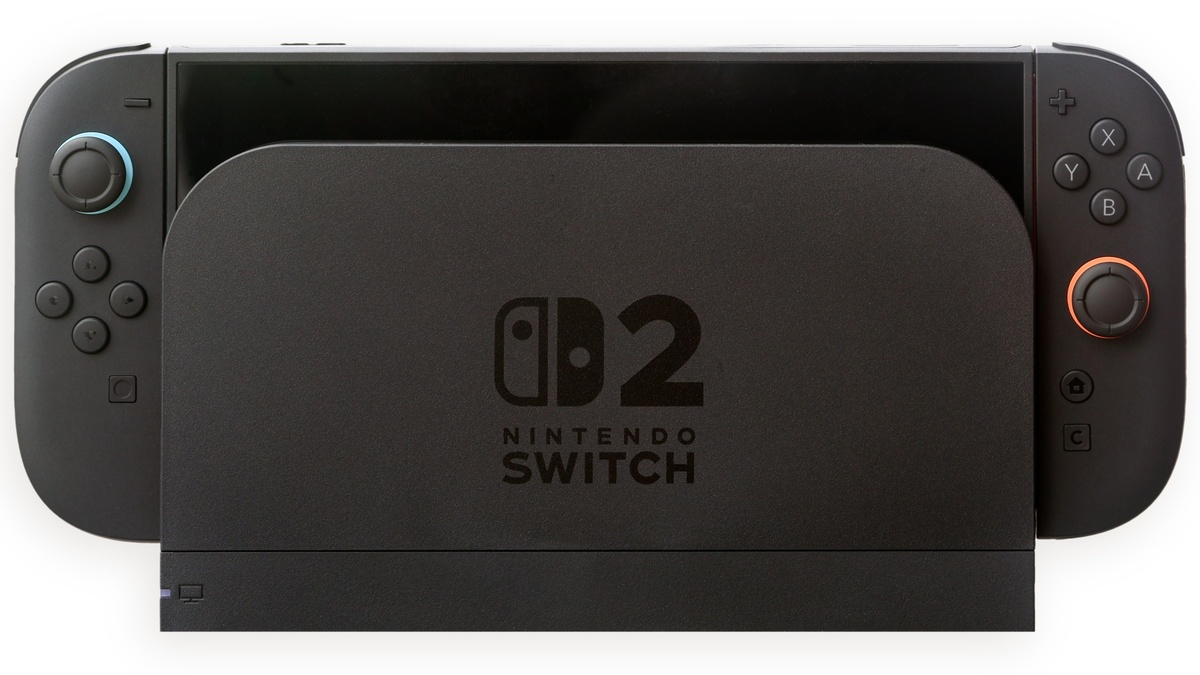
Technical breakdowns from AnandTech confirm that Nintendo’s upcoming handheld utilizes custom NVIDIA Tegra T239 silicon built on Ampere architecture. This cutting-edge mobile system-on-chip features dedicated hardware streaming multiprocessors and tensor cores designed for real-time acceleration.
Crucially, the upgrade from four gigabytes to twelve gigabytes of high-speed LPDDR5X memory completely eliminates the fatal bottleneck that thwarted original Switch releases. A memory-intensive title like Palworld Nintendo Switch 2 can seamlessly allocate assets across system threads.
Pocketpair engineers previously acknowledged that porting the game to legacy Nintendo hardware was technically impossible due to severe memory starvation. With modern memory capacity and bandwidth, the upcoming handheld adaptation pipeline achieves viable baseline performance.
Furthermore, hardware-accelerated NVIDIA DLSS upscaling enables the handheld to reconstruct crisp 1080p portable images from lower internal rendering resolutions. When docked, the console can leverage deep learning models to output fluid 1440p visuals on 4K televisions.
This computational leap transforms how physics simulations, monster behavior routines, and particle effects run simultaneously in handheld mode. Modern silicon ensures that Palworld Nintendo Switch 2 gameplay maintains stable thirty frames per second without drastic geometry compromises.
2. Tokyo Patent Litigation: Injunction Risks and Creature Mechanics Dispute
While hardware obstacles can be engineered away, corporate legal warfare presents a far more formidable barrier. The commercial fate of Palworld Nintendo Switch 2 remains inextricably bound to an ongoing patent infringement lawsuit filed in Tokyo.
Nintendo and The Pokémon Company filed formal civil proceedings alleging that Pocketpair infringed multiple registered gameplay patents. Investigative legal reports published by Tom’s Hardware suggest the dispute centers on interactive aiming, sphere tossing, and creature capture mechanics.
Rather than pursuing copyright claims over creature visual designs, the plaintiffs strategically deployed divisional patents granted shortly before litigation commenced. This deliberate strategy aims directly at mechanical gameplay systems foundational to Pocketpair’s creature survival experience.
The Tokyo District Court lawsuit seeks substantial financial compensation alongside a permanent domestic injunction barring further distribution of infringing code. If granted, an injunction would legally prohibit publishing any Palworld Nintendo Switch 2 physical cartridge or digital release.
Pocketpair has assembled a veteran intellectual property defense team to contest patent validity and demonstrate prior art across earlier survival games. Legal scholars anticipate protracted hearings that could extend through late 2026 before final judgments are rendered.
Until formal settlement agreements or decisive court victories occur, Nintendo platform gatekeepers are exceptionally unlikely to approve third-party publishing certification. Overcoming this legal impasse remains an absolute prerequisite for any Palworld Nintendo Switch 2 commercial rollout.
3. Unreal Engine 5 Pipeline: Nanite, Lumen, and Handheld Memory Footprint
Building a seamless open-world survival game requires robust software architecture capable of scaling across diverse computing hardware. Pocketpair developed its blockbuster title on Epic Games’ Unreal Engine 5, establishing both massive visual potential and distinct mobile rendering hurdles.
Unreal Engine 5 features advanced rendering systems including Nanite virtualized micropolygon geometry and Lumen dynamic global illumination. Optimizing these demanding features for Palworld Nintendo Switch 2 hardware requires surgical shader customization and aggressive Level-of-Detail tuning across environments.
Base construction systems and automated monster labor routines exert heavy computational strain on central processing cores. Hundreds of autonomous entities gathering resources, crafting weapons, and navigating complex terrain can rapidly degrade framerate stability without aggressive multithreaded profiling.
Fortunately, Epic Games designed Unreal Engine 5 with extensive mobile and handheld scalability profiles for modern ARM architectures. By targeting custom compute shaders, Palworld Nintendo Switch 2 builds can maintain visual coherence while slashing power consumption on battery.
Storage bandwidth also plays a pivotal operational role in eliminating open-world traversal stutters. The handheld’s high-speed UFS 3.1 internal flash storage allows open-world survival environments to stream high-resolution textures into memory without intrusive loading screens.
Through disciplined asset downsampling and custom render pipeline optimizations, developers can preserve the vibrant aesthetic appeal of the original PC release. Thorough engine profiling ensures that Palworld Nintendo Switch 2 achieves acceptable thermal efficiency during extended portable sessions.
Technical Performance Faceoff: Palworld Hardware Demands Across Handheld Silicon
Evaluating the viability of demanding open-world survival simulations requires comparing key hardware parameters across contemporary handheld gaming platforms. The technical matrix below details how the proposed Palworld Nintendo Switch 2 configuration compares against leading portable gaming silicon.
| Hardware Metric | Original Nintendo Switch | Nintendo Switch 2 (Target) | Valve Steam Deck | ASUS ROG Ally |
|---|---|---|---|---|
| CPU Architecture | 4x ARM Cortex-A57 @ 1.02 GHz | 8x ARM Cortex-A78C @ 2.0 GHz | 4C/8T AMD Zen 2 @ 3.5 GHz | 8C/16T AMD Zen 4 @ 5.1 GHz |
| GPU Silicon | NVIDIA Maxwell (256 Cores) | NVIDIA Ampere T239 (1536 Cores) | AMD RDNA 2 (8 CUs / 512 Shaders) | AMD RDNA 3 (12 CUs / 768 Shaders) |
| Unified Memory | 4GB LPDDR4 (25.6 GB/s) | 12GB LPDDR5X (102.4 GB/s) | 16GB LPDDR5 (88.0 GB/s) | 16GB LPDDR5 (102.4 GB/s) |
| Upscaling Tech | None (Spatial Scaling only) | Hardware NVIDIA DLSS 3.1 | FSR 2.2 / XeSS Software | FSR 3.0 / RSR Hardware |
| Internal Storage | 32GB / 64GB eMMC 5.1 | 256GB High-Speed UFS 3.1 | 256GB – 1TB NVMe SSD | 512GB PCIe 4.0 NVMe SSD |
| Target Palworld Res | Unsupported (Incompatible) | 1080p Portable / 1440p Docked | 800p Low / Medium Native | 1080p Medium / FSR Quality |
| Target Frame Rate | N/A (Hardware Crashes) | 30 – 40 FPS DLSS Balanced | 30 – 45 FPS Dynamic | 45 – 60 FPS Turbo Mode |
This comparative architecture matrix highlights why generational hardware upgrades are vital for modern survival gaming. With twelve gigabytes of high-bandwidth memory and dedicated tensor cores, Palworld Nintendo Switch 2 achieves the raw computational headroom required for dense open-world rendering.
Furthermore, hardware-accelerated DLSS gives the console a decisive visual clarity advantage over rival portable machines relying solely on spatial upscalers. Handheld players can anticipate clean image reconstruction, making Palworld Nintendo Switch 2 an exceptionally attractive portable gaming experience.
4. Pocketpair Commercial Stance: Multiplatform Strategy and Developer Ambition
Pocketpair has repeatedly demonstrated an aggressive multiplatform philosophy aimed at maximizing global player acquisition. The team’s desire to deliver a Palworld Nintendo Switch 2 release aligns perfectly with their ongoing expansion beyond initial Xbox and PC ecosystems.
Following its explosive launch on Steam Early Access and Xbox Game Pass, the studio successfully launched a PlayStation 5 edition in late 2024. Establishing Palworld Nintendo Switch 2 availability represents the natural next step in capturing dominant console market share.
During recent executive briefings, Chief Executive Officer Takuro Mizobe openly praised the hybrid console line as a cultural phenomenon throughout Japan and international markets. Mizobe explicitly reaffirmed that Pocketpair desires direct conversations regarding bringing Palworld Nintendo Switch 2 to life.
Communications Director John Buckley echoed this sentiment, emphasizing that studio leadership would never rule out exciting commercial platforms possessing adequate silicon horsepower. Their public transparency signals that developer willingness will not hinder a future portable release.
Furthermore, Pocketpair recently forged a collaborative joint venture with Sony Music Entertainment and Aniplex called Palworld Entertainment. This corporate structure expands merchandising, animated media, and international licensing, incentivizing maximum software distribution across all viable consumer gaming hardware.
By actively expressing goodwill toward Nintendo platform enthusiasts, Pocketpair positions itself as a cooperative software creator rather than an antagonistic rival. This diplomatic positioning preserves community goodwill while keeping the door open for future Palworld Nintendo Switch 2 negotiations.
Litigation Comparison Matrix: High-Profile Gaming Intellectual Property Disputes
Examining past intellectual property disputes across the video game industry offers valuable historical context for current court proceedings. The comparative litigation matrix below illustrates how similar courtroom battles resolved, providing critical clues regarding the Palworld Nintendo Switch 2 timeline.
| Historical Legal Dispute | Litigants Involved | Core Claims & Patents | Resolution & Outcome | Impact on Platform Releases |
|---|---|---|---|---|
| Nintendo vs. Colopl (2018) | Nintendo Co., Ltd. vs. Colopl | Touchscreen joystick steering patent | 3.3 Billion Yen Settlement | Game updated; service continued |
| The Pokémon Co. vs. Pocketpair (2024) | Nintendo & TPC vs. Pocketpair | Ball-throwing capture mechanics | Ongoing Tokyo District Court Trial | Potential delay for Switch 2 edition |
| Capcom vs. Koei Tecmo (2014) | Capcom Co., Ltd. vs. Koei Tecmo | Controller vibration & disc swapping | 143 Million Yen Infringement Award | Software remained active on market |
| Bethesda vs. Mojang (2011) | ZeniMax Media vs. Mojang AB | ‘Scrolls’ trademark dispute | Settlement with trademark agreement | Game released without rebranding |
| Epic Games vs. Apple (2020) | Epic Games Inc. vs. Apple Inc. | Storefront antitrust & fee structures | Split verdict; appeals ongoing | Fortnite removed from iOS ecosystem |
Analyzing these historic precedents demonstrates that Japanese corporate patent litigation frequently concludes with confidential cross-licensing accords or financial settlements. A negotiated resolution would clear the legal path, allowing Palworld Nintendo Switch 2 distribution to proceed without judicial interference.
However, if Nintendo chooses to pursue an uncompromising court verdict to defend Pokémon ecosystem dominance, platform certification could remain frozen indefinitely. Navigating this delicate corporate terrain determines whether gamers ever experience Palworld Nintendo Switch 2 natively.

5. Handheld Ecosystem Faceoff: Performance Parity and Crossplay Architecture
Modern survival crafting games rely heavily on social connectivity, persistent world servers, and synchronized multiplayer sessions. Establishing a thriving Palworld Nintendo Switch 2 ecosystem requires seamless crossplay compatibility with existing player bases across PC, Xbox, and PlayStation.
Nintendo’s upgraded network infrastructure and online service architecture offer significantly lower latency and improved voice communication APIs. Integrating these modern networking protocols enables Palworld Nintendo Switch 2 players to join thirty-two-player dedicated servers without cumbersome connection drops.
Cross-progression and cloud saves represent another essential feature demanded by modern multiplatform enthusiasts. Gamers who invested hundreds of hours into PC or home console builds expect seamless profile synchronization when picking up Palworld Nintendo Switch 2 in portable mode.
Pocketpair’s dedicated backend engineering team has steadily upgraded dedicated server matchmaking and anti-cheat protections across recent patches. Deploying these robust network features to next-generation Nintendo hardware ensures fair and secure multiplayer exploration.
Furthermore, local wireless cooperative play could emerge as an exclusive handheld feature, reviving nostalgic portable monster-taming traditions. Gathering with nearby friends to take down formidable world bosses would elevate Palworld Nintendo Switch 2 into a premier local co-op showcase.
Balancing technical performance with rich community connectivity will ultimately define the game’s long-term commercial legacy. Should technical and legal hurdles resolve, Palworld Nintendo Switch 2 possesses immense potential to become one of the most popular portable adventures of the generation.
Final Verdict: The High-Stakes Handheld Horizon for Creature Survival
The prospect of Palworld Nintendo Switch 2 represents one of the most fascinating convergences of technological capability and legal friction in modern gaming. While next-generation NVIDIA silicon comfortably conquers previous handheld hardware hurdles, civil courtroom battles cast a long shadow.
Pocketpair’s vocal enthusiasm and transparent multiplatform vision demonstrate an admirable commitment to expanding player accessibility across every gaming screen. Gamers worldwide would undoubtedly embrace the chance to experience creature-capturing survival natively on Nintendo’s sleek next-generation hardware.
Whether this ambitious portable dream materializes depends on judicial rulings, confidential corporate settlements, and platform certification diplomacy over the coming months. Until legal clarity arrives, Palworld Nintendo Switch 2 remains the ultimate high-stakes waiting game for handheld gaming enthusiasts.
