


Modern artificial intelligence clusters have expanded into massive computing facilities that demand continuous operational synchronization. The official unveiling of the NVIDIA Minerva platform establishes a unified observability framework engineered specifically to maintain peak throughput across hyperscale accelerated infrastructure environments.
Traditional enterprise data centers typically isolate telemetry signals into disconnected operational silos. Site reliability engineers, network architects, and machine learning teams routinely monitor separate dashboards, creating severe friction when diagnosing complex distributed performance bottlenecks across high-speed fabric networks.
According to technical details published in the official NVIDIA Blog announcement, this AIOps architecture directly correlates telemetry across compute silicon, network switches, and active distributed training workloads.
Hardware scaling challenges in massive data centers mirror the thermal and memory bandwidth constraints seen in consumer computing, where the Apple M4 Mac mini redesign showcased thermal dissipation innovations.
Similarly, modern gaming processors like the AMD Ryzen 7 9800X3D revealed how specialized 3D V-Cache packaging mitigates memory latency bottlenecks during intensive computation under sustained production workloads.
As legacy enterprise operating systems retire and NVIDIA ends Windows 10 support, modern data center operations require intelligent runtime environments capable of autonomous diagnosis and proactive hardware failure prediction.
Hyperscale server management mirrors cloud delivery models like Xbox Cloud Gaming pay-as-you-go bundles, where dynamic server resource allocation and high availability dictate sustained end-user service satisfaction.
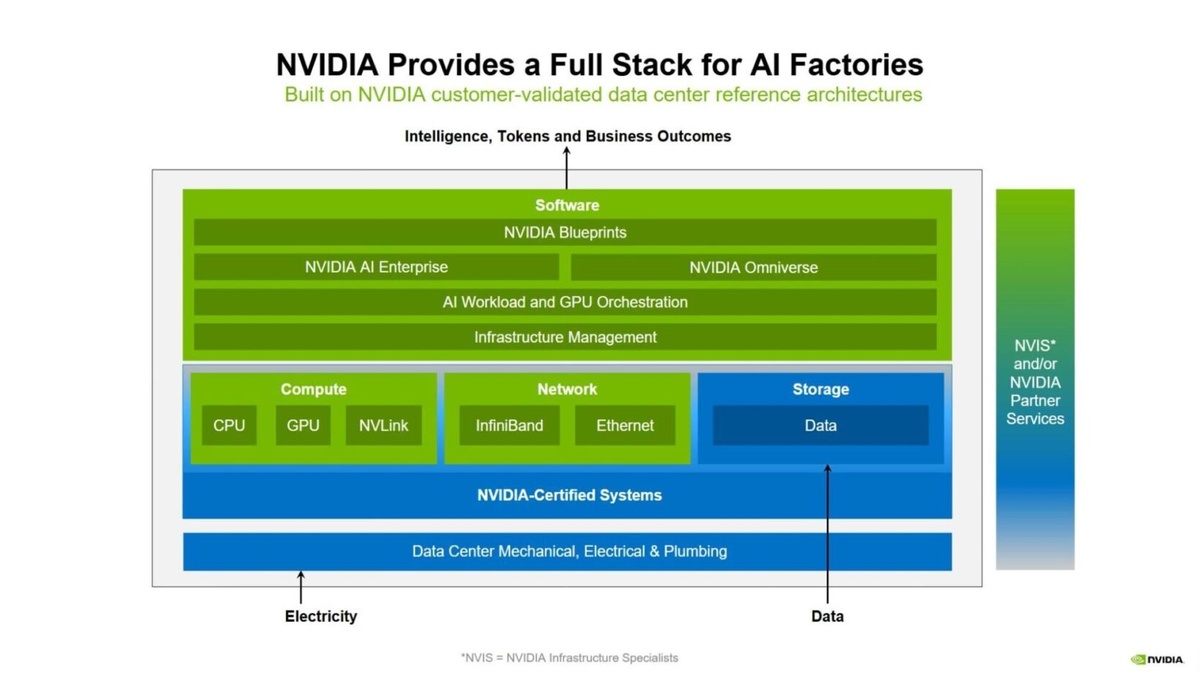
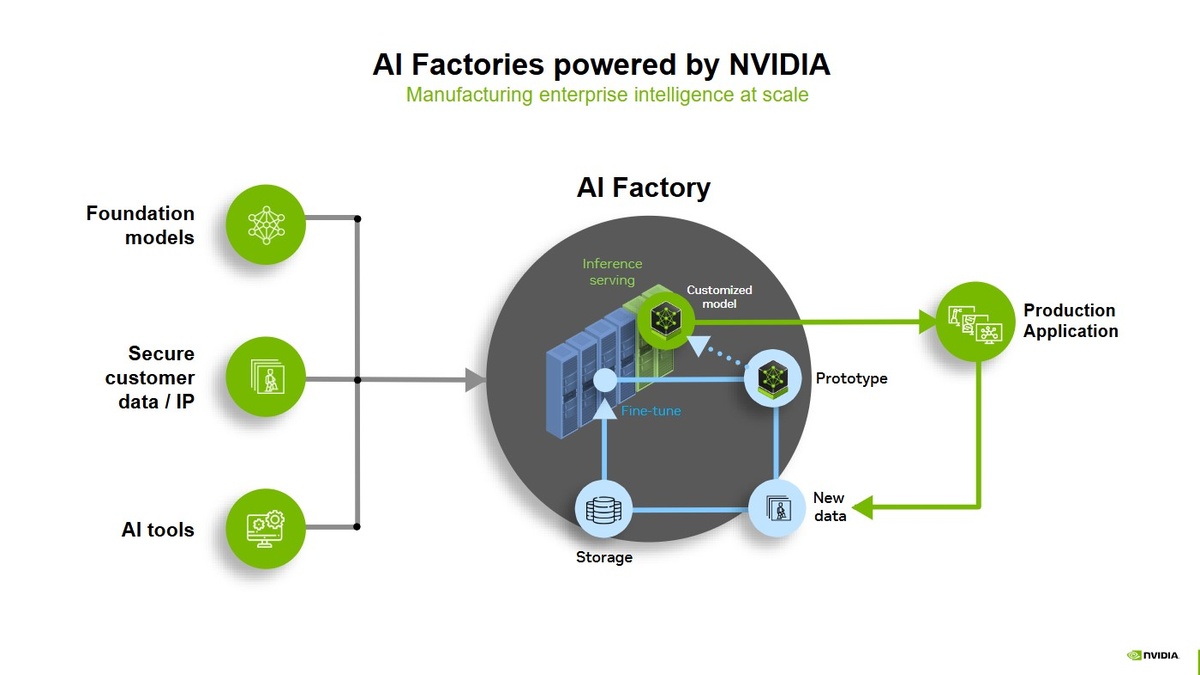
Operating an AI factory requires continuous synchronization among hundreds of thousands of GPUs executing synchronized tensor calculations. The NVIDIA Minerva platform addresses this systemic challenge by converting billions of raw telemetry data points into actionable operational intelligence.
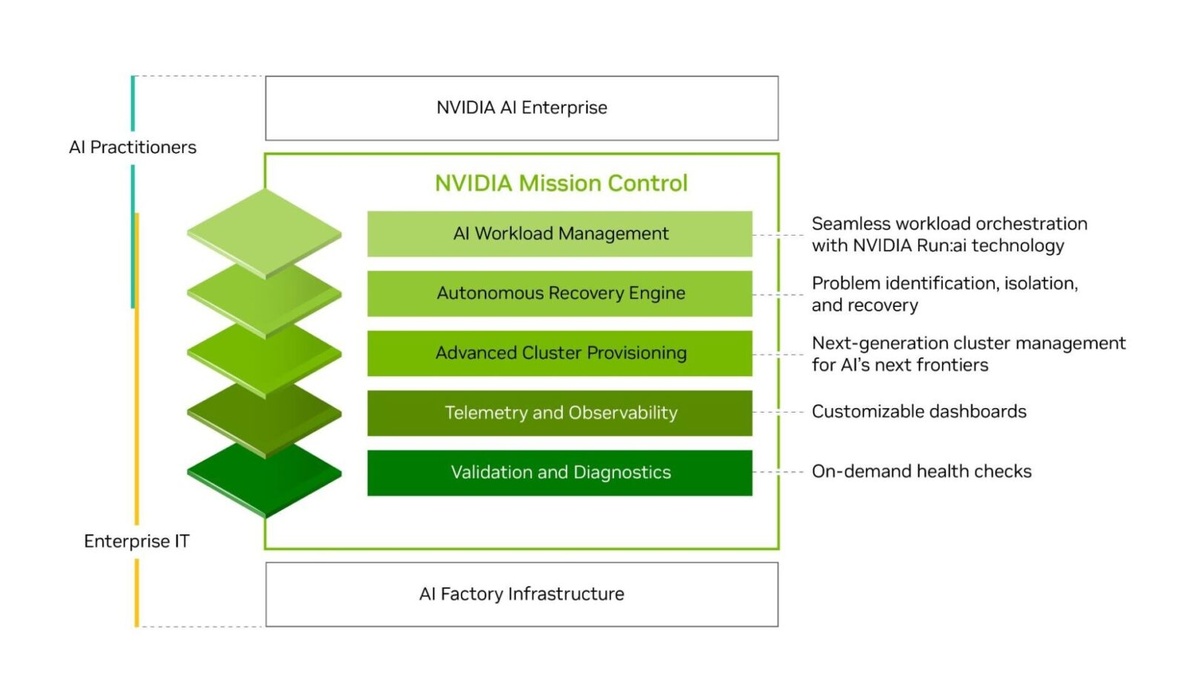
In this comprehensive architectural breakdown, we analyze how the NVIDIA Minerva platform transforms data center telemetry, dynamic topology mapping, anomaly detection models, conversational agentic AI troubleshooting, and overall GPU cluster yield.
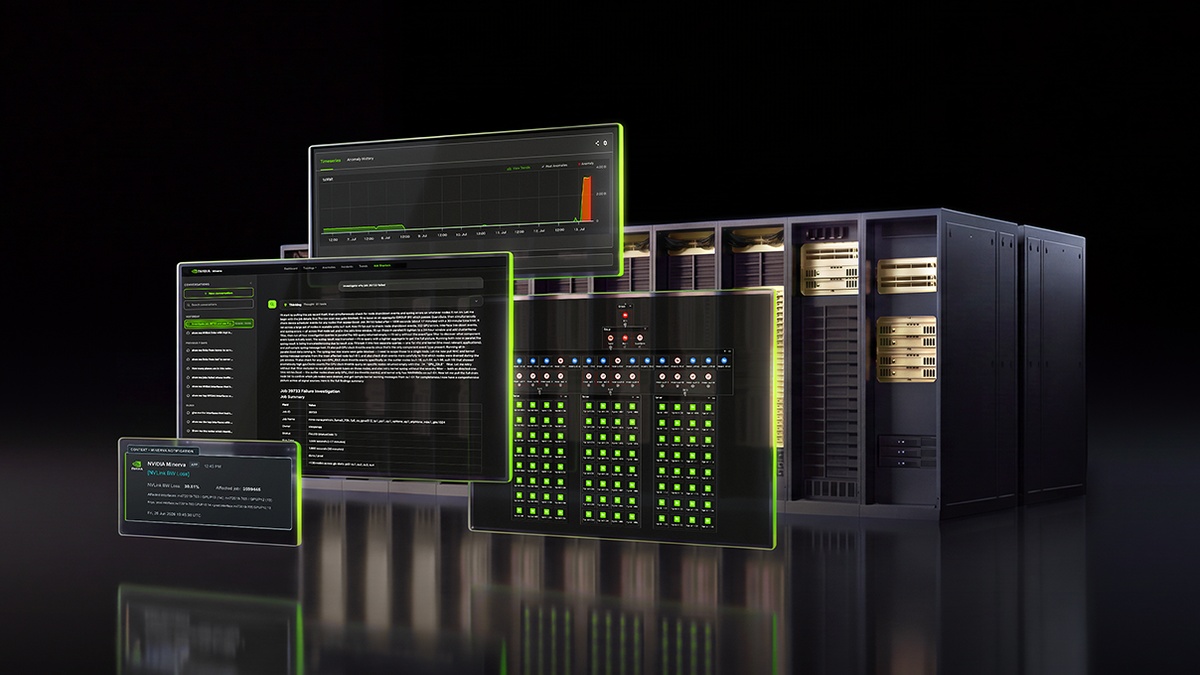
Table of Contents
1. Full-Stack Telemetry Ingestion: Eliminating Silos Across Compute, Fabric, and Storage
The foundational pillar of the NVIDIA Minerva platform is its comprehensive full-stack telemetry ingestion engine. Rather than relying on sampled metrics, the platform ingests continuous data streams spanning GPU silicon, SuperNICs, InfiniBand switches, optical transceivers, and NVMe flash arrays.
Distributed training workloads operate synchronously, meaning that a minor performance degradation in a single component can stall hundreds of servers. A slightly overheating tensor core or an NVMe drive exhibiting write latency instantly drags down entire cluster training throughput.
By pulling high-frequency operational signals across physical compute nodes and cluster interconnects, the architecture establishes a holistic operational picture. Enterprise hardware analysts at AnandTech emphasize that unified cross-layer telemetry is crucial for mitigating silent hardware degradation.
The telemetry pipeline also captures scheduler states from Kubernetes and Slurm, linking job allocations directly to physical hardware telemetry. This tight synchronization allows operators to understand whether workload delays stem from software algorithmic inefficiency or underlying physical hardware degradation.
Storage infrastructure metrics are monitored in real time alongside GPU execution pipelines. As highlighted by storage experts at StorageReview, NVMe cache contention and PCIe bus saturation are rapidly flagged before causing catastrophic checkpointing stalls.
Through pervasive multi-layer telemetry collection, the NVIDIA Minerva platform eliminates visibility blind spots across enterprise infrastructure. Data center operators gain unprecedented clarity into resource utilization, allowing preventative hardware maintenance before catastrophic failures interrupt mission-critical distributed workloads.
2. Dynamic Knowledge Graph Architecture: Mapping Physical Topology to Active AI Workloads
Raw telemetry streams alone can overwhelm infrastructure operators with disconnected alerts during transient operational spikes. To solve this challenge, the NVIDIA Minerva platform constructs a real-time dynamic knowledge graph that logically maps the physical infrastructure against active software jobs.
This sophisticated knowledge graph tracks the relational topology connecting individual graphics processors, SuperNIC adapters, Quantum-2 InfiniBand directors, and optical cabling backplanes. Every physical link and hardware dependency is continually updated across the entire data center fabric.
Simultaneously, the graph overlays the logical execution structure of active distributed training jobs and inference deployments. When a distributed parameter synchronization slowdown occurs, the graph instantly identifies which physical networking switch or compute board is responsible.
Traditional monitoring frameworks require site reliability teams to manually correlate timestamped log files across disparate dashboards. In contrast, the dynamic topology engine automatically traces workload performance deviations across physical cables and server trays within milliseconds.
This topological awareness is particularly vital for multi-tenant AI factories hosting thousands of concurrent generative AI pipelines. Workload interference, noisy neighbor collisions, and uneven traffic distribution across network spine switches are pinpointed with precision.
By bridging physical hardware layouts with dynamic software execution boundaries, the NVIDIA Minerva platform provides unprecedented contextual visibility. Infrastructure teams can immediately visualize how localized hardware anomalies ripple through complex distributed model architectures.
Architecture Comparison: NVIDIA Minerva Platform vs. Legacy Data Center Monitoring
Evaluating the operational paradigm shift introduced by the NVIDIA Minerva platform requires comparing modern full-stack observability architectures against traditional data center monitoring tools. The comprehensive specification table below outlines the core architectural contrasts across both infrastructure approaches.
| Architectural Capability | Legacy Data Center Monitoring | NVIDIA Minerva Platform (AIOps) |
|---|---|---|
| Telemetry Scope | Siloed Metrics Across Teams | Unified Full-Stack Telemetry Ingestion |
| Topology Awareness | Static Network Maps & Spreadsheets | Dynamic Real-Time Knowledge Graph |
| Failure Detection | Reactive Threshold Alarms | Predictive Supervised & Unsupervised ML |
| Alert Management | Cascading Alert Storms | Correlated Root-Cause Incident Isolation |
| Triage Interface | Manual Dashboard Correlation | Conversational Natural-Language AI Assistant |
| Remediation Architecture | Manual Script Execution | Closed-Loop Agentic Automation & APIs |
| Workload Correlation | Disconnected Scheduler Logs | Direct Job-to-Silicon Contextual Mapping |
| Target Optimization | Component Availability | AI Factory Yield & GPU Goodput |
The architectural comparison highlights why conventional data center monitoring stacks fail under the rigorous demands of modern AI supercomputing. The NVIDIA Minerva platform replaces reactive threshold alarms with unified topological awareness and continuous multi-layer telemetry streams.
By aggregating compute, networking, and scheduler telemetry into a synchronized analytical fabric, infrastructure teams eliminate manual correlation overhead. Operators can identify and isolate degraded silicon components before systemic performance penalties cascade across high-speed fabrics.
3. AI-Driven Anomaly Detection: Predictive Root-Cause Isolation and Event Storm Suppression
Analyzing billions of telemetry data points per hour requires advanced machine intelligence to separate genuine failure signatures from background operational noise. The NVIDIA Minerva platform deploys supervised and unsupervised machine learning models to detect subtle behavioral anomalies.
Under traditional monitoring rules, static alert thresholds frequently trigger alert storms when hundreds of related nodes experience transient network jitter. Minerva suppresses alert storms by automatically clustering correlated symptoms into a single consolidated, actionable incident.
Unsupervised anomaly detection algorithms learn the nominal performance baselines for compute nodes, memory controllers, and high-speed network interfaces. Components exhibiting subtle performance degradation outside statistical norms are proactively identified long before catastrophic hardware failures occur.
Supervised predictive failure models evaluate thermal gradients, power fluctuations, and memory error-correcting code rates to forecast imminent component breakdown. Predictive insights allow operators to schedule preventive maintenance during planned maintenance windows rather than suffering unexpected job crashes.
Root-cause analysis engines traverse the dynamic knowledge graph to trace anomalous symptoms directly to their originating physical source. Whether an issue stems from optical transceiver degradation or firmware bugs, Minerva isolates the exact root cause rapidly.
This proactive algorithmic intelligence transforms infrastructure maintenance from reactive firefighting into structured, predictable operations. Operators preserve compute availability by resolving emerging silicon anomalies before they disrupt multi-million-dollar AI training initiatives.
4. Agentic AI Copilot Integration: Natural-Language Diagnostics and Closed-Loop Remediation
Operational triage in modern accelerated computing centers is further enhanced through conversational artificial intelligence. The NVIDIA Minerva platform integrates a native AI assistant that allows infrastructure engineers to interrogate complex cluster telemetry using natural language queries.
Operators can query the assistant regarding thermal distributions, network congestion hotspots, or job completion forecasts across specific server pods. The assistant grounds its responses directly in real-time telemetry streams, ensuring accurate, hallucination-free technical guidance.
Beyond answering ad-hoc queries, the assistant provides prescriptive remediation recommendations for identified operational incidents. If a high-speed InfiniBand port reports excessive packet retransmissions, the copilot suggests targeted port resets or cable replacements.
The platform seamlessly connects with external agentic artificial intelligence tools and automated orchestration workflows through secure APIs. Organizations can implement closed-loop autonomous remediation, allowing the platform to isolate degraded nodes and reschedule workloads automatically.
Human-in-the-loop controls ensure that system administrators retain full authority over critical infrastructure interventions and hardware modifications. Engineers can review recommended diagnostic actions, validate automated telemetry conclusions, and approve remediation scripts with single-click verification.
By combining conversational natural-language interfaces with autonomous agentic execution pipelines, the NVIDIA Minerva platform drastically accelerates incident response times. System administrators resolve intricate infrastructure challenges in minutes rather than spending hours manually parsing system logs.
Operational Metrics Matrix: AI Factory Telemetry, MTBI Scaling, and Triage Latency
Understanding the tangible operational gains achieved by deploying the NVIDIA Minerva platform across hyperscale server environments requires analyzing core reliability metrics. The table below illustrates critical performance benchmarks comparing legacy operational management with modern AIOps observability.
| Operational Benchmark Metric | Legacy Monitoring Baseline | NVIDIA Minerva Platform Optimization |
|---|---|---|
| Telemetry Data Ingestion Rate | Millions of Points / Hour | Billions of Data Points / Hour Real-Time |
| Diagnostic Triage Latency | Hours Across Disparate Teams | Minutes via Unified Knowledge Graph |
| Mean Time Between Interruptions (MTBI) | Baseline Job Interruption Rate | Significantly Extended via Predictive ML |
| Mean Time to Repair (MTTR) | Multi-Hour Manual Debugging | Accelerated Root-Cause Pinpointing |
| Alert Volume During Outage | Thousands of Cascading Alarms | Single Consolidated Actionable Incident |
| Incident Remediation Model | Manual Intervention Only | Automated Closed-Loop & Human-in-the-Loop |
| Cluster Scale Support | Thousands of Compute Nodes | Hundreds of Thousands of Scaled GPUs |
The operational benchmark data underscores how automated telemetry correlation dramatically accelerates mean time to repair across hyperscale clusters. The NVIDIA Minerva platform compresses diagnostic triage windows from several hours to mere minutes through algorithmic root-cause isolation.
Furthermore, expanding the mean time between interruptions ensures that costly training jobs maintain continuous progress without frequent checkpoint rollback penalties. AI factory operators achieve higher overall computing yield while minimizing costly human engineering overhead.
5. Maximizing AI Factory Yield: Benchmarking GPU Goodput, MTBI, and Token Production
The ultimate benchmark for any accelerated computing deployment is overall AI factory yield and useful compute throughput. The NVIDIA Minerva platform directly optimizes cluster yield by maximizing productive GPU execution hours and minimizing straggler delays.
In distributed large language model training, the slowest computing node determines the pace of the entire collective parameter synchronization phase. Minerva detects silent performance degradation early, preventing single sluggish servers from delaying hundreds of synchronized GPUs.
Major enterprise infrastructure providers including Dell Technologies, Lenovo, and Supermicro are integrating Minerva into their flagship AI factory portfolios. Their joint engineering solutions ensure turnkey deployment across enterprise data centers and sovereign cloud architectures.
Cloud service providers such as IREN, Lambda, Tesla, and Bitdeer AI have adopted the observability platform to optimize their massive GPU clusters. Operators report higher cluster availability and enhanced token generation efficiency across production environments.
Maximizing token production and goodput directly translates into superior return on capital investment for hyperscale data center operators. By keeping expensive GPU silicon fully utilized, organizations reduce operational expenditure while speeding model training timelines.
As accelerated computing clusters continue scaling toward millions of interconnected GPUs, automated full-stack observability becomes an absolute operational prerequisite. The NVIDIA Minerva platform delivers the architectural visibility required to sustain dependable, high-efficiency AI factory operations.

Final Verdict: A Paradigm Shift for Hyperscale AI Infrastructure
The introduction of the NVIDIA Minerva platform represents a decisive evolution in the management of hyperscale artificial intelligence supercomputing infrastructure. By unifying telemetry across compute silicon, network fabrics, and distributed workloads, NVIDIA eliminates chronic operational silos.
Through the combination of real-time dynamic knowledge graphs, predictive machine learning models, and conversational AI assistants, the architecture transforms data center reliability. Operators transition effortlessly from reactive emergency troubleshooting to automated proactive infrastructure maintenance.
For enterprise organizations and cloud service providers investing billions into accelerated computing clusters, the NVIDIA Minerva platform provides indispensable operational visibility. It maximizes GPU goodput, ensures cluster stability, and accelerates the future of generative intelligence.
