


The desktop computing landscape has reached an extraordinary developmental milestone this autumn. Apple has officially unveiled its most advanced all-in-one personal computer yet, blending state-of-the-art semiconductor lithography with iconic ultra-thin industrial design.
The newly announced Apple iMac with M6 introduces radical architectural breakthroughs engineered specifically for local artificial intelligence workflows. Powered by TSMC’s refined two-nanometer fabrication process, this sleek desktop delivers unprecedented computational density across creative and productivity applications.
Cupertino is offering the computer in two distinct performance configurations to suit diverse professional needs. Buyers can choose between an accessible ten-core CPU and GPU configuration or an expanded twelve-core flagship silicon tier.
According to the official Apple Newsroom announcement, pre-orders commence immediately with standard retail deliveries beginning Friday, November 6. The baseline model carries an MSRP of fourteen hundred ninety-nine dollars.
This hardware launch follows a wave of aggressive structural modernizations throughout Apple’s computing catalog. Just as the diminutive Apple M4 Mac mini redesign established new expectations for miniature workstations, this desktop elevates integrated personal computing.
Simultaneously, the broader silicon market is experiencing dramatic competitive shifts across desktop workstations. While high-performance PC builders chase record-breaking framerates with the AMD Ryzen 7 9800X3D revealed processor, Apple focuses relentlessly on power efficiency per watt.
Operating system dynamics are also driving significant user migrations across enterprise and home offices. With news that NVIDIA ends Windows 10 support, millions of desktop users are actively exploring seamless, secure macOS alternatives.
Furthermore, cloud subscription models are transforming personal gaming habits, as evidenced by flexible Xbox Cloud Gaming pay-as-you-go bundles. Yet having immense on-device neural horsepower locally remains essential for latency-sensitive creative work.
Here are the five critical architectural upgrades behind why the Apple iMac with M6 stands as the ultimate modern all-in-one desktop, uniting extreme neural throughput with pristine visual clarity.
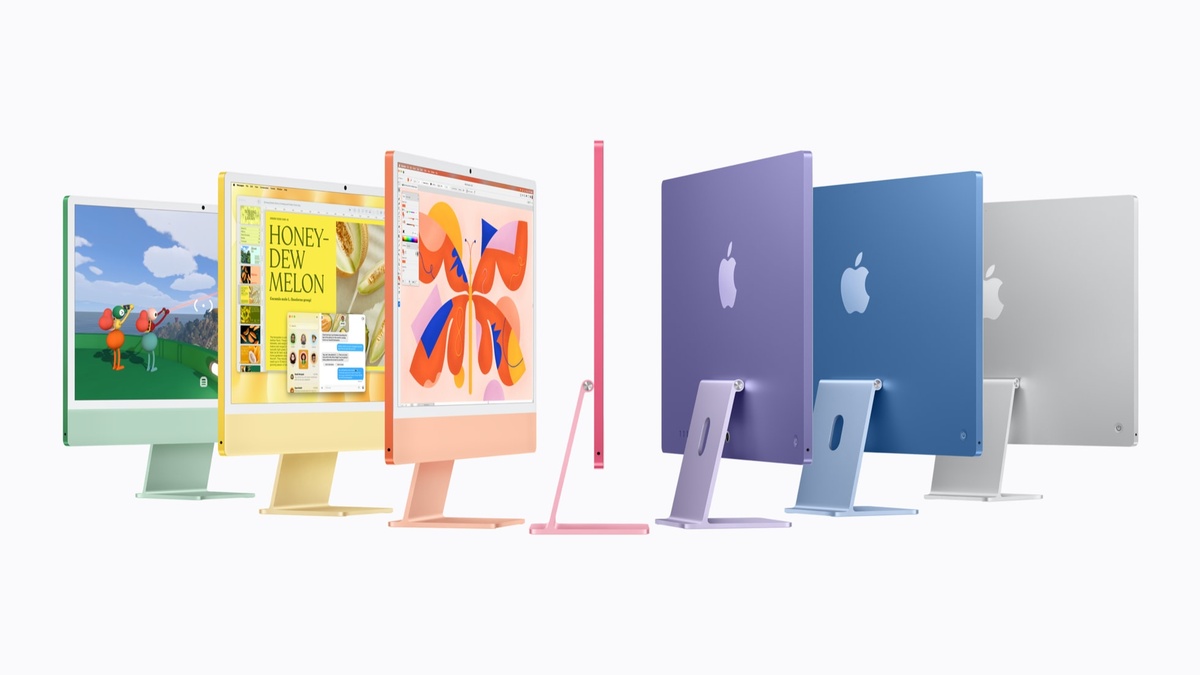
Table of Contents
1. Next-Generation 2nm M6 Silicon: Unprecedented AI & Ray Tracing Muscle
At the core of the machine lies Apple’s second-generation two-nanometer system-on-chip architecture. The Apple iMac with M6 leverages TSMC’s dense manufacturing node, allowing billions of additional transistors within the compact unified die.
Productivity benchmarks reveal transformative generational leaps across demanding everyday office workflows. Daily operations in spreadsheet suites like Microsoft Excel execute up to 2.5 times faster than M1 systems and 1.5 times faster than M4 models.
Visual artists and graphic designers also gain massive hardware accelerations in creative suites. Raster manipulation in Affinity Photo renders up to 3.3 times faster than older M1 hardware and doubles the sustained throughput of preceding M4 configurations.
Most impressively, the dedicated Neural Engine delivers mind-boggling local machine learning throughput. Running quantized large language model prompts inside LM Studio is up to twelve times faster than M1 systems and five times faster than M4.
Titles rendered on the Apple iMac with M6 achieve up to double the ray tracing framerates seen on previous M4 generations. Gamers enjoy realistic reflections, dynamic global illumination, and fluid high-refresh gameplay directly on macOS.
Unified memory architecture has also received substantial performance upgrades across all configurations. Memory bandwidth scales effortlessly, ensuring massive generative AI weights and multi-layered timeline assets remain instantly accessible without thermal throttling.
2. 24-Inch 4.5K Nano-Texture Display: Zero Reflections & 500 Nits Luminance
Display quality has long defined the all-in-one experience, and Apple has pushed visual fidelity further than ever. The Apple iMac with M6 retains the beloved 24-inch 4.5K Retina display with five hundred nits of sustained brightness.
With a resolution of 4480 by 2520 pixels, the panel provides five times more screen detail than common 1080p desktop PCs. Over one billion colors and P3 wide gamut coverage guarantee exceptional color accuracy for photography.
However, the most significant visual breakthrough is the introduction of Apple’s nano-texture glass display option. Available previously only on high-end Studio Displays, this surface treatment precision-scatters ambient lighting across intensely illuminated creative studios.
Unlike inferior matte screen coatings that introduce distracting visual haze, nano-texture glass preserves deep contrast and razor-sharp text clarity. Working near sunny windows or beneath studio track lighting no longer produces annoying glare on the Apple iMac with M6.
Detailed hardware analysis from AnandTech engineering reviews confirms that etching glass at nanometer tolerances significantly reduces eye fatigue. Content creators can grade video footage accurately without having to draw blackout curtains.
By combining 4.5K pixel density with cutting-edge anti-reflective surface chemistry, Apple sets a towering standard for consumer displays. The Apple iMac with M6 transforms desktop visual fidelity into an uncompromised artistic canvas.
Architectural Showdown: Apple iMac with M6 vs. Previous Generations
To understand the monumental technological leap delivered by this modern desktop, examining generational hardware benchmarks is essential. Here is how Apple’s newest all-in-one compares directly against its M4 and M1 predecessors.
| Hardware Specification | iMac with M1 (2021) | iMac with M4 (2024) | New Apple iMac with M6 (2026) |
|---|---|---|---|
| Fabrication Node | 5-Nanometer TSMC Node | 3-Nanometer TSMC Process | Advanced 2-Nanometer Process |
| CPU Architecture | 8-Core CPU (4P + 4E) | Up to 10-Core CPU | 10-Core or 12-Core CPU |
| GPU Architecture | Up to 8-Core Graphics | Up to 10-Core Graphics | 10-Core or 12-Core with Ray Tracing |
| AI Neural Acceleration | Baseline 16-Core NPU | 3x Faster vs. M1 NPU | Up to 12x Faster in LM Studio |
| Display Surface Option | Standard Glossy Glass Only | Nano-Texture Option Available | Standard & Nano-Texture Glass |
| Video Conferencing Camera | 1080p FaceTime HD Sensor | 12MP Center Stage Camera | 12MP Center Stage with Desk View |
| External Display Output | Single External 6K Display | Dual External 6K Displays | Up to Two External 6K Displays |
| Baseline Unified Memory | 8GB Unified Memory | 16GB Unified Memory | 16GB / 24GB Unified Memory |
| Starting Retail Price | $1,299 USD Starting Price | $1,299 USD Starting Price | $1,499 USD Starting Price |
The architectural progression demonstrates why the Apple iMac with M6 represents a compelling upgrade cycle. Jumping to a two-nanometer fabrication node yields staggering efficiency gains, particularly for localized machine learning workloads.
While the original M1 model revolutionized power efficiency, its neural processing pales compared to modern silicon. Upgrading to the Apple iMac with M6 delivers up to twelve-fold faster AI calculations alongside superior graphical fidelity.

3. 12MP Center Stage Camera & Studio-Grade Spatial Acoustics
Remote communication and content production demand flawless audiovisual fidelity, and Apple has comprehensively overhauled the sensory stack. The Apple iMac with M6 integrates an upgraded twelve-megapixel Center Stage camera directly into its upper display bezel.
Center Stage utilizes machine learning to dynamically crop and track users as they shift positions during calls. Presenters remain centered within the frame during FaceTime, Zoom, and Webex conferences without requiring cumbersome manual webcam adjustments.
Additionally, the camera system supports Apple’s clever Desk View feature for top-down presentations. By capturing an overhead perspective of physical desktop workspaces simultaneously, educators and artists can demonstrate physical objects while maintaining direct eye contact.
Acoustic reproduction matches the sophisticated visual sensors through an overhauled six-speaker sound array. Dual pairs of force-cancelling woofers work in tandem with high-efficiency tweeters to produce room-filling bass response with zero cabinet vibration.
The internal audio hardware fully supports immersive Dolby Atmos Spatial Audio for cinema-grade entertainment. Complementing the speakers is a studio-grade three-microphone array featuring directional beamforming that isolates human voices from background environmental hum.
With Apple’s newest desktop workstation, professional video conferencing operates with studio-level sophistication straight out of the box, ensuring crystal-clear audio and video across every remote collaboration meeting.
4. Thunderbolt Connectivity, USB-C Peripherals & 7 Vibrant Colorways
Modern workstation productivity hinges on high-speed peripheral expansion and wireless connectivity. The Apple iMac with M6 features up to four rear Thunderbolt ports capable of driving dual external 6K Studio Displays simultaneously.
This robust display pipeline allows creators to configure expansive multi-monitor battle stations effortlessly. Creative professionals can run dual 6K displays alongside the built-in 4.5K panel without experiencing interface lag or dropped frames.
Wireless connectivity receives an upgrade to the latest Wi-Fi standards alongside low-latency Bluetooth 5.4. Gigabit Ethernet remains integrated directly into the external magnetic power adapter brick, preserving clean, single-cable desktop cable management.
Every desktop ships with color-matched Magic accessories, including a Magic Keyboard with Touch ID and Magic Mouse or Trackpad. In compliance with modern universal connectivity standards, all bundled peripherals now feature USB-C charging ports.
Independent hardware testing published on Tom’s Hardware highlights the ergonomic benefits of color-matched input ecosystems. Quick Touch ID biometrics streamline multi-user switching, Apple Pay purchases, and password autofill operations.
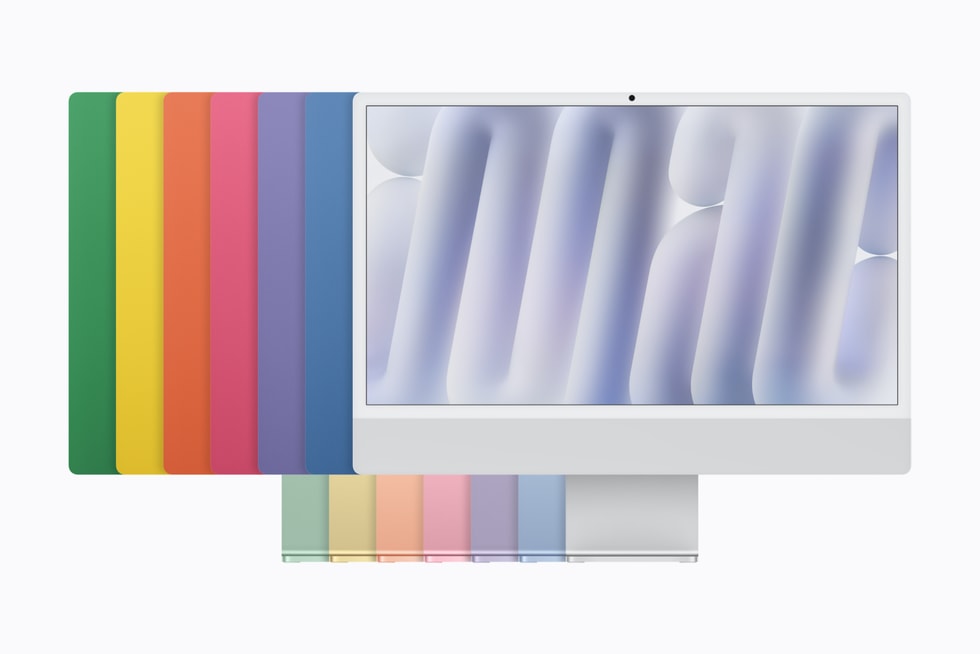
Available in seven striking colors—green, yellow, orange, pink, purple, blue, and silver—the Apple iMac with M6 personalizes any creative environment. The computer blends high-performance connectivity with cheerful, modern industrial aesthetics.
All-in-One Desktop Faceoff: Apple iMac with M6 vs. Windows Workstations
Evaluating the premium all-in-one desktop category requires contrasting Apple Silicon against competing x86 Windows alternatives. Here is how Cupertino’s latest desktop measures up against top Windows all-in-one workstations.
| Workstation Feature | Apple iMac with M6 | HP Envy 34 All-in-One | Dell Inspiron 27 7000 |
|---|---|---|---|
| Display Resolution | 4.5K 4480×2520 Retina Panel | 5K 5120×2160 UltraWide | FHD 1920×1080 IPS Screen |
| Surface Glare Coating | 500 Nits Nano-Texture Glass | 500 Nits Matte Coating | 300 Nits Glossy Glass |
| Silicon Architecture | Apple M6 2nm ARM SoC | Intel Core i7 13th Gen x86 | Intel Core Ultra 7 Processor |
| Acoustic Fan Profile | Whisper-Quiet Single Fan | Dual High-RPM Blower Fans | Moderate Acoustic Fan Whine |
| Camera & Tracking | 12MP Center Stage + Desk View | 16MP Magnetic Webcam | 1080p Pop-Up Webcam |
| AI Neural Acceleration | Dedicated On-Die M6 NPU | Discrete Graphics Acceleration | Integrated Intel NPU Engine |
| Starting MSRP | $1,499 USD Starting Price | $1,999 USD Starting Price | $1,349 USD Starting Price |
The comparative analysis highlights the undeniable efficiency supremacy of the Apple iMac with M6. Delivering five hundred nits of 4.5K resolution while drawing a fraction of x86 power ensures whisper-quiet acoustic operation.
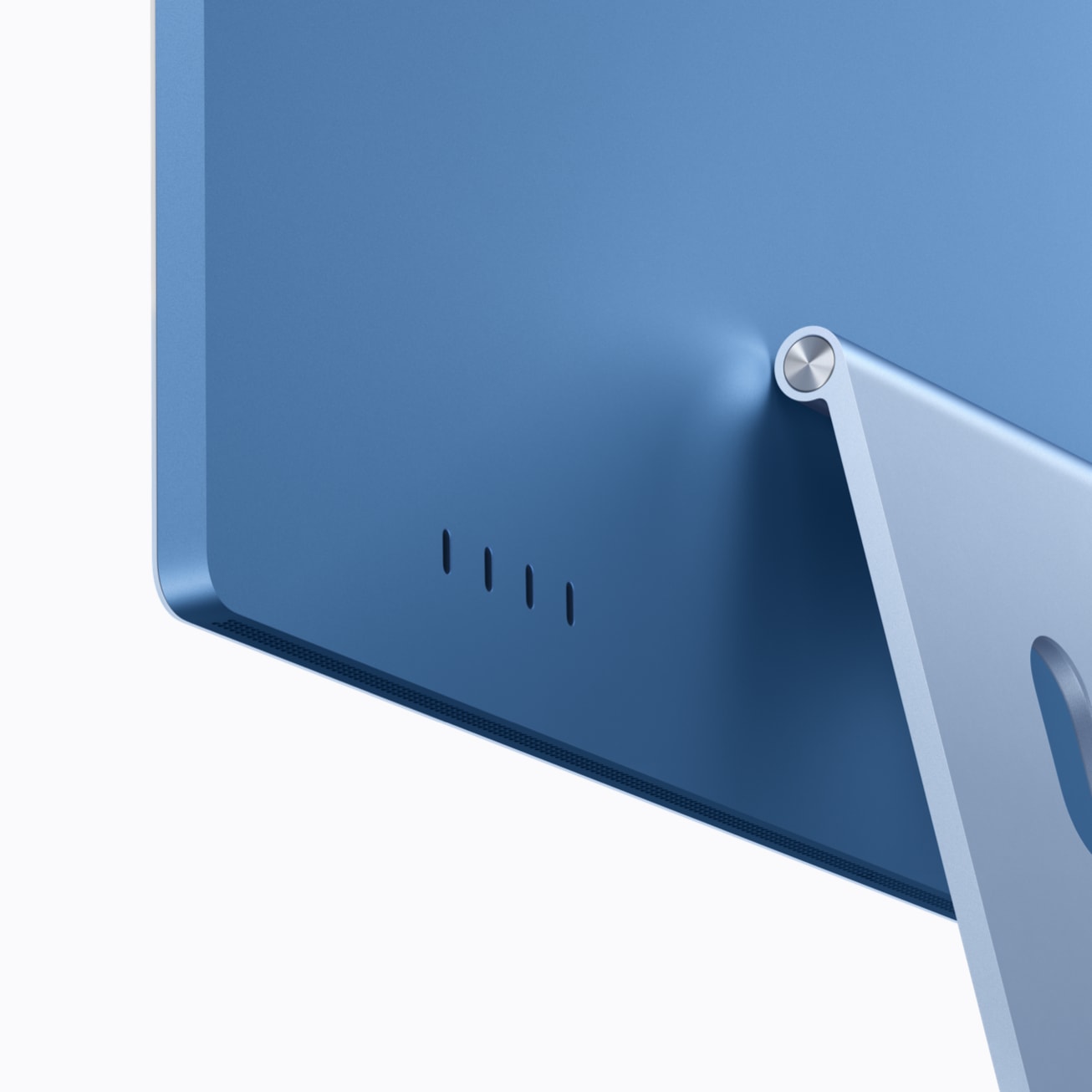
While competing Windows all-in-ones often rely on noisy multi-fan cooling solutions, Apple’s unified silicon stays remarkably cool. Cupertino’s latest desktop computer offers unmatched performance per watt in an ultra-slim eleven-millimeter silhouette.
5. macOS 27 Golden Gate: Siri AI & Liquid Glass Customization
Hardware innovation reaches its fullest potential when harmonized with intelligent operating system software. The Apple iMac with M6 ships loaded with macOS 27 Golden Gate, introducing striking visual refinements and responsive system animations.
A standout aesthetic enhancement is the customizable Liquid Glass interface architecture. A dedicated slider inside System Settings allows users to fine-tune UI translucency anywhere from crystal clear to deeply tinted, while app icons appear sharper.
Deeply embedded Siri AI capabilities transform how users interact with their file systems and applications. Powered by the on-chip M6 Neural Engine, Siri synthesizes complex cross-app context locally without transmitting sensitive personal data to external clouds.
Seamless Continuity features allow effortless interoperability between desktop macOS and nearby iPhone devices. Users can wirelessly drag and drop multimedia assets, mirror phone displays, or hand off active productivity tasks without missing a beat.
Environmental sustainability remains foundational to Apple’s overall manufacturing ethos. The computer incorporates one hundred percent recycled aluminum in its stand, recycled rare earth elements in all magnets, and completely plastic-free fiber packaging.
By fusing cutting-edge neural processing with refined system software, the Apple iMac with M6 establishes a new gold standard. It delivers an intuitive, secure, and delightfully responsive personal computing experience for the modern era.
Final Verdict: The Definitive All-in-One Desktop for Creators
The arrival of the Apple iMac with M6 marks a triumphant evolution for all-in-one computing. By pairing TSMC’s cutting-edge two-nanometer silicon with unmatched neural processing, Apple has created an exceptionally capable desktop powerhouse.
From its glare-free nano-texture 4.5K display to its studio-grade audiovisual array, every element has been thoughtfully refined. Whether managing complex spreadsheets, editing high-resolution video, or deploying local AI models, performance remains completely effortless.
For families, students, creative professionals, and growing businesses seeking a gorgeous desktop that will remain relevant for years, this next-generation Apple computer is an extraordinary investment that defines the future of personal workstations.
