


The compact desktop computing landscape has officially witnessed a seismic tectonic shift. Apple has pulled back the curtain on its long-awaited hardware transformation, introducing a drastically reduced form factor and groundbreaking architectural silicon updates that redefine modern workstation computing expectations.
The newly unveiled Apple M4 Mac Mini Redesign shrinks the company’s iconic miniature computer into a five-by-five inch aluminum powerhouse. This landmark release represents the first major physical enclosure overhaul for the Mac mini line in over fourteen years.
For more than a decade, the Mac mini retained an identical aluminum unibody enclosure measuring seven-point-seven inches square. While Apple Silicon transitions modernized internal motherboards, expansive vacant cavities remained inside, prompting long-standing enthusiast calls for a truly miniaturized desktop footprint.
According to the official announcement published in the Apple Newsroom press release, the Apple M4 Mac Mini Redesign stands just two inches tall. Despite dramatic volume reductions, the enclosure accommodates advanced next-generation silicon alongside innovative thermal management.
Crucially, the Apple M4 Mac Mini Redesign marks the historic death of entry-level eight-gigabyte memory configurations. Every single base configuration now ships standard with sixteen gigabytes of high-bandwidth unified memory without increasing the celebrated five-hundred-ninety-nine dollar entry price.
This aggressive commercial strategy creates immediate pressure across the computing market. While PC enthusiasts navigate how NVIDIA ends Windows 10 support, Apple delivers unprecedented baseline productivity value that undercuts competing custom mini-ITX workstations and office towers.
Simultaneously, the broader tech landscape faces immense corporate and operational disruption. Just as the sudden news that the Xbox COO leaves Microsoft shook gaming hardware divisions, Apple’s relentless silicon pacing demonstrates total vertical hardware execution.
Furthermore, cloud architectures and remote services are shifting rapidly, illustrated by recent expansions in Xbox Cloud Gaming pay-as-you-go bundles. Apple’s ultra-dense desktop architecture offers immense potential for developers hosting scalable private server clusters and rendering pipelines.
Here are the five shocking secrets behind why the Apple M4 Mac Mini Redesign represents the most disruptive desktop release of the decade, featuring Thunderbolt 5, M4 Pro silicon, and game-changing thermal engineering.
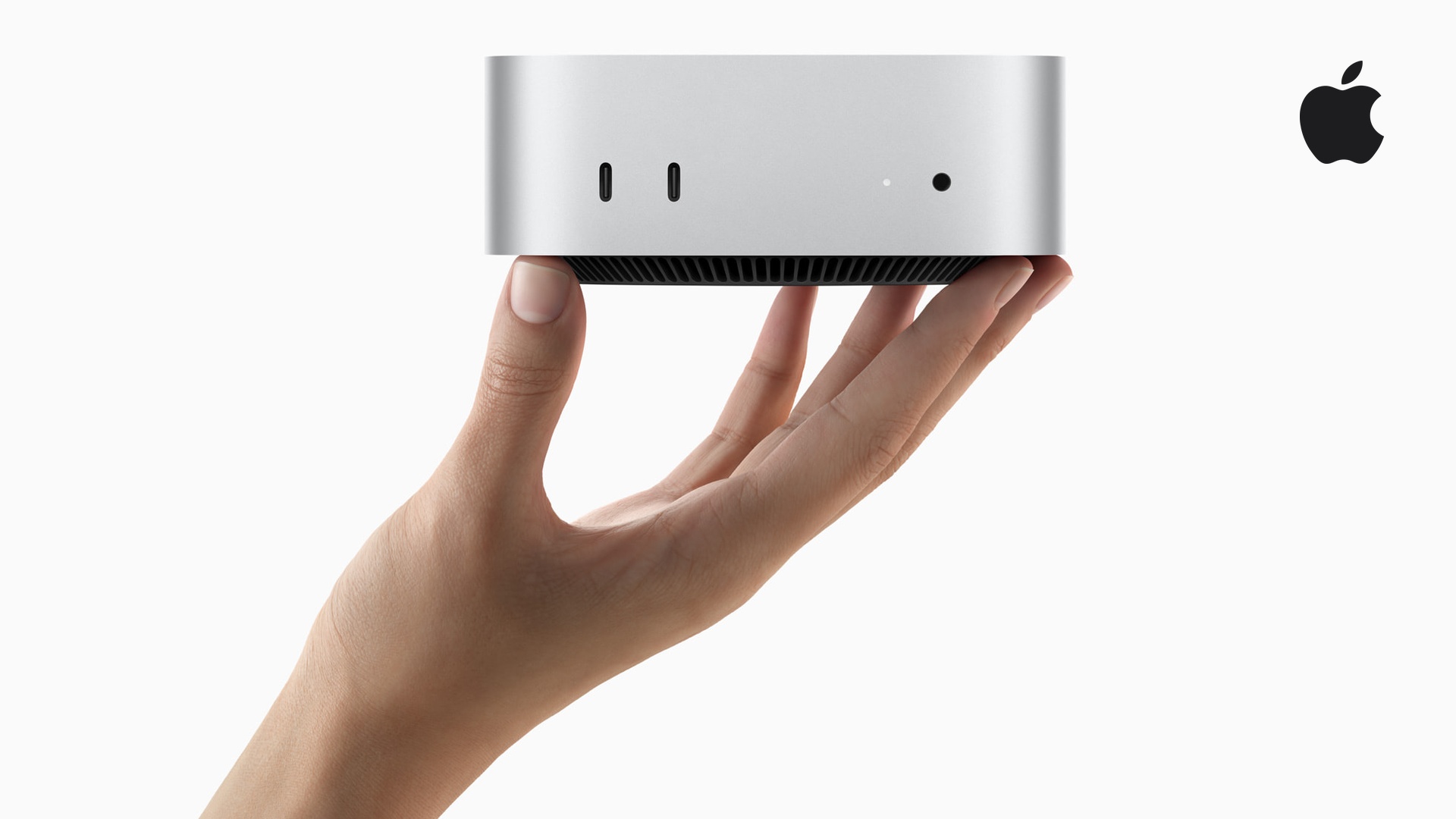
Table of Contents
Secret 1: The 5×5-Inch Shrink & Custom Thermal Foot
The primary revelation powering the Apple M4 Mac Mini Redesign centers on its unprecedented physical downsizing. Measuring exactly five inches wide by five inches deep, the computer occupies less than half the surface footprint of previous generations.
Engineers achieved this astonishing dimensional reduction by taking architectural cues directly from the Mac Studio and Apple TV. In the Apple M4 Mac Mini Redesign, the internal layout was reconceptualized to eliminate wasted internal air volume while preserving structural integrity.
To cool potent system-on-chip architectures inside such a compact volume, Apple engineered an innovative thermal ventilation foot. Rather than drawing ambient air through rear vents, cool intake streams are guided upwards through circular perimeter perforations located underneath the machine.
Internal blowers circulate airflow across internal logic board layers, exhausting elevated thermal energy out the back. Inside the Apple M4 Mac Mini Redesign, this multi-level airflow cycle ensures sustained peak performance without generating perceptible acoustic whine during rigorous workloads.
By optimizing internal volumetric efficiency, the Apple M4 Mac Mini Redesign functions as an unobtrusive desk accessory. Users can effortlessly position the miniature desktop beneath studio monitors, behind television cabinets, or inside dense modular server rack shelves.
Moreover, Apple emphasizes substantial environmental benefits tied directly to this enclosure transformation. The miniature desktop represents Apple’s very first carbon-neutral Mac, boasting over fifty percent recycled materials across aluminum, copper, and gold manufacturing components.
This breakthrough architectural miniaturization proves that the Apple M4 Mac Mini Redesign redefines modern desk ergonomics. Creative professionals gain massive computing horsepower without sacrificing precious desktop workspace to bulky desktop chassis.
Secret 2: The Extinction of 8GB RAM: 16GB Is the New Floor
For years, tech analysts and power users vigorously criticized Apple for shipping premium machines with meager eight-gigabyte memory limits. With the arrival of the Apple M4 Mac Mini Redesign, that controversial baseline limitation has finally been permanently eradicated.
Across the Apple M4 Mac Mini Redesign, every single base configuration now includes sixteen gigabytes of unified memory as standard factory baseline. Customers no longer have to pay extortionate two-hundred-dollar upgrade penalties merely to obtain practical multitasking headroom.
This long-overdue transition is primarily dictated by system hardware prerequisites for Apple Intelligence generative workflows. On-device large language models, image processing engines, and intelligent contextual assistants require substantial dedicated memory allocations to operate alongside conventional productivity applications.
Detailed architectural technicalities on the official Apple Mac mini specifications portal confirm unified memory tiers extending to twenty-four and thirty-two gigabytes on standard M4 models. Power users selecting the high-tier M4 Pro variant can configure up to sixty-four gigabytes.
Memory bandwidth has also expanded dramatically across silicon tiers. Base M4 processors deliver one-hundred-twenty gigabytes per second, whereas the advanced M4 Pro pushes an astonishing two-hundred-seventy-three gigabytes per second of bidirectional unified memory throughput.
This enormous memory bandwidth ensures that the Apple M4 Mac Mini Redesign processes complex generative models, high-track audio compositions, and multi-stream ProRes 4K timelines without experiencing traditional memory swapping latency or storage bottleneck slowdowns.
The elimination of eight-gigabyte configurations signals a broader industry awakening. By establishing sixteen gigabytes as the baseline standard, the Apple M4 Mac Mini Redesign sets a new minimum benchmark that PC manufacturers will be pressured to adopt immediately.
Secret 3: M4 & M4 Pro Silicon Breakthroughs & Hardware Ray Tracing
Silicon capability represents another transformative triumph inside the Apple M4 Mac Mini Redesign. Built on TSMC’s cutting-edge second-generation three-nanometer fabrication process, the M4 family establishes new world-record benchmark figures for single-threaded processing efficiency.
Powering the base Apple M4 Mac Mini Redesign, the standard M4 chip features a ten-core CPU architecture comprised of four performance cores and six efficiency cores. Graphics duties are driven by an upgraded ten-core GPU supporting hardware-accelerated mesh shading.
For demanding power users, the premier M4 Pro silicon pushes computing boundaries even further. It boasts up to a fourteen-core CPU configuration alongside a massive twenty-core GPU capable of rivaling dedicated workstation discrete graphics hardware in select computational benchmarks.
Gaming capabilities receive a colossal boost through second-generation hardware-accelerated ray tracing engines. Real-time lighting, reflection calculations, and complex geometric shadows render with unprecedented fluidity in modern AAA releases such as Death Stranding Director’s Cut and Control.
Artificial intelligence processing is accelerated by an updated sixteen-core Neural Engine delivering up to thirty-eight trillion operations per second. On the Apple M4 Mac Mini Redesign, this enables lightning-fast local transcription, automated code generation, and neural audio isolation directly on-device.
When evaluated against legacy Intel-based Mac mini systems, Apple claims CPU performance multiplies up to six times over. Compared to the preceding M2 generation, users can expect up to one-point-eight times faster CPU speeds and over double the graphics rendering throughput.
Developers seeking optimal compilation performance will find the Apple M4 Mac Mini Redesign an irresistible workstation companion. Codebases compile significantly faster, and local container clusters run seamlessly without overburdening internal thermal headroom or throttling processor clock speeds.
By delivering desktop-class computational throughput inside a pocket-sized form factor, the Apple M4 Mac Mini Redesign outperforms many bulky full-tower desktop PCs while consuming a mere fraction of the wall power.
Architectural Showdown: Apple M4 vs. M4 Pro Specifications
Choosing between the standard M4 and the top-tier M4 Pro requires analyzing core silicon differences. Here is the complete architectural hardware breakdown detailing memory, processing capability, and connectivity differences between both available configurations.
| Hardware Specification | Apple M4 (Standard) | Apple M4 Pro (Performance) |
|---|---|---|
| Fabrication Process | TSMC 2nd Gen 3-Nanometer (N3E) | TSMC 2nd Gen 3-Nanometer (N3E) |
| CPU Core Count | 10-Core (4 Performance + 6 Efficiency) | Up to 14-Core (10 Performance + 4 Efficiency) |
| GPU Core Count | 10-Core GPU with Hardware Ray Tracing | Up to 20-Core GPU with Hardware Ray Tracing |
| Neural Engine | 16-Core (38 TOPS Performance) | 16-Core (38 TOPS Performance) |
| Unified Memory Baseline | 16GB Standard Unified Memory | 24GB Standard Unified Memory |
| Maximum Unified Memory | Up to 32GB Unified Memory | Up to 64GB Unified Memory |
| Memory Bandwidth | 120 GB/s Throughput | 273 GB/s Throughput |
| External Thunderbolt Standard | Thunderbolt 4 (Up to 40 Gb/s) | Thunderbolt 5 (Up to 120 Gb/s) |
| Simultaneous Displays | Up to 3 Displays (2x 6K + 1x 5K) | Up to 3 Displays (3x 6K at 60Hz) |
| Starting Base Price | $599 Retail / $499 Education | $1,399 Retail / $1,299 Education |
The comparative data demonstrates how the M4 Pro transforms this miniature desktop into an authentic studio workstation. Memory bandwidth more than doubles, while Thunderbolt 5 unlocks unprecedented external expansion potential for high-speed storage arrays and professional video capture peripherals.
Investing in the high-tier variant of the Apple M4 Mac Mini Redesign guarantees robust future-proofing for professional creative editors. Handling multi-cam 8K video streams or training localized machine learning models becomes exceptionally fluid on this pocket-sized desktop.
Secret 4: Modern I/O Overhaul: Front Ports & Thunderbolt 5 Beast
For more than a generation, Mac mini owners suffered the ergonomic irritation of reaching behind desk chassis to connect simple thumb drives. The Apple M4 Mac Mini Redesign addresses this persistent complaint by introducing convenient front-facing connectivity.
On the Apple M4 Mac Mini Redesign, the sleek front panel features two USB-C ports supporting ten-gigabit USB 3 data transfer protocols. Beside these ports rests a three-point-five millimeter audio jack featuring automatic impedance detection for audiophile-grade studio headphones.
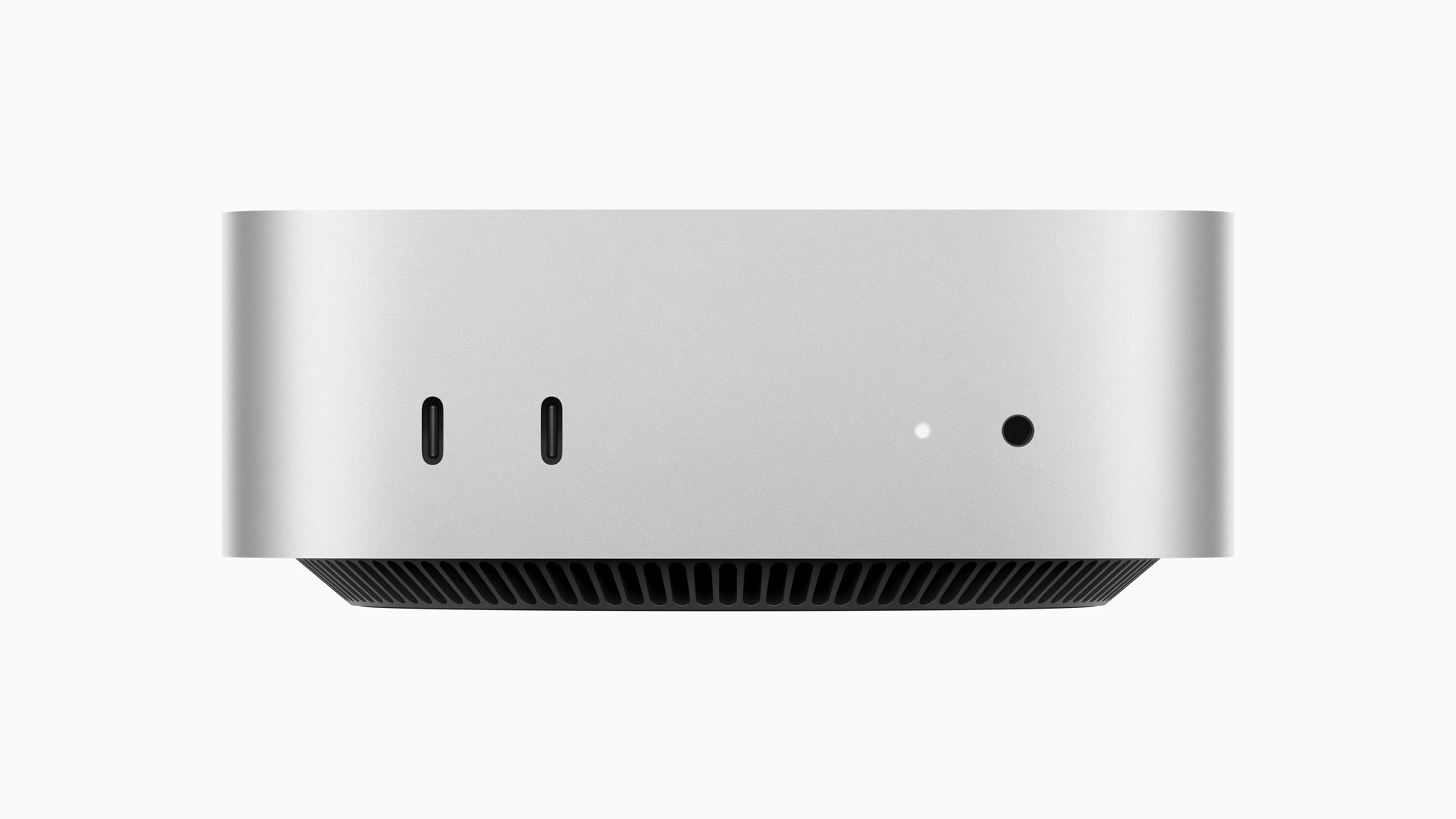
However, legacy connectivity has officially met its demise. As reported in comprehensive hardware analyses by The Verge, Apple has completely eliminated legacy USB-A ports from the Mac mini chassis entirely.
The rear panel on the Apple M4 Mac Mini Redesign hosts three versatile Thunderbolt ports alongside an HDMI port and a Gigabit Ethernet jack. Customers requiring enterprise data speeds can custom configure the Ethernet connection to ten-gigabit speeds for network storage.
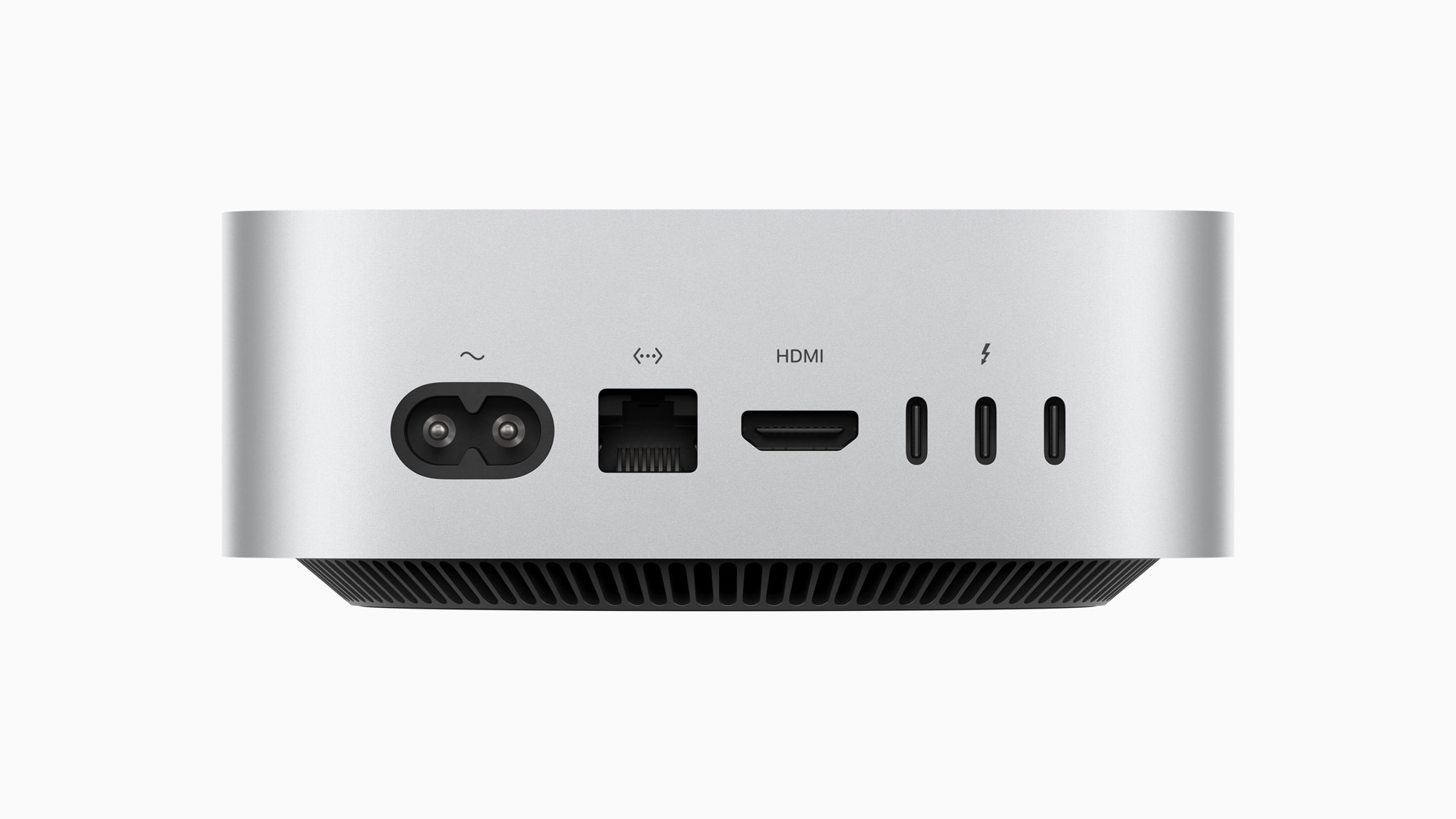
The technological showstopper on M4 Pro models is the debut of cutting-edge Thunderbolt 5 connectivity. Thunderbolt 5 delivers up to one-hundred-twenty gigabytes per second of bidirectional bandwidth using dynamic Bandwidth Boost technology across compatible displays.
This immense bandwidth enables the Apple M4 Mac Mini Redesign to power up to three simultaneous 6K displays at sixty hertz. Professional video editors can seamlessly attach high-density external PCIe storage arrays without saturating visual bus lanes.
By adopting next-generation bus architectures across the back panel, the Apple M4 Mac Mini Redesign provides workstation-grade modularity. Creative studios can connect multiple high-refresh monitors and specialized audio interfaces through a single consolidated exterior cabling run.
Users who previously relied on legacy accessories will easily transition using inexpensive type-C adapters. The forward-looking port selection ensures the Apple M4 Mac Mini Redesign remains fully synchronized with modern ultra-fast peripheral ecosystems.
Secret 5: The Bottom Power Button Controversy & $599 Budget Miracle
While the architectural advancements are widely celebrated, one peculiar engineering choice has triggered humorous online debate. The physical power button has been relocated from the rear casing directly onto the bottom underbelly of the miniature chassis.
To press the button, users must physically tilt or lift the front edge of the Apple M4 Mac Mini Redesign. Apple engineers reportedly justified this relocation because most modern Mac desktop users rely on sleep modes rather than conducting daily cold shutdowns.
Despite this quirky ergonomic concession, the value equation remains unmatched across the entire personal computer landscape. At a starting price of five-hundred-ninety-nine dollars, the Apple M4 Mac Mini Redesign delivers unmatched price-to-performance efficiency.
Equivalent Windows mini PCs or custom small-form-factor builds cannot match the single-core speed, energy efficiency, and thermal acoustics at this price point. Furthermore, qualified higher education students and educators can acquire the base model for just four-hundred-ninety-nine dollars.
By pairing world-class silicon with sixteen gigabytes of baseline unified memory, Apple has created an unassailable entry barrier. Competing manufacturers will find it extraordinarily challenging to rival this level of cohesive system integration at a sub-six-hundred-dollar threshold.
Consequently, the commercial impact of the Apple M4 Mac Mini Redesign will echo throughout the desktop industry for years. Budget-conscious buyers now receive genuine professional-grade silicon without enduring the prohibitive price premiums typically associated with high-end workstation hardware.
Whether deployed in education labs, home offices, or media production suites, the Apple M4 Mac Mini Redesign represents an astonishing economic victory. High performance has never been so accessible to everyday computer users.
Generational Evolution: M4 Mac Mini vs. M2 Mac Mini
Upgrading from previous Apple Silicon revisions yields dramatic compounding improvements across everyday workflows. The following generational matrix illustrates how the latest redesign elevates computing standards over the beloved M2 generation predecessor.
| Feature Category | Previous Generation (M2 Mac Mini) | Redesigned Model (M4 Mac Mini) |
|---|---|---|
| Physical Dimensions | 7.7 x 7.7 x 1.4 inches | 5.0 x 5.0 x 2.0 inches |
| Chassis Weight | 2.6 pounds (1.18 kg) | 1.5 pounds (0.67 kg) |
| Baseline Unified Memory | 8GB Unified Memory | 16GB Unified Memory (Standard) |
| Front I/O Connectivity | None (Smooth Aluminum Face) | 2x USB-C (10 Gb/s) + 3.5mm Headphone Jack |
| Legacy USB-A Ports | 2x USB-A Ports Included | Zero (Completely Retired) |
| Thunderbolt Protocol | Thunderbolt 4 across all variants | Thunderbolt 4 (M4) / Thunderbolt 5 (M4 Pro) |
| GPU Architecture | Standard GPU (No Ray Tracing) | Hardware Ray Tracing & Dynamic Caching |
| Display Support | Up to 2 External Displays | Up to 3 External Displays |
| Carbon Footprint | Standard Recycled Content | 100% Carbon Neutral Certified |
| Starting Price | $599 MSRP | $599 MSRP (16GB RAM Included) |
The evolutionary differences prove that the new enclosure represents an authentic multi-generational leap. By trimming over a pound of physical bulk while doubling baseline memory, Apple delivers an uncompromising workstation upgrade for professionals and hobbyists alike.
Owners of older M1 or Intel machines will discover that the Apple M4 Mac Mini Redesign delivers night-and-day responsive gains. Web applications launch instantly, video rendering durations drop precipitously, and everyday multitasking feels completely liberated from thermal throttling constraints.
With comprehensive hardware updates from silicon architecture to connectivity, the Apple M4 Mac Mini Redesign completely obsoletes previous small-form-factor iterations. Upgrading delivers immediate tangible benefits across creative software suites.
Homelab & Gaming Impact: A Tiny Server Revolution
Beyond mainstream desktop workflows, the Apple M4 Mac Mini Redesign holds profound ramifications for homelab enthusiasts and software developers. Its diminutive five-by-five inch footprint allows homelab administrators to stack multiple miniature machines inside compact network enclosures.
For the Apple M4 Mac Mini Redesign, exceptional performance-per-watt efficiency translates into whisper-quiet operation and minimal electrical consumption. Running localized continuous integration pipelines, Docker microservices, or private media caching nodes requires mere fractions of the wattage consumed by traditional servers.
Homelab cluster architects can deploy several units of the Apple M4 Mac Mini Redesign across custom rack shelves. The resulting multi-node compute cluster delivers astonishing parallel throughput while drawing less electrical power than a single conventional desktop tower.
On the gaming horizon, hardware-accelerated ray tracing and MetalFX upscaling position macOS as an increasingly viable secondary gaming ecosystem. While platform holders recalibrate cloud subscription models, local Apple Silicon hardware is increasingly equipped to run graphically intensive modern engines natively.
Combined with rapid strides in game porting toolkits, developers can adapt DirectX 12 titles to macOS with minimal code overhead. The arrival of hardware ray tracing in a sub-six-hundred-dollar box fundamentally expands the addressable gaming audience for Mac developers.
With popular titles gaining native optimization, the Apple M4 Mac Mini Redesign emerges as an unexpectedly competent casual gaming rig. Gamers can explore visually breathtaking virtual worlds without requiring expensive dedicated graphics cards or noisy desktop cooling fans.
Furthermore, software engineers testing native ARM applications will find the Apple M4 Mac Mini Redesign to be the definitive continuous integration workhorse. Reliable sustained performance guarantees deterministic testing and ultra-fast deployment pipelines.
Frequently Asked Questions
Final Verdict: The Undisputed Budget Powerhouse
The launch of the Apple M4 Mac Mini Redesign represents a definitive masterclass in consumer hardware engineering. By uniting a five-by-five inch architecture with sixteen gigabytes of baseline memory, Apple delivers an uncompromising computational marvel.
From day-to-day productivity to studio-grade video production and homelab clustering, this diminutive machine handles demanding workloads with effortless thermal stability. It stands as an authentic testament to the raw efficiency and scalability of modern Apple Silicon.
Every workstation enthusiast considering a compact computing upgrade will find the Apple M4 Mac Mini Redesign an extraordinary long-term investment. Its combination of whisper-quiet cooling, expandable high-speed ports, and unrivaled energy efficiency sets the golden industry standard.
For creative professionals, developers, and students seeking peak computing value, the five-hundred-ninety-nine dollar entry point is simply unbeatable. The Apple M4 Mac Mini Redesign is not merely a generational upgrade; it is the definitive small-form-factor desktop of this generation.
