


Table of Contents
Nintendo has quietly redefined cinematic interactive storytelling in Ocarina of Time Switch 2, expanding the legendary Master Sword extraction into an emotionally devastating sequence that elevates the entire mid-game narrative twist.
By introducing fresh Sacred Realm staging and explicit petrification cinematography, this refreshed Ocarina of Time Switch 2 turns what was once an imaginative leap on Nintendo 64 into an unforgettable showcase of villainous triumph.
| Narrative Sequence | N64 Original (1998) | Switch 2 Remake (2026) | Audio & Sound Design | Thematic Significance |
|---|---|---|---|---|
| Pedestal Extraction | Blue particle flash cut to void | Real-time volumetric light beams | Live brass orchestral swell | Marks transition to destiny |
| Sacred Realm Gateway | Static background texture | Full cinematic threshold reveal | Ethereal choir harmonies | Exposes holy Triforce resting place |
| Seven-Year Hero Slumber | Implied jump cut narrative | Physical rock petrification | Sudden Ganondorf theme sting | Highlights youthful helplessness |
| Ganondorf Infiltration | Disembodied laughing floating face | Full physical saunter past statue | Ominous heavy brass march | Establishes ruthless personal malice |
| Chamber of Sages | Dialogue-driven exposition | Dynamic camera tracking and depth | Atmospheric acoustic meditation | Reveals Rauru sage heritage |
| Town Square Emergence | Silent static courtyard reveal | Sweeping cinematic ruin pan | Terrifying ReDead shrieks | Demonstrates total kingdom collapse |
Sacred Realm Threshold: Volumetric Lighting and New Gateway Cinematics
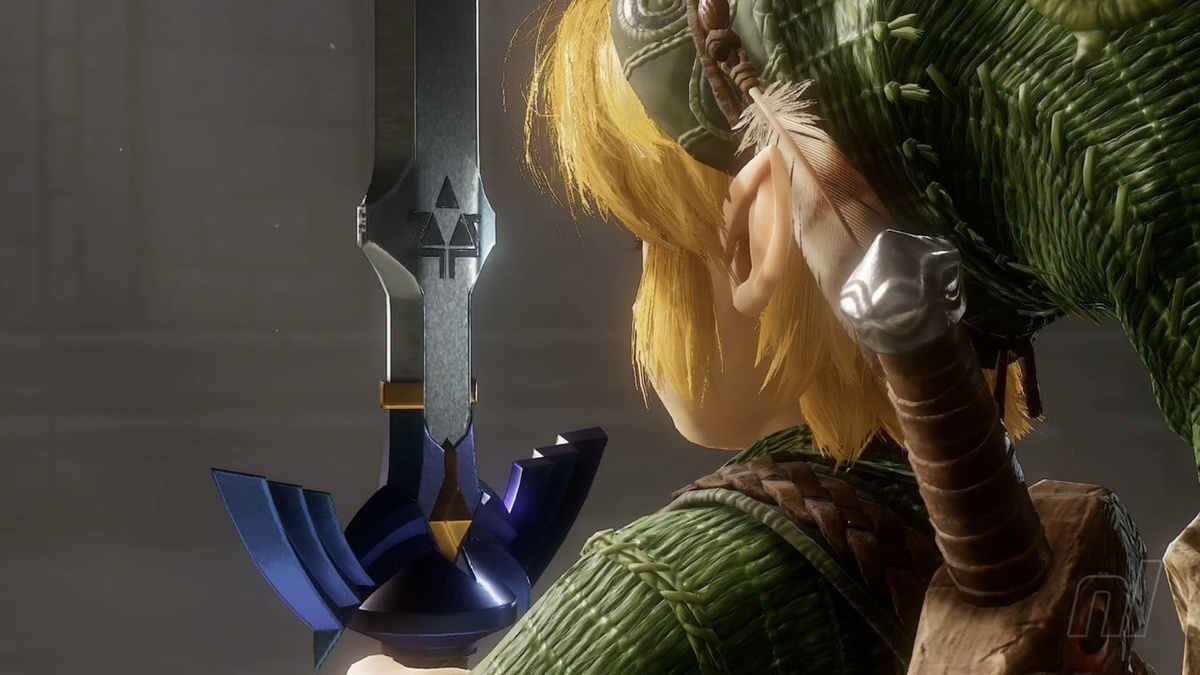
When players guide young Link to pull the legendary blade in Ocarina of Time Switch 2, the pedestal extraction no longer abruptly cuts to the Chamber of Sages.
Instead, according to analytical gameplay details reported by Nintendo Life, a brand-new real-time cinematic sequence manifests right at the luminous threshold of the Sacred Realm.
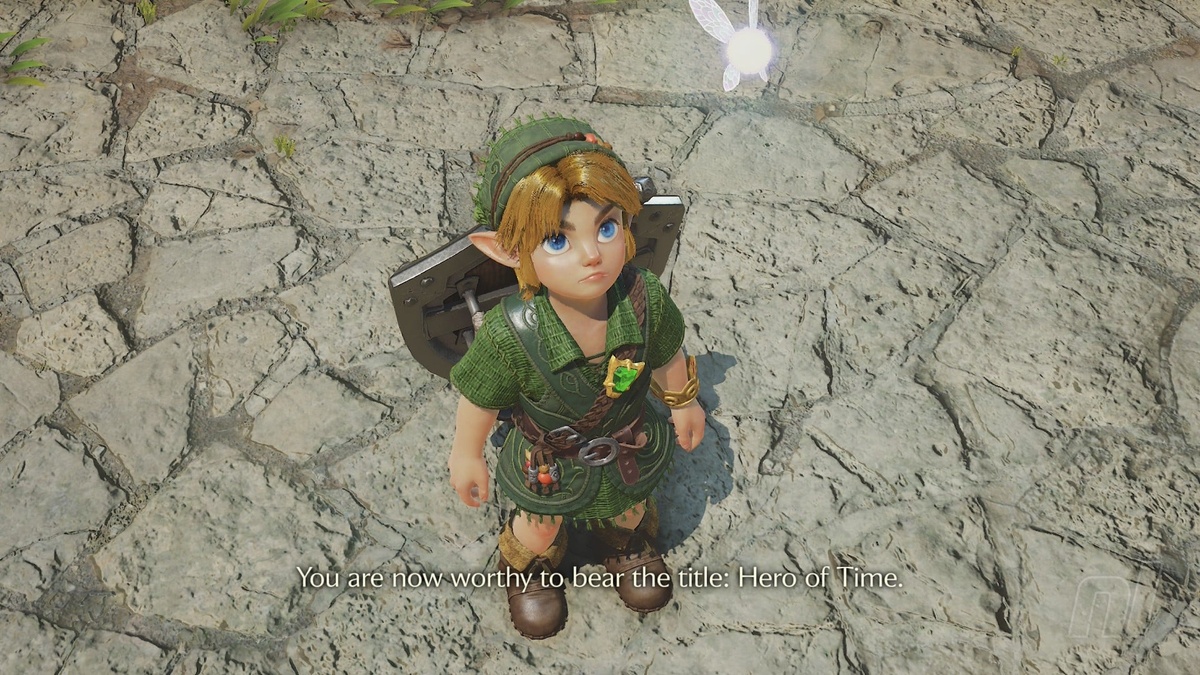
Golden ethereal radiance fills the screen as the sacred sanctuary doors slowly part, bathing Link in majestic volumetric lighting that underscores the holy power of the Triforce.
This breathtaking visual staging elevates Ocarina of Time Switch 2 above typical retro remasters, utilizing modern GPU shaders to contrast the sacred beauty of the golden land against creeping shadows.
The sequence provides crucial visual framing for newcomers and franchise veterans alike, clarifying the exact physical transition before catastrophic villainy strikes.
Petrification Mechanics: Visualizing Child Link’s Seven-Year Stasis
The most jarring cinematic addition in Ocarina of Time Switch 2 occurs when child Link is physically frozen in place upon grasping the ancient hilt.
Rather than floating in an abstract blue void, Link turns completely into solid stone, petrified with his youthful arms raised in helpless defense.
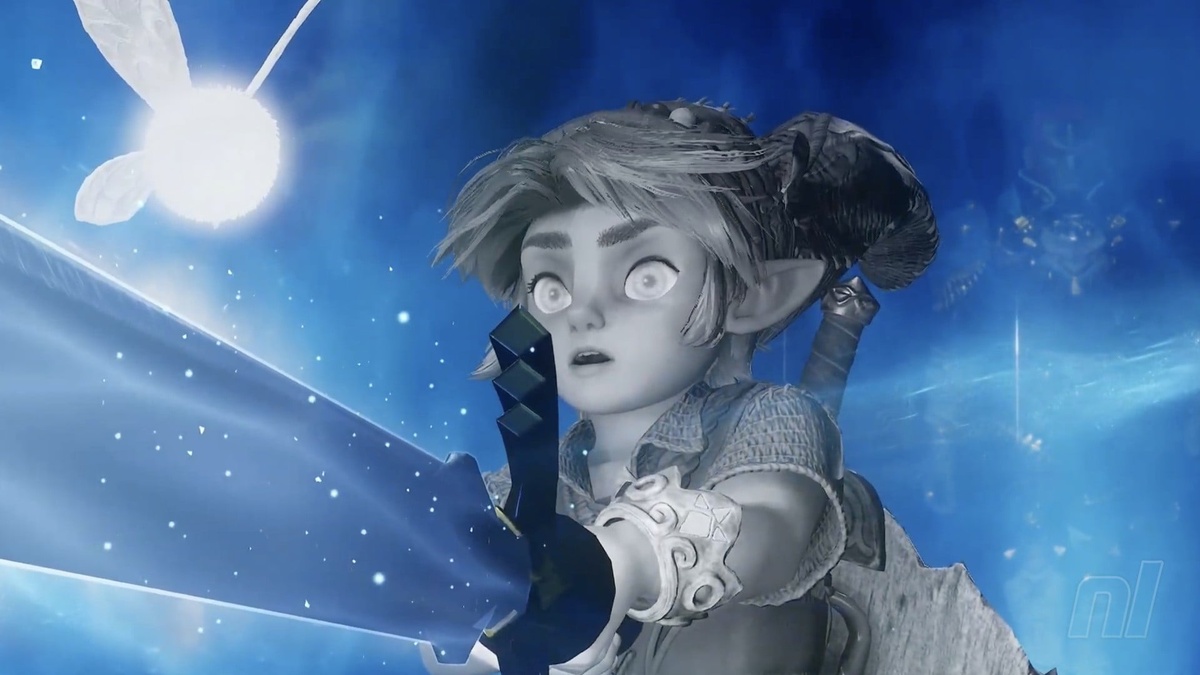
This chilling statue transformation visualizes the seven-year slumber in Ocarina of Time Switch 2, illustrating the terrible physical cost required for the young hero’s body to mature into adulthood.
Seeing the boy hero rendered into lifeless rock creates profound vulnerability, contrasting dramatically with triumphant sword-swinging moments established in earlier dungeon encounters.
By grounding Link’s seven-year entrapment in tangible petrification, Ocarina of Time Switch 2 transforms a classic narrative convenience into an emotionally harrowing moment of high fantasy horror.
Ganondorf’s Psychological Menace: Orchestral Motifs and Unchecked Conquest
Ganondorf’s presence in Ocarina of Time Switch 2 is significantly magnified as he strolls arrogantly past the petrified hero toward the glowing golden relic.
Accompanied by a bone-chilling brass orchestral sting, Ganondorf delivers mocking dialogue, taunting Link’s youthful naivety before sauntering into the defenseless Sacred Realm.
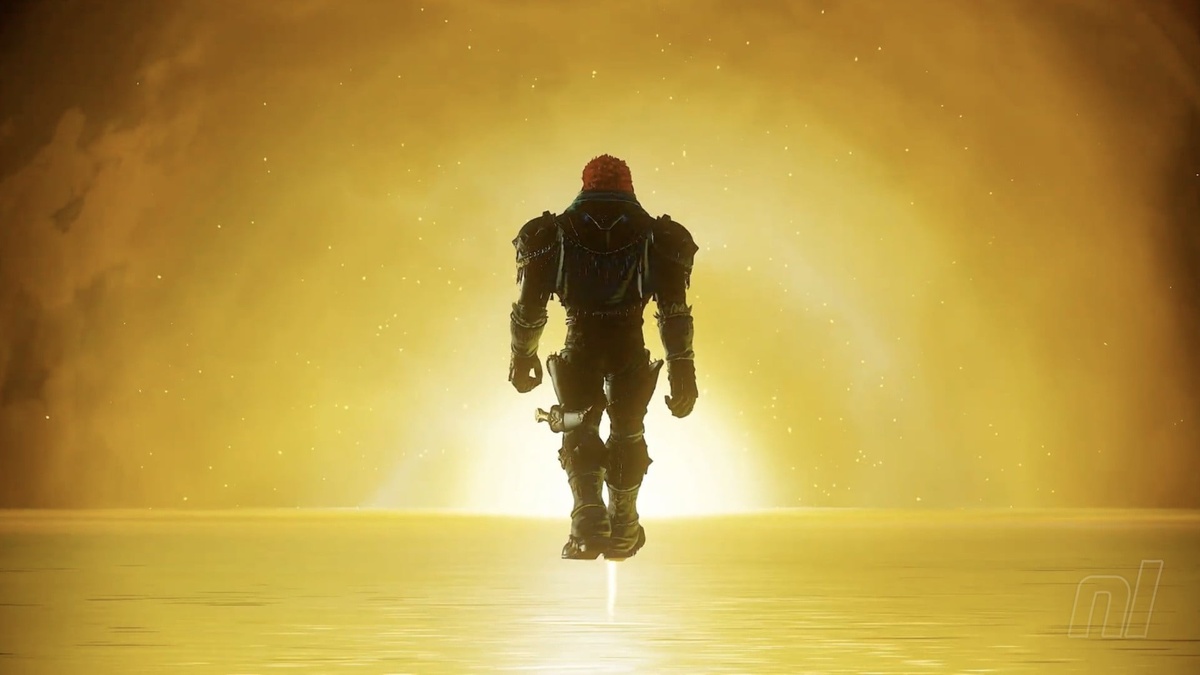
In the 1998 original, players only witnessed a floating, disembodied face laughing across a void, leaving the villain’s direct physical intrusion entirely to player imagination.
By depicting the Gerudo king casually bypassing Link’s frozen body, Ocarina of Time Switch 2 reinforces the crushing emotional weight of having unwittingly handed the kingdom over to evil.
This dramatic confrontation matches the cinematic ambition seen in modern action epics, providing powerful psychological stakes that fuel the player’s quest across adult dungeons.
Post-Temple Desolation: Cinematic Panning and Hyrule Castle Town Ruin
The atmospheric brilliance of Ocarina of Time Switch 2 deepens immediately after adult Link awakens, meets the mysterious Sheik, and steps outside the sanctuary.
Rather than relying strictly on quiet environmental shock, the camera sweeps across decimated rooftops toward the volcanic sky surrounding Ganon’s Castle.
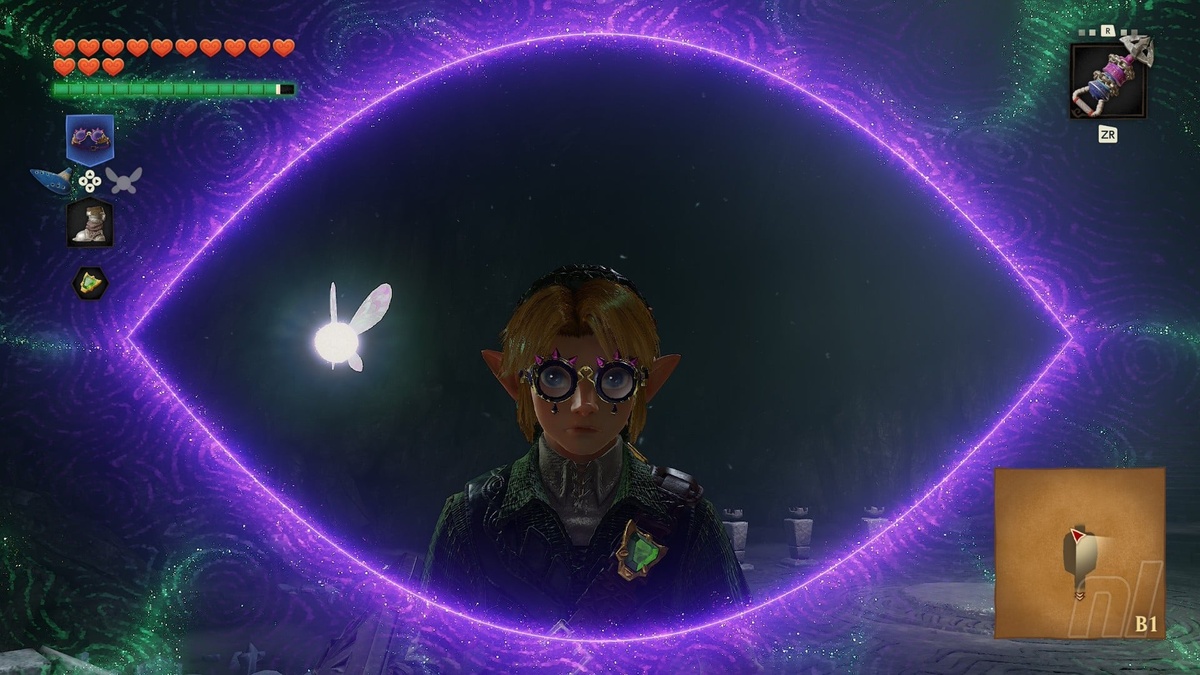
Smoldering ruins, crumbling archways, and the terrifying guttural screams of lurking ReDeads illustrate how completely the kingdom collapsed during the seven-year gap.
Industry analysts at Eurogamer note that this expanded environmental pan sharpens the tonal contrast between childhood peace and apocalyptic adult despair.
Similar architectural and rendering triumphs echo modern computing milestones, such as desktop efficiency innovations found in the Apple M4 Mac Mini redesign.
| Operational Mode | Target Display Resolution | Target Framerate | Shader & Lighting Pipeline | Memory & Asset Streaming |
|---|---|---|---|---|
| Switch 2 Docked Mode | Dynamic 4K (2160p Upscaled) | 60 Frames Per Second | Real-Time Volumetric Sunshafts | High-Speed LPDDR5X Bus |
| Switch 2 Handheld Mode | Native 1080p Screen Render | 60 Frames Per Second | Optimized Temporal Shaders | Low-Power Unified Memory |
| Cinematic Cutscenes | Full 4K Uncompressed Buffer | 30 FPS Locked Cinematic | Per-Object Motion Blur & DoF | Direct NVMe Storage Feed |
| Temple Interior Scenes | Dynamic 1800p to 4K Docked | 60 Frames Per Second | Dynamic Point Torches & Mist | Real-Time Geometry Caching |
| Open Hyrule Field | Dynamic 1440p to 4K Docked | 60 Frames Per Second | Volumetric Fog & Distant LOD | Seamless World Partitioning |
Technical Execution: Handheld Optimization, Audio Engineering and Modern Controls
Achieving this stunning cinematic presentation required substantial hardware engineering to ensure Ocarina of Time Switch 2 maintains fluid framerates across both docked and portable configurations.
The graphics pipeline leverages temporal reconstruction to deliver crisp native 4K output docked, while intelligent dynamic resolution keeps handheld action locked near 60 frames per second.
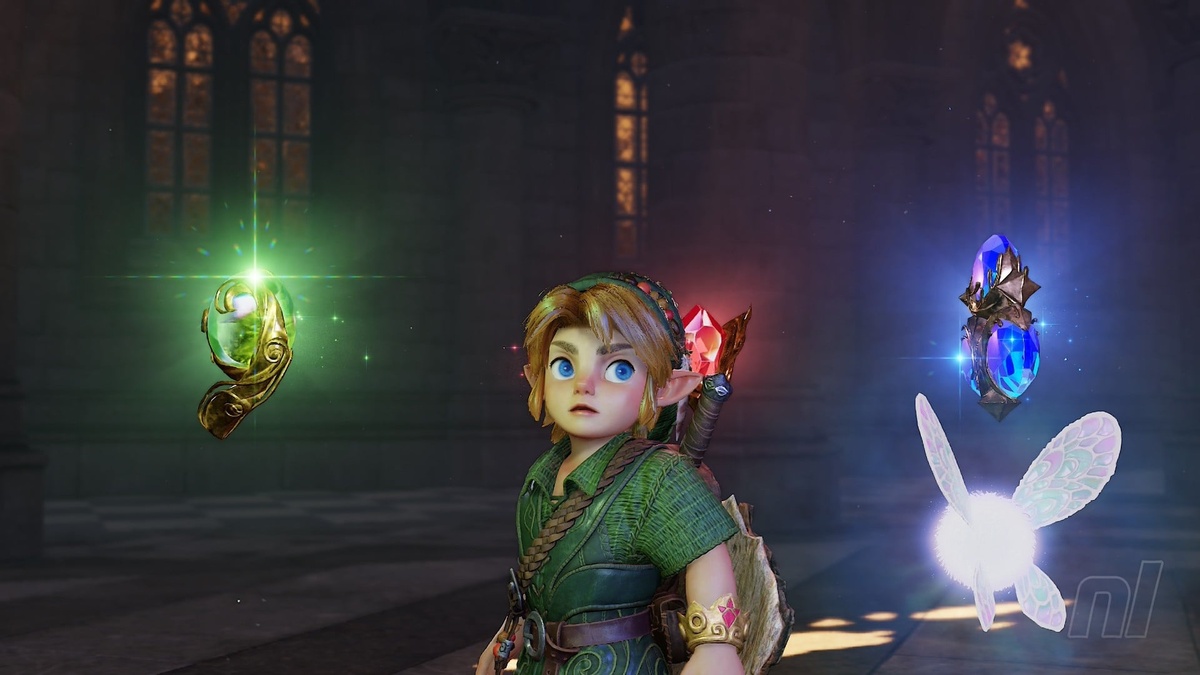
Comprehensive audio enhancements accompany the visual overhaul, substituting synthesized MIDI melodies with rich live orchestral recordings that dynamically respond to cinematic pacing.
High-performance memory bandwidth requirements mirror modern enthusiast hardware demands, akin to processing benchmarks explored in our AMD Ryzen 7 9800X3D analysis.
Furthermore, legacy software modernizations reflect broader industry shifts toward long-term platform resilience, aligning with enterprise pivots documented in our NVIDIA Windows 10 support retirement report.
Frequently Asked Questions
How does the Master Sword scene differ in Ocarina of Time Switch 2?
The updated sequence in Ocarina of Time Switch 2 adds real-time cinematics depicting the Sacred Realm gates, Link turning to solid stone, and Ganondorf physically walking past him while mocking his naivety.
Why does Link turn to stone in the Switch 2 remake?
The petrification visually represents Link’s seven-year stasis inside Ocarina of Time Switch 2, emphasizing his physical vulnerability while his spirit is sealed away until he is old enough to become the Hero of Time.
Does the Switch 2 remake feature new cutscenes after leaving the Temple of Time?
Yes, after meeting Sheik, Ocarina of Time Switch 2 includes a cinematic camera pan displaying the burning ruins of Hyrule Castle Town and Ganon’s Castle looming under a blood-red sky.
What resolution and framerate does the game target on Switch 2?
Running on second-generation hardware, Ocarina of Time Switch 2 targets dynamic 4K resolution at 60 frames per second when docked, utilizing temporal upscaling to preserve crisp image fidelity in portable play.
Were the music and audio tracks re-recorded for the remake?
Nintendo completely overhauled the audio in Ocarina of Time Switch 2, replacing original synthesized arrangements with a full orchestral soundtrack that incorporates dynamic leitmotifs during critical narrative moments.
Final Verdict: Elevating Classic Nintendo Storytelling Without Compromising Nostalgia
Nintendo’s bold cinematic choices in Ocarina of Time Switch 2 demonstrate how sensitive visual direction can invigorate beloved franchise history without compromising core mechanical identity.
By dramatizing Link’s petrification and Ganondorf’s cruel triumph, Ocarina of Time Switch 2 imbues the mid-game transition with unprecedented emotional weight and chilling psychological tension.
This masterclass in cinematic pacing proves that classic adventures can discover fresh narrative vitality when modern hardware capabilities serve timeless artistic vision.
